
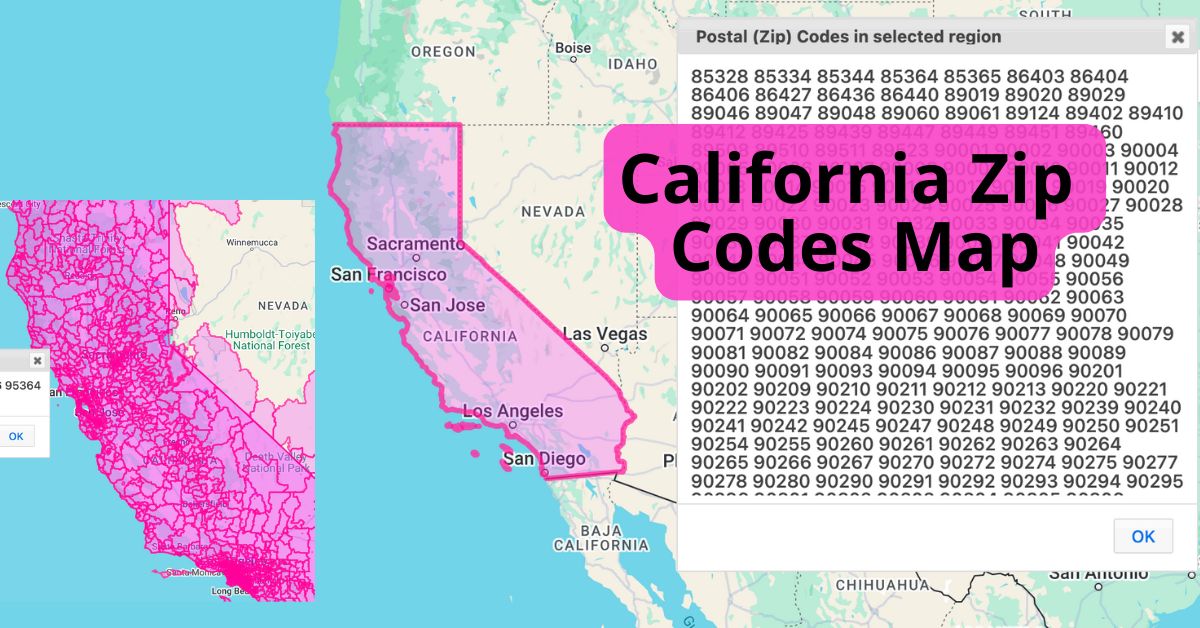
The question “What is the ZIP code of California?” is a common one, often posed by those unfamiliar with the vastness and intricate postal system of the United States. The simple answer, though perhaps initially surprising, is that there isn’t one single ZIP code for the entire state. California, a sprawling and incredibly diverse region that spans over 163,695 square miles, is served by thousands of unique ZIP codes, each meticulously designated to ensure efficient mail delivery across its myriad cities, towns, rural communities, and even natural landmarks.
Understanding why a single ZIP code for a state like California is a logistical impossibility provides a fascinating glimpse into the state’s geography, population distribution, and the very mechanics of the postal system. For travelers, this insight is particularly valuable, as knowing the general postal codes for various regions can indirectly inform choices about destinations, accommodations, and the types of experiences available in different parts of the Golden State. From the bustling urban landscapes of Los Angeles and San Francisco to the serene vineyards of Napa Valley and the rugged wilderness of the Sierra Nevada, each area possesses its own distinct postal identity, reflecting its unique character and the services it offers to residents and visitors alike.
Unpacking California’s Postal Tapestry: More Than Just a Number
The concept of a ZIP code is fundamental to modern logistics, yet its application across a state as geographically and demographically complex as California means that its identity is fragmented into thousands of specific designations. This intricate system is not merely about mail delivery; it’s a reflection of population density, geographical features, and the administrative divisions that make up one of the world’s largest economies.
The Basics of ZIP Codes: A Nationwide System
The acronym ZIP stands for Zone Improvement Plan, a system introduced by the United States Postal Service in 1963. Its primary purpose was to improve the efficiency and speed of mail delivery by assigning specific five-digit codes to various postal delivery areas across the United States. Over time, an expanded nine-digit ZIP+4 code was introduced, allowing for even more precise targeting within a delivery area, down to a specific side of a street, an apartment building, or even an individual office.
The first digit of a ZIP code typically indicates a general group of U.S. states. For California, these first digits are primarily “9,” indicating the far western region of the country. The subsequent digits further narrow down the geographical area: the second and third digits represent a central mail processing facility or a large city, while the fourth and fifth digits denote specific delivery routes or zones within that area. This hierarchical structure is precisely why a single state, no matter how small, cannot be encapsulated by one universal ZIP code, let alone a colossal one like California.

Why a Single State ZIP Code is a Myth
Imagine attempting to assign one singular code to an area that is home to nearly 40 million people, boasts the fifth-largest economy in the world, and encompasses everything from pristine Pacific coastlines and arid deserts to towering mountain ranges and sprawling agricultural valleys. It would be akin to trying to fit the entire ocean into a teacup. California’s sheer scale dictates the necessity of its extensive ZIP code system.
The state’s diverse topography plays a significant role. The Sierra Nevada mountains, the Mojave Desert, the Central Valley, and the vast metropolitan areas each present unique challenges and requirements for mail delivery, which are reflected in their distinct postal codes. Furthermore, the state’s vibrant tourism sector, with its countless attractions and landmarks, means that even remote natural parks and popular resort towns have their own specific codes, facilitating the smooth operation of hotels, lodges, and visitor centers. This fragmented postal identity is a testament to the state’s incredible diversity, which is precisely what makes it such a captivating destination for travelers seeking varied experiences.
Navigating California’s Diverse Regions Through Its ZIP Codes
While you won’t find a single ZIP code for California, understanding the general ranges and iconic codes associated with its major regions is invaluable for anyone planning a visit, seeking accommodation, or simply curious about the lay of the land. Each region tells a different story, reflected in its unique blend of culture, landscape, and, by extension, its postal identity.
Northern California: From Redwood Forests to Tech Hubs
Northern California encompasses a vast and varied landscape, from the dramatic coastlines and ancient forests to the innovative heart of Silicon Valley and the historic charm of San Francisco.
In San Francisco, a city renowned for its iconic Golden Gate Bridge, vibrant neighborhoods, and world-class dining, ZIP codes typically range from 94101 to 94188. Each neighborhood, from the historic Fisherman’s Wharf (often around 94133) to the bustling Financial District (e.g., 94104), carries its own distinct code. Travelers seeking boutique hotels or luxury suites in the city center will find themselves using these concentrated codes.
Further south, the innovation hub of Silicon Valley includes cities like San Jose (e.g., 95101-95196), Palo Alto (94301-94309), and Cupertino (95014), each synonymous with tech giants and a modern, fast-paced lifestyle. Even further north, the rolling hills and esteemed vineyards of Napa Valley feature codes like 94558 (for Napa city itself), drawing visitors to its wine resorts and gourmet cuisine.
Meanwhile, the majestic Redwood National and State Parks along the northern coast might fall under a broader range of codes (e.g., in the 955XX range), signifying their more remote, nature-focused attractions and opportunities for camping or rustic cabins.
Central California: Agricultural Heartlands and Scenic Beauty
Moving into the heart of the state, Central California presents a different facet of the Golden State. This region is dominated by the fertile Central Valley, a global agricultural powerhouse, alongside breathtaking natural wonders like Yosemite National Park and the eastern Sierra Nevada mountain range.
Cities like Fresno, often considered the heart of the Central Valley, use ZIP codes in the 936XX-937XX range. These codes reflect communities deeply rooted in farming and local commerce, offering a glimpse into California’s agricultural heritage. Similarly, Bakersfield, another significant Central Valley city, falls into the 932XX-933XX range.
However, Central California’s appeal extends far beyond its agricultural output. Yosemite National Park, a world-renowned landmark famous for its granite cliffs, giant sequoias, and waterfalls, has its own specific ZIP code for the park area (95389 for Yosemite Valley), which is crucial for guests staying at Yosemite Lodge or The Ahwahnee. The towns surrounding these national parks, like Oakhurst or Mariposa, also have distinct codes (e.g., 93644 and 95338, respectively), serving as gateways for tourism and offering various accommodation options from modest motels to charming bed and breakfasts.
Southern California: Beaches, Entertainment, and Deserts
Southern California is perhaps the most iconic region, globally recognized for its vibrant cities, stunning beaches, and entertainment industry. Its ZIP codes reflect this high density and diverse array of attractions.
Los Angeles, the largest city in the state, is an intricate tapestry of communities, each with its own ZIP code reflecting its unique character. Codes here span a wide range, generally starting with 900XX for downtown LA and extending to 902XX for exclusive areas like Beverly Hills (90210 being famously iconic) and Malibu (90265). These codes pinpoint everything from luxury hotels on Sunset Boulevard to beachfront resorts overlooking the Pacific.
Further south, Orange County is home to world-famous Disneyland Resort in Anaheim (92802 for the park area itself) and picturesque coastal towns like Laguna Beach (92651). These areas are prime for family travel and beach-centric lifestyles, offering a plethora of hotels, vacation rentals, and resorts.
Even further south, San Diego, known for its beautiful harbor, pristine beaches, and laid-back atmosphere, uses ZIP codes largely in the 921XX range, with specific codes for areas like La Jolla (92037) or Coronado (92118). Beyond the coastal cities, the desert landscapes of Palm Springs, a popular destination for wellness and golf, utilize codes such as 92262 and 92264, reflecting its unique resort lifestyle and distinct climate.
ZIP Codes and the California Travel Experience
For travelers and those interested in California’s diverse lifestyle offerings, understanding the distribution of ZIP codes, even at a conceptual level, is more than a trivial detail; it’s a practical tool for planning and discovery.
Planning Your California Adventure by Location
When you’re mapping out a California adventure, whether it’s a road trip through multiple regions or an immersive stay in one city, your awareness of specific locales—and by extension, their general ZIP code ranges—becomes incredibly useful. This knowledge directly impacts how you search for hotels, compare accommodations, or pinpoint local attractions. A search for hotels in “90210” will yield very different results than a search for “95389,” one pointing to luxury stays in Beverly Hills and the other to lodges within Yosemite National Park.
Travel guides often categorize destinations by region or city, but underlying these divisions are the postal codes that define their precise location. For instance, if you’re interested in wine tourism, knowing that codes in the 945XX range are common for Napa and Sonoma Valleys can help you refine your search for vineyard tours and wine-country resorts. Similarly, for those seeking beach experiences, knowing coastal codes (like 90265 for Malibu or 92651 for Laguna Beach) immediately narrows down suitable accommodations and local activities. This precision in location planning is key to optimizing your travel budget and ensuring your trip aligns with your desired lifestyle.
From Urban Stays to Remote Retreats: The Accommodation Landscape
The diversity of California’s ZIP codes is directly mirrored in its vast and varied accommodation landscape. Each postal zone often corresponds to a particular type of environment and, consequently, a specific style of lodging.
In urban centers like San Francisco or Los Angeles, ZIP codes indicate areas dense with luxury hotels, boutique hotels, and serviced apartments catering to both business travelers and leisure guests looking for a sophisticated city stay. Here, booking platforms use these codes to provide highly localized results, offering everything from rooftop pools to concierge services.
Venturing into coastal regions, different ZIP codes bring up beach resorts, oceanfront villas, and charming bed and breakfasts perfect for a relaxing getaway. For instance, the codes around Santa Barbara (e.g., 93101) or Carmel-by-the-Sea (93921) are synonymous with picturesque coastal accommodations and a laid-back, yet upscale, lifestyle.
In contrast, the ZIP codes associated with national parks like Yosemite (95389) or Lake Tahoe (e.g., 96150 for South Lake Tahoe) will highlight lodges, cabins, and campgrounds, catering to outdoor enthusiasts and those seeking a closer connection with nature. For those interested in long-term stays or more independent travel, ZIP codes are essential for finding vacation rentals or apartments that fit specific regional preferences and budget travel needs. The correlation between a ZIP code and the type of accommodation available showcases the incredible range of options California provides, allowing every traveler to find their perfect temporary home.
In conclusion, the inquiry “What is the ZIP code of California?” opens up a broader discussion about the state’s remarkable geographic and cultural diversity. Far from having a single identifier, California is a mosaic of thousands of ZIP codes, each representing a unique community, landscape, or experience. For anyone looking to explore this magnificent state, whether for leisure, business, or a new lifestyle, understanding this postal granularity is a subtle yet powerful key to unlocking its full potential as a travel destination and a place to truly live out of the box.
