
The iconic cross-country journey from New York City to Los Angeles is more than just a calculation of mileage; it’s a rite of passage for many Americans and a dream trip for international travelers. This transcontinental odyssey traverses a vast and diverse landscape, touching upon the very essence of the American experience. Whether you’re dreaming of the bustling metropolises or the wide-open spaces, understanding the distance is the first step in planning an unforgettable adventure.
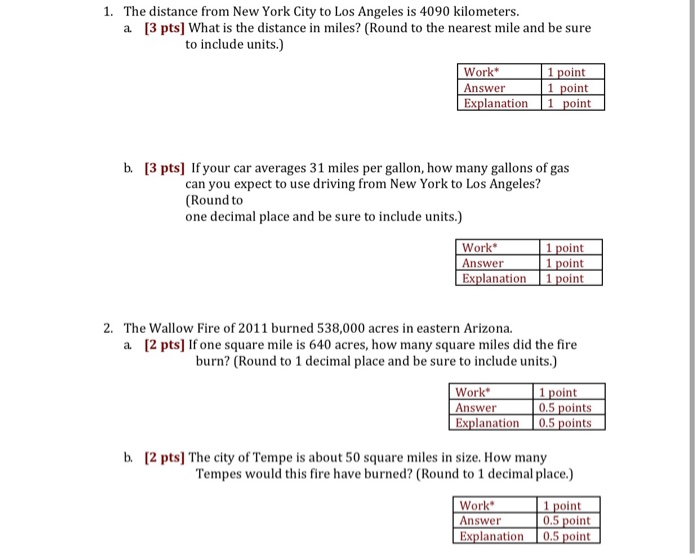
The precise mileage can vary depending on the chosen route, but generally, the drive from New York City to Los Angeles is approximately 2,800 to 3,000 miles. This figure represents the most common and practical driving routes, often utilizing major interstates like Interstate 80 or Interstate 70 for significant portions of the journey. For those opting for air travel, the distance remains the same, but the experience is vastly different.

Planning Your Cross-Country Adventure
Embarking on a trip of this magnitude requires careful consideration of your travel style, time constraints, and interests. This journey offers a spectrum of experiences, from the thrill of a fast-paced flight to the immersive exploration of a road trip. Each method presents unique advantages and challenges, catering to different preferences and budgets.
By Air: The Fastest Route
For those whose primary goal is to reach the sunny shores of California as quickly as possible, flying is the clear winner. Direct flights between New York City and Los Angeles typically take around 5 to 6 hours. This allows travelers to maximize their time exploring the destinations rather than the transit itself. Major airports serving these cities include John F. Kennedy International Airport (JFK), LaGuardia Airport (LGA), and Newark Liberty International Airport (EWR) in the New York area, and Los Angeles International Airport (LAX) and Hollywood Burbank Airport (BUR) in the Los Angeles area.
Airlines like American Airlines, Delta Air Lines, and United Airlines offer frequent non-stop services. The cost of flights can vary significantly based on the time of year, how far in advance you book, and the airline. However, for a quick hop across the country, it’s often a cost-effective option when compared to the total expenses of a long road trip, especially when factoring in accommodation, food, and gas.
Advantages of Flying:
- Speed: Significantly reduces travel time, allowing for more time at your destination.
- Convenience: Airports are generally well-connected to city centers and offer various transportation options upon arrival.
- Less Planning Intensive: Requires less detailed logistical planning compared to a road trip.
Disadvantages of Flying:
- Limited Sightseeing: You miss the diverse landscapes and attractions along the way.
- Baggage Restrictions: Can be costly and inconvenient if you have a lot of luggage.
- Airport Hassles: Security lines, potential delays, and the general stress of air travel.
By Car: The Ultimate American Road Trip
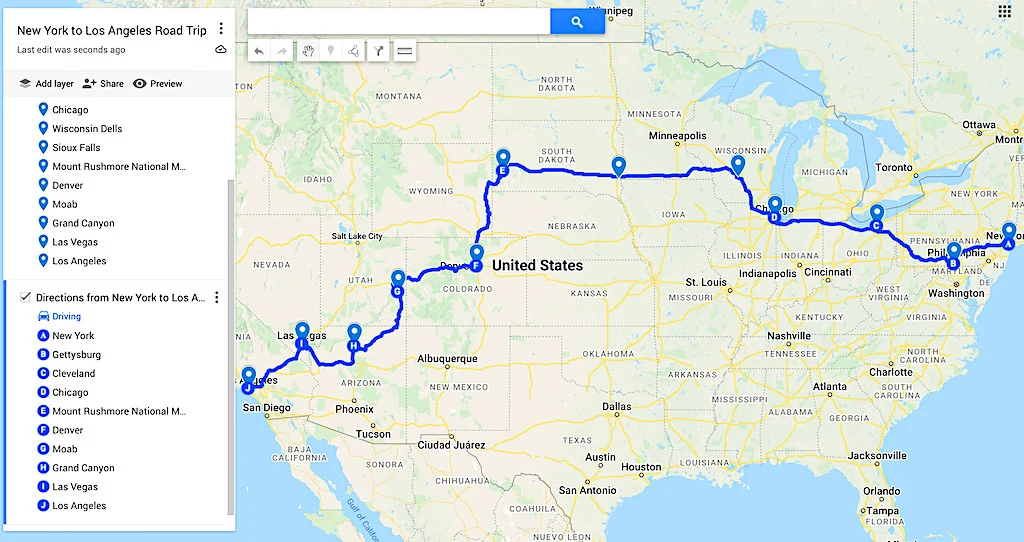
For many, the true heart of the New York City to Los Angeles journey lies in the road trip. This is where you can truly immerse yourself in the vastness and diversity of the United States. The approximately 2,800-3,000 miles offer endless opportunities for exploration, from historic landmarks to quirky roadside attractions and breathtaking natural wonders.
Popular Route Options:
- The Northern Route (via I-80): This route takes you through states like Pennsylvania, Ohio, Illinois, Iowa, Nebraska, Wyoming, Utah, and Nevada. This path offers access to cities like Chicago, Omaha, and national parks like Yellowstone National Park (with a detour) and the salt flats of Utah.
- The Central Route (via I-70): This route passes through states such as Pennsylvania, Ohio, Indiana, Missouri, Kansas, Colorado, Utah, and Nevada. It offers stunning mountain scenery in Colorado and allows for stops in cities like St. Louis and Denver.
- The Southern Route (via I-40): This historic route follows much of the path of the old Route 66 for significant stretches. It goes through states like Tennessee, Arkansas, Oklahoma, Texas, New Mexico, Arizona, and California. This option is rich in Americana, with opportunities to visit iconic diners, kitschy attractions, and natural wonders like the Grand Canyon National Park.
Factors to Consider for a Road Trip:
- Time Commitment: A comfortable road trip of this distance typically requires at least 7 to 10 days, allowing for stops and sightseeing. Those looking to truly explore might dedicate 2 to 3 weeks or more.
- Vehicle Preparation: Ensure your vehicle is in excellent condition. Regular maintenance, tire checks, and a full service are crucial.
- Accommodation: From budget-friendly motels to charming bed and breakfasts and unique roadside inns, the options are plentiful. Booking in advance, especially during peak seasons, is advisable. Consider hotels like the Motel 6 for budget stays or unique historic hotels found in many towns along the way.
- Budgeting: Factor in gas, accommodation, food, potential car repairs, and entrance fees for attractions.
- Packing: Pack for a variety of climates and terrains. Layers are essential. Don’t forget snacks, a first-aid kit, and entertainment for the long stretches.
- Navigation: While GPS is invaluable, consider carrying physical maps as a backup, especially in remote areas where cell service can be spotty.
The Journey’s Highlights and Landmarks
Regardless of your chosen mode of transport, the distance between New York City and Los Angeles is punctuated by iconic landmarks and diverse landscapes that define the American tapestry.
From East Coast Charm to Mountain Majesty:
As you depart New York City, you’ll transition from the dense urbanity of the East Coast to the rolling hills and farmlands of states like Pennsylvania and Ohio. Cities like Pittsburgh offer glimpses into industrial history, while the Great Lakes region provides a different kind of natural beauty.
Continuing westward, the landscape gradually transforms. The flat plains of the Midwest, stretching across states like Illinois and Nebraska, give way to the dramatic elevation changes of the Rocky Mountains. As you enter Colorado, cities like Denver serve as gateways to breathtaking national parks such as Rocky Mountain National Park. The sheer scale of the mountains, the crisp mountain air, and the panoramic vistas are a significant highlight for any traveler.
Desert Landscapes and the Final Stretch:
Beyond the Rockies, the terrain shifts again into the arid beauty of the desert Southwest. States like Utah, Arizona, and New Mexico offer a stark yet captivating beauty. The red rock formations of Monument Valley, the majestic depths of the Grand Canyon National Park, and the unique geological wonders of Arches National Park are just a few of the natural marvels that await.
As you press on towards California, the desert continues to dominate, with landscapes dotted by Joshua trees and vast open skies. The journey culminates as you descend into the basin and range topography of Southern California, eventually reaching the sprawling metropolis of Los Angeles. The contrast between the natural wonders you’ve traversed and the urban energy of your destination is a profound part of the cross-country experience.
The approximately 2,800-3,000 miles from New York City to Los Angeles represent more than just a physical distance; they are a narrative of America’s diverse geography, rich history, and vibrant culture. Whether you choose the swiftness of a plane or the immersive adventure of a road trip, this journey promises an unforgettable experience that will leave you with a deeper appreciation for the vastness and wonder of the United States.
LifeOutOfTheBox is a participant in the Amazon Services LLC Associates Program, an affiliate advertising program designed to provide a means for sites to earn advertising fees by advertising and linking to Amazon.com. Amazon, the Amazon logo, AmazonSupply, and the AmazonSupply logo are trademarks of Amazon.com, Inc. or its affiliates. As an Amazon Associate we earn affiliate commissions from qualifying purchases.