
Embarking on the journey of divorce is a significant life event, and understanding the legal processes involved is paramount. While the title of this guide, “How To File For Divorce In Nevada,” might initially evoke images of bustling casinos and desert landscapes synonymous with the Silver State, the reality of navigating a divorce within its borders is a process that demands clarity, adherence to legal requirements, and often, a structured approach. This article aims to demystify the procedures for filing for divorce in Nevada, offering a comprehensive overview for those seeking to initiate this legal dissolution of marriage. Whether you are a resident contemplating a new chapter or an individual with ties to the state, understanding the foundational steps is crucial for a smooth and informed process.
Understanding the Basics of Nevada Divorce Law
Nevada is known for its relatively straightforward divorce laws, often cited as a “no-fault” divorce state. This means that neither party needs to prove wrongdoing or adultery on the part of the other to obtain a divorce. The primary grounds for divorce are irreconcilable differences, meaning the marriage has broken down to the point where it cannot be salvaged. This simplifies the legal proceedings by removing the need for lengthy and potentially acrimonious trials centered on blame.
Residency Requirements
Before initiating divorce proceedings in Nevada, you must meet the state’s residency requirements. Generally, one of the parties must have resided in Nevada for at least six weeks prior to filing the complaint for divorce. This requirement is in place to ensure that the Nevada courts have jurisdiction over the divorce case. If you are considering a divorce and have recently moved to Nevada, it is essential to ensure you meet this minimum residency period before proceeding with filing. Failure to do so could result in your case being dismissed.
Types of Divorce in Nevada
Nevada recognizes two main types of divorce:
Divorce by Default
A divorce by default occurs when one party files for divorce, and the other party fails to respond within the legally prescribed timeframe. In such cases, the court may grant the divorce based on the initial filing, often in favor of the filing party’s requests. This scenario typically arises when the responding party is aware of the divorce but chooses not to participate in the legal process, or if they cannot be located to be served with the divorce papers.
Divorce by Agreement (Uncontested Divorce)
An uncontested divorce, also known as a divorce by agreement, is generally the most straightforward and amicable path. This occurs when both parties agree on all the terms of the divorce, including child custody, child support, spousal support (alimony), and the division of property and debts. When parties can reach a comprehensive agreement, they can submit a stipulated divorce decree to the court for approval. This minimizes legal fees and emotional distress, as it avoids contentious court battles.
Contested Divorce
A contested divorce arises when the parties cannot agree on one or more of the key issues of the divorce. This may include disagreements over child custody arrangements, the amount of child or spousal support, or how marital assets and debts should be divided. In a contested divorce, the court will ultimately decide these matters after hearing evidence and arguments from both sides, which can involve extensive legal proceedings, mediation, and potentially a trial.
The Divorce Filing Process in Nevada
Initiating a divorce in Nevada involves a series of steps, beginning with the preparation and filing of specific legal documents. While the exact forms may vary slightly depending on the county and the specific circumstances of your divorce, the core requirements remain consistent.
Step 1: Preparing the Necessary Documents
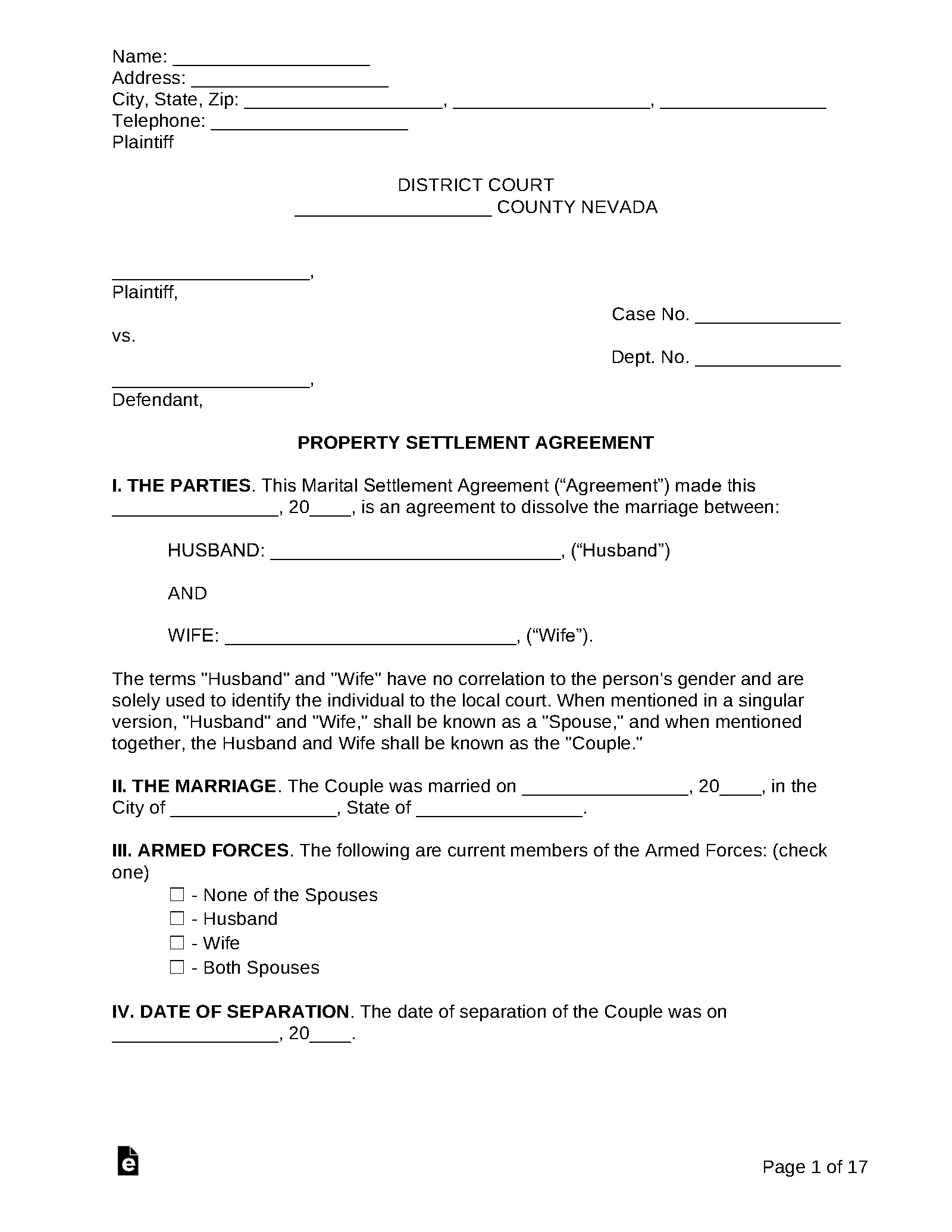
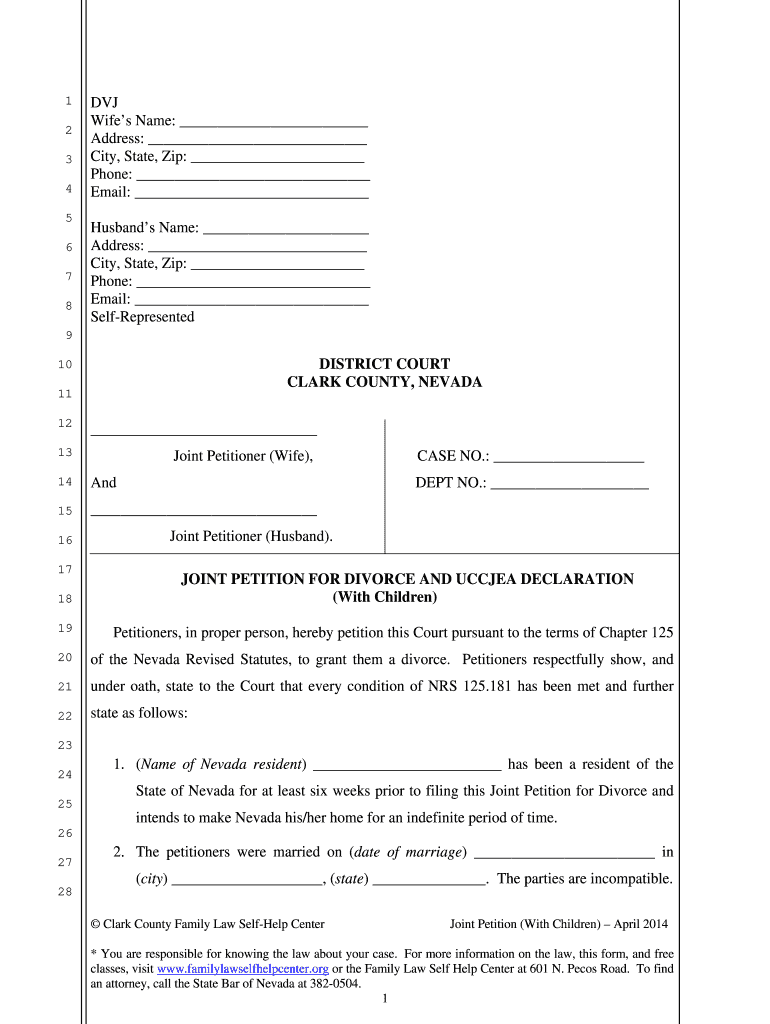
The initial step in filing for divorce in Nevada involves preparing the Complaint for Divorce. This document formally requests the court to grant a divorce and outlines the terms being sought by the filing party (the plaintiff). It will include information such as the names of both spouses, the date and place of marriage, the grounds for divorce (typically irreconcilable differences), and requests regarding child custody, support, spousal support, and property division.
In cases involving children under 18, additional documents will be required, such as a Proposed Parenting Plan, which details custody arrangements, visitation schedules, and child support calculations. If there are no minor children, this section may be simplified.
If you are seeking a divorce by agreement (uncontested), you will also prepare a Stipulated Divorce Decree or Marital Settlement Agreement. This document, signed by both parties, outlines their mutual agreement on all divorce-related issues.
Step 2: Filing the Complaint and Serving the Other Party
Once the Complaint for Divorce is prepared, it must be filed with the appropriate Nevada district court. You will need to pay a filing fee at the courthouse. The court will then assign a case number to your divorce.
After filing, the Summons and a copy of the Complaint for Divorce must be formally served on your spouse (the defendant). Service ensures that your spouse is officially notified of the divorce proceedings and has an opportunity to respond. This is typically done by a sheriff’s deputy, a professional process server, or another adult who is not a party to the case. Proper service is crucial for the legal validity of the divorce.
Step 3: The Defendant’s Response
Following service of process, the defendant has a limited timeframe to file a Response to the Complaint for Divorce. In Nevada, this is typically 20 days after being served. If the defendant files a Response, it indicates that they intend to participate in the divorce proceedings and may dispute some or all of the claims made in the Complaint. This marks the beginning of a contested divorce if agreements cannot be reached.
If the defendant does not file a Response within the specified period, and proof of service has been filed with the court, the plaintiff can proceed with a divorce by default.
Step 4: Reaching an Agreement or Proceeding to Court
Uncontested Divorce Path
If both parties are able to reach a full agreement on all issues, they can submit their signed Marital Settlement Agreement or Stipulated Divorce Decree to the court. This agreement will be reviewed by the judge, and if it is deemed fair and equitable, it will be incorporated into the final Divorce Decree. This is the quickest and most cost-effective way to finalize a divorce in Nevada.
Contested Divorce Path
If the parties cannot reach an agreement, the divorce proceedings will become contested. This may involve several stages:
- Discovery: Both parties exchange information and documents related to their finances, assets, debts, and any other relevant matters.
- Mediation: A neutral third party, the mediator, helps the couple try to resolve their disputes outside of court. Many Nevada courts require mediation before a trial.
- Hearings and Pre-Trials: The court may hold various hearings to address specific issues or to manage the case leading up to a trial.
- Trial: If no agreement is reached, the case will proceed to trial, where a judge will hear evidence from both sides and make final decisions on all disputed matters.
Step 5: Finalizing the Divorce Decree
Once all issues are resolved, either by agreement or by court order, a Final Divorce Decree will be signed by the judge. This document legally dissolves the marriage and outlines all the terms of the divorce, including child custody, support, property division, and any spousal support obligations. The divorce is not final until the judge signs this decree and it is entered into the court’s records.
Considerations Beyond the Legal Filing
While the legal steps for filing for divorce in Nevada are crucial, it is equally important to consider the broader implications and practical aspects of this transition. Divorce is not just a legal process; it is a profound life change that affects finances, living arrangements, and emotional well-being.
Financial Planning and Property Division
Nevada is a community property state. This means that most assets and debts acquired by either spouse during the marriage are considered jointly owned and will be divided equally between the parties in the event of a divorce. This includes income, real estate, bank accounts, investments, and retirement funds. Understanding your financial picture and how assets and debts will be divided is a critical part of the divorce process. It is often advisable to consult with a financial advisor or a divorce attorney specializing in asset division to ensure a fair and equitable outcome. For those accustomed to the luxurious lifestyle often associated with destinations like Las Vegas, the financial realities post-divorce require careful planning, whether it involves managing accommodations in upscale resorts or considering more budget-friendly lifestyle choices.
Child Custody and Support
For divorces involving minor children, child custody and support are paramount considerations. Nevada courts prioritize the best interests of the child when making custody decisions. This can involve legal custody (the right to make decisions about a child’s upbringing) and physical custody (where the child lives). Child support is calculated based on state guidelines, which take into account the income of both parents and the custody arrangement. Open communication and a focus on the child’s well-being are essential during these discussions, whether you are negotiating a parenting plan for a family trip to the Grand Canyon or planning for daily life.
Seeking Legal Counsel
While Nevada allows individuals to represent themselves in divorce proceedings (pro se), it is highly recommended to seek legal counsel from a qualified divorce attorney, especially in contested cases or if complex financial or custody issues are involved. An experienced attorney can guide you through the legal intricacies, protect your rights, and help you navigate the often-emotional landscape of divorce. They can also advise on matters related to your lifestyle, such as ensuring you can maintain certain accommodations or travel plans, even after the divorce.
The journey through divorce, like planning a complex travel itinerary from booking a suite in a luxury hotel to understanding local attractions, requires careful preparation and execution. By understanding the legal framework and the practical considerations, individuals in Nevada can approach this significant life transition with greater confidence and clarity.
LifeOutOfTheBox is a participant in the Amazon Services LLC Associates Program, an affiliate advertising program designed to provide a means for sites to earn advertising fees by advertising and linking to Amazon.com. Amazon, the Amazon logo, AmazonSupply, and the AmazonSupply logo are trademarks of Amazon.com, Inc. or its affiliates. As an Amazon Associate we earn affiliate commissions from qualifying purchases.