
The question of which metropolis reigns supreme in terms of sheer size is one that ignites passionate debate among urban explorers and armchair geographers alike. When we pose the question, “Is New York City bigger than London?”, the answer, as with many things concerning these titans of urban life, is not as straightforward as a simple yes or no. It depends entirely on how we define “bigger.” Are we talking about population density? Geographic footprint? Economic influence? Or perhaps the sheer density of iconic landmarks and the experiences they offer?
For many travelers, the concept of “bigger” is intrinsically linked to the sensory overload, the endless possibilities, and the unforgettable experiences a city provides. Both New York City and London offer an unparalleled abundance of these, each with its unique character and charm. Let’s delve into the multifaceted ways these two global powerhouses can be compared, moving beyond simple statistics to explore what truly makes a city feel immense and impactful.
Defining “Bigger”: Beyond Square Miles and Population Counts
When people ask if New York City is bigger than London, they often have a mental image of sprawling urban landscapes and towering skyscrapers. While these visual cues are important, a comprehensive comparison requires a more nuanced approach.
Geographic Size: The Urban Sprawl
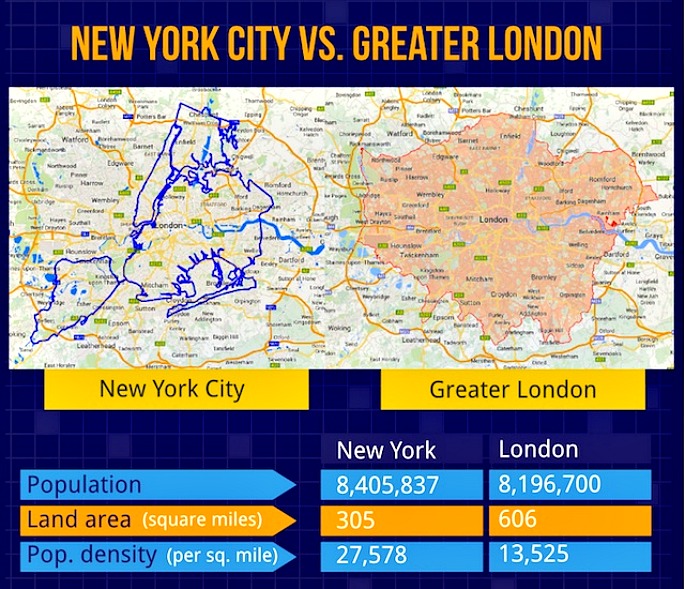
One of the most common metrics for comparing city size is land area. Geographically, the administrative boundaries of a city can be misleading. For instance, the City of London, the historic core, is remarkably small compared to the vast expanse of Greater London. Similarly, the five boroughs of New York City – Manhattan, Brooklyn, Queens, the Bronx, and Staten Island – together create a significant landmass.
When considering the contiguous urban area, the definition of “metropolitan area” becomes crucial. The New York metropolitan area is one of the most populous in the world, encompassing parts of New Jersey and Connecticut in addition to New York City itself. Similarly, the Greater London area, a region that includes 32 boroughs and the City of London, is significantly larger in terms of land area than just the core.
In terms of sheer geographic spread, when you factor in the broader metropolitan regions, New York City generally edges out London. The urban sprawl of the New York metropolitan area extends further, reflecting its extensive suburban development and interconnectedness with surrounding areas. However, London, with its more defined green belt and distinct commuter towns, presents a different kind of urban fabric.
Population: The Human Scale of “Bigger”
Population is another key indicator of a city’s scale. Both New York City and London are global population centers. Within their official administrative boundaries, New York City typically reports a higher population than London. However, the story changes when we look at their respective metropolitan areas.
The New York metropolitan area is home to a significantly larger population than the Greater London area. This sheer density of people contributes to the feeling of immensity and constant activity that defines New York City. Imagine navigating the crowded streets of Times Square or the bustling subway system during rush hour – the human element is palpable.
However, population density within the core urban areas can also be a factor. While New York City has more people overall in its broader region, certain parts of London, particularly its central districts, can feel incredibly dense and vibrant, packed with a constant flow of residents and tourists.
Experiencing “Bigger”: Landmarks, Culture, and Lifestyle
Beyond the quantifiable metrics of land and population, the feeling of a city’s “bigness” is often shaped by the depth and breadth of its offerings – its landmarks, its cultural tapestry, and its distinct lifestyle. This is where both New York City and London truly excel, each presenting an overwhelming array of experiences that can make them feel boundless.
A Pantheon of Iconic Landmarks
Both cities are home to some of the most recognizable landmarks in the world, drawing millions of visitors each year.
In New York City:
- Statue of Liberty: A potent symbol of freedom and America, offering breathtaking views of the skyline from its harbor.
- Empire State Building: An art deco masterpiece that has long defined the New York skyline, providing panoramic vistas.
- Times Square: The dazzling “Crossroads of the World,” famous for its bright lights, Broadway theaters, and bustling atmosphere.
- Central Park: An expansive urban oasis, offering a green respite from the concrete jungle, with its own network of paths, lakes, and performance spaces.
- Brooklyn Bridge: A historic engineering marvel offering iconic views of lower Manhattan.
- Metropolitan Museum of Art: One of the world’s largest and finest art museums, housing a collection spanning over 5,000 years of art history.
In London:
- Buckingham Palace: The official residence of the monarch, a symbol of the United Kingdom and its royal heritage.
- Houses of Parliament and Big Ben: Iconic symbols of British democracy and history, situated along the River Thames.
- Tower of London: A historic castle that has served as a royal palace, prison, and treasury, housing the Crown Jewels.
- London Eye: A giant Ferris wheel offering spectacular views across the city.
- Westminster Abbey: A magnificent Gothic church, the traditional place of coronation and burial for English and British monarchs.
- British Museum: Home to a vast collection of world art and artifacts, including the Rosetta Stone and Egyptian mummies.
The sheer number and historical significance of these landmarks contribute to the feeling of grandeur and immensity in both cities. While New York City might have a higher concentration of modern skyscrapers that stretch towards the heavens, London offers a rich tapestry of historical architecture, whispering tales of centuries past.

A Melting Pot of Culture and Cuisine
The “bigness” of a city is also felt in its cultural diversity and culinary offerings. Both New York City and London are true global melting pots, attracting people from every corner of the earth, and this is reflected in their vibrant cultural scenes and their unparalleled food landscapes.
New York City:
The city that never sleeps is a hub for arts, theater, music, and fashion. Broadway shows, world-class museums like the Metropolitan Museum of Art and the Museum of Modern Art (MoMA), and countless galleries offer endless cultural exploration. Its culinary scene is a testament to its diversity, with every imaginable cuisine represented, from Michelin-starred restaurants to humble street food vendors selling hot dogs and pretzels. Exploring neighborhoods like Chinatown or Little Italy offers immersive cultural and culinary experiences.
London:
London boasts a rich theatrical tradition in the West End, a plethora of world-renowned museums such as the British Museum and the Victoria and Albert Museum, and a thriving live music scene. Its multicultural identity is vividly expressed through its diverse population and, consequently, its incredible food scene. From traditional pubs serving fish and chips to vibrant curry houses in Brick Lane and bustling street food markets like Borough Market, London offers a gastronomic journey that mirrors its global character. Exploring areas like Notting Hill or Shoreditch reveals distinct cultural and culinary flavors.
The sheer variety of experiences available in both cities, from high art to street performances, from haute cuisine to comfort food, makes them feel immeasurably large and endlessly fascinating.
Lifestyle: From Luxury to Budget Adventures
The “bigness” of a city can also be perceived through the lens of lifestyle and the diverse ways one can experience it, catering to every budget and preference.
Luxury Travel:
For those seeking indulgence, both New York City and London offer unparalleled luxury. In New York, think of stays at the iconic Plaza Hotel or the sophisticated Carlyle, A Rosewood Hotel, coupled with fine dining at establishments like Per Se or Le Bernardin, and high-end shopping on Fifth Avenue.
London presents its own brand of luxury, with establishments like The Ritz London or Claridge’s offering timeless elegance. High tea at The Ritz, designer shopping on Bond Street, and world-class theatre performances are hallmarks of a luxurious London experience.
Budget Travel:
Yet, the immensity of these cities is also accessible to budget-conscious travelers. New York City offers free attractions like walking across the Brooklyn Bridge, exploring Central Park, and visiting numerous free museums or enjoying street art in neighborhoods like Bushwick. Affordable eats can be found in abundance from food trucks and delis. Accommodation options range from hostels to budget-friendly hotels outside the core Manhattan area.
Similarly, London provides numerous free museums, including the British Museum and the National Gallery. Walking tours of historical areas, exploring vibrant street markets, and enjoying affordable pub grub are budget-friendly ways to experience the city. Budget accommodation can be found in areas further from the center, connected by the extensive London Underground.
Family Trips and Business Stays:
Both cities are exceptionally well-equipped for family trips, offering everything from theme parks and interactive museums to child-friendly attractions. For business travelers, their status as global financial and business hubs ensures excellent connectivity, world-class convention centers, and a wide array of hotels catering to professional needs, from boutique business hotels to large convention resorts.
Conclusion: A Matter of Perspective
So, is New York City bigger than London? In terms of raw geographic area and metropolitan population, New York City can be considered larger. However, the true measure of a city’s “bigness” is subjective and deeply personal.
New York City often feels bigger due to its sheer density, relentless energy, and the sheer scale of its modern infrastructure and the population within its broader metropolitan area. It’s a city that pulsates with an undeniable force, a concrete jungle where dreams are forged.
London, on the other hand, feels immense through its historical depth, its sprawling royal parks, its diverse cultural layers, and its enduring global influence. It’s a city steeped in tradition yet constantly evolving, offering a sense of timeless grandeur.
Ultimately, whether you perceive New York City as bigger than London will depend on what you value most in your urban explorations. Both are giants in their own right, offering an infinite landscape of experiences that can leave any traveler feeling awestruck and humbled by their scale and grandeur. They are not just cities; they are worlds unto themselves, waiting to be discovered.
LifeOutOfTheBox is a participant in the Amazon Services LLC Associates Program, an affiliate advertising program designed to provide a means for sites to earn advertising fees by advertising and linking to Amazon.com. Amazon, the Amazon logo, AmazonSupply, and the AmazonSupply logo are trademarks of Amazon.com, Inc. or its affiliates. As an Amazon Associate we earn affiliate commissions from qualifying purchases.