
Embarking on the journey of obtaining a driver’s permit is a significant milestone, especially for young individuals eager for independence and the freedom to explore. For aspiring drivers in the Empire State, understanding the specific age requirements and the process involved is the first crucial step. This guide delves into everything you need to know about when you can get your driver’s permit in New York, covering the nuances of the New York State Department of Motor Vehicles (DMV) regulations, the different types of permits available, and essential preparation for passing your tests. Whether you’re dreaming of road trips to the Adirondacks or simply navigating your local neighborhood in Buffalo, this information will set you on the right path.
Understanding the Junior Driver’s License Program in New York
New York State has a well-defined graduated driver licensing (GDL) program designed to introduce new drivers to the responsibilities of driving in stages. This program acknowledges that driving is a complex skill that requires practice and experience under varying conditions. The core of this program revolves around the learner’s permit, which allows supervised driving practice.
The Minimum Age to Apply for a Permit
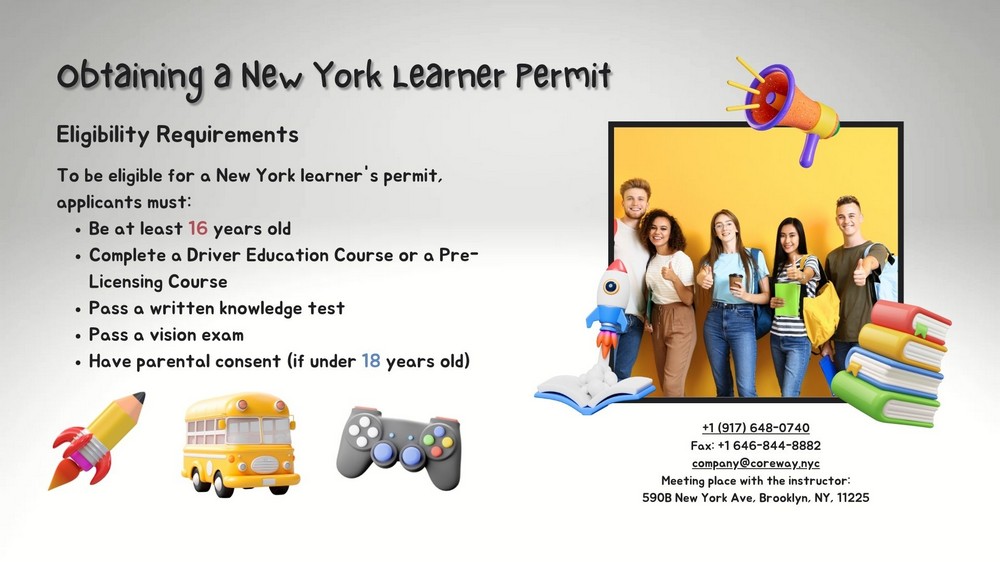
The fundamental question for many young people and their parents is: “What age can you get your permit in New York?” The New York State Department of Motor Vehicles (DMV) clearly stipulates that you must be at least 16 years old to be eligible to apply for a learner’s permit. This age is a national standard in many places, recognizing that individuals at this stage are typically developing the cognitive and decision-making skills necessary for safe driving, with appropriate supervision.
It’s important to note that reaching 16 is just the starting point. There are several steps and requirements that must be met before you can legally sit behind the wheel, even with a permit.
Types of Permits and Their Requirements
New York offers different types of permits tailored to the applicant’s age and intended driving practices. The most common for young drivers is the Class DJ learner’s permit, which is specifically for individuals under 18 years old.
The Class DJ Learner’s Permit
To obtain a Class DJ learner’s permit, an applicant must:
- Be at least 16 years old: As mentioned, this is the absolute minimum age.
- Provide Proof of Identity and Age: You’ll need to present original documentation, such as a birth certificate or passport, to prove your identity and that you meet the age requirement. The DMV has a specific list of acceptable documents on its website.
- Pass a Vision Test: This is a standard requirement to ensure you have adequate eyesight to operate a vehicle safely.
- Pass a Written Knowledge Test: This computer-based test assesses your understanding of New York State traffic laws, road signs, and safe driving practices. Studying the official New York State Driver’s Manual is essential for success.
- Obtain Parental or Guardian Consent: For applicants under 18, a parent or legal guardian must sign the application form, giving their consent for you to apply for a permit. This underscores the importance of parental involvement in the driver education process.
- Pay the Required Fees: There are fees associated with the permit application and testing process.
Once you have successfully completed these steps, you will be issued your Class DJ learner’s permit. This permit is your ticket to supervised driving practice, a critical component of learning to drive safely and confidently.
The Importance of the Driver’s Manual and Preparation
The New York State Driver’s Manual is the definitive resource for anyone preparing for the written knowledge test. It covers a comprehensive range of topics, including:
- Traffic Laws and Regulations: Understanding speed limits, right-of-way rules, parking regulations, and other legal aspects of driving.
- Road Signs and Signals: Familiarizing yourself with the meaning of various signs, signals, and pavement markings.
- Safe Driving Techniques: Learning about defensive driving, hazard perception, and maintaining a safe following distance.
- Alcohol and Drug Awareness: The manual emphasizes the dangers of impaired driving and its legal consequences.
- Sharing the Road: Understanding how to interact safely with pedestrians, cyclists, motorcyclists, and other vehicles.
Studying this manual thoroughly, perhaps even multiple times, is highly recommended. Many candidates also benefit from taking practice tests, which are often available online or through driving schools. This not only helps reinforce knowledge but also familiarizes you with the test format, reducing anxiety on the actual test day.
Navigating the Journey: Permit Restrictions and Supervised Driving
Obtaining a learner’s permit is not the end of the process; it’s the beginning of a learning period. The Class DJ learner’s permit comes with specific restrictions designed to ensure supervised practice and gradual progression toward full driving privileges.
Restrictions on Permit Holders
For Class DJ permit holders, the primary restriction is that they cannot drive unless accompanied by a qualified supervising driver. This supervising driver must meet certain criteria:
- Age: They must be at least 21 years old.
- License: They must possess a valid New York State driver’s license.
- Seating: They must be seated in the front passenger seat, adjacent to the permit holder.
This supervised driving period is crucial. It allows the new driver to gain practical experience in a controlled environment, with guidance from an experienced driver. The supervising driver can offer advice, point out potential hazards, and reinforce safe driving habits.
Minimum Practice Time and Driver Education
New York State mandates a minimum amount of supervised driving practice before a permit holder can advance to the next stage of the GDL program. While the exact number of hours can be subject to updates, the general principle is to encourage substantial real-world driving experience.
Furthermore, enrollment in a certified driver education program is highly beneficial and often required for those under 18. These programs typically include both classroom instruction and behind-the-wheel training with certified instructors. This structured learning environment provides a strong foundation in driving skills and knowledge, complementing the supervised practice with family or friends. Successfully completing a driver education course can also sometimes lead to a discount on car insurance, making it a financially prudent choice.
Documenting Your Practice
It is good practice to keep a log of your supervised driving sessions. This log can help you track your progress, identify areas where you need more practice, and is often a requirement for verifying your supervised driving hours when applying for a restricted or intermediate license. Recording the date, time, duration, and type of driving (e.g., highway, city, night driving) can be invaluable.
Moving Towards Full Driving Privileges: The Intermediate License
The journey doesn’t end with the learner’s permit. New York State’s GDL program is designed to ensure that young drivers gain sufficient experience before they are granted unrestricted driving privileges. The next step for permit holders under 18 is typically the Class DJ junior driver’s license.
Eligibility for the Junior Driver’s License
To become eligible for a junior driver’s license, an applicant must:
- Be at least 16 years old.
- Hold their learner’s permit for at least six months: This waiting period is designed to ensure adequate supervised driving practice.
- Complete a MV-285 form: This form, often referred to as the “Driver Education Certificate,” needs to be completed by your driving instructor if you have completed a driver education course. This verifies your successful completion of the course.
- Complete 50 hours of supervised driving: At least 10 of these hours must be at night, and at least 10 must be in inclement weather. This broadens the experience beyond just fair-weather, daytime driving.
- Pass the Road Test: This practical driving test evaluates your ability to operate a vehicle safely and competently in various driving situations.

Restrictions on the Junior Driver’s License
The junior driver’s license, while allowing more independence than a permit, still comes with restrictions. These are designed to limit potential distractions and exposure to high-risk driving situations:
- Passenger Limits: Typically, junior drivers are restricted in the number and age of passengers they can transport, especially during nighttime hours. Specific regulations can vary, so checking the latest DMV guidelines is essential.
- Curfew: There is usually a curfew in place, meaning junior drivers cannot drive during certain late-night hours unless accompanied by a parent or guardian, or for specific work or volunteer-related reasons.
- Electronic Device Use: Strict rules usually apply regarding the use of mobile phones and other electronic devices while driving.
These restrictions gradually ease as the young driver gains more experience and reaches certain age milestones, eventually leading to an unrestricted, full driver’s license. The entire GDL process is a testament to New York State’s commitment to fostering safe and responsible drivers, ensuring that the freedom of the open road is earned through diligence and practice, much like planning a memorable trip to the Thousand Islands or a family vacation to Niagara Falls.
In conclusion, the age to get your permit in New York is 16, but the journey to full driving independence involves multiple stages of learning, practice, and adherence to specific regulations. By understanding and diligently following the guidelines set forth by the New York State DMV, aspiring young drivers can confidently navigate the path toward becoming safe and licensed operators of motor vehicles. This process not only prepares them for the road but also instills a sense of responsibility that extends to all aspects of life, whether it’s planning a local excursion or enjoying the diverse attractions New York has to offer.
LifeOutOfTheBox is a participant in the Amazon Services LLC Associates Program, an affiliate advertising program designed to provide a means for sites to earn advertising fees by advertising and linking to Amazon.com. Amazon, the Amazon logo, AmazonSupply, and the AmazonSupply logo are trademarks of Amazon.com, Inc. or its affiliates. As an Amazon Associate we earn affiliate commissions from qualifying purchases.