
As the crisp air begins to bite and the days shorten, a familiar question emerges for residents and eager travelers alike: will it snow in New York this year? The allure of a New York winter, adorned with a blanket of white, is a powerful draw, promising iconic scenes straight out of a holiday movie. From the twinkling lights of Times Square dusted with snowflakes to the serene beauty of a frozen Central Park, the possibility of snow transforms the city into a magical wonderland. But predicting snowfall, especially in a region as dynamic as the Northeastern United States, is a complex endeavor, involving a delicate dance of atmospheric conditions.

The excitement surrounding potential snowfall isn’t just about aesthetics; it injects a unique energy into the city, influencing everything from holiday planning to the types of activities available. For those considering a winter escape to New York, the prospect of snow can be a deciding factor, adding an extra layer of enchantment to an already vibrant destination. This article delves into the factors that influence snowfall in New York, what to expect from a winter visit, and how to make the most of the season, snow or no snow.
Understanding New York’s Winter Climate
New York City, situated in a temperate climate zone, experiences four distinct seasons, with winter being a period of significant temperature drops and the potential for precipitation in the form of rain, sleet, and snow. The city’s geography, nestled along the Atlantic coast and influenced by continental weather patterns, creates a diverse range of winter conditions.
Factors Influencing Snowfall
Several meteorological factors converge to determine whether New York will witness a white winter. The primary driver is the presence of cold air masses, typically originating from the north or northwest, that are sufficiently below freezing for snow to form and reach the ground.
-
Temperature: This is the most critical element. For snow to fall, the air temperature from the cloud where it forms all the way down to the ground must be at or below 0°C (32°F). Even a slight dip above this threshold can result in rain or sleet. New York‘s winter temperatures can fluctuate significantly, with periods of deep freeze interspersed with milder spells. The average January temperature in New York City hovers around 0.5°C (33°F), but daily highs and lows can vary considerably.
-
Moisture: Cold air can only hold so much moisture. A weather system, such as a low-pressure system, needs to move through the region, drawing in moist air from the Atlantic Ocean or the Gulf of Mexico. This moisture, when lifted and cooled within the cold air mass, condenses to form clouds and eventually precipitation. The intensity and trajectory of these storms are key. A slow-moving storm with ample moisture has a higher chance of delivering significant snowfall.
-
Storm Tracks: The path a storm takes is crucial. For New York to receive snow, the storm often needs to track in a specific way. A common scenario for significant snow events involves a storm developing off the coast or moving northeastward along the Atlantic seaboard. This allows the storm to tap into moisture from the ocean while dragging cold air from the north. Storms that track too far inland might bring rain or sleet, while those that hug the coast too tightly might miss the city altogether, dumping snow further out at sea. The concept of a “Nor’easter,” a powerful winter storm that moves up the East Coast, is particularly relevant to New York‘s snowfall.
-
Upper-Level Winds: High-altitude winds play a role in steering weather systems. These winds can dictate the speed and direction of storms, influencing how long they linger over New York and how much precipitation they can deliver.
Historical Snowfall Patterns
Looking at historical data can provide some insight, although it’s important to remember that past performance is not indicative of future results. New York City typically sees an average of around 25-30 inches of snow per winter season. However, this average can be misleading, as snowfall can be highly variable from year to year. Some winters are characterized by frequent, moderate snowfalls, while others might experience one or two major blizzards.
For example, the winter of 2015-2016 saw a record-breaking 27.5 inches of snow in a single storm, contributing significantly to the season’s total. In contrast, some winters might have very little snowfall, with warm spells melting away any accumulation. The timing of snowfall is also a factor; early snows in November or late snows in March are less common than December, January, and February events.
The city’s commitment to preparedness, with agencies like the New York City Department of Sanitation ready with snowplows and salt, means that even significant snowfalls are often managed efficiently, minimizing disruption to travel and daily life.
Planning Your Winter Visit to New York
Even without the guarantee of snow, a winter trip to New York offers a wealth of experiences, from festive holiday decorations to cozy indoor activities. However, if a snowy backdrop is a priority for your visit, understanding the typical snow season and potential for accumulation is key to setting expectations.
When to Visit for the Best Snow Chances
The prime months for snowfall in New York City are generally from December through February. January is statistically the snowiest month, often experiencing the coldest temperatures and the highest likelihood of significant snow events.
-
December: While snow is possible, early December can still be quite mild. However, as the month progresses, temperatures tend to drop, and the first snowfalls often grace the city, adding to the magical holiday atmosphere. Think of ice skating at Rockefeller Center with a dusting of snow or enjoying Christmas markets under a potentially snowy sky.
-
January: This is often the heart of winter in New York. Cold air masses are more persistent, and the storm tracks that favor snowfall are more frequent. January can bring both light dustings and significant snowstorms, creating opportunities for quintessential New York winter scenes. This is an ideal time for those actively seeking a snow-filled experience.
-
February: Similar to January, February remains a strong contender for snowy weather. While the days start to lengthen, the cold air can still dominate, and significant snowfalls are not uncommon. Late February can sometimes bring a transition towards spring, but winter storms are still a distinct possibility.
- March: Snow in March is less common but certainly not unheard of. Some of the city’s most memorable snowfalls have occurred in March, often bringing a surprise burst of winter after a milder February. However, it’s generally considered a shoulder month for snow enthusiasts.
When booking your accommodation, consider areas that offer easy access to both indoor attractions and potential winter landscapes. Hotels in Midtown Manhattan provide proximity to iconic landmarks like Times Square and Central Park, while options in neighborhoods like the Upper West Side or Greenwich Village offer a more local feel and charming streets that look particularly picturesque when dusted with snow. Luxury hotels like the St. Regis New York or more budget-friendly options in Brooklyn can all provide a comfortable base for exploring the city in its winter attire.
Embracing the Winter Wonderland
Whether or not snow blankets the city, New York in winter is a captivating destination. If snow does arrive, the city transforms into an even more enchanting place.
-
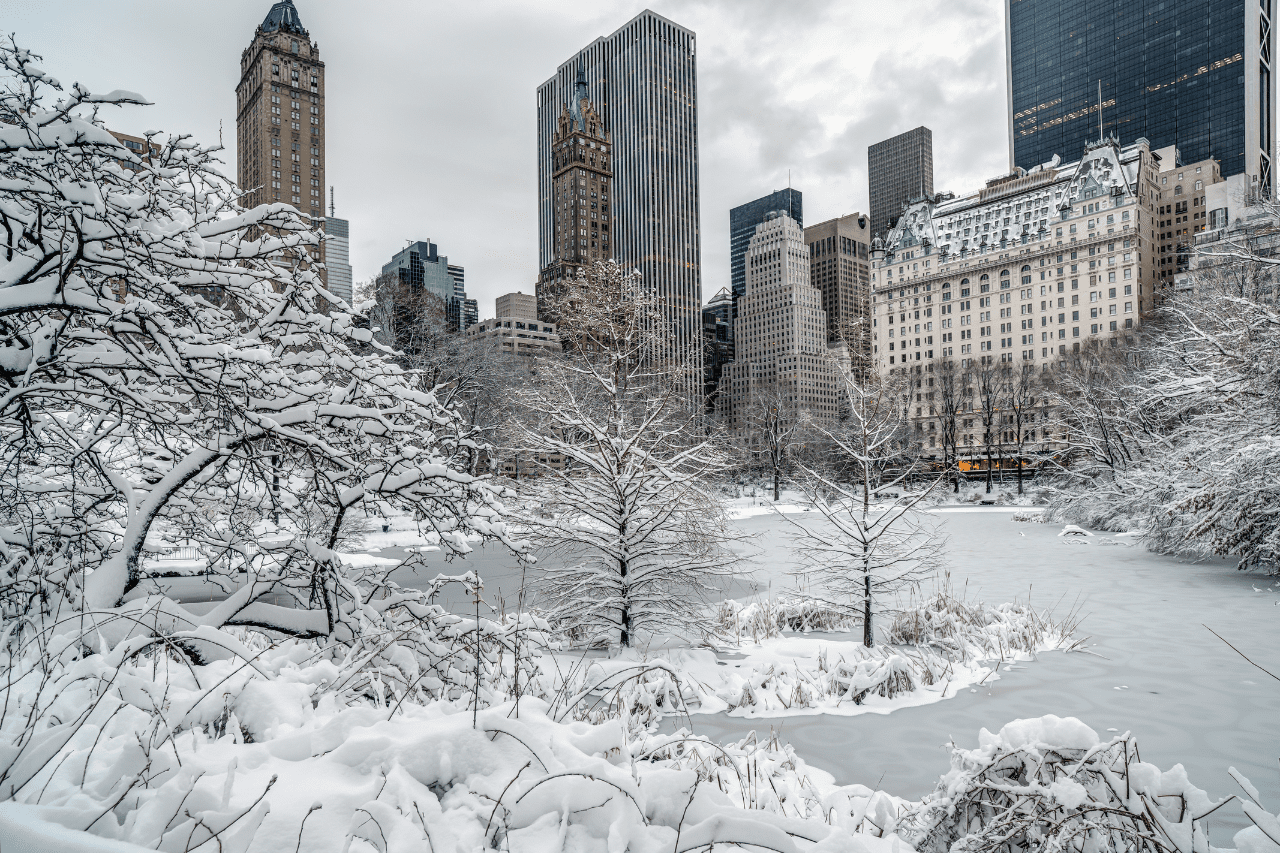
Iconic Snow Scenes: Imagine seeing the skyscrapers of Manhattan peeking through a gentle snowfall, or strolling through Central Park with snow-covered trees and frozen ponds. The frozen expanse of the reservoir, the quiet paths, and the general hush that snow brings can offer a unique perspective on this bustling metropolis. This is the perfect time for photography enthusiasts to capture breathtaking images.
-
Winter Activities: Snowfall opens up a range of activities. Central Park offers opportunities for sledding if the accumulation is significant. Ice skating rinks like the one at Bryant Park or Wollman Rink in Central Park become even more magical under a snowy sky. The Metropolitan Museum of Art or the American Museum of Natural History offer warm, engaging indoor experiences that are perfect for escaping the chill, with snow outside adding to the ambiance.
-
Cozying Up: Winter is the season for hearty food and warm beverages. Discovering cozy cafes for hot chocolate or enjoying a comforting meal in a traditional New York restaurant becomes a delightful pursuit. Restaurants offering scenic views, such as those overlooking the Brooklyn Bridge, can be particularly atmospheric on a snowy evening.
-
Holiday Spirit: If your visit coincides with the holiday season, the city is renowned for its festive decorations. The Rockefeller Center Christmas Tree, ice skating at Rockefeller Center, and the elaborate window displays along Fifth Avenue are sights to behold, often enhanced by a sprinkle of snow.
Making the Most of Your New York Winter Trip
A successful winter trip to New York hinges on flexibility and a willingness to embrace whatever the season brings. Whether it’s a picturesque snowfall or a clear, crisp winter day, there are countless ways to experience the city’s unique charm.
Navigating Winter Weather
When planning your itinerary, it’s wise to build in some flexibility to accommodate potential weather disruptions.
-
Transportation: New York‘s public transportation system, including the subway, is generally resilient to snow. The subway remains the most reliable way to get around the city during snowfall. Buses can be affected by road conditions, and taxis or ride-sharing services might experience delays and surge pricing. Walking, when conditions permit, can be a delightful way to experience the snowy streets.
-
Attire: Layering is key. Pack warm clothing, including a waterproof coat, hats, gloves, scarves, and waterproof, insulated footwear. Comfortable, sturdy shoes are essential for walking on potentially icy or snowy sidewalks.
-
Checking Forecasts: Stay updated on weather forecasts through reliable sources like the National Weather Service or local New York news channels. This will help you adjust your plans accordingly and make informed decisions about outdoor activities.

Beyond the Snow: Year-Round Attractions
Even if snow doesn’t materialize, New York offers an abundance of attractions and experiences that make a winter visit worthwhile.
-
Museums and Galleries: New York is home to world-class cultural institutions. The Metropolitan Museum of Art, Museum of Modern Art (MoMA), the Guggenheim Museum, and the Whitney Museum of American Art offer endless hours of exploration. The American Museum of Natural History is another family favorite, offering fascinating exhibits on natural history.
-
Broadway Shows: Catching a Broadway show is a quintessential New York experience, and a great way to spend an evening. From long-running classics to the latest hits, there’s something for everyone.
-
Culinary Delights: New York is a global food destination. Explore diverse neighborhoods for authentic cuisine, from Chinatown to Little Italy, or indulge in fine dining experiences in restaurants like Per Se or Le Bernardin. Food halls like Chelsea Market offer a variety of options under one roof.
-
Shopping: Whether you’re looking for luxury goods on Fifth Avenue, unique boutiques in SoHo, or discount finds in Chinatown, New York offers a shopping experience for every taste and budget.
-
Landmarks: Iconic landmarks like the Statue of Liberty and Ellis Island, the Empire State Building, Top of the Rock Observation Deck, and the One World Observatory offer breathtaking views of the city, regardless of the weather. A visit to the 9/11 Memorial & Museum is a poignant and important experience.
Ultimately, the question of whether it will snow in New York this year adds a layer of anticipation to the winter season. While snow can undoubtedly enhance the magic of a visit, the city’s enduring appeal lies in its vibrant culture, endless attractions, and the unique energy that permeates its streets year-round. So, whether you’re hoping for a winter wonderland or simply seeking an unforgettable urban adventure, New York in winter promises an experience like no other.
LifeOutOfTheBox is a participant in the Amazon Services LLC Associates Program, an affiliate advertising program designed to provide a means for sites to earn advertising fees by advertising and linking to Amazon.com. Amazon, the Amazon logo, AmazonSupply, and the AmazonSupply logo are trademarks of Amazon.com, Inc. or its affiliates. As an Amazon Associate we earn affiliate commissions from qualifying purchases.