
While the allure of Oregon’s stunning natural beauty, vibrant cities, and unique lifestyle often captures the imagination of those seeking a change of scenery, a crucial aspect for anyone considering a move or career shift is understanding the financial realities. This is particularly true for those in the education sector, where the passion for shaping young minds is often balanced with the need for a stable and rewarding income. This article delves into the compensation of teachers in Oregon, exploring the factors that influence their salaries and providing insights into what aspiring and current educators can expect.
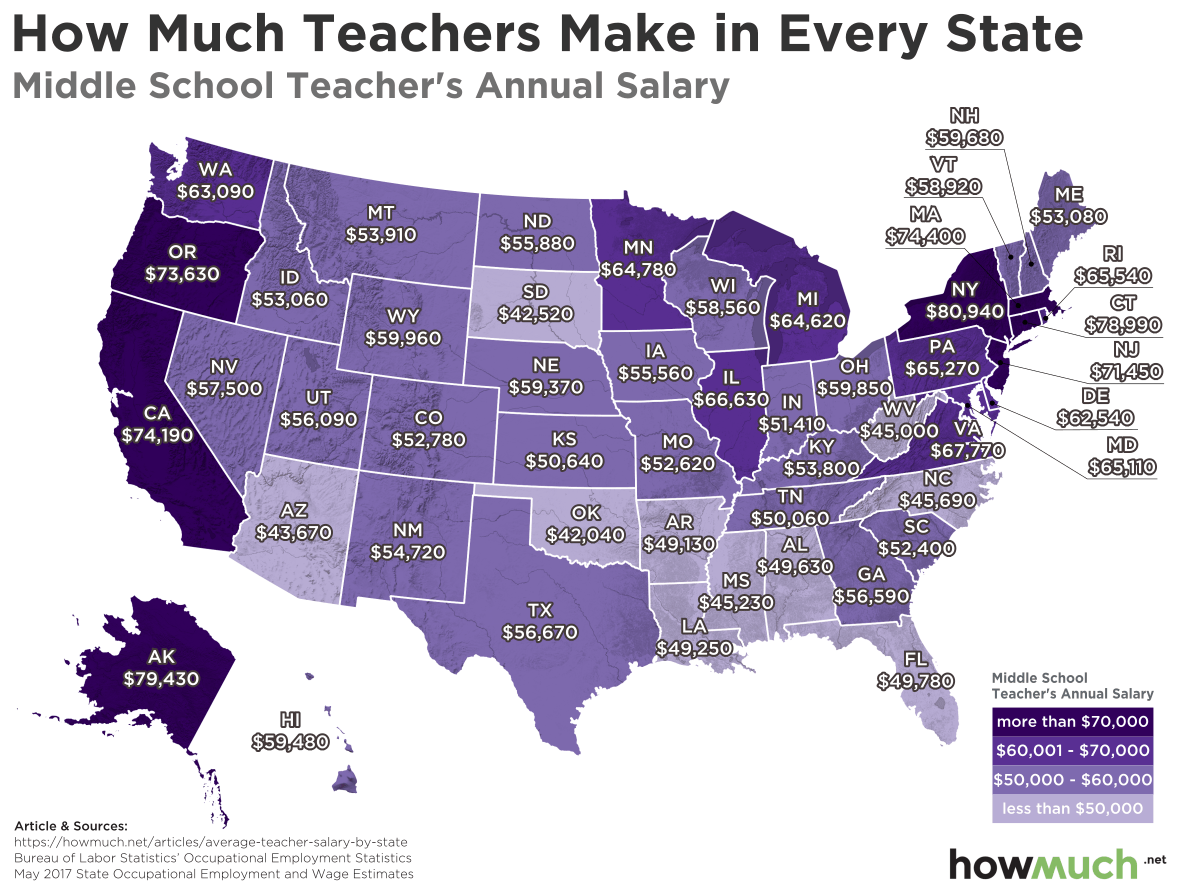
The question of “How much do teachers make in Oregon?” is multifaceted. It’s not a simple number, but rather a range influenced by a complex interplay of experience, education level, school district, and even the specific subject being taught. Oregon‘s commitment to education, coupled with its diverse economic landscape, creates a dynamic environment for teacher salaries. Understanding these nuances is vital for anyone planning their career in the Beaver State.
Understanding Teacher Salary Determinants in Oregon
The compensation for teachers in Oregon is not uniform across the state. Several key factors contribute to the variations observed in teacher salaries, from the bustling urban centers of Portland to the more rural communities scattered throughout the state. Aspiring educators and those considering a relocation to Oregon should familiarize themselves with these elements to gain a comprehensive understanding of potential earnings.
Experience and Years of Service
One of the most significant drivers of teacher salary in Oregon is experience. Like many professions, the longer a teacher has been in the field, the higher their earning potential typically becomes. This is often reflected in a step-based salary schedule, where educators advance to higher pay grades with each additional year of service. For instance, a first-year teacher in a particular district might start at a baseline salary, while a teacher with 10 or 15 years of experience would command a considerably higher income within the same district.
This incremental increase acknowledges the accumulated knowledge, classroom management skills, and pedagogical expertise that seasoned educators bring. It also serves as an incentive for teachers to remain in the profession and within their respective districts, fostering stability in the teaching workforce. Districts often have clearly defined salary schedules that outline these step increases, allowing teachers to project their earning potential over the course of their careers.
Educational Attainment
Beyond experience, a teacher’s level of education plays a pivotal role in their salary. In Oregon, as in many other states, teachers with advanced degrees, such as a Master’s degree or a Doctorate, generally earn more than those with a Bachelor’s degree alone. Holding a Master’s degree often places a teacher on a higher pay scale, reflecting the additional coursework, research, and specialized knowledge acquired. Similarly, a doctoral degree can lead to even greater salary advancements.
The pursuit of advanced degrees is often encouraged by school districts and state educational bodies, not only for the salary benefits but also for the enhancement of teaching quality. Professional development and ongoing learning are highly valued in the Oregon education system, and investing in further education can yield significant financial returns for teachers. This can include tuition reimbursement programs or salary stipends for teachers who obtain qualifying advanced degrees.
School District and Location
The economic health and funding levels of individual school districts are primary determinants of teacher salaries. Larger, urban districts, such as those in the Portland metropolitan area, often have more robust budgets and can therefore offer higher salaries and more comprehensive benefits packages compared to smaller, rural districts. These urban districts may attract a larger pool of applicants, leading to competitive salary offers to secure qualified educators.
Conversely, districts in more remote or less affluent areas might face greater budgetary constraints, which can translate into lower teacher salaries. However, these districts may offer other incentives, such as housing assistance or signing bonuses, to attract and retain staff. The cost of living also varies significantly across Oregon, with areas like Portland having a higher cost of living than some of the more rural parts of the state. While higher salaries in urban areas may seem more attractive, the increased cost of living needs to be factored into the overall financial picture.
Subject Area Specialization
In some Oregon school districts, the demand for teachers in specific subject areas can also influence salary. For example, there is often a high demand for qualified teachers in Science, Technology, Engineering, and Mathematics (STEM) fields, as well as in special education and bilingual education. Districts may offer higher starting salaries or incentives to attract candidates in these shortage areas.
This specialization is crucial for meeting the diverse educational needs of students. When there’s a scarcity of qualified professionals in a particular field, districts are often willing to invest more to ensure they can provide instruction in those critical areas. This can create opportunities for teachers with specialized skills and certifications to negotiate for higher compensation.
Average Teacher Salaries in Oregon
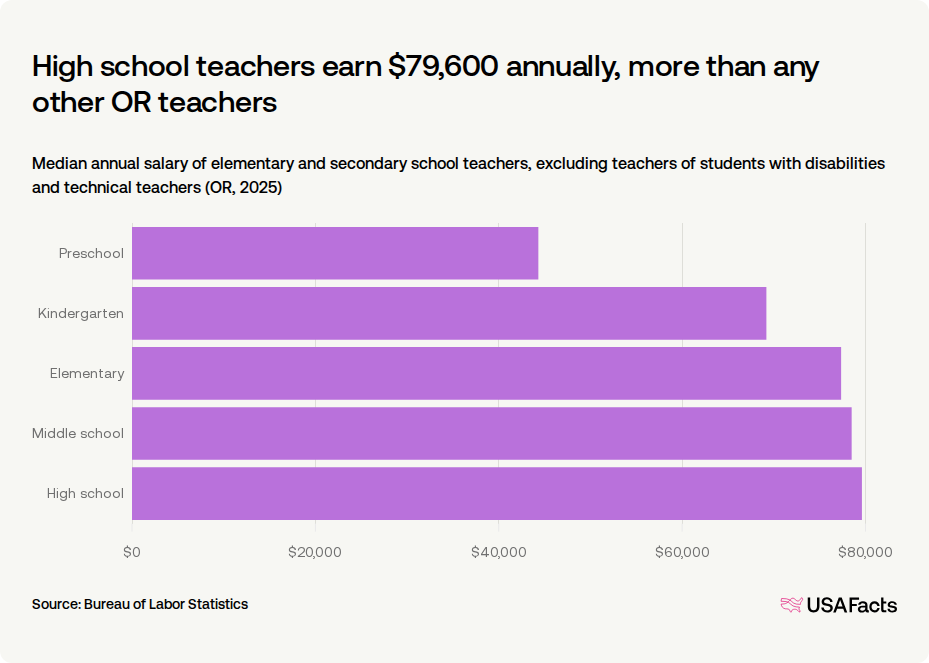
Pinpointing a single average salary for teachers in Oregon can be challenging due to the aforementioned variables. However, by examining data from various sources, we can establish a general understanding of the earning potential. These averages provide a valuable benchmark for both current teachers and prospective educators.
According to data from reputable sources such as the National Education Association (NEA) and salary aggregators like Glassdoor and Indeed, the average annual salary for a teacher in Oregon typically falls within a range. For instance, reports often indicate an average salary somewhere between $55,000 and $70,000 per year. It is important to remember that this is an average, and individual salaries can be significantly lower or higher.
Entry-Level Salaries
For teachers just beginning their careers in Oregon, starting salaries are generally at the lower end of the spectrum. Entry-level positions, typically for those with a Bachelor’s degree and minimal or no prior teaching experience, might see annual salaries ranging from approximately $45,000 to $55,000. These figures are highly dependent on the specific school district and its established salary schedule. While this might seem modest, it’s important to consider that these salaries are often accompanied by benefits packages that can add significant value, including health insurance, retirement contributions, and paid time off. Furthermore, entry-level positions are the first step on a career ladder that offers the potential for substantial salary growth over time through experience and further education.
Mid-Career and Experienced Teacher Salaries
As teachers gain experience and potentially pursue advanced degrees, their salaries in Oregon can increase substantially. Teachers in the mid-career range, typically with 5-10 years of experience, might earn anywhere from $60,000 to $80,000 annually. Experienced educators with 15 or more years of service, particularly those who hold Master’s or Doctoral degrees, can see their salaries climb into the $70,000 to $90,000 range, and in some of the higher-paying districts, even exceed $100,000 per year.
These higher earnings reflect the deep well of knowledge, leadership, and mentorship that experienced teachers provide. They are often sought after for roles in curriculum development, department leadership, or as mentors for new teachers. The investment in a long-term teaching career in Oregon can therefore yield significant financial rewards.
Factors Beyond Base Salary
While the base salary is a primary component of a teacher’s compensation, several other factors contribute to their overall financial well-being and the attractiveness of the profession in Oregon. Understanding these can provide a more holistic view of the teacher’s financial package.
Benefits Packages
Most school districts in Oregon offer comprehensive benefits packages to their teachers. These often include health, dental, and vision insurance, which can represent a significant saving for individuals and families. Retirement plans, such as the Oregon Public Employees Retirement System (PERS), are also a major draw. PERS offers a defined benefit pension plan, providing teachers with a reliable source of income in retirement, a valuable long-term financial security. Life insurance and disability insurance are also commonly included. The value of these benefits, though not directly paid out in cash, can be substantial and should be factored into any comparison of compensation.
Extracurricular and Summer Employment Opportunities
Many teachers in Oregon supplement their income through various extracurricular activities and summer employment. Coaching sports teams, advising clubs, or leading summer school programs can provide additional stipends that boost annual earnings. Some teachers also take on tutoring roles or find employment in related fields during the summer months when school is not in session. These opportunities can help educators enhance their income and gain further experience, contributing to their overall professional development and financial stability.
Teacher Unions and Collective Bargaining
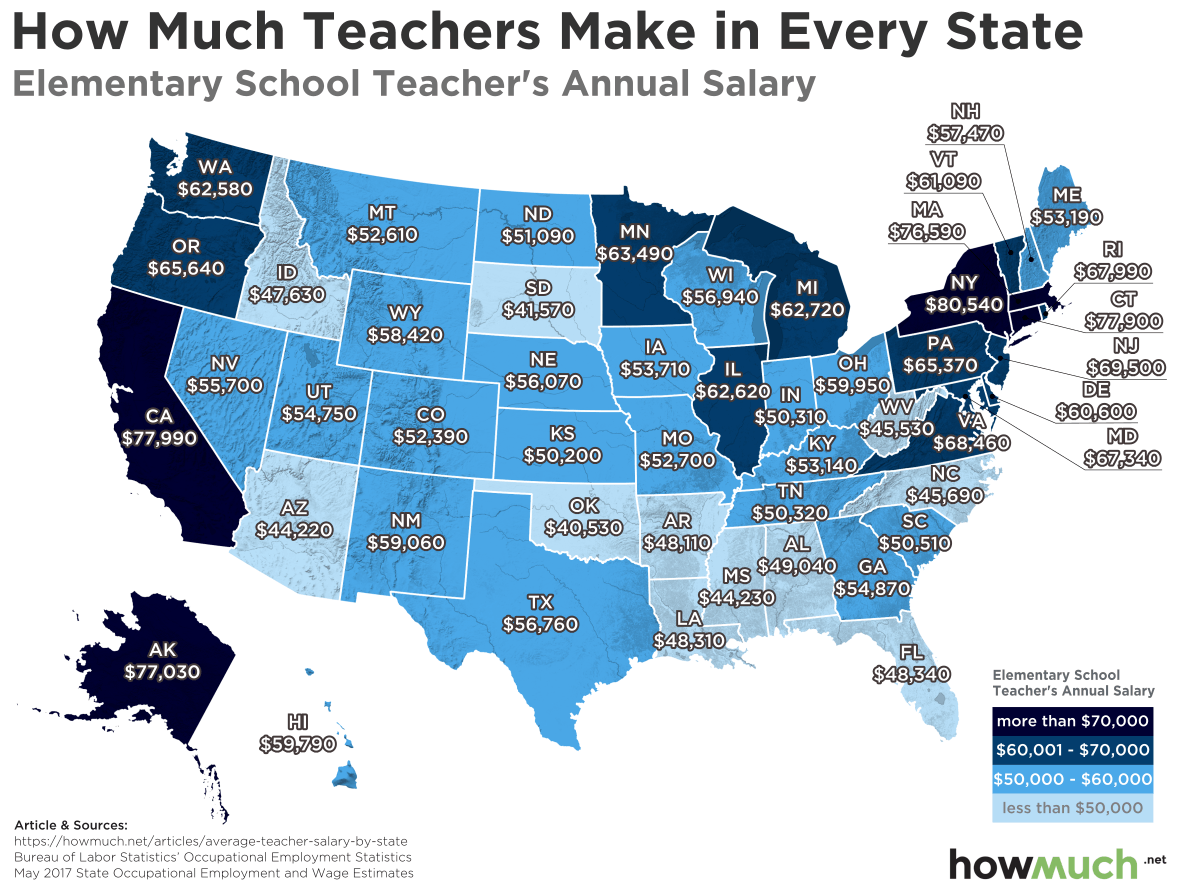
Teacher unions play a crucial role in advocating for fair compensation and favorable working conditions for educators in Oregon. Through collective bargaining, unions negotiate salary schedules, benefits, and other employment terms with school districts. This collaborative process ensures that teachers have a voice in their compensation and that salary increases are regularly reviewed and implemented based on factors like experience and education. The strength and influence of these unions can significantly impact the overall salary levels and benefits offered to teachers across the state.
In conclusion, the question of “How much do teachers make in Oregon?” is answered by a nuanced understanding of numerous influencing factors. While starting salaries require dedication and a long-term perspective, the profession offers a path to competitive earnings, especially when combined with experience, advanced education, and the valuable benefits packages provided by Oregon school districts. The commitment to education in the Beaver State, coupled with the dedication of its teachers, creates a rewarding environment for those who choose to shape the future generation.
LifeOutOfTheBox is a participant in the Amazon Services LLC Associates Program, an affiliate advertising program designed to provide a means for sites to earn advertising fees by advertising and linking to Amazon.com. Amazon, the Amazon logo, AmazonSupply, and the AmazonSupply logo are trademarks of Amazon.com, Inc. or its affiliates. As an Amazon Associate we earn affiliate commissions from qualifying purchases.