
While the sprawling landscapes and vibrant cities of Texas might conjure images of vast ranches, iconic landmarks like the Alamo, and the bustling energy of cities like Dallas and Houston, there’s a vital profession operating behind the scenes that keeps communities healthy and functioning: the pharmacy technician. These dedicated individuals are the backbone of our pharmacies, assisting pharmacists with a wide range of tasks that ensure patients receive their medications accurately and efficiently. For those considering a career in this field, or perhaps already working in the Lone Star State and curious about their earning potential, understanding the salary landscape for pharmacy techs in Texas is crucial.
This article delves into the financial realities of being a pharmacy technician in Texas, exploring the average salaries, the factors that influence pay, and how this compares to national averages. Whether you’re a student contemplating vocational training, a seasoned professional looking to negotiate your next contract, or simply a curious resident of Texas, we aim to provide a comprehensive overview to help you navigate this aspect of the pharmacy profession.
Understanding the Pharmacy Tech Role in Texas
Before we dive into the numbers, it’s important to recognize the significant role a pharmacy technician plays within the healthcare ecosystem of Texas. They are not merely dispensing medications; their responsibilities extend to patient care, administrative duties, and maintaining the smooth operation of a pharmacy. In Texas, as elsewhere, pharmacy technicians work under the direct supervision of licensed pharmacists. Their duties typically include:
- Receiving and verifying prescription orders: This involves accurately inputting patient and medication information into the pharmacy’s computer system.
- Preparing medications: This can include counting pills, measuring liquids, and compounding basic non-sterile preparations.
- Labeling and packaging medications: Ensuring correct labels with patient names, drug names, dosages, and instructions are affixed.
- Managing inventory: Ordering medications, receiving shipments, stocking shelves, and rotating stock to prevent spoilage.
- Interacting with patients and customers: Answering basic questions about over-the-counter medications, assisting with insurance inquiries, and directing patients to the pharmacist for clinical advice.
- Processing insurance claims: Navigating the complexities of various insurance plans and submitting claims for reimbursement.
- Maintaining records: Keeping accurate logs of prescriptions filled, controlled substances dispensed, and other important pharmacy data.
- Adhering to legal and ethical standards: Ensuring compliance with all federal and state regulations regarding prescription dispensing and patient privacy.
The scope of a pharmacy technician’s work can vary depending on the setting. In a retail pharmacy, like those found in major chains such as CVS Pharmacy or Walgreens, the focus might be on high-volume dispensing and customer service. In a hospital setting, such as at Texas Medical Center facilities, technicians may be involved in more complex tasks, preparing IV admixtures, delivering medications to patient floors, and working closely with nursing staff. Specialized pharmacies, like compounding pharmacies or those serving long-term care facilities, also present unique work environments and responsibilities. The specific demands of these roles can influence salary expectations.
Factors Influencing Pharmacy Tech Salaries in Texas
Several key factors converge to determine how much a pharmacy technician can earn in Texas. Understanding these variables is essential for anyone looking to gauge their earning potential or negotiate a fair wage.
Experience and Certification
Like many professions, experience plays a significant role in a pharmacy technician’s salary. Entry-level technicians will typically start at the lower end of the pay scale, while those with several years of experience, a proven track record, and a deep understanding of pharmacy operations can command higher salaries. In Texas, while formal certification is not always mandatory for employment, it can significantly boost earning potential and job prospects. The Pharmacy Technician Certification Board (PTCB) offers widely recognized certifications that demonstrate a technician’s competency and commitment to the profession. Holding a PTCB certification often leads to higher pay rates as employers value the assurance of standardized knowledge and skills.
Location within Texas
Texas is a vast state, and the cost of living, as well as the demand for pharmacy services, can vary dramatically from one region to another. Major metropolitan areas such as Houston, Dallas-Fort Worth, San Antonio, and Austin generally offer higher average salaries for pharmacy technicians compared to smaller towns or rural areas. This is often due to a higher cost of living in these urban centers and a greater concentration of large pharmacy chains and hospital systems that can afford to offer more competitive compensation packages. For example, a pharmacy tech working in the bustling medical district of Houston might earn more than one in a smaller community in West Texas.
Type of Pharmacy Practice
The setting in which a pharmacy technician works is another crucial determinant of their salary.
- Retail Pharmacies: These are the most common settings, found in drugstores, supermarkets, and big-box retailers. Salaries in retail can be competitive, but they often reflect the high volume of prescriptions filled and the customer service demands.
- Hospital Pharmacies: Pharmacy technicians in hospitals often earn higher salaries due to the increased complexity of the work, the need for specialized knowledge (e.g., sterile compounding, IV preparations), and the critical role they play in patient care within a healthcare facility. Hospitals typically require more rigorous training and adherence to strict protocols, which is reflected in compensation. Working in a large hospital network, such as those affiliated with institutions like the University of Texas Southwestern Medical Center, can offer excellent salary ranges.
- Mail-Order Pharmacies: These facilities handle a high volume of prescriptions remotely. While the work can be more automated, the sheer scale of operations can lead to competitive wages.
- Specialty Pharmacies: Pharmacies focusing on complex or rare medications, such as those for cancer treatment or chronic diseases, often employ technicians with advanced skills and may offer higher compensation.
Education and Skills

While a high school diploma or GED is typically the minimum educational requirement, pursuing additional education or specialized training can lead to increased earning potential. Pharmacy technicians who have completed accredited pharmacy technician programs, possess specialized skills in areas like medication therapy management (MTM) support, or are proficient in multiple pharmacy software systems may be more valuable to employers and thus command higher salaries. Bilingual abilities can also be a significant asset, especially in diverse areas of Texas, opening up more job opportunities and potentially leading to higher pay.
Average Pharmacy Tech Salaries in Texas
Pinpointing an exact salary figure for pharmacy technicians in Texas can be challenging as it’s influenced by the factors previously discussed. However, by examining data from various sources, we can establish a general range.
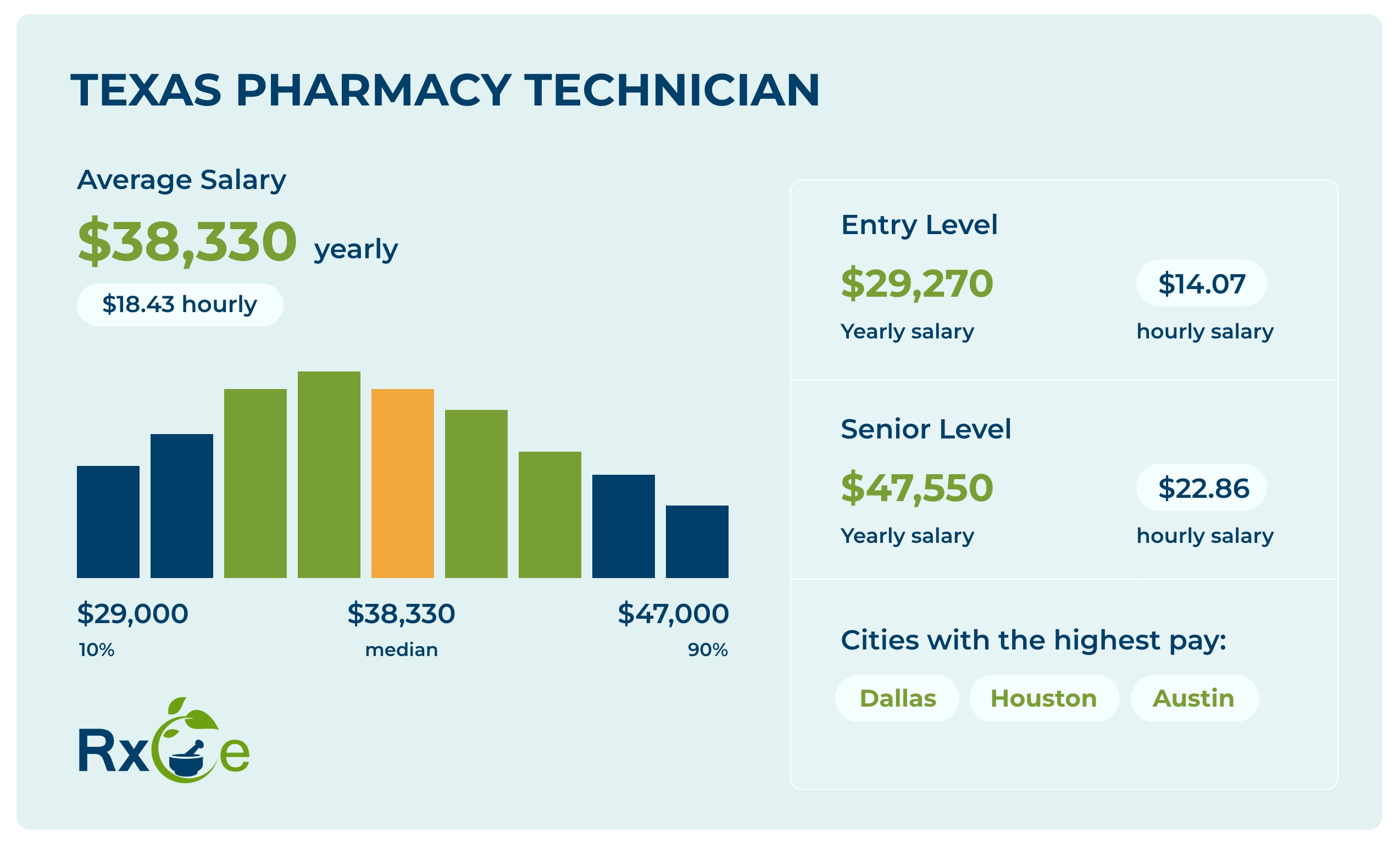
According to recent industry reports and salary aggregators, the average annual salary for a pharmacy technician in Texas typically falls between $33,000 and $45,000. Entry-level positions might start closer to the lower end of this spectrum, around $28,000 to $32,000 per year. Experienced pharmacy technicians, especially those with certifications, specialized skills, or working in hospital settings in major metropolitan areas, can see their salaries rise significantly, potentially earning $48,000 to $55,000 or more annually.
For perspective, national averages for pharmacy technicians often hover around $36,000 to $44,000 per year. This indicates that Texas generally aligns with or slightly exceeds the national median, particularly in its larger cities where the demand for healthcare professionals is consistently high. The competitive nature of the job market in places like Austin or San Antonio encourages employers to offer more attractive compensation to attract and retain qualified staff.
It’s also worth noting that hourly wages are commonly used in this profession. For pharmacy technicians in Texas, the hourly rate typically ranges from $16 to $22, with experienced professionals potentially earning $23 to $26 per hour.
When considering these figures, it’s important to factor in the cost of living in different parts of Texas. While salaries in cities like Dallas might be higher, the cost of housing, transportation, and everyday expenses also tends to be greater. Conversely, in more rural areas, salaries may be lower, but so too are the general living costs, which can balance out earning potential.
Career Growth and Advancement Opportunities
The role of a pharmacy technician in Texas is not necessarily a static one. There are clear pathways for career growth and advancement, which can lead to increased job satisfaction and higher earning potential.
Specialization and Advanced Roles
As mentioned earlier, specializing in specific areas of pharmacy practice can open doors to more advanced and lucrative positions. Pharmacy technicians with expertise in sterile compounding for hospitals or specialized therapies, for instance, are in high demand. They may take on roles such as:
- Lead Pharmacy Technician: Supervising other technicians, managing workflow, and assisting with training.
- Inventory Specialist: Focusing on the procurement, management, and control of pharmacy inventory.
- Billing and Claims Specialist: Handling complex insurance billing and claim resolution.
- Compounding Technician: Working in specialized pharmacies to prepare customized medications.
Further Education and Certification
Pursuing higher levels of certification or additional training can significantly enhance career prospects. The PTCB offers advanced certifications in areas like sterile compounding (CSPT) and hazardous drug management (CHDS), which can lead to specialized roles and higher pay. Some ambitious pharmacy technicians may also consider pursuing a degree in pharmacy to become a licensed pharmacist, a path that offers substantially higher earning potential and a broader scope of practice.

Transitioning to Other Healthcare Roles
The skills acquired as a pharmacy technician are transferable to other areas within the healthcare industry. With additional training or education, technicians might transition into roles in pharmaceutical sales, medical device representatives, or healthcare administration. The foundational knowledge of medications, patient care, and healthcare systems gained as a pharmacy tech provides a strong stepping stone for a diverse range of career paths.
In conclusion, the salary for pharmacy technicians in Texas offers a stable and respectable income, with ample opportunities for growth. By understanding the factors that influence pay, pursuing relevant certifications, and considering specialization, pharmacy technicians can build rewarding careers within the vibrant healthcare landscape of the Lone Star State. Whether you’re exploring the possibility of a career change or aiming for professional development, the role of a pharmacy technician in Texas presents an attractive and vital option.
LifeOutOfTheBox is a participant in the Amazon Services LLC Associates Program, an affiliate advertising program designed to provide a means for sites to earn advertising fees by advertising and linking to Amazon.com. Amazon, the Amazon logo, AmazonSupply, and the AmazonSupply logo are trademarks of Amazon.com, Inc. or its affiliates. As an Amazon Associate we earn affiliate commissions from qualifying purchases.