
The vastness of Texas is a characteristic that defines not only its geography but also its telecommunications. When dialing a number within the Lone Star State, you’ll encounter a diverse array of area codes, each representing a specific region and its unique identity. Understanding these numerical prefixes is more than just a practical necessity; it’s a gateway to grasping the state’s expansive reach and the interconnectedness of its communities. This exploration delves into the various area codes that serve Texas, touching upon the major cities and regions they encompass, and offering a glimpse into the diverse experiences that await travelers and residents alike.
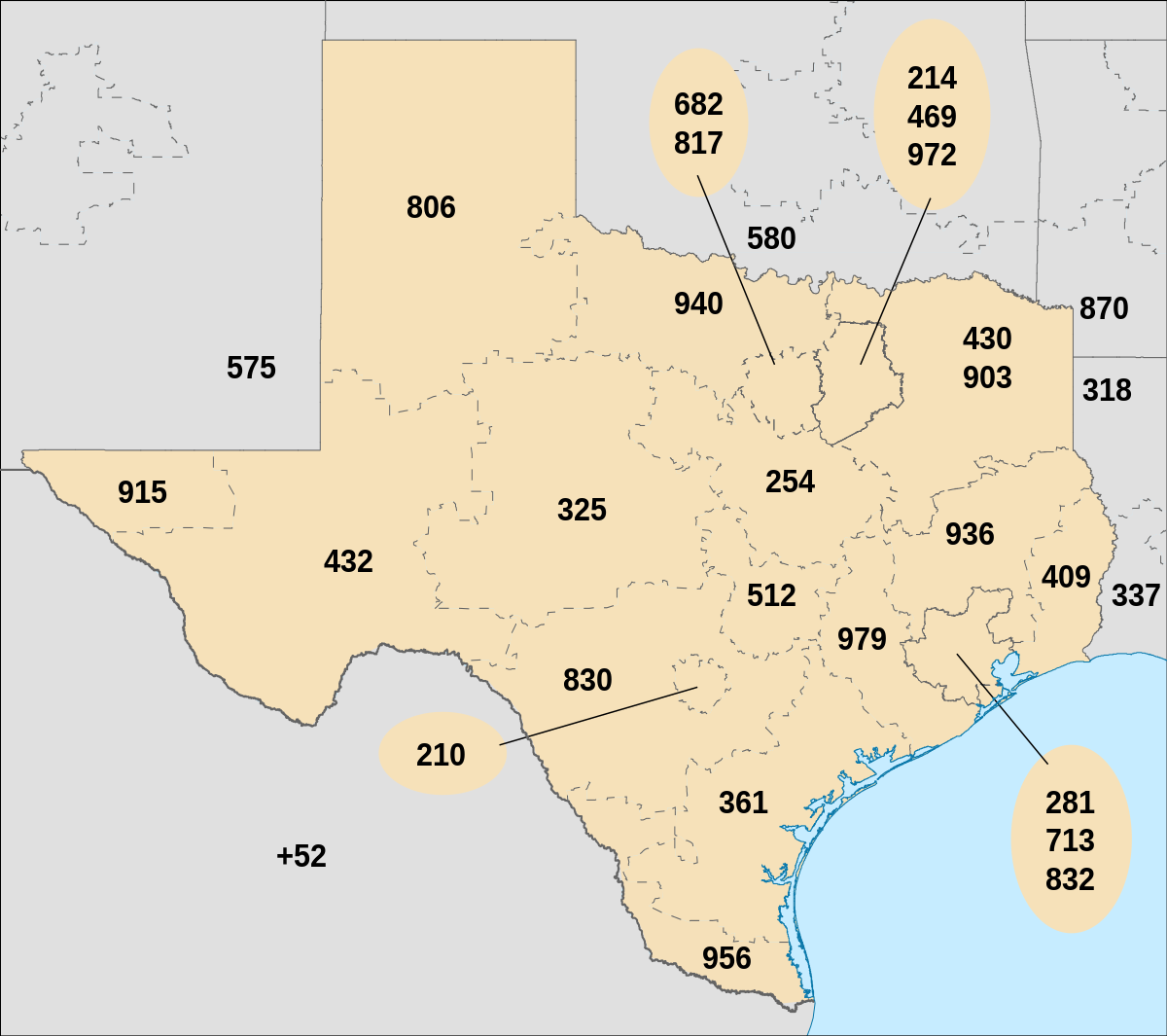
Texas is a state that truly lives up to its “everything’s bigger” reputation, and this is reflected in its intricate system of telephone area codes. As the second-largest state in the United States by both area and population, Texas requires a robust and distributed network of these numerical identifiers to facilitate communication across its diverse landscapes, from the bustling metropolises of Dallas-Fort Worth and Houston to the sprawling ranches of West Texas and the historic charm of the Texas Hill Country.
The dynamic growth of Texas has led to the creation of new area codes through overlays and splits, ensuring that there’s always capacity for new phone numbers. This means that many areas are served by multiple area codes, a phenomenon known as an “overlay.” This system allows for continued expansion without disrupting existing phone number assignments. For travelers planning a trip to Texas, or for those looking to relocate, familiarizing yourself with these area codes can offer a subtle yet insightful introduction to the state’s geography and the general location of popular destinations and attractions.
The Major Metropolitan Hubs and Their Area Codes
Texas boasts several of the nation’s largest and fastest-growing metropolitan areas. These urban centers are the engines of the state’s economy and cultural vibrancy, and their corresponding area codes are among the most recognizable. Understanding which area codes serve these key cities can be particularly helpful for anyone planning a visit, looking for accommodation, or engaging with the local tourism scene.
Dallas-Fort Worth Metroplex
The Dallas-Fort Worth Metroplex, often abbreviated as the DFW Metroplex, is a sprawling urban conglomeration in North Texas. This dynamic region is a hub for business, culture, and entertainment, attracting millions of visitors annually. Several area codes serve this vast area, reflecting its immense population and economic activity.
The original area code for much of the Metroplex was 214. This code still serves the core of Dallas and surrounding areas. As the population grew, overlays were introduced. 469 is an overlay for 214, covering a broad geographic area that encompasses much of Dallas and its northern and eastern suburbs, including cities like Plano and Frisco. Another overlay, 972, primarily serves the southern and western suburbs of Dallas, such as Irving and Garland. For Fort Worth and its western suburbs, the area code is 817. Similar to Dallas, Fort Worth has seen the introduction of overlay area codes to accommodate growth. 682 is an overlay for 817, covering Fort Worth and extending into its surrounding communities. The most recent addition to this busy region is 832, which also serves parts of the DFW area, further illustrating the need for multiple codes to manage the extensive network of phone numbers. Travelers looking for hotels in Dallas might find themselves dialing numbers starting with 214, 469, or 972, depending on their specific destination within the city or its suburbs. Similarly, visitors to Fort Worth will likely encounter 817 and 682.
The DFW Metroplex offers a wealth of attractions. In Dallas, you can explore the Sixth Floor Museum at Dealey Plaza, delve into the arts at the Dallas Museum of Art, or enjoy the vibrant nightlife in the Deep Ellum district. Fort Worth captivates with its Western heritage, evident at the Stockyards National Historic District, and its renowned cultural district, home to the Kimbell Art Museum and the Modern Art Museum of Fort Worth. Accommodation options range from luxury hotels in downtown Dallas to charming boutique inns in Fort Worth, catering to every travel style.
Houston Metropolitan Area
Houston, Texas‘s most populous city, is a global center for the energy industry and a major hub for space exploration, with the NASA Space Center Houston being a primary attraction. The area codes serving Houston are also numerous, reflecting its status as a sprawling metropolis.
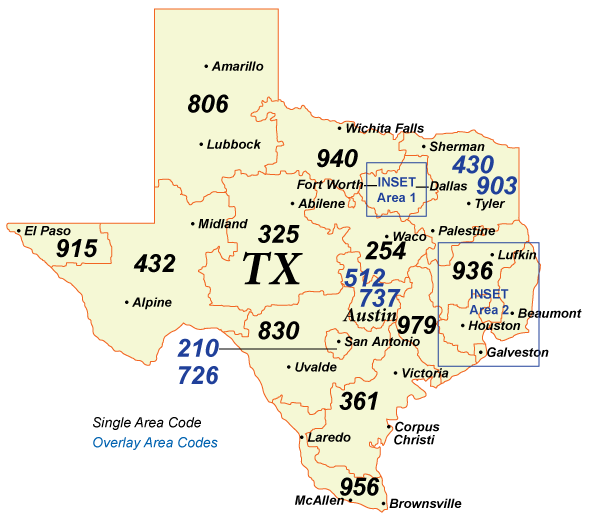
The primary area code for Houston itself is 713. However, like the DFW Metroplex, Houston has experienced significant growth, leading to the implementation of overlay area codes. 281 is a prominent overlay that serves many of Houston‘s outer suburbs and is also used within the city itself. Further expansion led to the introduction of 832, which also covers Houston and its surrounding areas, and more recently, 346 has been added as another overlay. This means that a business or residential address in Houston could potentially be associated with any of these four area codes: 713, 281, 832, or 346. For those seeking hotels in Houston, you’ll find listings using these diverse prefixes.
Beyond the iconic Space Center Houston, the city offers world-class museums in the Museum District, a thriving culinary scene, and vibrant entertainment venues. Travelers can experience the historic charm of the Galveston island, a popular beach destination accessible from Houston, or explore the unique ecosystems of the Texas Gulf Coast. The range of accommodation in Houston is vast, from opulent suites in the Galleria area to budget-friendly motels, ensuring options for every traveler.
San Antonio and Austin – The Texas Triangle
The central Texas corridor, often referred to as the Texas Triangle, connects Dallas-Fort Worth, Houston, and San Antonio to Austin. This region is rich in history, culture, and natural beauty, offering a distinct Texas experience.
San Antonio is a city steeped in history, famously known for the Alamo and its vibrant River Walk. The primary area code for San Antonio is 210. As the city expanded, 726 was introduced as an overlay to 210, covering the same geographic area and providing additional number capacity. Visitors to San Antonio will find hotels and attractions primarily associated with these two codes. Exploring San Antonio involves immersing oneself in its Spanish colonial past, visiting the historic missions, and enjoying the lively atmosphere of the Market Square.
Further north, Austin, the state capital, is renowned for its live music scene, eclectic culture, and stunning natural surroundings, including the Texas Hill Country. The original area code for Austin is 512. Due to rapid population growth, Austin has also adopted overlay area codes. 737 is the overlay for 512, covering Austin and its expanding metropolitan area. This means that while many Austin numbers will start with 512, newer numbers or those in newly developed areas might use 737. When booking accommodation in Austin, or looking up local businesses, be prepared to see either of these codes.
Austin‘s attractions are diverse, from the iconic Texas State Capitol building and the lively South Congress Avenue to the beautiful Barton Creek Greenbelt for outdoor enthusiasts. The city’s music venues, world-class restaurants, and unique festivals like South by Southwest draw visitors year-round. The accommodation scene in Austin mirrors its eclectic personality, offering everything from trendy downtown hotels to quirky boutique stays.
Other Significant Area Codes and Regions
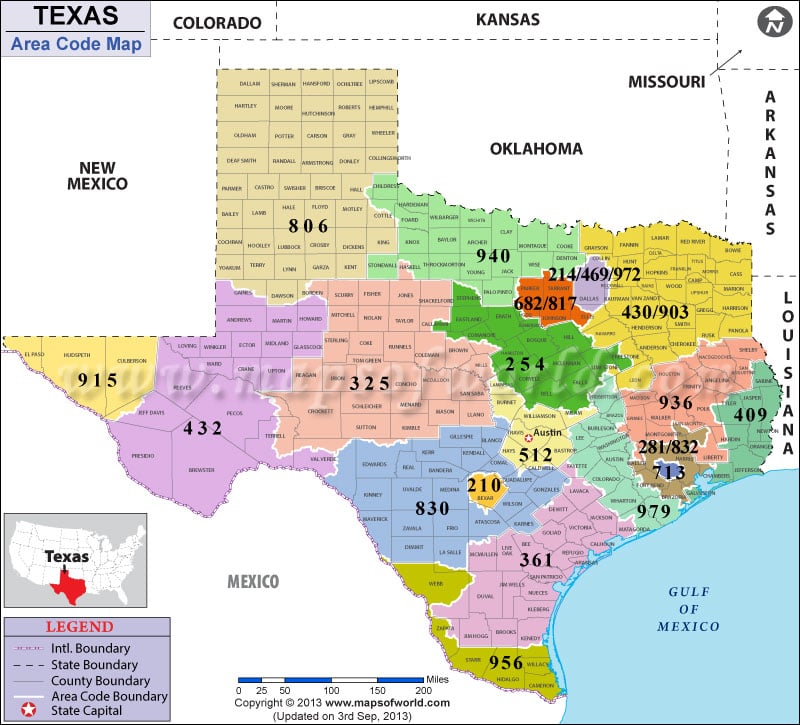
Beyond the major metropolitan centers, Texas is home to numerous other regions, each with its own unique charm and identity, served by distinct area codes. These codes connect you to the diverse tapestry of the Lone Star State, from the rugged beauty of West Texas to the coastal plains of the Gulf Coast.
West Texas, a region characterized by its vast landscapes and oil industry, has several important area codes. The sprawling city of El Paso, located on the border with Mexico, is served by 915. As this area also experienced growth, 915 has an overlay in 432, which also serves a significant portion of West Texas, including cities like Midland and Odessa, known for their oil and gas industries. Traveling to this part of Texas might involve dealing with these codes for navigation and communication.
The Panhandle region, known for its flat terrain and agricultural importance, is primarily served by 806, which covers cities like Lubbock and Amarillo. These areas offer a different pace of life and unique attractions, such as the Palo Duro Canyon State Park, often called the “Grand Canyon of Texas.”
The Texas Gulf Coast, a region of beaches, ports, and a distinct coastal culture, is also served by a variety of area codes. While Houston and its immediate surroundings fall under the codes mentioned earlier, other coastal cities have their own. For instance, Corpus Christi, a popular tourist destination known for its beaches and the Texas State Aquarium, is primarily served by 361. This area code also extends to many smaller coastal communities along the Gulf of Mexico.
The Texas Hill Country, a picturesque region of rolling hills, wineries, and charming small towns, is largely covered by the 512 and 737 area codes of Austin, but extends into areas served by 830, which covers a broad geographic area south and west of Austin, including cities like San Marcos and Fredericksburg. This region is a haven for those seeking outdoor adventures, wine tasting tours, and a more relaxed pace of life.
Understanding these area codes provides a framework for exploring the vastness and diversity of Texas. Whether you’re planning a luxury trip to a resort in Austin, a family vacation to the beaches of Galveston, a business stay in downtown Houston, or a historical exploration of the Alamo in San Antonio, these numerical identifiers are the first step in connecting with the Lone Star State. Each area code, in its own way, unlocks a unique facet of Texas – from its booming economies and cultural hotspots to its natural wonders and rich historical tapestry.
LifeOutOfTheBox is a participant in the Amazon Services LLC Associates Program, an affiliate advertising program designed to provide a means for sites to earn advertising fees by advertising and linking to Amazon.com. Amazon, the Amazon logo, AmazonSupply, and the AmazonSupply logo are trademarks of Amazon.com, Inc. or its affiliates. As an Amazon Associate we earn affiliate commissions from qualifying purchases.