
The landscape of education in Texas is a dynamic and often debated topic, with “school choice” emerging as a central theme. While the phrase itself might seem straightforward, understanding its nuances, particularly within the Texas context, requires a deeper dive into the various pathways and policies that empower parents to select educational options beyond their assigned traditional public school. This article will explore the multifaceted nature of school choice in Texas, examining its current manifestations, the underlying principles, and the implications for families across the Lone Star State.
Understanding the Spectrum of School Choice in Texas
School choice is not a monolithic concept; rather, it represents a collection of policies and programs designed to give parents more flexibility in where their children receive their education. In Texas, this spectrum encompasses a range of options, each with its own set of eligibility requirements, funding mechanisms, and operational frameworks. The fundamental idea is to foster competition and innovation within the education sector by allowing public funds to follow students to schools that best meet their individual needs.
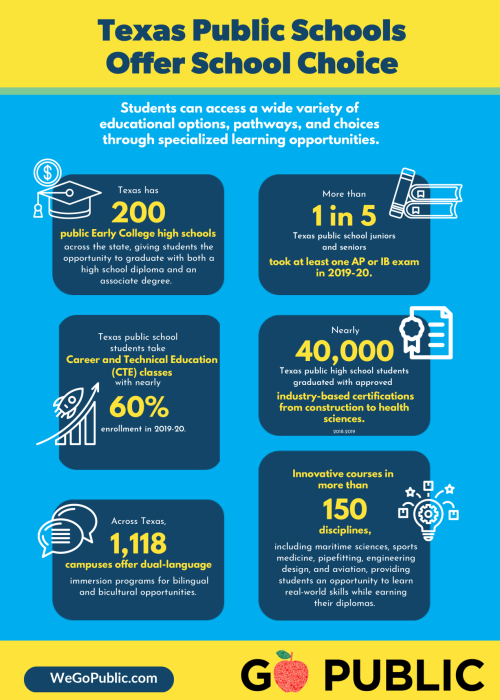
Charter Schools: Public Education, Publicly Funded, Freely Chosen
One of the most established forms of school choice in Texas are charter schools. These are public schools that operate independently of the traditional school district system, although they are still funded by taxpayer dollars. Charter schools are granted waivers from certain state regulations, allowing them greater autonomy in their curriculum, staffing, and operational models. This flexibility often enables them to experiment with innovative educational approaches, cater to specific student populations, or focus on particular academic strengths.
The Texas Education Agency (TEA) oversees the charter school application and approval process. Aspiring charter schools must submit a detailed proposal outlining their educational philosophy, student services, financial management, and accountability measures. Once approved, charter schools are subject to rigorous performance evaluations, and their continued operation depends on meeting state-mandated academic and operational standards.
For parents, charter schools offer an alternative to their assigned neighborhood school without incurring tuition costs. They are open to all students, often through a lottery system if demand exceeds capacity. This option provides a crucial avenue for families seeking specialized programs, smaller class sizes, or a different learning environment than what their local public school district might offer. Examples of charter school networks in Texas include the YES Prep Public Schools network, known for its focus on college readiness, and Harmony Public Schools, which emphasizes STEM education.
Magnet Schools: Specialized Programs within Traditional Districts
Within many traditional Texas school districts, magnet schools represent another significant form of school choice. These are public schools designed with specialized themes or academic focuses, such as arts, science, technology, engineering, and mathematics (STEM), or international baccalaureate programs. While still part of the larger district, magnet schools offer unique curricula and learning environments that attract students from across the district, and sometimes beyond.
Admission to magnet schools is typically based on specific criteria, which can include academic achievement, interest in the school’s theme, or a lottery system. This allows students to pursue their passions and talents in a focused academic setting. For example, a student with a strong aptitude for science might apply to a science-focused magnet school within their district, even if it’s not their geographically closest school. The appeal of magnet schools lies in their ability to provide specialized educational experiences within the framework of the public school system, often without the need for separate governance structures like charter schools.
Education Savings Accounts (ESAs) and Vouchers: Emerging Pathways
Beyond charter and magnet schools, Texas has seen increasing discussion and legislative efforts around Education Savings Accounts (ESAs) and voucher programs. These initiatives aim to provide public funding directly to parents, which they can then use to pay for a variety of educational expenses, including private school tuition, tutoring, textbooks, and other approved learning materials.
ESAs, in particular, are gaining traction as a more flexible approach. With an ESA, a portion of the state funding that would have gone to a public school for a specific student is deposited into a special savings account controlled by the parent. This allows parents to tailor their child’s education by choosing a combination of services and providers that best suit their needs. The Texas Legislature has explored various ESA proposals, though the implementation and scope of such programs have been subject to significant debate and policy adjustments.
Vouchers, a more traditional form of school choice, typically provide a fixed amount of public money to parents to offset the cost of private school tuition. The debate surrounding ESAs and vouchers often centers on concerns about equity, accountability, and the potential impact on traditional public schools. Proponents argue that these programs empower parents, especially those in underperforming districts, with greater educational freedom and access to high-quality alternatives. Critics, however, raise concerns about diverting funds from public schools, ensuring accountability of private providers, and the potential for these programs to exacerbate existing educational disparities.
The Guiding Principles of School Choice in Texas

At its core, school choice in Texas is driven by several key principles. The most prominent is the belief in parental rights and the idea that parents should have the ultimate authority in determining their child’s educational path. This philosophy suggests that parents are best positioned to understand their child’s unique learning style, needs, and aspirations, and therefore should be empowered to select the educational environment that best fosters their success.
Another driving force is the pursuit of educational excellence. Proponents of school choice argue that by introducing competition into the educational landscape, all schools – traditional public, charter, and private – are incentivized to improve their offerings. When students have the ability to choose where they learn, schools are compelled to innovate, enhance their curriculum, improve teaching quality, and provide a more engaging and effective learning experience to attract and retain students.
Furthermore, school choice is often framed as a tool for promoting equity and opportunity. For families living in areas with struggling or underperforming public schools, school choice can provide access to higher-quality educational options that might otherwise be out of reach. This can be particularly impactful for low-income families who may not have the financial resources to afford private school tuition without some form of public assistance.
Finally, the principle of student-centered learning is central to the school choice movement. The idea is that a one-size-fits-all approach to education is not effective for all students. By offering a diverse range of educational models and philosophies, school choice allows students to find learning environments that align with their individual strengths, interests, and learning paces, thereby maximizing their potential for academic and personal growth.
Navigating the School Choice Landscape in Texas: A Practical Guide for Families
For parents in Texas considering school choice options, navigating the various pathways can seem complex. Understanding the eligibility requirements, application processes, and the unique characteristics of each option is crucial.
Researching Your Options
The first step for any parent interested in school choice is thorough research. This involves identifying the types of school choice programs available in their area, whether it be charter schools, magnet programs within their local district, or exploring potential ESA or voucher opportunities as they emerge. Websites of the Texas Education Agency, individual school districts, and specific charter school networks are invaluable resources. Attending informational sessions, open houses, and school fairs can provide direct insights into different educational philosophies and environments.
Understanding Eligibility and Application Processes
Each school choice option will have its own set of eligibility criteria and application procedures. Charter schools are generally open to all Texas students, but often have enrollment lotteries if demand exceeds the number of available spots. Magnet schools within districts may have specific academic or interest-based requirements for admission. For emerging programs like ESAs, Texas legislation will define eligibility, which typically focuses on factors such as household income or enrollment in specific types of public schools.
It is essential for parents to pay close attention to application deadlines, required documentation, and any selection criteria. Early research and timely submission of applications are key to securing a spot in a desired school or program.
Evaluating Educational Quality and Fit
Beyond the procedural aspects, parents must evaluate the educational quality and overall fit of a school choice option for their child. This involves looking beyond test scores and considering factors such as:
- Curriculum and Instructional Methods: Does the school’s approach align with your child’s learning style? Are there specialized programs that cater to their interests?
- School Culture and Environment: Does the school foster a positive, safe, and inclusive atmosphere? What are the class sizes and student-teacher ratios?
- Extracurricular Activities and Support Services: Are there opportunities for enrichment activities, and what kind of academic and social-emotional support is available?
- Accountability and Performance: How does the school measure success, and what are its performance metrics? For charter schools, understanding their state-mandated accountability ratings is important.

The Role of Local Communities and Districts
It’s important to remember that school choice exists within a broader educational ecosystem. While school choice empowers families to explore alternatives, traditional public schools remain the cornerstone of education for the vast majority of Texas students. The discussion around school choice often involves ongoing dialogue between parents, educators, policymakers, and community members about how to best serve all students and ensure a robust and equitable educational system for everyone in Texas. The interplay between these different entities shapes the future of education in the Lone Star State, and understanding school choice is a vital part of that conversation.
LifeOutOfTheBox is a participant in the Amazon Services LLC Associates Program, an affiliate advertising program designed to provide a means for sites to earn advertising fees by advertising and linking to Amazon.com. Amazon, the Amazon logo, AmazonSupply, and the AmazonSupply logo are trademarks of Amazon.com, Inc. or its affiliates. As an Amazon Associate we earn affiliate commissions from qualifying purchases.