
The question “Is North Pole in Alaska?” is a common one, often born from a fascinating blend of geographical curiosity, the whimsical charm of a certain Alaskan town, and a general understanding of the extreme northern reaches of our planet. While Alaska is undoubtedly a northern state with significant Arctic territories, the definitive answer to whether the Earth’s true North Pole resides within its borders is a resounding no. This misconception, however, offers a compelling opportunity to delve into the distinct geographical realities of both the planet’s northernmost point and the majestic Last Frontier state, clarifying their unique identities as global landmarks.
Understanding the difference requires separating the scientific definition of a geographical pole from the cultural and administrative boundaries of a state. The true North Pole is a singular, fixed point on the Earth’s surface, an invisible pivot around which our planet spins. Alaska, on the other hand, is a vast and varied landmass, a political subdivision of the United States that, while touching the Arctic Ocean, is fundamentally separate from the pole itself. This article will unravel the threads of this geographical puzzle, providing a clear and insightful exploration of where these iconic landmarks truly lie and why the confusion persists.
Unraveling the Arctic’s True Geography
To accurately answer the initial question, we must first establish a clear understanding of what the North Pole actually is and where it is located. Its true nature is often obscured by popular culture and a general lack of in-depth geographical knowledge.
Defining the Geographical North Pole
The Geographical North Pole is precisely that point in the Northern Hemisphere where the Earth’s axis of rotation meets its surface. It’s a theoretical, invisible point, not a physical landmark you can stand on in the traditional sense of solid ground. This pole, also known as the Terrestrial North Pole, is situated in the middle of the Arctic Ocean, surrounded by constantly shifting sea ice. At this precise location, all lines of longitude converge, meaning that every direction from the North Pole is south.
It’s crucial to distinguish the Geographical North Pole from other “North Poles” people might encounter. There’s the Magnetic North Pole, which is the point on the Earth’s surface where the planet’s magnetic field lines are perpendicular to the surface, and a compass would point straight down. This magnetic pole is constantly drifting due to changes in the Earth’s core. Then there’s the Geomagnetic North Pole, a theoretical point related to the Earth’s overall magnetic field. Neither of these is fixed nor the point of rotation. Furthermore, there’s the town of “North Pole” in Alaska, which, as we will explore, is merely a place that adopted the name for symbolic reasons, not because it houses the true pole. The true North Pole is an abstract geographical concept realized in the shifting wilderness of the Arctic ice cap.
The Vastness of the Arctic Ocean
The Arctic Ocean, where the North Pole is located, is the smallest and shallowest of the world’s five major oceans. It is almost entirely surrounded by Eurasia and North America. Unlike the South Pole, which lies on the continent of Antarctica, the North Pole is not on a landmass. Instead, it is situated over deep international waters, typically covered by a thick, perennial layer of sea ice. This ice pack drifts and rotates, making the journey to the pole a challenging feat for explorers throughout history.
The Arctic Ocean is bordered by numerous countries, including Canada, Greenland (a territory of Denmark), Russia, Norway, and the United States (via Alaska). While Alaska does indeed share a coastline with the Arctic Ocean, its northernmost land points are still hundreds of miles away from the North Pole itself. The proximity allows Alaska to experience the extreme Arctic climate and unique phenomena like the Midnight Sun and Aurora Borealis, but it does not place the pole within its sovereign territory. The international nature of the Arctic Ocean at the pole is a subject of ongoing geopolitical interest, but geographically, it remains distinct from any national claim.
Alaska: The Last Frontier and Its Arctic Connection
Having clarified the actual location of the North Pole, let us now turn our attention to Alaska, a state renowned for its majestic wilderness and its undeniable connection to the Arctic. Its geographic position makes it a vital part of the global Arctic region, even if the pole itself lies beyond its borders.
Alaska’s Geographical Position
Alaska’s geographical footprint is immense, making it the largest state in the United States by area. It occupies the northwestern extremity of the North American continent, bordering Canada to the east and facing Russia across the Bering Strait to the west. A significant portion of Alaska lies north of the Arctic Circle, qualifying it as a true Arctic state. Its northernmost point is Point Barrow, also known as Nuvuk, which extends into the Arctic Ocean. This promontory, near the city of Utqiagvik (formerly Barrow), is indeed the northernmost point of all U.S. territory.
However, even Point Barrow is approximately 1,300 miles (2,100 kilometers) south of the Geographical North Pole. While this distance is vast, it illustrates Alaska’s undeniable role as a gateway to the Arctic and a critical base for scientific research, resource development, and defense operations in the high north. The state’s unique geography, characterized by vast tundra, towering mountain ranges, extensive coastlines, and powerful glaciers, makes it a landmark of natural beauty and ecological significance.
The City of North Pole, Alaska: A Charming Misnomer
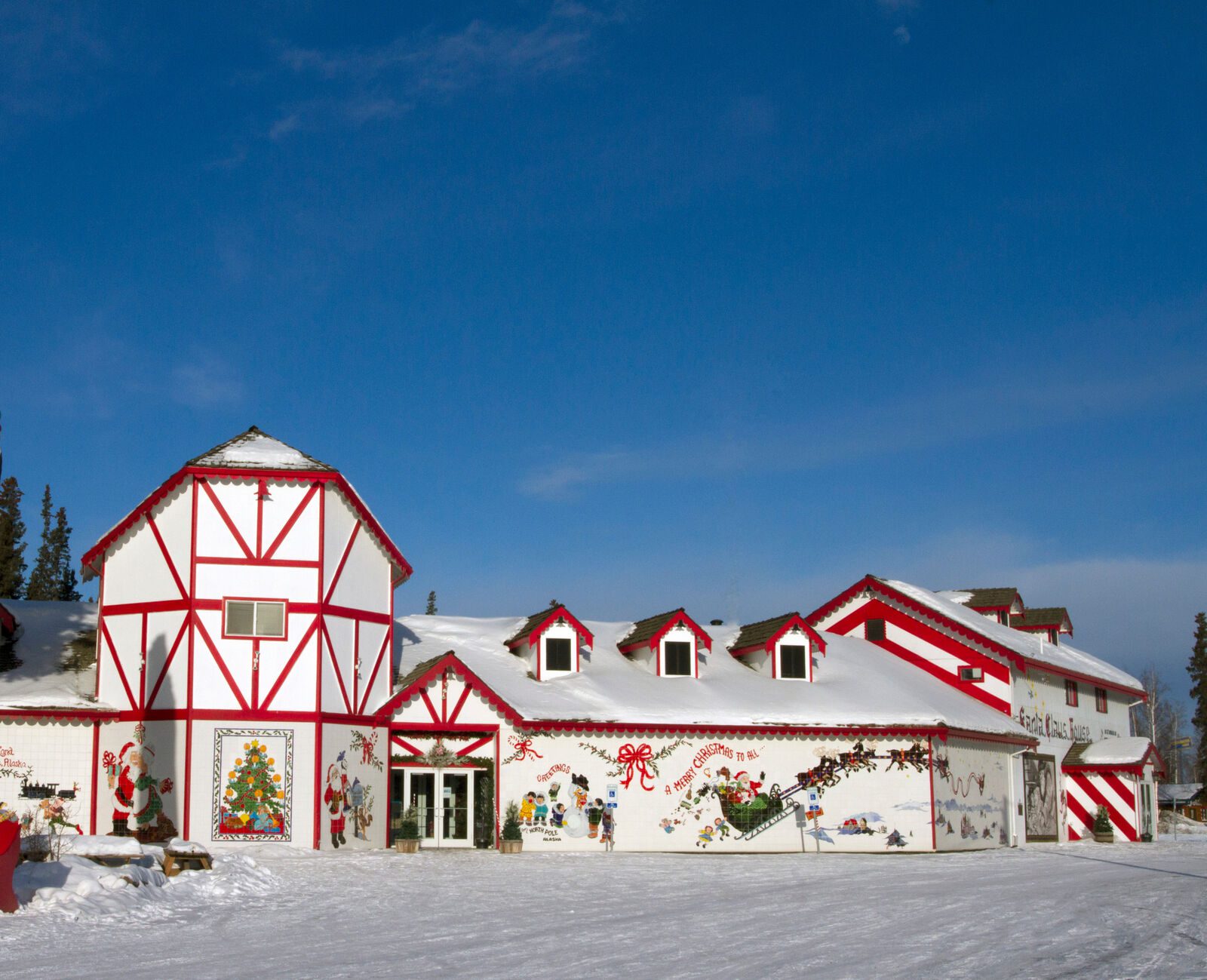
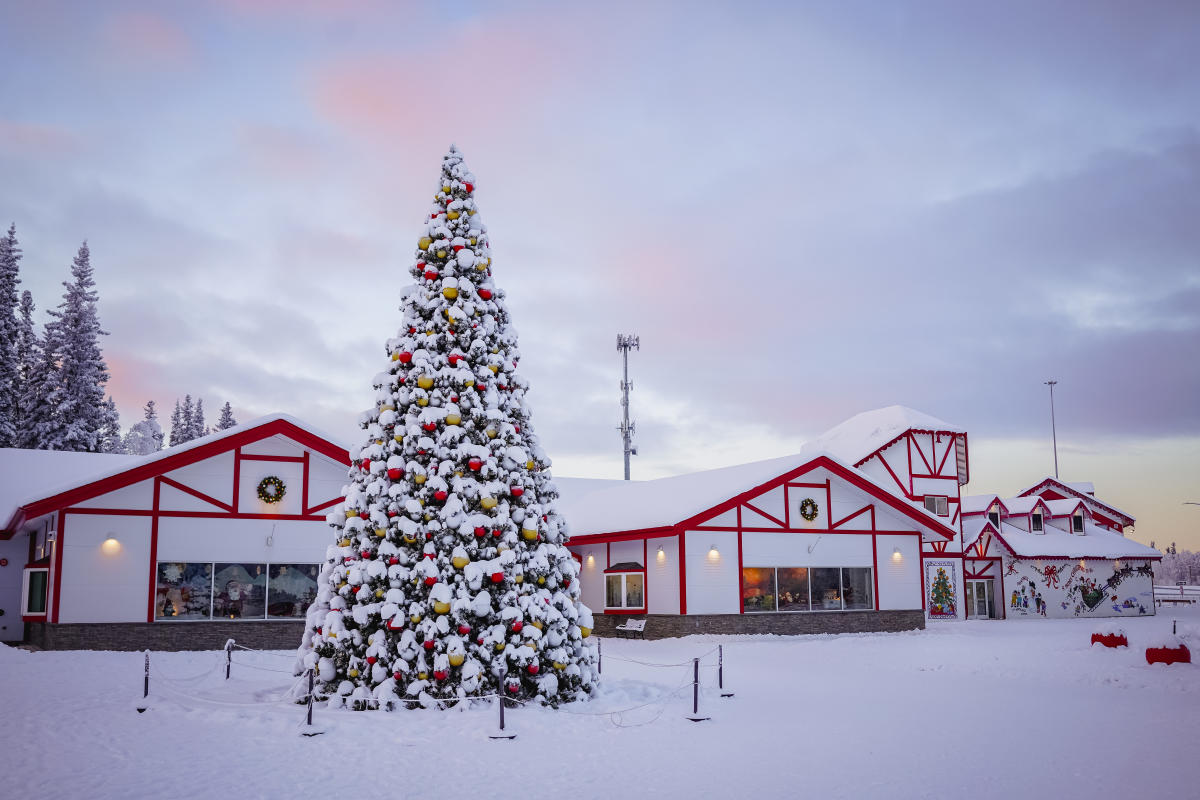
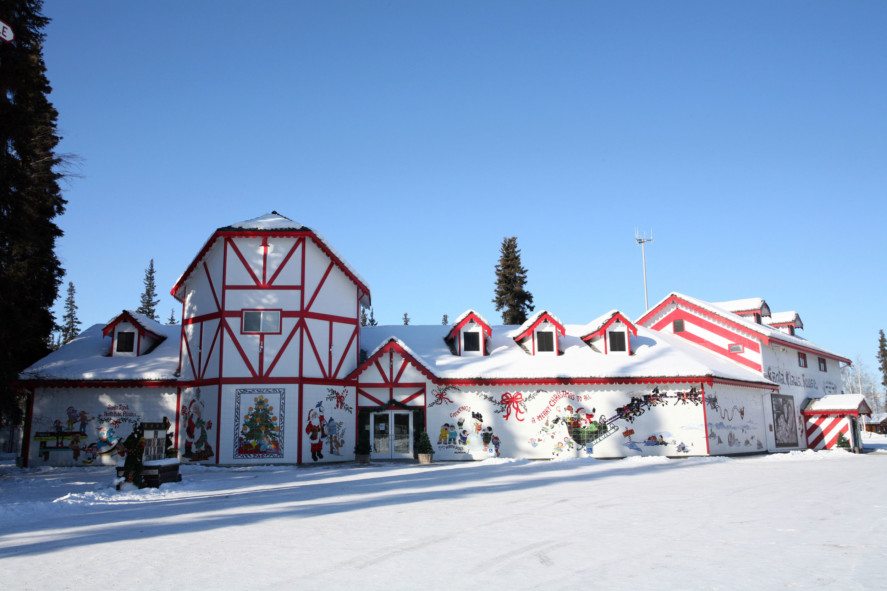
The primary source of confusion regarding the North Pole’s location in Alaska can almost certainly be attributed to the charming city of North Pole, Alaska. Located just southeast of Fairbanks in the Interior Alaska region, this town deliberately adopted its name in 1953 to attract toy manufacturers to the area, hoping to brand itself as the official home of Santa Claus. While that particular economic venture didn’t pan out, the name stuck, and the town fully embraced its festive identity.
Today, the City of North Pole is a unique landmark in its own right, especially famous for the Santa Claus House, where children can visit Santa year-round and send letters postmarked from the actual “North Pole, Alaska.” Streets bear names like Kris Kringle Drive and Mistletoe Lane, and lampposts are decorated like candy canes. This festive atmosphere, deeply ingrained in the town’s identity, often leads visitors and those unfamiliar with global geography to assume it is physically located at the Earth’s rotational pole. However, despite its magical allure and Christmas spirit, the town is still hundreds of miles south of the true North Pole in the Arctic Ocean. It stands as a delightful example of how a cultural landmark can influence perceptions of a geographical one.
Navigating the Extreme North: Exploration and Significance
Both the true North Pole and the state of Alaska have played pivotal roles in humanity’s quest to understand and navigate the extreme north, each representing different facets of this enduring challenge.
Historical Expeditions to the True North Pole
The journey to the Geographical North Pole has been one of history’s most arduous and celebrated expeditions. For centuries, explorers dreamed of reaching this elusive point, a quest fraught with peril, extreme cold, and the treacherous, ever-shifting ice. Early attempts, such as those by Sir William Edward Parry in the 19th century and Fridtjof Nansen’s famous drift in the ship Fram, pushed the boundaries of human endurance and scientific understanding.
The race to be the first to definitively reach the pole captured global attention. Frederick Cook claimed to have reached it in April 1908, followed by Robert Peary in April 1909. While historical debate surrounds both claims, particularly Cook’s, Peary’s expedition is widely accepted, though not without controversy, as the first to reach the pole. Later, Roald Amundsen and Umberto Nobile achieved the first undisputed aerial flight over the pole in 1926. These pioneering journeys highlight the extreme isolation and the formidable natural barriers presented by the Arctic Ocean at its center. The pole remains a symbolic landmark, representing the ultimate triumph over nature’s harshest conditions.
Alaska’s Role in Arctic Research and Access
While not home to the pole itself, Alaska serves as a crucial base and gateway for scientific research, environmental monitoring, and strategic access to the broader Arctic region. Its extensive Arctic coastline, its proximity to the Bering Strait (a critical shipping route), and the presence of established communities like Utqiagvik (formerly Barrow) make it an indispensable logistical hub.
Scientific institutions and government agencies utilize Alaskan facilities to study climate change impacts, observe wildlife, analyze ocean currents, and conduct meteorological research vital to understanding global weather patterns. The state’s ports and airfields support icebreakers, research vessels, and aircraft that venture further north into the Arctic Ocean. Furthermore, Alaska’s indigenous communities possess invaluable traditional knowledge of the Arctic environment, contributing unique perspectives to ongoing research and conservation efforts. In essence, Alaska is a vital frontline landmark in the ongoing exploration and understanding of our rapidly changing polar regions.
Distinguishing Landmarks: Pole vs. State
The persistent question about the North Pole’s location stems from a genuine curiosity about these significant geographical points. Clarifying their fundamental differences is key to a precise understanding.
Key Geographical Differences
The most critical distinction lies in their very nature:
- The North Pole: This is a single, abstract mathematical point on the Earth’s rotational axis. It has no landmass, only transient sea ice atop deep international waters of the Arctic Ocean. There are no permanent structures, no indigenous populations, and no national sovereignty. It is a true global commons, a dynamic, extreme environment.
- Alaska: This is a vast, defined landmass and a sovereign state of the United States. It possesses diverse ecosystems, rich natural resources, a permanent population (including distinct indigenous cultures), and a complex infrastructure. While it has an Arctic coastline and regions of Arctic climate, it is fundamentally a continental landmass, not the pole itself.
The distance between Alaska’s northernmost point and the North Pole underscores this difference. Point Barrow is closer to the North Pole than, say, New York City is to Miami, but it is still a significant journey across hostile terrain and ice-covered waters.
Why the Confusion Persists
The enduring confusion can be attributed to several factors:
- The Name: The existence of the City of North Pole, Alaska, is undeniably the most significant contributor. Its festive branding and direct appropriation of the name naturally lead many to believe it’s the actual location.
- General Proximity: Alaska’s reputation as the “Last Frontier” and its undeniably northern latitude mean it’s often associated with extreme cold and proximity to the North Pole in the collective imagination, even if the precise geographical distinction isn’t clear.
- Media Portrayals: Fictional stories and movies about Santa’s Workshop or polar expeditions sometimes take liberties with geography, reinforcing generalized notions rather than precise facts.
- Complexity of Polar Geography: The Arctic is a remote and complex region. For many, distinguishing between the Arctic Circle, the Arctic Ocean, and the North Pole itself, let alone its relationship to surrounding landmasses like Alaska, requires specific education.
In conclusion, while the City of North Pole, Alaska offers a charming and unique cultural landmark, the true North Pole remains a distinct geographical landmark situated hundreds of miles away in the international waters of the Arctic Ocean. Both are iconic in their own right, representing different facets of the Earth’s extreme north – one a testament to human imagination and festive spirit, the other a stark, majestic symbol of planetary rotation and scientific exploration. Understanding their individual identities enriches our appreciation for the vast and diverse landmarks that shape our world.
LifeOutOfTheBox is a participant in the Amazon Services LLC Associates Program, an affiliate advertising program designed to provide a means for sites to earn advertising fees by advertising and linking to Amazon.com. Amazon, the Amazon logo, AmazonSupply, and the AmazonSupply logo are trademarks of Amazon.com, Inc. or its affiliates. As an Amazon Associate we earn affiliate commissions from qualifying purchases.