
The majestic land of Alaska, known for its sprawling wilderness, abundant wildlife, and rugged beauty, officially joined the United States as the 49th state on January 3, 1959. This momentous occasion marked the culmination of a century-long journey from a distant Russian colony to a full-fledged member of the American Union. The path to statehood for Alaska was unique, fraught with geographical challenges, political hurdles, and economic considerations that often made its inclusion seem like a remote dream. Yet, through persistent advocacy, strategic shifts, and the undeniable allure of its vast resources and strategic location, Alaska eventually achieved its rightful place among the states. Understanding this historical progression reveals not just a timeline, but the intricate interplay of international relations, economic ambition, and the enduring American spirit of expansion and self-governance.
From Russian America to U.S. Territory
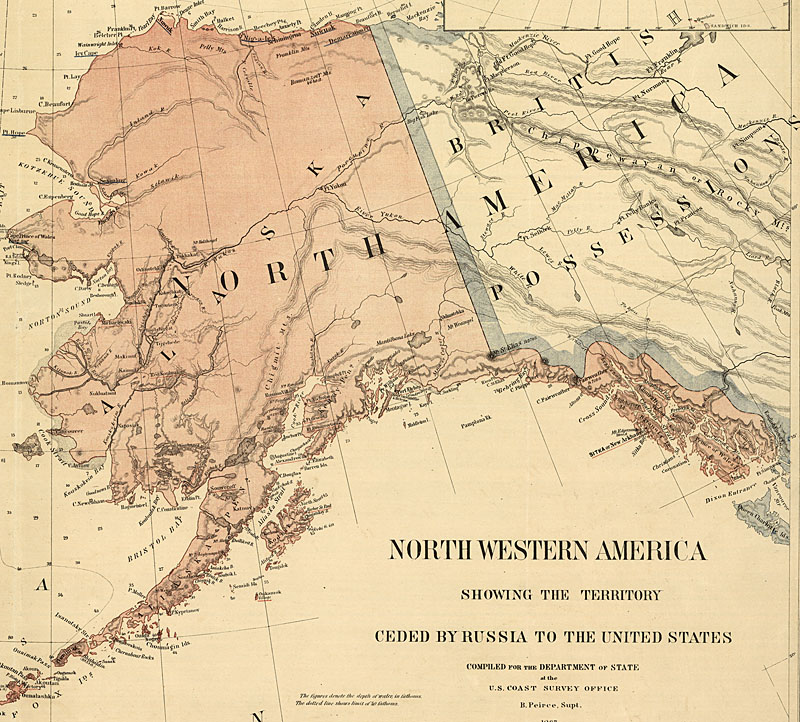
The story of Alaska as part of the United States begins long before its statehood, tracing back to its days as Russian America and its eventual purchase by the U.S.
The Russian Presence
For over a century, Alaska was a colonial possession of Imperial Russia. Russian explorers first sighted Alaska in 1741, leading to a lucrative fur trade that drew Russian merchants and settlers to the region. Establishments like Sitka became bustling centers of Russian activity, serving as the capital of Russian America. However, maintaining such a distant and expansive territory proved increasingly difficult and costly for the Russian Empire, especially given its dwindling fur resources and the logistical nightmares of supplying its outposts across the Pacific. By the mid-19th century, Russia saw its Alaskan holdings as an economic burden and a potential strategic vulnerability, particularly in the face of growing British power in North America.
Seward’s Folly: The Alaska Purchase
The opportunity for the United States to acquire Alaska arose in the aftermath of the American Civil War. On March 30, 1867, U.S. Secretary of State William H. Seward negotiated the purchase of Alaska from Russia for $7.2 million – an astonishingly low price of about two cents per acre. The treaty was signed in Washington D.C. The acquisition was initially met with skepticism and derision by many Americans, who dubbed it “Seward’s Folly” or “Seward’s Icebox,” believing the land to be barren and worthless. Few could fathom the strategic and economic potential hidden within the vast, frozen frontier. Yet, Seward and other proponents understood the strategic value of extending American influence across the continent and preventing other powers from gaining a foothold.
Early Governance and Neglect
Following the purchase, Alaska entered a long period of administrative uncertainty and neglect. For years, it was governed by a series of military departments, including the Army, Navy, and Treasury Department, before a rudimentary civil government was established in 1884. This act designated Alaska as a “district,” providing for a governor and a district court but no legislative assembly. The remote nature of Alaska and the prevailing indifference in Washington meant that its development was slow and haphazard. Resource exploitation, primarily fishing and mining, occurred largely unregulated, and the indigenous populations faced significant challenges and displacement. This period laid the groundwork for a growing demand among Alaskans for greater self-governance and representation.
The Road to Statehood: A Century of Advocacy
Despite the early neglect, Alaska’s undeniable potential eventually began to emerge, fueling a persistent drive for statehood.
Economic Drivers and Population Growth
The discovery of gold in the late 19th and early 20th centuries proved to be a pivotal turning point. The famed Klondike Gold Rush of 1896, while primarily centered in Canadian territory, brought thousands of prospectors through Alaska and spurred subsequent discoveries within its borders, notably around Nome and Fairbanks. These gold rushes led to a dramatic increase in population and the establishment of new towns and infrastructure. Beyond gold, vast resources of fish, timber, and later, oil, began to draw further investment and settlement. This economic activity highlighted the need for stable laws, better infrastructure, and a local government capable of addressing the unique challenges of the territory. The transient nature of the population slowly gave way to permanent residents who increasingly sought greater political autonomy.
Territorial Status and Political Awakening
The growing population and economic importance, coupled with fervent lobbying efforts, finally convinced Congress to grant Alaska territorial status in 1912. This was a crucial step, providing Alaska with its own legislature and a non-voting delegate to Congress. While still subject to federal oversight, this new status allowed Alaskans to begin shaping their own laws and advocating more effectively for their interests. Figures like James Wickersham, Alaska’s delegate to Congress for many years, became tireless champions for statehood, arguing that full political rights were essential for the territory’s progress. Despite this progress, statehood remained elusive, primarily due to concerns about Alaska’s sparse population, vast distances, and perceived economic dependence on federal funds.
World War II’s Impact
The outbreak of World War II dramatically transformed Alaska’s strategic significance and profoundly impacted its statehood aspirations. With the attack on Pearl Harbor and the subsequent Japanese invasion of the Aleutian Islands, Alaska became a critical front in the Pacific theater. The U.S. government poured massive investments into military bases, airfields, and defensive infrastructure. The construction of the Alaska Highway linked the territory directly to the contiguous United States for the first time, bringing thousands of service members and construction workers. This wartime development led to a significant population boom and a newfound appreciation in Washington for Alaska’s strategic importance in global defense. The war effectively shattered the image of Alaska as a remote, useless territory, making the case for statehood much stronger.
The Final Push: Overcoming Obstacles
With newfound momentum after World War II, Alaskan leaders intensified their efforts to achieve statehood, employing innovative strategies to overcome congressional reluctance.
Constitutional Convention and Lobbying Efforts
Recognizing the need for a strong, unified legal framework, Alaskans took matters into their own hands. In 1955-1956, delegates convened the Alaska Constitutional Convention at the University of Alaska in Fairbanks. Under the leadership of figures like Ernest Gruening, a former territorial governor and a relentless advocate, they drafted a model state constitution, widely regarded as one of the best in the nation. To further pressure Congress, Alaskans adopted the “Tennessee Plan” strategy. They elected two “Senators” and one “Representative” to Congress, including Bob Bartlett, even before statehood was granted, sending them to Washington to lobby directly for their cause. This bold move demonstrated Alaska’s determination and readiness for self-governance.
Political Opposition and Support
Despite the growing support, statehood for Alaska faced persistent opposition. Concerns included the vast federal land holdings in Alaska, its small tax base, the potential cost of providing state services, and the distance from the mainland United States. Some Southern politicians also feared that new states like Alaska (and later Hawaii) would shift the balance of power in Congress towards those who favored civil rights legislation. However, proponents argued that denying statehood was a violation of democratic principles and that Alaska’s strategic importance and resource wealth made it a valuable asset to the nation. The hard work of Alaskan delegates, the persuasive arguments of Governor Mike Stepovich, and the support of key congressional leaders gradually eroded the opposition.
The Triumphant Vote and Proclamation
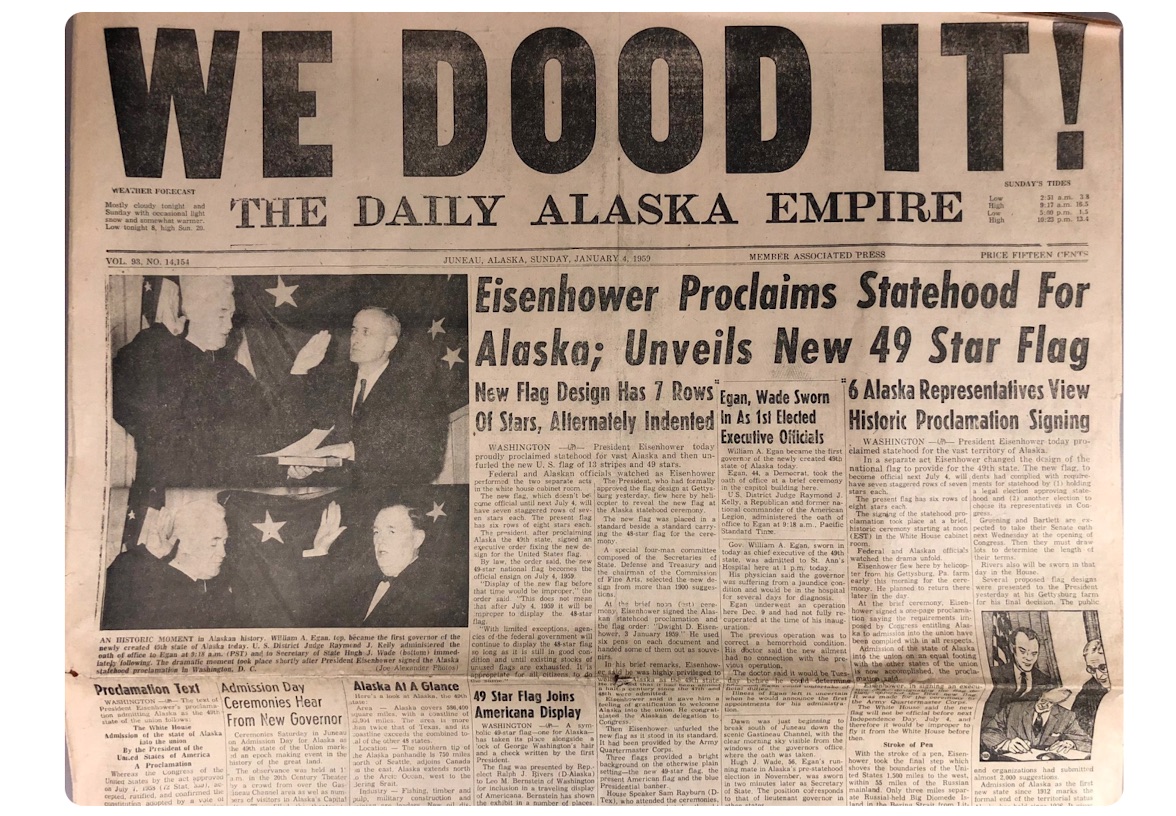
The momentum for Alaskan statehood became unstoppable in the late 1950s. On May 28, 1958, the United States House of Representatives passed the Alaska Statehood Act. The Senate followed suit on June 30, 1958. Finally, on July 7, 1958, President Dwight D. Eisenhower signed the act into law. This set in motion the final steps for Alaska to officially join the Union. Alaskans overwhelmingly approved the terms of statehood in an August 1958 plebiscite. With all conditions met, President Eisenhower issued Presidential Proclamation 3269 on January 3, 1959, officially declaring Alaska the 49th state of the United States. The news was met with jubilation across the vast territory, marking the end of its colonial status and the beginning of a new era.
Alaska’s Enduring Legacy as the 49th State
The admission of Alaska into the Union profoundly reshaped the map and the future of the United States.
A Vast and Resource-Rich Addition
As the largest state by land area, Alaska brought an unparalleled expanse of wilderness, diverse ecosystems, and rich natural resources to the United States. Its strategic location, bordering the Arctic Ocean and in close proximity to Russia and Asia, cemented its role in national defense and international geopolitics. The state’s vast oil reserves, particularly those discovered on the North Slope in 1968, transformed its economy and contributed significantly to the nation’s energy independence. Alaska’s immense natural beauty, from towering mountains like Denali to expansive glaciers and abundant wildlife, also solidified its place as a unique national treasure.

Modern Alaska and its Identity
Today, Alaska continues to thrive as a state with a distinct identity, balancing modern development with a deep respect for its natural heritage and indigenous cultures. Its capital, Juneau, and its largest city, Anchorage, serve as hubs for commerce, tourism, and government. The state’s economy remains heavily reliant on natural resources, particularly oil, gas, and seafood, but tourism is also a vital and growing industry, drawing visitors from around the globe eager to experience its unparalleled wilderness. The legacy of its journey to statehood is deeply woven into its political landscape and the independent spirit of its residents.
The admission of Alaska as the 49th state on January 3, 1959, was more than a mere formality; it was the culmination of a long and arduous process that reflected the determination of its people and the evolving vision of the United States. From its origins as Russian America and its purchase as “Seward’s Folly,” through decades of territorial status and fervent advocacy, Alaska’s path to statehood was shaped by economic booms, wartime imperatives, and the unwavering belief in self-determination. Its unique history continues to define its character, a land of vast frontiers, resilient communities, and enduring significance to the American narrative.
LifeOutOfTheBox is a participant in the Amazon Services LLC Associates Program, an affiliate advertising program designed to provide a means for sites to earn advertising fees by advertising and linking to Amazon.com. Amazon, the Amazon logo, AmazonSupply, and the AmazonSupply logo are trademarks of Amazon.com, Inc. or its affiliates. As an Amazon Associate we earn affiliate commissions from qualifying purchases.