
The question of whether a California ID is sufficient for crossing an international border is a common one, particularly for residents living near the United States borders with Mexico or Canada. The straightforward answer for international travel is generally no; a standard California Driver’s License or state ID card is not an acceptable primary document for entry into most foreign countries, nor for re-entry into the United States from those countries. While state-issued identification serves crucial purposes within the United States, such as proving identity, age, and driving privileges, its utility for international travel is severely limited. Understanding the specific requirements for different modes of travel and various international borders is paramount for a smooth and uninterrupted journey. This guide will delve into the nuances of travel documentation, clarify the role of California IDs, and outline the essential documents you’ll need for crossing international borders.
The Role of California IDs in the United States and Abroad
A California Driver’s License or Identification Card is a vital document for daily life within the Golden State and across the United States. It allows you to drive, purchase age-restricted goods, open bank accounts, and even board domestic flights if it’s a REAL ID compliant card. However, the distinction between domestic identification and international travel documents is critical.
What is a Standard California Driver’s License/ID?
A standard California Driver’s License or ID card is issued by the California Department of Motor Vehicles (DMV). It contains your photograph, name, address, date of birth, and an identifying number. Its primary function is to serve as proof of identity and, for driver’s licenses, proof of driving privileges within the state and the nation. These cards are designed to meet federal standards for domestic identification, particularly following the implementation of the REAL ID Act.
The REAL ID Act and International Travel
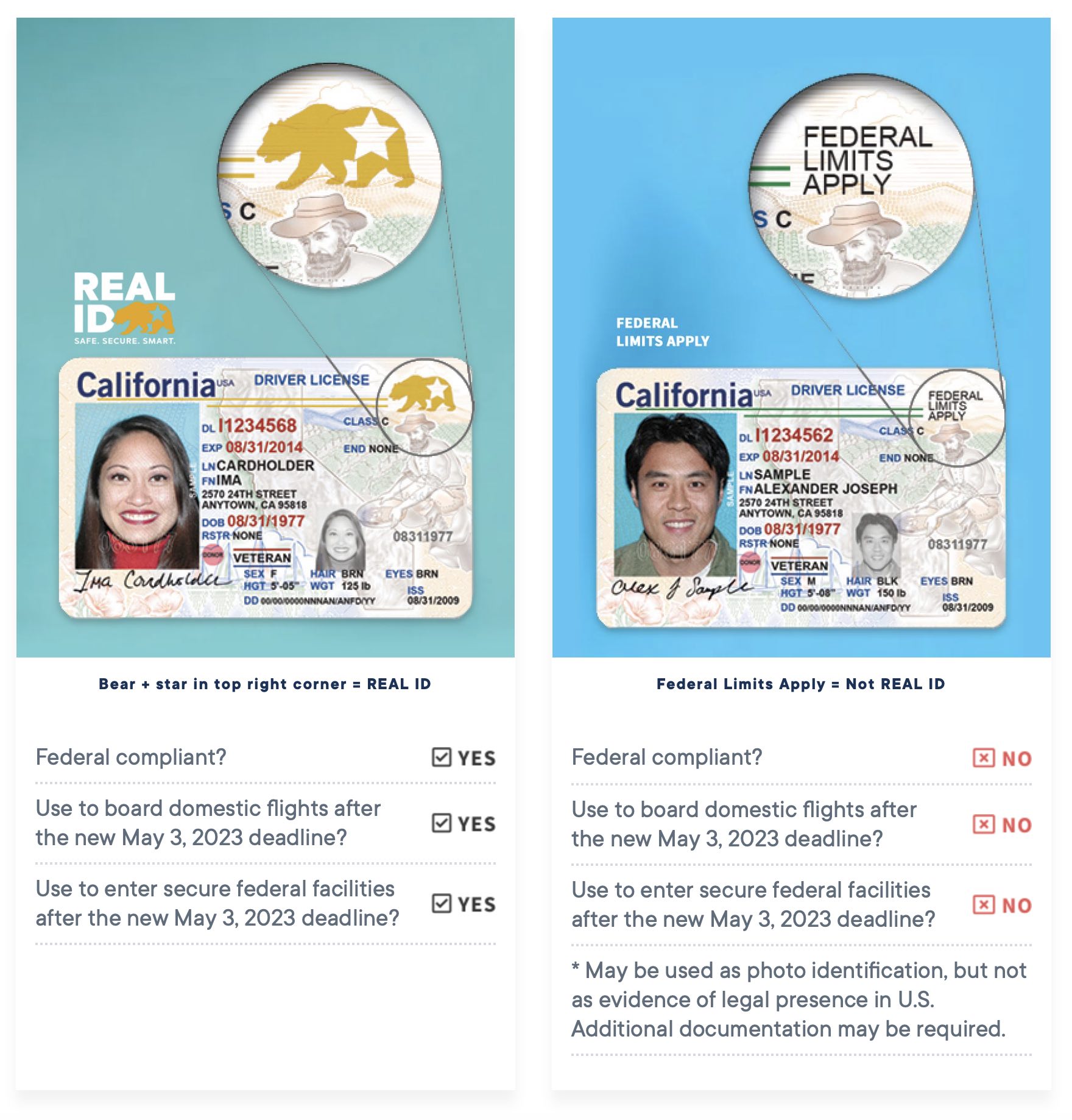
The REAL ID Act, passed by Congress in 2005, established minimum security standards for state-issued driver’s licenses and ID cards and prohibited federal agencies from accepting for certain purposes driver’s licenses and identification cards from states that do not meet these standards. For travelers, the most significant impact of REAL ID is on domestic air travel. As of May 7, 2025, every air traveler 18 years of age and older will need a REAL ID-compliant driver’s license or identification card, or another acceptable form of ID, to fly within the United States.
It is crucial to understand that a REAL ID-compliant California ID, while necessary for domestic air travel, does not grant you permission to cross international borders. The REAL ID designation pertains exclusively to federal identification requirements within the United States and does not elevate a state ID to the status of a passport for international travel. For that, you will still need a US passport or other WHTI-compliant documents, which we will discuss next.
The Western Hemisphere Travel Initiative (WHTI)
The Western Hemisphere Travel Initiative (WHTI) is a US law that requires US citizens and foreign nationals to present a passport or other approved travel document when entering the United States from countries in the Western Hemisphere, primarily Canada, Mexico, Bermuda, and the Caribbean. This initiative significantly changed what documents are accepted at land and sea borders. A standard California Driver’s License or ID is NOT WHTI-compliant.
Crossing Land Borders: Mexico and Canada
For California residents, the most frequent international border crossings are typically into Mexico by land. Crossing into Canada, while geographically more distant for California residents, follows similar documentation rules.
Land Border Crossings to Mexico
When driving or walking across the border into Mexico and then back into the United States, a standard California ID alone is not sufficient. To re-enter the United States from Mexico by land, US citizens must present a WHTI-compliant document. These include:
- US Passport Book: The gold standard for all international travel.
- US Passport Card: Specifically designed for land and sea travel to Canada, Mexico, the Caribbean, and Bermuda. It’s a convenient, wallet-sized alternative to the passport book for these specific travel types.
- Enhanced Driver’s License (EDL): Some states (not California) issue EDLs that denote both identity and citizenship and are WHTI-compliant for land and sea travel. Since California does not offer EDLs, this isn’t an option for California residents.
- Trusted Traveler Program Cards: Such as NEXUS (for Canada and US border), SENTRI (for Mexico and US border), or FAST (for commercial drivers). These cards expedite border crossings and are WHTI-compliant.
While Mexican authorities may sometimes allow short-term entry for US citizens with just a driver’s license for day trips just across the border, relying on this is risky and not officially sanctioned. More importantly, without one of the WHTI-compliant documents, you could face significant delays or denial of re-entry into the United States.
Land Border Crossings to Canada
The requirements for crossing into Canada by land are largely identical to those for Mexico. US citizens must present a WHTI-compliant document to re-enter the United States from Canada. Again, a standard California Driver’s License or ID is not sufficient. The same documents (Passport Book, Passport Card, NEXUS, or EDL from participating states) are required. Canadian authorities also require appropriate documentation for entry, which aligns with US WHTI standards.
Air and Sea Travel: Stricter Documentation Requirements
When traveling internationally by air or sea, particularly beyond immediate neighboring countries, the documentation requirements become even more stringent, with the US Passport Book being almost universally mandatory.
International Air Travel
For any international flight, whether to Mexico, Canada, or any other country across the globe, a valid US Passport Book is required. This is a fundamental rule with virtually no exceptions for US citizens. Airlines will not allow you to board an international flight without a valid passport book (and often, it must be valid for at least six months beyond your planned return date). A California Driver’s License or ID, even a REAL ID compliant one, is completely unacceptable for international air travel.
International Sea Travel (Cruises)
The documentation needed for international cruises can vary slightly depending on the itinerary, specifically whether it’s a “closed-loop” cruise.
- Closed-Loop Cruises: These are cruises that begin and end in the same US port and travel to destinations in Canada, Mexico, the Caribbean, or Bermuda. For US citizens, a US Passport Card or a standard birth certificate accompanied by a government-issued photo ID (like a California Driver’s License) may be accepted for re-entry into the United States. However, it is strongly recommended to use a US Passport Book for all cruises, even closed-loop ones, as it offers the most flexibility in case of unforeseen circumstances (e.g., needing to fly home from a foreign port due to an emergency).
- Open-Loop or Other International Cruises: For cruises that begin in one port and end in another, or that travel to destinations outside of the WHTI-designated areas (e.g., Europe, Asia, South America), a valid US Passport Book is always required. A California ID is not sufficient.
Essential Travel Documentation for US Citizens
Given the limitations of a California ID for international travel, it’s vital for any aspiring international traveler to obtain the appropriate documentation.
The US Passport Book
The US Passport Book is the single most important travel document for US citizens engaging in international travel. It proves both your identity and your citizenship and is globally recognized as the standard for international entry and re-entry. It is required for all international air travel and highly recommended for all other forms of international travel.
- Application: You can apply for a passport at designated passport acceptance facilities (often post offices or clerk of court offices) or renew by mail if eligible.
- Validity: Passports for adults are valid for 10 years; for minors under 16, they are valid for 5 years. Always ensure your passport has at least six months of validity remaining from your intended return date, as many countries enforce this requirement.
The US Passport Card
For those who frequently cross land borders into Canada or Mexico, or take short cruises to these regions and the Caribbean or Bermuda, the US Passport Card offers a convenient and less expensive alternative to the full passport book. However, it is strictly not valid for international air travel.
Trusted Traveler Programs
For frequent travelers, particularly those living near the US borders, enrolling in a Trusted Traveler Program can significantly expedite border crossings.
- NEXUS: For travel between the US and Canada by land, air, and sea.
- SENTRI: For expedited travel into the US from Mexico by land.
- FAST: Designed for commercial truck drivers crossing US land borders with Canada and Mexico.
These programs require a rigorous application and interview process but offer unparalleled convenience for eligible travelers. The cards issued through these programs are WHTI-compliant for land and sea travel.
Planning Ahead for International Travel
The key to a stress-free international journey is meticulous planning, especially concerning your travel documents.
Check Destination Requirements
Always verify the specific entry requirements for your destination country well in advance of your trip. These requirements can change, and some countries may require visas in addition to a valid passport. The US Department of State website is an excellent resource for this information.
Passport Validity
As mentioned, many countries require your passport to be valid for at least six months beyond your planned date of departure from their country. Do not wait until the last minute to check your passport’s expiration date. Renewing a passport can take several weeks, or even months during peak travel seasons, so plan accordingly.

Minors Traveling Internationally
Children, including infants, also need their own valid travel documents for international travel. If traveling with minors, especially if only one parent is present or if the child is traveling with guardians, additional documentation (such as a consent letter from the absent parent(s)) may be required by border authorities.
In conclusion, while a California ID is an indispensable document for daily life and domestic travel within the United States, it is not a ticket for international border crossings. For any journey beyond the US borders, the US Passport Book remains the most reliable and widely accepted form of identification. For land and sea travel to immediate neighbors, the US Passport Card or a Trusted Traveler Program card can also serve the purpose. Always prioritize obtaining the correct documentation well in advance of your travel dates to ensure a seamless and enjoyable international experience.
LifeOutOfTheBox is a participant in the Amazon Services LLC Associates Program, an affiliate advertising program designed to provide a means for sites to earn advertising fees by advertising and linking to Amazon.com. Amazon, the Amazon logo, AmazonSupply, and the AmazonSupply logo are trademarks of Amazon.com, Inc. or its affiliates. As an Amazon Associate we earn affiliate commissions from qualifying purchases.