
Deciding when to embark on a journey to Alaska, the “Last Frontier,” is perhaps the most crucial decision in planning your trip. This vast and diverse state offers profoundly different experiences depending on the time of year, transforming from a sun-drenched haven of outdoor adventure in summer to a mystical, snow-covered wonderland perfect for chasing the Northern Lights in winter. There isn’t a single “best” time, but rather an ideal season tailored to your specific interests, budget, and tolerance for crowds or cold. Understanding the distinct characteristics of Alaska’s four seasons is key to unlocking the adventure that awaits you.
Understanding Alaska’s Seasons: A Year-Round Perspective
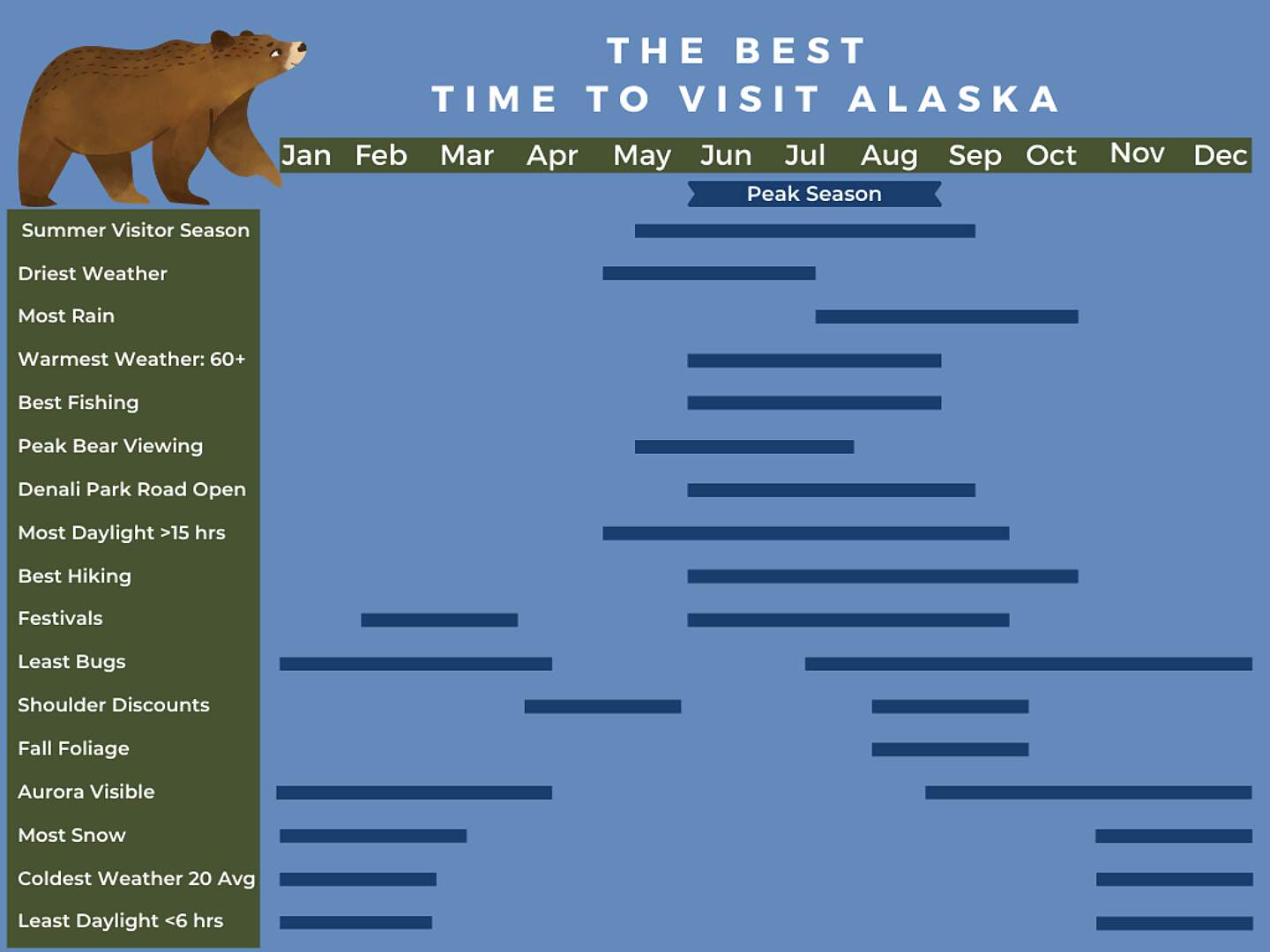
Alaska’s unique position on the globe grants it extreme seasonal variations in daylight, temperature, and accessibility. Each period unveils a different facet of its wild beauty, from vibrant green summers to icy, star-studded winters.
Summer: The Golden Window (June to August)
Summer is undeniably the most popular time to visit Alaska, and for good reason. From early June through late August, the state basks in extended daylight hours, often experiencing up to 19-24 hours of light in certain regions, particularly in the interior. This abundance of light fuels a burst of life, making it the prime season for outdoor activities and wildlife viewing.
Pros: The primary advantages of summer travel include warm temperatures (averaging 60-70°F/15-21°C), maximum accessibility to parks and attractions, and the full range of tour and activity options. Wildlife, from brown bears to humpback whales, is highly active and visible. It’s the only time most visitors can fully explore vast areas like Denali National Park, enjoy the full cruising season along the Inside Passage, or participate in world-class fishing expeditions. The famous Alaska Marine Highway system is fully operational, connecting coastal communities.
Cons: The popularity of summer comes with its downsides: larger crowds, higher prices for flights and accommodations, and the necessity of booking well in advance, especially for popular tours and lodges. Mosquitoes can also be prevalent in certain areas, particularly near standing water.
Activities: Summer is ideal for hiking, kayaking, white-water rafting, salmon fishing, and glacier viewing. Cruises offer unparalleled views of coastal glaciers and marine wildlife. Exploring cities like Anchorage and Juneau reveals bustling markets and vibrant local life. National parks are fully open, offering ranger-led programs and extensive trail networks.
Spring: Thawing Beauty (April to May)
Spring in Alaska is a time of transition, offering a unique blend of lingering winter beauty and the promise of summer’s vibrancy. As the snow and ice begin to melt, the landscape gradually transforms.
Pros: Traveling in spring means fewer crowds compared to summer, leading to more intimate experiences and often lower prices on flights and lodging. It’s an excellent time for budget-conscious travelers. Wildlife begins to emerge from hibernation, and migratory birds return, offering superb birdwatching opportunities. The budding wildflowers add splashes of color to the thawing landscape. Day length increases rapidly, providing ample time for exploration without the full summer intensity.
Cons: The weather in spring can be unpredictable, oscillating between sunny days and colder, wetter conditions. Some remote roads and hiking trails may still be snow-covered or muddy, and many seasonal businesses, particularly in smaller towns, might not yet be fully open until late May. Certain popular summer activities might not be available.
Activities: Coastal areas become accessible earlier, making Seward and Homer attractive destinations. Early season cruises might be available, offering good deals. Photography is particularly rewarding as landscapes change daily. It’s an excellent time for driving scenic routes like the Seward Highway, witnessing the first signs of green against snow-capped peaks.
Autumn: A Symphony of Colors (September to October)
Autumn in Alaska is a short but spectacular season, marked by a dramatic transformation of the landscape into a canvas of reds, golds, and oranges. It’s a favorite for many discerning travelers.
Pros: Similar to spring, autumn offers significantly fewer crowds and often excellent “shoulder season” deals on accommodations and tours. The fall foliage, especially in interior Alaska, is breathtaking. Wildlife is still active, preparing for winter, and it’s an exceptional time for photographers. Critically, late September and October often mark the beginning of optimal Northern Lights viewing, particularly in interior towns like Fairbanks, as nights grow longer and darker.
Cons: Daylight hours shorten considerably, and temperatures drop, especially overnight. While pleasant during the day, evenings can be chilly. Some tourist services and attractions begin to close down for the winter season by mid-September or early October, especially in more remote areas. Snow can start falling in higher elevations.
Activities: Fall is perfect for scenic drives through colorful landscapes, photography, and wildlife spotting as animals forage. It’s a prime time to head north to Fairbanks or other interior locations for a chance to witness the Aurora Borealis. Late-season fishing can still be productive.
Winter: The Wonderland of Aurora (November to March)
Winter unveils Alaska’s quiet, stark beauty, characterized by vast expanses of snow, frozen lakes, and the ethereal dance of the Northern Lights.
Pros: For those seeking solitude, adventure, and the magical Aurora Borealis, winter is the unrivaled choice. Crowds are minimal, and prices for many services are at their lowest. The snow-covered landscape creates stunning photo opportunities. Unique winter activities like dog sledding, ice sculpting festivals, and cross-country skiing become possible. The chance to see the Northern Lights is highest during the long, dark nights, particularly from November to March in areas away from city lights. Fairbanks, located under the “Aurora Oval,” is a world-renowned spot.
Cons: Winter in Alaska means extreme cold, with temperatures often well below freezing (0°F/-18°C and much colder). Daylight hours are severely limited, especially around the winter solstice. Many roads, particularly in national parks and remote areas, are closed, and most summer tour operators cease operations. Travel can be challenging due to snow and ice.
Activities: Dog sledding, snowmobiling (snowmachining), ice skating, cross-country skiing, and downhill skiing at resorts like Girdwood (Alyeska Resort) are popular. Attending winter festivals in Anchorage or Fairbanks offers cultural immersion. The primary draw, however, remains the awe-inspiring Northern Lights.
Matching Your Interests to the Season
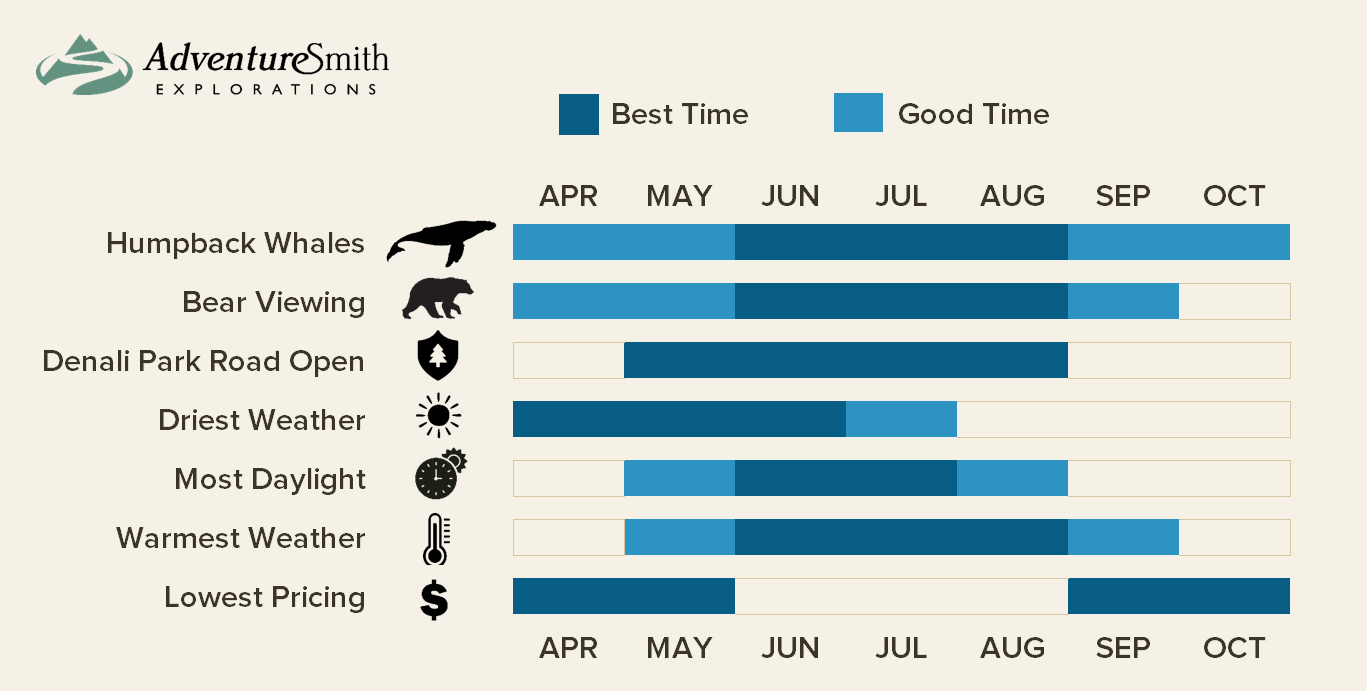
Your ideal travel time to Alaska largely depends on what you hope to experience. Tailoring your visit to specific activities will maximize your enjoyment.
For Wildlife Enthusiasts
Summer (June-August) is king for seeing a broad spectrum of Alaska’s iconic wildlife. Bears are active, feeding on salmon and berries; whales breach in the fjords; and sea otters, puffins, and other marine life thrive along the coast. Cruising through Kenai Fjords National Park or visiting brown bear viewing areas are prime summer activities. Spring and fall also offer great wildlife opportunities, especially for bird migration and seeing animals preparing for their seasonal changes.
For Adventure Seekers
If hiking, kayaking, rafting, and exploring vast wilderness are your priorities, summer is undoubtedly the best. Trails are clear, water levels are good, and the long daylight hours allow for extended outdoor pursuits. For winter sports like dog sledding, snowmobiling, ice climbing, and cross-country skiing, the deep winter months (December-March) provide the ideal snowy playground.
For Northern Lights Chasers
The prime time to witness the majestic Aurora Borealis is during the long, dark nights of late fall, winter, and early spring (September to April). Interior Alaska, particularly Fairbanks, offers the highest probability due to its location under the Aurora Oval and typically clear, cold skies. Plan to stay several nights to increase your chances.
For Budget-Conscious Travelers
For those looking to stretch their travel dollar, the shoulder seasons of spring (April-May) and fall (September-October) offer excellent value. You’ll find lower prices on flights, accommodations, and sometimes even tours. Winter also presents significant savings, though fewer options are available. The trade-off is often less predictable weather and reduced accessibility compared to peak summer.
Key Considerations for Planning Your Alaska Trip
Regardless of the season you choose, some fundamental aspects of planning remain crucial for a smooth and enjoyable Alaska adventure.
Weather Variability and Packing
Alaska’s weather is famously unpredictable. Even in summer, temperatures can fluctuate significantly, and rain is always a possibility. The key to comfortable travel is layering. Pack moisture-wicking base layers, insulating middle layers (fleece or down), and a waterproof and windproof outer shell. In winter, thermal wear, heavy insulated coats, waterproof boots, hats, and gloves are non-negotiable.
Transportation and Accessibility
Transportation options vary significantly by season. In summer, the road system is fully open, cruises are abundant, and the Alaska Railroad operates its scenic routes. Bush planes offer access to remote lodges. In winter, many roads close, and travel often relies on flying, the limited winter Alaska Railroad schedule, or specialized winter vehicles. Planning your route and understanding seasonal access is critical.
Booking in Advance
For peak summer travel, booking flights, accommodations, rental cars, and popular tours (especially those to Denali National Park or bear-viewing excursions) several months, or even a year, in advance is highly recommended. For shoulder seasons and winter, while flexibility is greater, booking key elements still ensures availability and often better rates.
The “Best” Time: A Personal Choice
Ultimately, the “best” time to travel to Alaska is subjective and depends entirely on your personal priorities and what kind of experience you envision. There is no wrong answer, only different adventures.
Defining Your Priorities
Do you dream of endless daylight and abundant wildlife encounters, even if it means sharing the trails with more people? Then summer is your calling. Are you an intrepid explorer seeking solitude, vibrant fall colors, and the potential to witness the aurora? Autumn might be perfect. Do you long for a magical, snow-laden landscape, thrilling winter sports, and the ethereal dance of the Northern Lights, unfazed by extreme cold? Winter beckons. Or perhaps you’re seeking a blend of budding nature, fewer crowds, and a more budget-friendly trip during the thaw of spring.

The Allure of Each Season
Alaska is a destination that truly transforms with the seasons. Summer’s long days offer boundless opportunities for exploration and wildlife viewing. Spring brings the land to life with thawing ice and returning animals. Autumn paints the landscape in fiery hues and signals the return of the Northern Lights. Winter wraps the state in a blanket of snow, creating a serene, magical world perfect for chasing the aurora and embracing unique cold-weather adventures.
By carefully considering your interests and weighing the pros and cons of each season, you can confidently choose the ideal time to visit Alaska and create an unforgettable journey into the heart of the last great wilderness.
LifeOutOfTheBox is a participant in the Amazon Services LLC Associates Program, an affiliate advertising program designed to provide a means for sites to earn advertising fees by advertising and linking to Amazon.com. Amazon, the Amazon logo, AmazonSupply, and the AmazonSupply logo are trademarks of Amazon.com, Inc. or its affiliates. As an Amazon Associate we earn affiliate commissions from qualifying purchases.