
The question “When was Alaska discovered?” appears straightforward, yet its answer is far from simple. Like many vast territories with long histories, the concept of “discovery” depends entirely on one’s perspective. For the indigenous peoples who have called this land home for millennia, Alaska was never “discovered”—it was simply their ancestral realm. For European explorers, it represented a new frontier, a land waiting to be charted and claimed. Understanding the “discovery” of Alaska requires delving into two distinct, yet ultimately intertwined, narratives: the deep history of its original inhabitants and the subsequent arrival and exploration by external powers.

The Original Inhabitants: A Deep History
Long before any European sailed its treacherous waters or set foot on its icy shores, Alaska was a vibrant mosaic of cultures and communities. Its “discovery” by humans traces back to the very dawn of human migration into the Americas.
Ancient Migrations Across Beringia
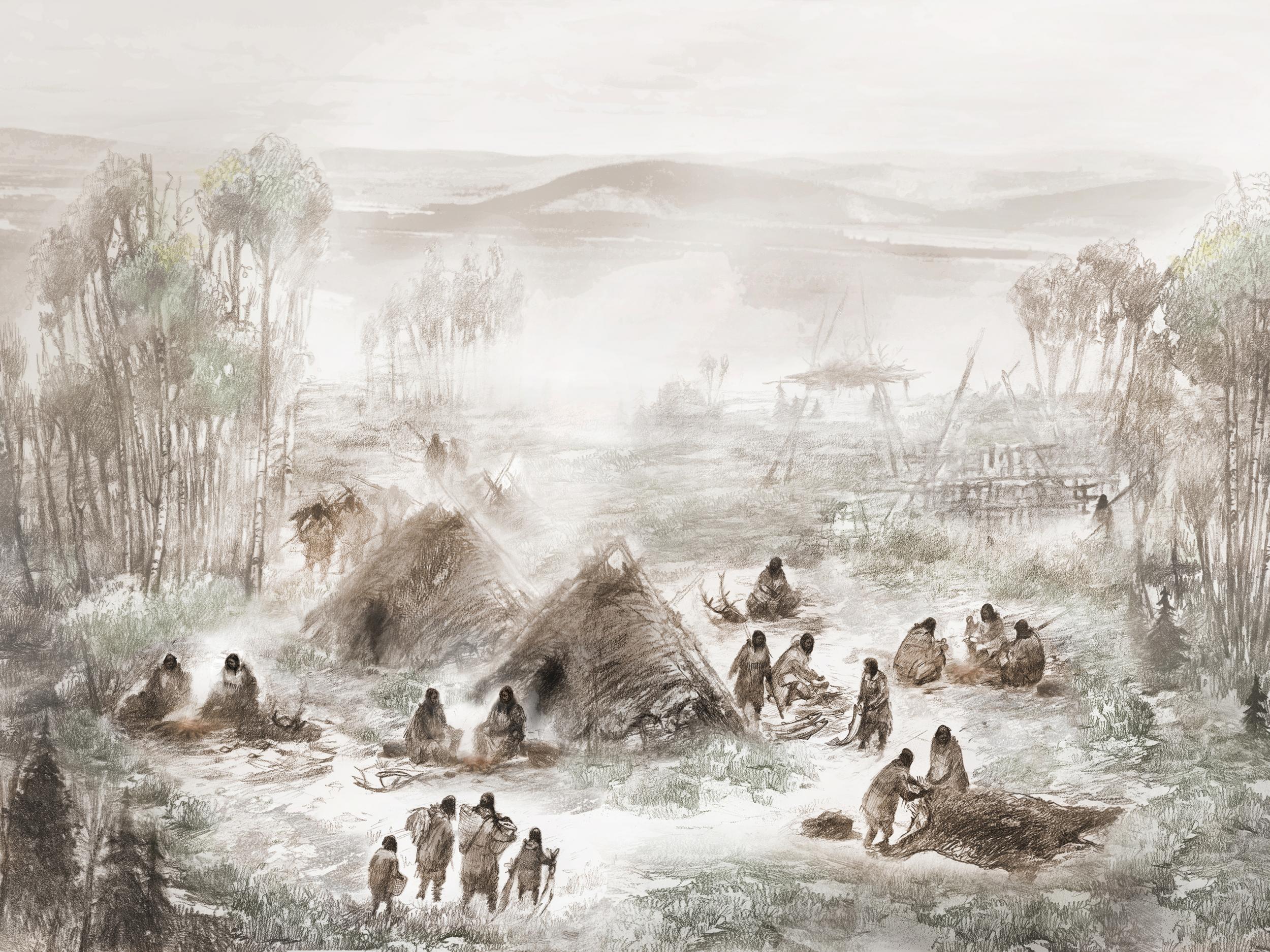
The most profound “discovery” of Alaska occurred tens of thousands of years ago, during the last Ice Age. At this time, vast amounts of the Earth’s water were locked in glaciers, causing sea levels to drop significantly. This exposed a wide land bridge, known as Beringia, connecting what is now Siberia to Alaska. It was across this expansive, grassy steppe that the ancestors of modern indigenous Americans migrated from Asia into North America.
Estimates vary, but archaeological evidence suggests these paleo-Siberians began crossing Beringia perhaps as early as 30,000 years ago, with significant migrations occurring between 15,000 and 20,000 years ago. These early pioneers were the true discoverers of Alaska, venturing into an untouched wilderness and laying the groundwork for the diverse indigenous cultures that would flourish there. As glaciers retreated, they moved deeper into the continent, but many remained, establishing permanent settlements throughout Alaska’s vast and varied landscapes.
Flourishing Cultures and Self-Sustenance
Over millennia, these early inhabitants developed complex societies perfectly adapted to Alaska’s’s challenging environments. Diverse linguistic and cultural groups emerged, including the Inuit and Yup’ik along the Arctic and Bering Sea coasts, renowned for their incredible knowledge of sea mammal hunting and Arctic survival. In the interior, the Athabascan peoples thrived by hunting caribou and moose and harvesting salmon from vast river systems. Along the southeastern panhandle, the Tlingit, Haida, and Tsimshian developed rich, complex cultures centered around forest and marine resources, characterized by elaborate totem poles, intricate art, and sophisticated social structures.
These communities possessed an intimate understanding of their land, its seasons, resources, and spiritual significance. They navigated its waterways, built shelters, developed sophisticated tools, and passed down generations of knowledge through oral traditions. For these peoples, Alaska was not a place to be discovered, but a living entity, their homeland, deeply integrated into their identity and way of life. Their presence represents the longest continuous human history in Alaska, a narrative of resilience and profound connection to the land that predates any European contact by thousands of years.
European Exploration: The Quest for New Lands
The European “discovery” of Alaska marks a distinct chapter, driven by imperial ambition, scientific curiosity, and the insatiable quest for new trade routes and resources. This phase began much later, in the 18th century, as European powers expanded their global reach.
Russian Pioneers and the Great Northern Expedition
The first documented European sighting of what is now Alaska is generally credited to Russian explorers. The impetus came from Tsar Peter the Great, who, in 1725, commissioned an expedition to determine if Asia and North America were connected. This led to the monumental Great Northern Expedition.
Under the command of Danish navigator Vitus Bering (working for Russia), the first voyage in 1728 confirmed the existence of a strait between the continents, now known as the Bering Strait. However, it was Bering’s second expedition, aboard the St. Peter, accompanied by Aleksei Chirikov on the St. Paul, that truly “discovered” Alaska in the European sense.
On July 16, 1741, Aleksei Chirikov’s crew sighted land, likely the southeastern coast of Alaska, near Prince of Wales Island. The very next day, July 17, 1741, Vitus Bering and his crew sighted what they called Mount St. Elias, a towering peak on the southeastern coast of the Alaskan mainland. This pivotal moment marked the official European “discovery” of Alaska and opened the door for subsequent Russian exploration and colonization. The expedition, though fraught with hardship and the loss of Bering himself, returned with valuable sea otter pelts, sparking the lucrative fur trade that would drive Russian interest in the region for decades.
Spanish and British Encounters
The Russian presence in Alaska spurred other European powers to explore the North Pacific. The Spanish Empire, fearing Russian encroachment on its claimed territories further south, dispatched its own expeditions. In 1774, Juan Pérez led the first Spanish voyage to the region, reaching the entrance to Dixon Entrance, between what is now Alaska and British Columbia. While he didn’t make landfall in Alaska proper, his voyage contributed to the growing European understanding of the northwestern coast of North America.
Shortly after, the renowned British explorer Captain James Cook embarked on his third Pacific voyage in 1778, with the primary goal of finding the fabled Northwest Passage. Cook meticulously charted much of the Alaskan coastline, from Yakutat Bay to the Bering Strait, proving that no easy passage existed at these latitudes. His detailed maps and observations were invaluable, solidifying Alaska’s place on global maps and initiating further British interest in the region.
The Russian-American Company and Colonial Footprints
Following the expeditions, Russia began to establish a more permanent, albeit sparse, presence in Alaska, largely driven by the lucrative sea otter fur trade.
Establishing Russian Presence
The discovery of abundant fur-bearing animals, particularly the sea otter, quickly attracted Russian trappers and traders, known as promyshlenniki. These intrepid adventurers initially operated independently, often clashing with indigenous communities and leading to brutal exploitation. To bring order and maximize profits, the Russian-American Company was chartered in 1799 by Tsar Paul I. This powerful, state-sponsored monopoly became the primary instrument of Russian colonial expansion in North America.
The company established its first permanent settlement at Three Saints Bay on Kodiak Island in 1784. Later, under the leadership of Alexander Baranov, the company’s chief manager, the main administrative center was moved to Novo-Arkhangelsk, modern-day Sitka, in 1808. This port city became the capital of Russian America, a bustling hub of trade, shipbuilding, and Orthodox Christian missionary activity. Russian influence extended from the Aleutian Islands to Northern California, with outposts like Fort Ross.
Cultural Exchange and Conflict
The period of Russian colonization was marked by complex interactions between the Russians and the indigenous peoples. On one hand, there was significant cultural exchange, with intermarriage becoming common, leading to a distinct Creole population. The Russian Orthodox Church established missions and converted many natives, leaving a lasting legacy that continues to be a vibrant part of Alaskan culture today, particularly in the Aleutian Islands and among the Yup’ik.
However, the fur trade was also a brutal enterprise. Indigenous hunters, particularly the Aleut and Kodiak Alutiiq (Sugpiaq), were often coerced into hunting sea otters for the Russians, sometimes facing severe punishment or even massacres if they resisted. The Battle of Sitka in 1804, a violent conflict between the Tlingit and the Russians, exemplifies the resistance mounted by indigenous groups against colonial expansion. This era of Russian dominion, while brief in the grand sweep of Alaska’s history, irrevocably altered the social, economic, and cultural landscape of the region.
The American Acquisition: A New Chapter
The final chapter in the “discovery” narrative, particularly from a United States perspective, involves its formal acquisition and subsequent integration into the American fabric.
Seward’s Folly and the Alaska Purchase
By the mid-19th century, Russia found its Alaskan colony increasingly difficult and expensive to maintain. The sea otter population had been decimated, and the threat of British invasion during the Crimean War highlighted the territory’s vulnerability. Consequently, Russia offered to sell Alaska to the United States.
The transaction was spearheaded by U.S. Secretary of State William H. Seward. On March 30, 1867, Seward negotiated the purchase of Alaska from Russia for $7.2 million, an astonishingly low price of about two cents per acre. The treaty was signed, and the formal transfer of sovereignty took place on October 18, 1867, in Sitka.
Initially, the purchase was met with widespread skepticism and ridicule in the United States. Critics derided it as “Seward’s Folly” or “Seward’s Icebox,” believing Seward had squandered millions on a frozen, barren wasteland. However, Seward and his supporters envisioned the strategic importance and potential resource wealth of Alaska, particularly its rich fisheries, timber, and the future prospect of mineral wealth. This purchase significantly expanded the United States’ territory and solidified its presence in the Pacific.
Post-Purchase Exploration and Development
Following the Alaska Purchase, American “discovery” focused on mapping, surveying, and exploiting the vast natural resources of the new territory. The early years of American rule saw a period of neglect, but this changed dramatically with the late 19th-century gold rushes, particularly the Klondike Gold Rush of 1896 and the subsequent rushes in Nome and Fairbanks. These events brought tens of thousands of prospectors and settlers to Alaska, leading to rapid development of infrastructure, towns, and a more robust American presence.
Throughout the 20th century, Alaska continued to reveal its immense value, not just in gold, but also in copper, oil, and natural gas. Its strategic importance became evident during World War II, with the construction of the Alaska Highway and the defense of the Aleutian Islands from Japanese invasion. These developments ultimately paved the way for Alaska’s admission as the 49th state of the United States on January 3, 1959.
Redefining “Discovery”: A Concluding Perspective
The question of “When was Alaska discovered?” offers a fascinating lens through which to view history, geography, and the often-contested meanings of exploration and ownership.
Multiple Layers of History
Ultimately, there isn’t a single “discovery” date for Alaska. It was discovered by its first human inhabitants when they crossed Beringia tens of thousands of years ago, establishing thriving cultures that endured for millennia. It was “discovered” by Europeans, specifically by Vitus Bering and Aleksei Chirikov, in 1741, marking its entry into the European consciousness and global maps. And it was “discovered” again by the United States in 1867 through its acquisition, which initiated a new era of exploration, resource extraction, and eventual statehood.
Each of these “discoveries” represents a distinct historical layer, adding to the rich tapestry of Alaska’s past. A truly comprehensive understanding acknowledges all these perspectives, recognizing the profound and enduring legacy of its indigenous peoples alongside the transformative impacts of Russian and American contact.
Alaska’s Enduring Legacy
Today, Alaska stands as a testament to this complex history. Its vast wilderness, rich cultural heritage, and strategic importance continue to captivate and inspire. From the ancient migrations across a vanished land bridge to the scientific expeditions of the 18th century and the economic ambitions of subsequent centuries, Alaska’s story is one of continuous revelation and interaction. It is a land that has been, and continues to be, “discovered” in new ways by scientists, adventurers, and its own diverse population, each adding their chapter to its enduring legacy.
LifeOutOfTheBox is a participant in the Amazon Services LLC Associates Program, an affiliate advertising program designed to provide a means for sites to earn advertising fees by advertising and linking to Amazon.com. Amazon, the Amazon logo, AmazonSupply, and the AmazonSupply logo are trademarks of Amazon.com, Inc. or its affiliates. As an Amazon Associate we earn affiliate commissions from qualifying purchases.