
For many travelers planning a trip to the southwestern United States, the question of “What’s the time now in Arizona?” often comes with a unique twist. Unlike most states that dutifully spring forward and fall back with Daylight Saving Time (DST), Arizona largely stands apart, maintaining a consistent clock throughout the year. This distinction isn’t just a quirky local fact; it has tangible implications for flight schedules, tour bookings, communication with loved ones, and even your internal clock. Understanding Arizona’s approach to time is an essential piece of travel wisdom that ensures a seamless and enjoyable visit to the Grand Canyon State. This guide will unravel the mystery, offering insights and practical advice to help you navigate Arizona’s unique time zone landscape with confidence.

Unraveling Arizona’s Unique Time Zone Enigma
The most significant aspect of Arizona’s time-keeping is its steadfast refusal to observe Daylight Saving Time. This decision, made decades ago, sets the state apart and often causes initial confusion for visitors. However, once understood, it becomes a straightforward element of planning your desert adventure.
The Mountain Standard Time (MST) Constant
For the vast majority of the state, Arizona operates year-round on Mountain Standard Time (MST). This means it is UTC-7, a fixed offset from Coordinated Universal Time. When other states in the Mountain Time Zone (like Colorado or Utah) observe DST and shift to Mountain Daylight Time (MDT) – which is UTC-6 – Arizona remains on MST.
What does this mean in practical terms?
- During Standard Time (Winter Months): From roughly early November to mid-March, Arizona is on the same time as its Mountain Time Zone neighbors.
- During Daylight Saving Time (Summer Months): From mid-March to early November, Arizona is effectively on Pacific Daylight Time (PDT). So, if it’s 3:00 PM in Los Angeles, it’s also 3:00 PM in Phoenix during these months. At the same time, it would be 4:00 PM in Denver or Salt Lake City.
The primary reason Arizona opted out of DST was practical: the intense summer heat. Lengthening daylight hours during the hottest parts of the day would mean pushing activities like school, work, and outdoor recreation into even hotter afternoons and evenings. By sticking to MST, the sun rises and sets earlier, aligning better with natural rhythms and helping residents avoid the peak midday heat.
The Navajo Nation Exception
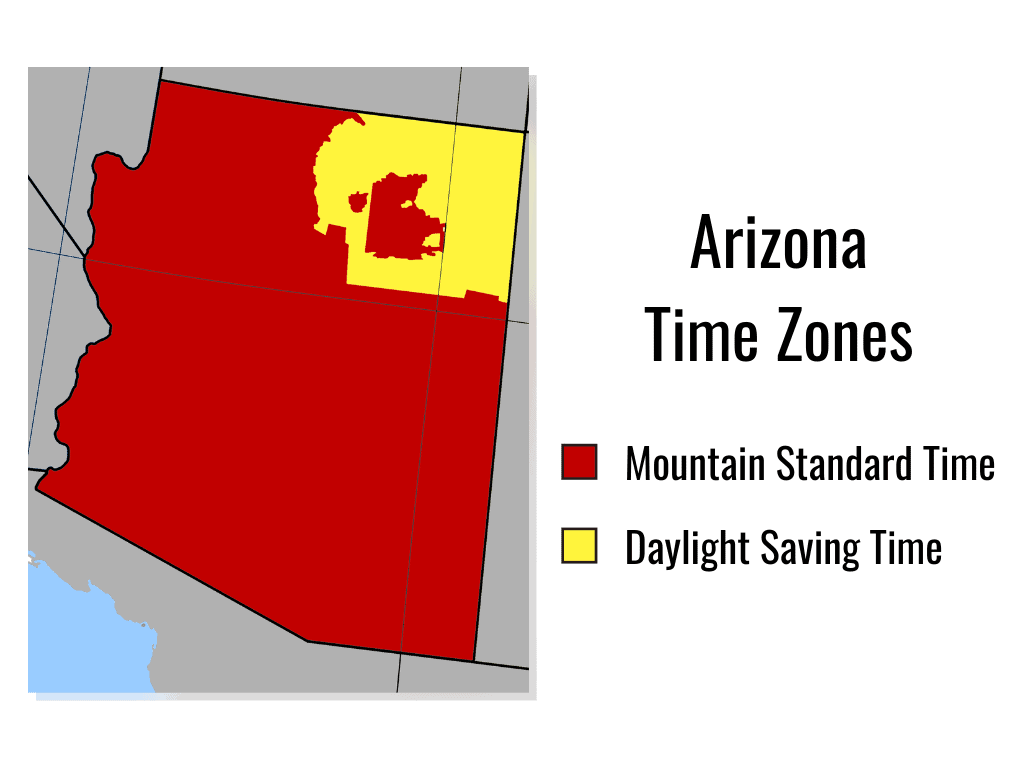
Just when you think you’ve got Arizona’s time situation figured out, there’s one significant exception that travelers must be aware of: the Navajo Nation. This vast sovereign territory, spanning parts of northeastern Arizona, New Mexico, and Utah, does observe Daylight Saving Time.
This means that for roughly half the year (during DST), the Navajo Nation will be one hour ahead of the rest of Arizona. If you’re driving from Flagstaff (MST) into areas like Monument Valley or Antelope Canyon, you’ll need to adjust your clock forward an hour. This geographical quirk can be particularly confusing when visiting attractions located on or near the reservation borders. For instance, parts of Grand Canyon National Park (South Rim) remain on MST, but if you venture to the eastern sections or areas within the Navajo Nation for certain tours, you’ll cross into MDT during DST.
Adding another layer of interest, the Hopi Reservation, which is entirely surrounded by the Navajo Nation in Arizona, does not observe DST. This creates a fascinating “time island” where you could potentially drive from non-DST Arizona, into DST Navajo Nation, and then into non-DST Hopi Reservation, only to return to DST Navajo Nation and finally back to non-DST Arizona — all within a relatively short drive!
Practical Implications for Arizona Travelers
Understanding Arizona’s time situation isn’t just an academic exercise; it has real-world consequences for your travel plans and overall experience. A small oversight can lead to missed flights, late tour arrivals, or simply unnecessary stress.
Planning Your Itinerary: Flights, Tours, and Reservations
The unique time zone can significantly impact the logistics of your trip.
- Flight Schedules: When booking flights into or out of Arizona, particularly during the DST period, be mindful of how your airline or booking platform displays times. Flight times are typically shown in local time for the departure and arrival airports. If you’re flying from a state that observes DST into Phoenix (which doesn’t), your perceived travel time might seem shorter or longer by an hour depending on the direction. Always double-check arrival and departure times against your personal clock to avoid confusion.
- Tour Bookings: This is especially critical for tours operating within the Navajo Nation, such as trips to Antelope Canyon or Monument Valley Navajo Tribal Park. Tour operators on the reservation will use their local time (MDT during DST). If you’re driving from a place like Page (MST) to an Antelope Canyon tour, you’ll need to factor in the one-hour time difference. Always confirm the meeting time directly with the tour operator and specify whether they mean “Arizona time” or “Navajo time” if there’s any ambiguity.
- Hotel Check-ins/Check-outs and Restaurant Reservations: While most hotels and restaurants across the main part of Arizona adhere to the non-DST rule, it’s good practice to confirm. When making reservations, especially if you’re traveling from a different time zone, reiterate the local time to avoid any miscommunication.
Communication Across Time Zones
Keeping in touch with friends, family, or colleagues outside of Arizona also requires a slight adjustment.
- Calling Home: If your family or friends are in a state that observes DST, remember that during those months, Arizona will be effectively one hour behind them if they are on Mountain Daylight Time, or the same time as those on Pacific Daylight Time.
- Business Travelers: For those on business trips, scheduling virtual meetings with partners or teams in other parts of the country requires careful calculation. A meeting scheduled for 9:00 AM MST in Phoenix would be 12:00 PM EDT in New York during DST, but only 11:00 AM EDT during Standard Time.

Health and Well-being: Avoiding “Time Confusion Jet Lag”
While not true jet lag, the subtle shifts in time can sometimes disrupt your internal clock, especially if you’re frequently crossing between Arizona’s MST and the Navajo Nation’s MDT during DST.
- Mental Adjustment: Your body might not feel the dramatic shift of several hours, but continuously thinking about which “time” you’re on can be mentally taxing.
- Tips for Adjustment: Stay hydrated, especially in Arizona’s dry climate. Try to establish a consistent sleep schedule quickly. And when in doubt, trust your phone’s automatic time adjustments, but always cross-reference with local signs or inquiries.
Navigating Arizona’s Diverse Landscapes by Time
Understanding where the time shifts occur is crucial for exploring Arizona’s incredible natural beauty and vibrant cities. Most major tourist destinations will operate on the consistent MST, but a few key regions demand extra attention.
Exploring Phoenix and Tucson: Always MST
The vast majority of Arizona’s population centers and popular tourist destinations adhere to year-round MST. This includes:
- The Greater Phoenix Area: Cities like Phoenix, Scottsdale, Tempe, and Mesa consistently operate on MST. This means your golf tee times, spa appointments, and dinner reservations in these bustling urban hubs will always follow the same clock, irrespective of the time of year.
- Southern Arizona: Tucson, home to the Saguaro National Park and a rich desert culture, also observes year-round MST.
- Central and Western Arizona: Destinations such as Sedona, Flagstaff, Yuma, and Kingman all maintain the MST standard. Even the popular South Rim of the Grand Canyon National Park remains on MST, making planning sunrise or sunset visits relatively straightforward.
For most travelers sticking to these well-trodden paths, the time difference essentially boils down to knowing that from March to November, Arizona is on the same time as California and Nevada.
The Navajo Nation & Beyond: Where Time Shifts
The primary area where time becomes a dynamic factor is within the Navajo Nation and its surrounding territories in northeastern Arizona.
- Iconic Attractions: Many of Arizona’s most recognizable natural wonders, like Antelope Canyon near Page, and the majestic Monument Valley Navajo Tribal Park on the border with Utah, are located within the Navajo Nation. Canyon de Chelly National Monument is another significant site.
- Navigating the Shift: When visiting these areas between March and November, be prepared to set your watch forward one hour as you cross into the Navajo Nation. Many local businesses, tour operators, and tribal parks within the reservation will operate on this adjusted time (MDT). It’s not uncommon to see signs indicating “Navajo Time” or “Arizona Time” to help clarify.
- The Hopi “Time Island”: Remember the Hopi Reservation, nestled entirely within the Navajo Nation, does not observe DST. This means if you travel from Flagstaff (MST) to a Navajo Nation site (MDT) and then to the Hopi Reservation (MST again), you’ll experience two time changes. While not a common tourist route, it highlights the intricate nature of time-keeping in this corner of the state.
Always plan your activities in this region with the “Navajo Nation time” in mind during the DST period. A missed tour slot because of a time miscalculation can be a significant disappointment.
Essential Tips for a Seamless Arizona Adventure
Navigating Arizona’s unique time situation doesn’t have to be daunting. With a few simple precautions, you can ensure your trip runs smoothly and that you never miss a moment of its breathtaking beauty.
Always Confirm Local Time
This is the golden rule for any trip to Arizona.
- Before Booking: When making reservations for flights, hotels, tours, or guided experiences, especially those near the Navajo Nation or during the DST months, take an extra moment to confirm what time zone the stated schedule refers to.
- Upon Arrival: Don’t hesitate to ask hotel staff, tour guides, or locals for clarification on the current time, especially if you’ve recently crossed a time zone boundary. A quick “What time is it now, locally?” can save you from potential headaches.
- Digital vs. Analog: While smartphones typically adjust automatically, it’s wise to double-check your device’s settings to ensure it’s set to automatic time zone detection. For those who prefer analog watches, remember to manually adjust if you venture into the Navajo Nation during DST.
Use Reliable Time-Telling Devices
Modern technology is your best friend when dealing with time zone complexities.
- Smartphones and GPS Devices: Most smartphones and in-car GPS systems automatically update to the correct local time based on your location. Ensure your phone’s “Set Automatically” or “Automatic Time Zone” feature is enabled.
- Travel Apps: Many travel apps can display multiple time zones, allowing you to easily compare Arizona time with your home time or the time in the Navajo Nation.
Embrace the Simplicity (Mostly)
Despite the initial confusion, Arizona’s consistent time-keeping for most of the state actually simplifies things. You don’t have to worry about changing your clocks twice a year for the bulk of your visit. The non-observance of DST is a deeply ingrained part of the state’s identity, linked to its climate and lifestyle. By understanding and respecting this unique aspect, you’re not just navigating schedules; you’re also getting a feel for the local rhythm.
Ultimately, the question of “What’s the time now in Arizona?” is a gateway to a deeper understanding of this remarkable state. With a little forethought and awareness, you can effortlessly manage your schedule, maximize your enjoyment, and fully immerse yourself in the natural wonders and cultural richness that Arizona has to offer. So, set your watch (or trust your phone), and prepare for an unforgettable journey through the sun-drenched landscapes of Arizona.
LifeOutOfTheBox is a participant in the Amazon Services LLC Associates Program, an affiliate advertising program designed to provide a means for sites to earn advertising fees by advertising and linking to Amazon.com. Amazon, the Amazon logo, AmazonSupply, and the AmazonSupply logo are trademarks of Amazon.com, Inc. or its affiliates. As an Amazon Associate we earn affiliate commissions from qualifying purchases.