
Havasu Falls, often depicted in breathtaking photographs as a vibrant blue-green oasis cascading over red rock cliffs, is one of Arizona‘s most iconic and elusive natural wonders. Far from being easily accessible, its remote location within the Grand Canyon and the Havasupai Indian Reservation contributes to its mystique and preserves its pristine beauty. For those seeking an unparalleled travel experience that combines challenging adventure with serene natural splendor, understanding exactly where Havasu Falls is and how to reach it is the first crucial step on an unforgettable journey.
The Enchanting Location of Havasu Falls
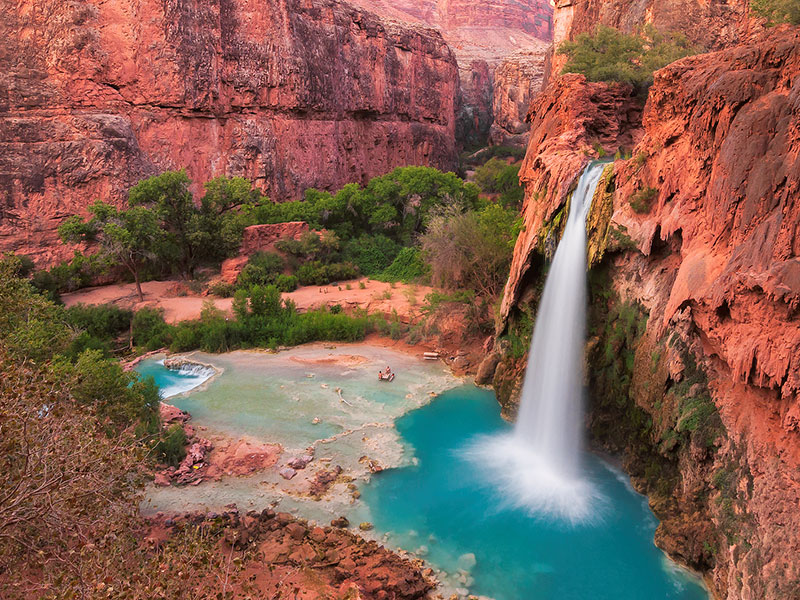
Havasu Falls is not merely a waterfall; it is a jewel nestled deep within the dramatic landscape of the Grand Canyon. Its unique characteristics, primarily the striking turquoise hue of its waters, are a direct result of the high concentration of calcium carbonate and magnesium in the Havasu Creek, which feeds the falls.
Nestled Within the Grand Canyon
The Grand Canyon, a mile-deep gorge carved by the Colorado River over millions of years, is one of the world’s most impressive geological features. Havasu Falls is situated on a tributary of the Colorado River within the Grand Canyon’s western edge. While often associated with the Grand Canyon National Park, it’s important to note that Havasu Falls is not located within the official boundaries of the national park itself. This distinction is vital for planning purposes, as access and regulations differ significantly. The falls are roughly 35 miles north of Peach Springs, a small town on Route 66, and significantly distant from the more popular South Rim or North Rim visitor centers of the national park.
The Havasupai Indian Reservation: A Sacred Land
The land encompassing Havasu Falls belongs to the Havasupai Tribe, whose name translates to “people of the blue-green water.” The reservation is a sovereign nation, and access to the falls is strictly controlled by the tribal government. This protection by the Havasupai Tribe is paramount to preserving the delicate ecosystem and cultural heritage of the area. Visitors are guests on tribal land and must adhere to all rules and regulations, which are designed to respect the environment and the tribe’s ancestral home. The Village of Supai, the tribal capital, is the only place in the United States where mail is still delivered by mule, further emphasizing its isolation and unique character. This village serves as the gateway to the falls, located just a couple of miles upstream from Havasu Falls itself.
Geographical Coordinates and General Area
Geographically, Havasu Falls is found at approximately 36.2575° N latitude and 112.7139° W longitude. It lies within the remote Havasu Canyon, a side canyon accessible primarily via a challenging hike. The nearest major cities are Kingman, Arizona, to the west, and Flagstaff, Arizona, to the east, though both are still several hours’ drive from the trailhead. The journey typically begins with a drive to Hualapai Hilltop, the starting point for the trek into the canyon. This initial drive itself takes visitors through vast stretches of arid Arizona desert, setting the stage for the dramatic change in scenery that awaits.
The Journey to a Hidden Paradise: Getting There
Reaching Havasu Falls is an adventure in itself, requiring meticulous planning, physical preparedness, and a significant commitment of time and resources. It’s not a destination you can simply drive up to; it demands effort and respect for its remote nature.
Permits: Your Golden Ticket
Access to Havasu Falls, the campgrounds, and the Village of Supai is strictly controlled and requires a permit issued by the Havasupai Tribe. These permits are notoriously difficult to obtain due to overwhelming demand and limited availability. The permit system is typically operated through an online lottery or reservation release, often selling out within minutes or hours for the entire upcoming year. There are no day-use permits; all visitors must have an overnight reservation, which includes camping. The permit includes entrance fees, environmental fees, and a tourism fee, all of which contribute to the tribe’s infrastructure and preservation efforts. It is absolutely crucial to secure your permit well in advance, sometimes a year or more, as spontaneous trips are virtually impossible.
Hualapai Hilltop: The Trailhead
The journey into Havasu Canyon begins at Hualapai Hilltop. This remote parking area is located at the end of Indian Road 18, a 60-mile paved road that branches off Route 66 near Peach Springs. There are no services at Hualapai Hilltop beyond restrooms, so travelers must ensure they have enough fuel, water, and supplies for the drive and the initial stages of their trek. The drive to the hilltop can be several hours from any major hub, so planning for an early morning arrival at the trailhead is essential for starting the hike in cooler temperatures.
The Trek: Hiking Into the Canyon
From Hualapai Hilltop, the only way to reach the Village of Supai on foot is via an 8-mile (13 km) hike down into the canyon. This trail is steep and rocky for the first 1.5 miles as it descends quickly, then flattens out somewhat as it follows the sandy wash of the dry creek bed for the remaining distance to the village. The terrain can be challenging, particularly during the hot summer months, and hikers must be prepared for extreme conditions. From the Village of Supai, it’s another 2 miles (3.2 km) to the campground and Havasu Falls. This means a total one-way hike of 10 miles (16 km) to the campground. Carrying plenty of water, high-energy snacks, and wearing appropriate hiking gear are non-negotiable. The trail is exposed, offering little shade, making early morning starts crucial to avoid the midday sun.
Alternative Transport: Mules and Helicopters
For those unable or unwilling to undertake the strenuous hike, the Havasupai Tribe offers limited alternative transportation options. Mule trains can carry luggage, food, and gear from Hualapai Hilltop to the Village of Supai and back, though reservations are often required in advance. There is also a helicopter service that operates on specific days, weather permitting, offering flights between Hualapai Hilltop and the Village of Supai. While faster, helicopter flights are subject to availability, tribal priorities (locals often get preference), weight limits, and can be relatively expensive. It’s a pragmatic option but should not be relied upon as the sole means of transport.
What Awaits: The Havasu Falls Experience
Upon arrival, the effort required to reach Havasu Falls quickly fades into the background, replaced by awe and wonder at the sheer beauty of this natural paradise. The vibrant waters, the lush vegetation, and the towering red cliffs create an almost surreal landscape, truly justifying its reputation as a hidden gem.
The Iconic Blue-Green Waters: A Natural Phenomenon
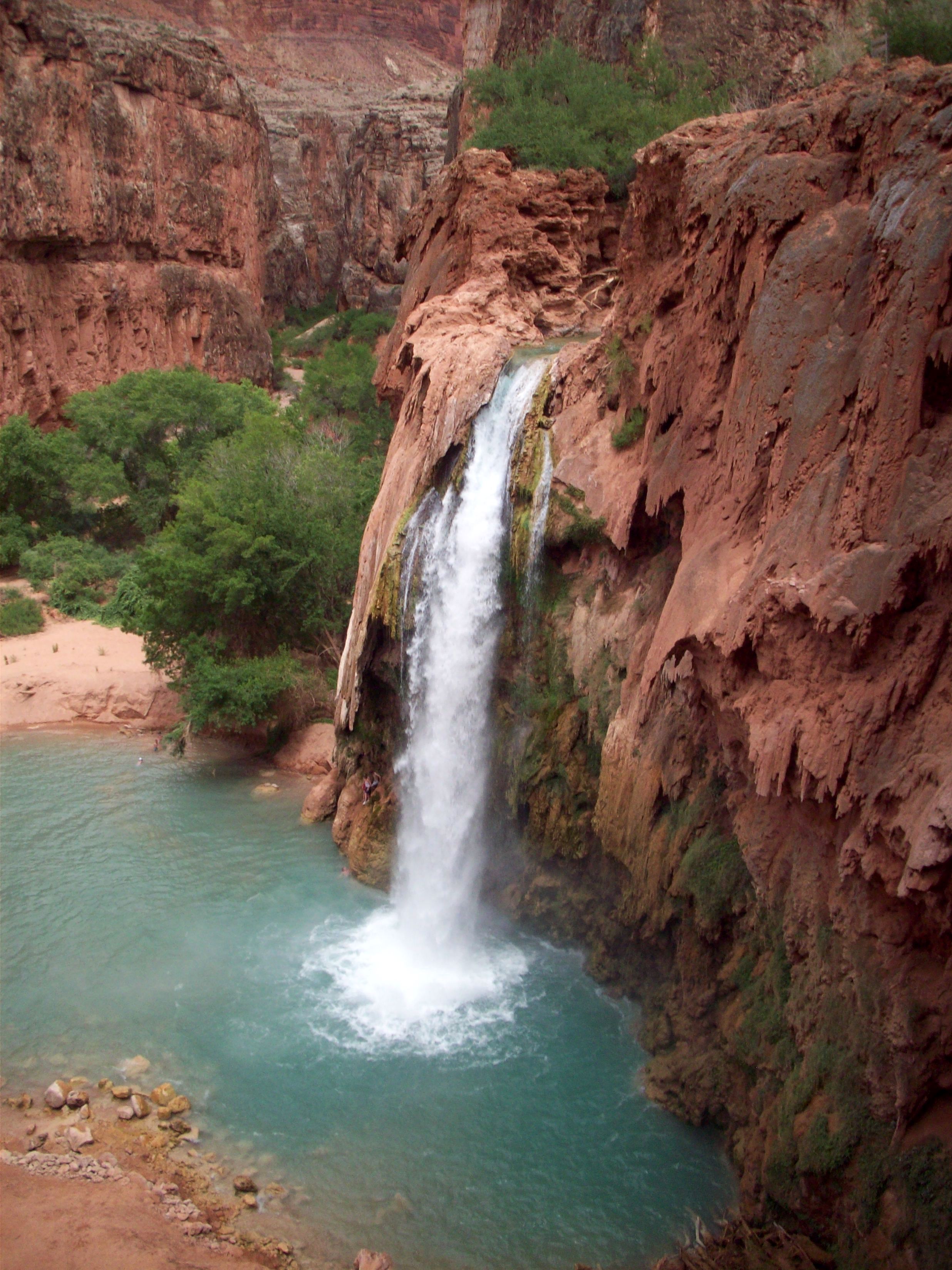
The most captivating feature of Havasu Falls is its distinctive blue-green water. This vivid coloration is due to the high mineral content, specifically calcium carbonate, which gives the water a milky turquoise appearance as it reflects sunlight. The water temperature remains a pleasant 70°F (21°C) year-round, making it ideal for swimming and cooling off after the long hike. The main cascade of Havasu Falls plunges approximately 100 feet (30 meters) into a series of inviting pools, forming a perfect natural swimming area. The scene is utterly picturesque, a stark contrast to the arid desert landscape above the canyon rim.
Beyond Havasu: Mooney Falls, Little Navajo Falls, Fiftyfoot Falls, and Beaver Falls
While Havasu Falls is the most famous, it is just one of several stunning waterfalls in Havasu Canyon. Upstream from Havasu Falls, accessible just before the main campground, are Little Navajo Falls (also known as Supai Falls) and Fiftyfoot Falls, offering beautiful smaller cascades and pools perfect for a more secluded swim.
Downstream from Havasu Falls lies the magnificent Mooney Falls. At over 200 feet (60 meters), it is taller than Havasu Falls and requires a somewhat challenging descent using chains, ladders, and carved steps through a slippery tunnel. This descent is not for the faint of heart, but the reward is access to an even grander cascade and expansive pools.
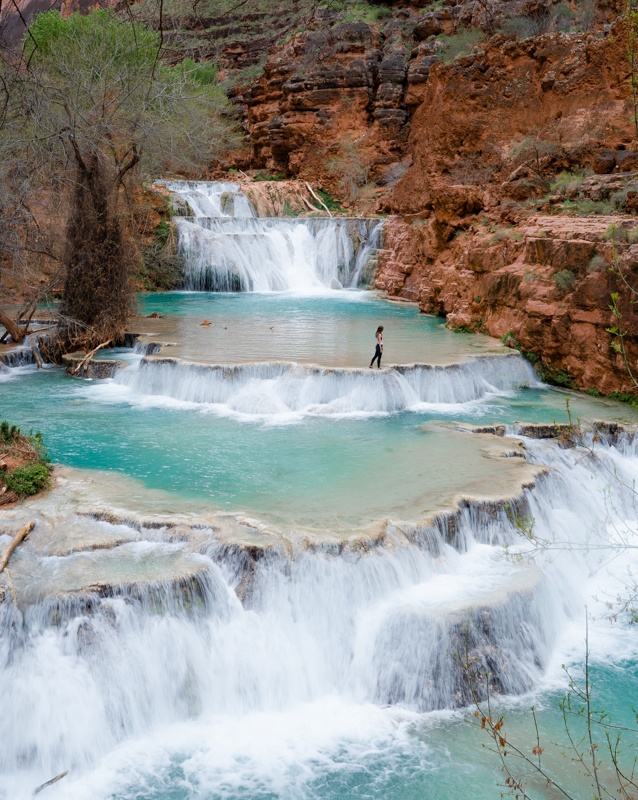
Further downstream, approximately 3 miles (4.8 km) from Mooney Falls, is Beaver Falls. Reaching Beaver Falls involves multiple creek crossings and minor scrambles, adding to the sense of adventure. It’s a multi-tiered cascade that flows into beautiful, tranquil pools, offering a quieter and often less crowded experience. Many continue past Beaver Falls to where Havasu Creek meets the Colorado River, an even longer and more arduous journey.
Camping at the Base: Immersive Wilderness
The only authorized overnight accommodation at Havasu Falls is the primitive campground, located between Havasu Falls and Mooney Falls. Camping is integral to the Havasu Falls experience, allowing visitors to fully immerse themselves in the natural environment. The campground stretches for about a mile along Havasu Creek and offers basic amenities like composting toilets and fresh spring water. Campers must pack in all their food, cooking gear, and sleeping arrangements. The absence of electricity and cell service further enhances the feeling of disconnecting from the modern world and truly connecting with nature.
The Village of Supai: A Glimpse into Havasupai Life
The Village of Supai, the capital of the Havasupai Indian Reservation, is a small, remote settlement with a population of around 200 tribal members. It offers a unique insight into a way of life deeply connected to the land. Here, visitors can find a small store (prices are higher due to transportation costs), a post office, and a cafe. While limited, these services provide essential resources and a chance to interact with the local community, emphasizing the importance of respectful tourism. The presence of the village reminds visitors that they are guests on sacred, ancestral lands.
Essential Travel Tips for Havasu Falls
A trip to Havasu Falls requires meticulous preparation to ensure a safe, enjoyable, and respectful experience.
Best Time to Visit and Weather Considerations
The ideal time to visit Havasu Falls is during the spring (April to May) and fall (September to October). During these months, temperatures are milder, making the long hike more manageable. Summers (June to August) can be intensely hot, with temperatures often exceeding 100°F (38°C), and also bring the monsoon season, increasing the risk of flash floods. Winters (November to March) are cooler, but the shorter days and potential for colder weather make swimming less appealing, and tribal operations may be reduced. Always check the weather forecast and tribal updates before and during your trip.
Packing Essentials: What to Bring for the Adventure
Given the remote nature of Havasu Falls, packing wisely is paramount. Essentials include:
- Permit and identification: Non-negotiable for entry.
- Backpack: A sturdy hiking backpack for all your gear.
- Water filtration/purification system: To supplement the natural spring water at the campground.
- Plenty of water: Especially for the hike in and out.
- Food: Lightweight, high-energy, non-perishable food for your entire stay.
- Tent, sleeping bag, and sleeping pad: For comfortable camping.
- First-aid kit: Comprehensive, including blister treatment, pain relievers, and any personal medications.
- Sun protection: Hat, sunglasses, sunscreen.
- Sturdy hiking boots: Broken in, with good ankle support.
- Water shoes/sandals: For navigating the falls and creek.
- Swimsuit and quick-drying towel.
- Headlamp or flashlight: For navigating at night.
- Trash bags: Pack it in, pack it out – leave no trace.
- Cash: For purchases at the Supai store or cafe.
Respecting the Land and Culture
Visitors to Havasu Falls are guests on the Havasupai Tribe’s ancestral lands. It is crucial to practice Leave No Trace principles, pack out all trash, and respect tribal customs and rules. Photography of tribal members or their homes without explicit permission is prohibited. Do not wander off marked trails, tamper with natural features, or engage in behavior that could damage the environment or disrespect the local culture. Your visit directly supports the tribe, so treating their home with reverence is essential.
Safety First: Preparing for the Wilderness
The remote wilderness environment of Havasu Falls presents inherent risks. Flash floods can occur, especially during monsoon season, and pose a serious threat. Dehydration and heatstroke are concerns, particularly during the summer. The hiking trails can be challenging, with potential for slips and falls. Inform someone of your itinerary, know your physical limits, and be prepared for emergencies. There is limited to no cell service, so self-reliance and preparedness are key.
Why Havasu Falls is a Premier Travel Destination
Despite the logistical challenges and the rigorous journey, Havasu Falls remains one of the most sought-after travel destinations in the United States. Its allure lies in its unmatched natural splendor and the profound sense of accomplishment one feels after experiencing it.
Unparalleled Natural Beauty and Seclusion
The vibrant blue-green waters, contrasting against the vivid red rocks of the Grand Canyon, create a visual spectacle unlike anywhere else in the world. This isolated paradise offers a rare chance to disconnect from urban life and immerse oneself in the raw, untamed beauty of nature. The limited access ensures that the falls retain a sense of pristine seclusion, preventing overcrowding and preserving the tranquility that makes it so special.
An Adventure for the Books: A Challenge and Reward
The journey to Havasu Falls is not a passive tourist trip; it is an active adventure that tests physical and mental endurance. The demanding hike, the rustic camping experience, and the exploration of multiple waterfalls create a multi-faceted challenge. This effort, however, magnifies the reward, making the sight of the cascading blue waters all the more precious and the experience deeply satisfying. It’s a trip that builds character and leaves a lasting impression.
A Bucket-List Destination for Outdoor Enthusiasts
For hikers, photographers, nature lovers, and adventure seekers, Havasu Falls is undeniably a bucket-list destination. It offers a unique combination of strenuous activity, breathtaking scenery, and an intimate connection with one of the planet’s most remarkable geological formations. The memories created while swimming in the ethereal pools, camping under a canopy of stars, and exploring the hidden cascades of Havasu Canyon are truly once-in-a-lifetime experiences, solidifying its status as a premier travel experience.
LifeOutOfTheBox is a participant in the Amazon Services LLC Associates Program, an affiliate advertising program designed to provide a means for sites to earn advertising fees by advertising and linking to Amazon.com. Amazon, the Amazon logo, AmazonSupply, and the AmazonSupply logo are trademarks of Amazon.com, Inc. or its affiliates. As an Amazon Associate we earn affiliate commissions from qualifying purchases.