
For anyone contemplating a trip through the scenic New England region, a common question arises regarding the proximity of major hubs and popular destinations. One particularly frequent inquiry for those based in or visiting Boston, Massachusetts, is about the distance to its charming southern neighbor, Rhode Island. This seemingly simple question unlocks a world of travel possibilities, from quick day trips to extended explorations of coastal towns and historic cities. Understanding the distance, travel times, and various transportation options is crucial for effectively planning any New England itinerary.
The relationship between Boston and Rhode Island is one of convenient connectivity, making it an ideal journey for travelers seeking to experience different facets of the region without extensive travel. Whether your interest lies in the bustling urban landscape of Providence, the Gilded Age grandeur of Newport, or the serene beaches of Narragansett, the journey from Boston is remarkably straightforward and accessible. This guide will delve into the precise distances, estimated travel times, and the best modes of transport to bridge the gap between these two captivating destinations, ensuring your travel planning is as smooth and informed as possible.

Understanding the Proximity: Boston to Rhode Island
The geographical relationship between Boston and Rhode Island is one of seamless integration within the greater New England tapestry. As the smallest state in the U.S., Rhode Island nestles just south of Massachusetts, making its border easily reachable from the Massachusetts capital. The journey isn’t just about covering miles; it’s about transitioning from one distinct regional character to another, often within a remarkably short timeframe.
The Geographic Link: New England’s Core
New England is renowned for its relatively compact geography, where states and major cities are often within a few hours’ drive of each other. This characteristic makes multi-state itineraries not only feasible but highly popular among visitors. Boston serves as a primary gateway to this interconnected region, and its proximity to Rhode Island exemplifies this convenience. The main highway arteries connecting the two are well-maintained and provide direct routes, making the journey largely uncomplicated. Travelers can easily cross state lines, transitioning from the historic charm of Boston to the coastal allure or metropolitan vibrancy of Rhode Island with minimal effort. This close connection facilitates everything from daily commutes for some residents to spontaneous weekend getaways for others, solidifying the two as part of a dynamic travel corridor.
Defining “Rhode Island”: Major Cities and Their Distances
When asking “How far is Rhode Island from Boston?”, it’s important to specify which part of Rhode Island you’re referring to, as the state, despite its small size, offers diverse destinations. The most common entry points and popular cities serve as useful benchmarks for distance calculations:
- Providence: As the capital and largest city of Rhode Island, Providence is often the first destination travelers consider. The driving distance from downtown Boston to downtown Providence is approximately 50 miles (80 kilometers). Under ideal traffic conditions, this journey typically takes around 1 hour to 1 hour and 15 minutes.
- Newport: Famous for its stunning Gilded Age mansions and sailing culture, Newport is a bit further south. The distance from Boston to Newport is roughly 70-75 miles (113-120 kilometers). Driving time usually ranges from 1 hour and 30 minutes to 1 hour and 45 minutes, depending on the exact route and traffic.
- Warwick: Home to Rhode Island’s main airport, Warwick is situated between Providence and the southern coastal towns. The distance from Boston is approximately 55-60 miles (88-96 kilometers), with a driving time of around 1 hour and 15 minutes to 1 hour and 30 minutes.
- Narragansett: A popular coastal town known for its beaches. Located further south, the drive from Boston to Narragansett typically covers about 75-80 miles (120-129 kilometers), taking roughly 1 hour and 45 minutes to 2 hours by car.
These figures illustrate that the vast majority of Rhode Island’s key destinations are well within a two-hour drive from Boston, making it an exceedingly convenient travel option for many.
Your Travel Options: Getting from Boston to Rhode Island
The journey from Boston to Rhode Island is facilitated by a range of transportation methods, each offering distinct advantages depending on your budget, schedule, and preferences. Understanding these options is key to selecting the most suitable mode for your travel plans.
Driving: The Most Popular Choice
For many travelers, driving remains the preferred method for reaching Rhode Island from Boston. The flexibility, convenience, and direct routes make it an appealing choice, especially for those planning to explore multiple locations within Rhode Island or traveling with family.
- Route: The primary route is Interstate 95 (I-95) South. This major highway offers a direct, albeit sometimes busy, path from Boston straight into Providence and then continues south through the state, providing access to other destinations like Warwick and eventually connecting to routes leading to Newport or Narragansett.
- Time & Distance: As previously noted, the drive to Providence is about 50 miles and takes 1 hour to 1 hour and 15 minutes. For Newport, expect 70-75 miles and 1 hour 30 minutes to 1 hour 45 minutes. These times can fluctuate significantly with traffic.
- Advantages: Complete flexibility in departure times, the ability to stop at points of interest along the way, and direct door-to-door travel, especially beneficial when exploring areas less served by public transport.
- Considerations: Traffic can be a major factor, particularly during weekday rush hours (7-9 AM and 4-6 PM) and on weekends during peak tourist seasons (summer, fall foliage). Parking availability and costs in urban areas like Providence or Newport also need to be factored in. Tolls are minimal, primarily associated with crossing bridges or tunnels within Boston itself rather than the direct route to Rhode Island.
Public Transportation: Train and Bus
For those who prefer not to drive, or are traveling solo or without extensive luggage, public transportation offers a comfortable and often more relaxing alternative.
- Train (Amtrak & MBTA Commuter Rail):
- Amtrak: Amtrak provides frequent service from Boston’s South Station directly to Providence’s Providence Station. The journey is quick, often taking as little as 30-40 minutes on the high-speed Acela Express, or 45-60 minutes on the Northeast Regional service. This is generally the fastest way to travel between the two city centers. Amtrak also continues south, with stops at Kingston Station in Rhode Island, which can be convenient for accessing parts of southern Rhode Island like Narragansett via a connecting ride-share or taxi.
- MBTA Commuter Rail: The MBTA Commuter Rail also operates service from Boston’s South Station to Providence Station, and extends to T.F. Green Airport/Warwick Station. This is a more budget-friendly option compared to Amtrak, though the journey might take slightly longer, typically around 1 hour to 1 hour and 15 minutes to Providence, with more frequent local stops.
- Bus (Peter Pan Bus Lines & Greyhound):
- Both Peter Pan Bus Lines and Greyhound offer regular scheduled services between Boston’s South Station and Providence’s Peter Pan Bus Terminal (adjacent to Providence Station). Bus journeys typically take between 1 hour and 1 hour and 30 minutes, depending on traffic and the number of stops.
- Advantages: Generally the most economical option. No need to worry about driving, parking, or tolls. Allows passengers to relax, work, or enjoy the scenery.
- Considerations: Travel times can be affected by traffic, similar to driving. Less direct for destinations beyond central Providence, often requiring local public transport or ride-shares for onward travel.
Other Considerations: Ride-Shares
While flights are impractical and non-existent for such a short distance, ride-share services like Uber or Lyft are readily available in Boston and can take you directly to your desired location in Rhode Island. This offers the convenience of a private car without the hassle of driving your own, but it will be significantly more expensive than public transport and often more costly than renting a car for a day, especially for longer distances within Rhode Island. It can be a good option for small groups splitting the fare or for urgent, last-minute travel.
Planning Your Journey: Time, Traffic, and Best Routes
Effectively planning your trip from Boston to Rhode Island involves more than just knowing the distance; it requires an understanding of how various factors can influence your travel time and experience. By considering these elements, you can optimize your journey for efficiency and enjoyment.
Estimating Travel Time: Factors to Consider
While average travel times are a good starting point, several variables can alter your actual arrival. Being aware of these can help you set realistic expectations:
- Time of Day: As mentioned, peak commuting hours (typically 7-9 AM and 4-6 PM on weekdays) will inevitably add significant delays to driving times on I-95. Traveling mid-day or later in the evening usually offers smoother conditions.
- Day of the Week: Weekend travel, particularly Friday afternoons and Sunday evenings, can see increased traffic as people head to and from coastal destinations. Saturdays, especially in summer, can also be busy.
- Seasonal Fluctuations: Summer (June-August) and the fall foliage season (late September-October) are popular travel times in New England, leading to higher traffic volumes on major routes. Holidays also see substantial increases in travel.
- Construction: Road construction projects can pop up unexpectedly and cause lane closures or detours, impacting travel times. Checking real-time traffic updates before departure is always advisable.
- Weather Conditions: Rain, snow, or fog can significantly slow down driving speeds and impact visibility, especially on highways. Always check the weather forecast for both Boston and your Rhode Island destination.
Navigating Peak Hours and Seasonal Traffic
To minimize time spent in traffic, strategic planning is essential. For drivers, aiming to depart Boston before 7 AM or after 9 AM on weekdays can bypass the worst of the morning rush. Similarly, an afternoon departure after 6 PM or even closer to dinner time can avoid the evening commute. On weekends, early morning departures are often the best bet, particularly for popular spots like Newport.
If driving during peak times is unavoidable, consider using GPS navigation apps (like Google Maps, Waze) that provide real-time traffic updates and suggest alternative routes. While I-95 is the most direct, sometimes a slight detour on secondary roads can save time if I-95 is heavily congested. For public transport users, while trains and buses typically adhere to schedules, extremely heavy road traffic can affect bus timings. Trains, however, are largely immune to road congestion, making Amtrak or MBTA Commuter Rail a reliable choice during peak driving hours.
Scenic Routes vs. Fastest Routes
For most travelers, the goal is often the fastest route, which generally means sticking to I-95. However, for those with extra time or an inclination for a more leisurely journey, there are scenic alternatives, particularly if your final destination is southern Rhode Island.
- Fastest Route: Primarily I-95 South from Boston to Providence and beyond. This route is typically the quickest for reaching Providence, Warwick, and T.F. Green Airport.
- More Scenic (Coastal Option to Newport or Narragansett): While not significantly shorter, a route that incorporates parts of coastal Massachusetts (e.g., using Route 1A or other state roads through charming towns) before heading into Rhode Island can offer pleasant views, especially if you are heading towards Newport or the South County beaches. This often involves taking I-93 South out of Boston, then transitioning to Route 24 South towards Fall River, and then connecting to Route 114 South for Newport. This path skirts the eastern edge of Rhode Island and can be less congested than I-95 during certain times, offering glimpses of quaint towns and coastal landscapes, though it may add 20-30 minutes to the total travel time compared to the most direct route.
Why Make the Trip? Integrating Rhode Island into Your New England Itinerary
The short distance and convenient travel options between Boston and Rhode Island make it an incredibly attractive addition to any New England travel plan. Far from being just a transit point, Rhode Island offers a unique and compelling array of experiences that perfectly complement a visit to Boston, solidifying its place as a desirable destination.
A Gateway to Southern New England Experiences
Rhode Island truly serves as a gateway to the distinct charms of Southern New England. While Boston offers a rich blend of history, vibrant urban life, and iconic landmarks, Rhode Island presents a different flavor. The state’s coastal identity is palpable, with picturesque harbors, sandy beaches, and a strong maritime heritage that differentiates it from its northern neighbor. The transition from Boston’s colonial red-brick alleys to Newport’s grand oceanfront mansions or Providence’s revitalized riverside is remarkably swift, offering travelers a diverse experience within a compact geographical area. This allows for a multi-faceted exploration of the region without requiring extensive travel time between varied attractions.
Ideal for Day Trips or Extended Stays
Given the remarkably short travel times, Rhode Island is an exceptional candidate for both quick day trips and more extended visits from Boston.
- Day Trips: A day trip to Providence is easily achievable, allowing visitors to explore its culinary scene, historic architecture, and unique attractions like WaterFire (seasonal). Similarly, Newport is a popular day-trip destination, where one can marvel at the Cliff Walk, tour a mansion, or simply enjoy the harbor views, all within a comfortable return journey to Boston by evening. The short travel distance means less time in transit and more time enjoying the destination.
- Extended Stays: For those with more time, Rhode Island warrants a longer stay. A weekend or several days allows for a deeper dive into Newport’s history, relaxation on Narragansett’s beaches, or exploring the lesser-known charming towns and islands within the state. The ease of access from Boston makes it a seamless transition for travelers wishing to immerse themselves in different aspects of New England culture and scenery.

Popular Rhode Island Destinations Accessible from Boston
Once you’ve made the convenient journey from Boston, a wealth of experiences awaits in Rhode Island.
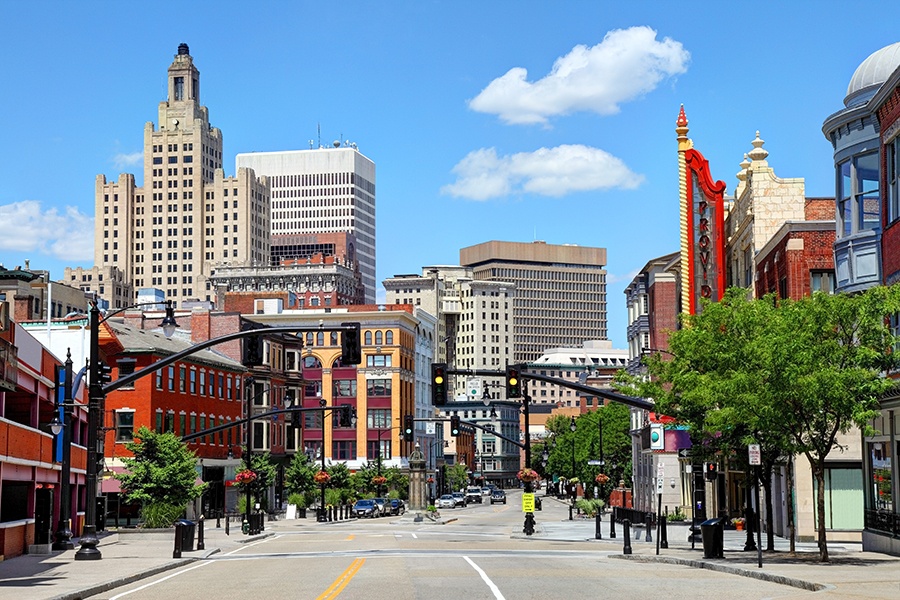
- Providence: As the vibrant capital, Providence offers a dynamic arts scene, acclaimed restaurants, historic College Hill, and the unique WaterFire art installation that lights up its rivers during warmer months. It’s a city of culture and culinary excellence.
- Newport: A world-renowned destination, Newport captivates with its opulent Gilded Age mansions like The Breakers and Marble House, the scenic Cliff Walk, and its storied maritime history as a sailing capital.
- Narragansett & South County: For beach lovers and those seeking coastal relaxation, Narragansett offers beautiful beaches and a classic seaside town atmosphere. The broader South County region provides access to serene coastline, charming villages, and natural beauty.
- Block Island: While requiring an additional ferry ride from points like Narragansett or Newport, Block Island offers a tranquil, unspoiled island escape with stunning cliffs, lighthouses, and pristine beaches, making for an unforgettable extension to your Rhode Island adventure.
In conclusion, the question “How far is Rhode Island from Boston?” is answered not just in miles and minutes, but in the effortless transition it represents between two distinct yet equally captivating corners of New England. With excellent transportation links and a variety of appealing destinations, Rhode Island is truly just a short, manageable journey away, promising enriching experiences for every traveler.
LifeOutOfTheBox is a participant in the Amazon Services LLC Associates Program, an affiliate advertising program designed to provide a means for sites to earn advertising fees by advertising and linking to Amazon.com. Amazon, the Amazon logo, AmazonSupply, and the AmazonSupply logo are trademarks of Amazon.com, Inc. or its affiliates. As an Amazon Associate we earn affiliate commissions from qualifying purchases.