
For anyone planning to drive in the Golden State, whether as a long-term resident or a visitor embarking on a scenic road trip, understanding local vehicle regulations is paramount. Among the most frequently asked questions and a common point of confusion revolves around license plate requirements. Specifically, many inquire: “Does California require a front license plate?” The simple, unequivocal answer is yes. This article delves into the specifics of this requirement, why it exists, potential exceptions, and the consequences of non-compliance, providing a comprehensive guide for drivers in California.
The Unambiguous Stance: Yes, California Does
California is one of 30 states in the United States that mandates the display of two license plates on most vehicles: one on the front and one on the rear. This isn’t a recent development but a long-standing regulation enshrined in state law. The clarity on this matter often gets obscured by anecdotes of drivers from other states, or those with certain vehicle types, who believe they might be exempt. However, for the vast majority of passenger vehicles, commercial trucks, and motorcycles (which have a single rear plate), adherence to this two-plate system is not optional.

Understanding the California Vehicle Code
The legal basis for this requirement is explicitly detailed within the California Vehicle Code (CVC). Specifically, CVC Section 5200 states that “When two license plates are issued by the Department of Motor Vehicles (DMV) for use upon a vehicle, they shall be attached to the vehicle for which they were issued, one in the front and one in the rear.” The language leaves little room for interpretation. The California Department of Motor Vehicles (DMV) issues two plates for most registered vehicles, and therefore, both must be properly affixed and visible. This applies to newly purchased vehicles, re-registered vehicles, and those transferred from other states. The enforcement of this code is consistent across the state, from bustling urban centers like Los Angeles and San Francisco to the quieter rural highways.
Historical Context of License Plate Laws
The requirement for front and rear license plates isn’t unique to California and has roots in the early days of automotive travel. As vehicles became more common, the need for identification for law enforcement, accident investigation, and general public safety became evident. The dual-plate system offers several advantages, primarily enhancing visibility and identification from multiple angles. Over the decades, as technology evolved with automatic tolling systems, red-light cameras, and parking enforcement, the front plate gained even more functional significance, cementing its role as a critical component of vehicle identification. While some states have opted for a single rear plate to potentially save costs or for aesthetic reasons, California has steadfastly maintained its dual-plate mandate, emphasizing safety and comprehensive identification.
Why the Requirement? Safety, Identification, and Enforcement
The mandate for a front license plate in California is not arbitrary; it serves several crucial functions vital to public safety, law enforcement, and efficient urban management. Understanding these underlying reasons helps clarify why the state has maintained this requirement despite occasional pushback from vehicle owners concerned about aesthetics or minor aerodynamic impacts.
Enhancing Law Enforcement Capabilities
One of the primary reasons for the front license plate is to aid law enforcement. A vehicle’s license plate acts as its unique identifier. In situations where a vehicle is traveling towards a police officer, or when an officer is attempting to identify a vehicle from the front (e.g., during traffic stops, roadside checks, or when pursuing a suspect), the front plate provides immediate and unambiguous identification. This significantly speeds up the process of running plate numbers to check for registration, stolen vehicle alerts, or outstanding warrants, directly contributing to public safety and effective policing. Without a front plate, identification would be delayed or impossible in many critical scenarios.
Deterring Crime and Hit-and-Runs
The presence of a front license plate acts as a deterrent to various forms of crime. In cases of hit-and-run accidents, the front plate offers a vital piece of evidence that witnesses might observe and recall, even if the rear of the vehicle is obscured or never seen. Similarly, for vehicles involved in other criminal activities, a visible front plate increases the chances of identification by security cameras, eyewitnesses, or dashcams from approaching vehicles. This double identification point makes it harder for criminals to evade detection and accountability, fostering a safer environment on California’s roads. It ensures that vehicles are trackable from multiple perspectives, significantly aiding investigations.
Supporting Automated Systems and Toll Roads
With the advent of modern technology, front license plates have become indispensable for automated systems designed to manage traffic flow, enforce regulations, and collect tolls. Systems like electronic toll collection (e.g., on California’s express lanes or bridges like the Golden Gate Bridge) often rely on front-facing cameras to capture license plate information for billing purposes, especially for vehicles without transponders. Red-light cameras and speed cameras, where deployed, also frequently capture images from the front of the vehicle. Without a front plate, these automated systems would be less effective, leading to billing errors, enforcement challenges, and potential revenue losses for critical infrastructure projects. The front plate, therefore, is a silent workhorse in the state’s efforts to modernize and streamline its transportation network.
Navigating Exceptions and Common Misconceptions
While the rule is clear, there are nuances and prevalent misconceptions that often lead to confusion regarding front license plate requirements in California. Many drivers, particularly those new to the state or owning specific types of vehicles, might erroneously believe they are exempt. It’s crucial to separate fact from fiction to avoid potential penalties.
The Myth of Classic Cars and Exemptions
A common misconception is that classic, vintage, or custom vehicles are exempt from displaying a front license plate, particularly if mounting it would damage the vehicle’s aesthetics or original design. This is largely untrue in California. The California Vehicle Code makes no general exemption for classic cars or vehicles that simply look “better” without a front plate. While some states offer special provisions for historical vehicles, California’s law remains broad. Owners of such vehicles are still required to comply. If a vehicle does not have a factory-designated front plate mounting area, creative and compliant solutions, such as bracket kits that utilize existing mounting points without drilling, are often available and encouraged. Claiming aesthetic preference as an excuse for non-compliance will not hold up in court.
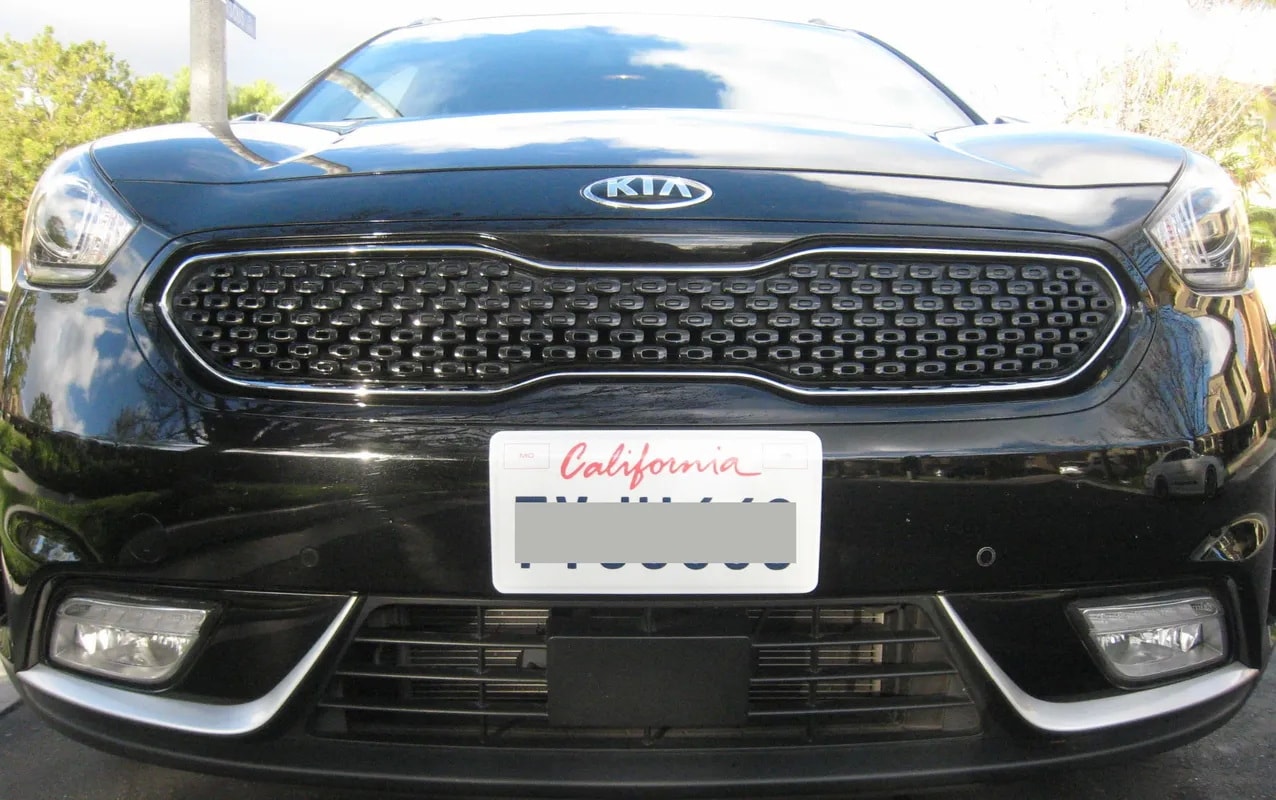
Electric Vehicles and Special Plates
Electric vehicles (EVs) in California often receive special “clean air vehicle” (CAV) or HOV lane access stickers, which sometimes leads to the mistaken belief that they might have different license plate rules. However, the type of fuel or propulsion system a vehicle uses does not alter the fundamental requirement for front and rear plates. Whether it’s a traditional gasoline-powered car, a hybrid, or a fully electric vehicle, if the DMV issues two plates, both must be displayed. Similarly, personalized plates, specialty plates (e.g., environmental, veteran, or university plates), and standard plates all fall under the same dual-plate mandate. The design or purpose of the plate doesn’t create an exemption from the display rules.
Temporary Plates and Dealer Vehicles
New vehicles typically come with temporary paper license plates issued by the dealership. During this interim period, while the permanent metal plates are being processed and mailed by the DMV, the temporary plate must be displayed. Usually, these temporary plates are affixed to the rear, but some dealerships may provide a method to display a temporary identification on the front as well. Once the permanent plates arrive, both must be installed immediately. Dealer vehicles, when used for demonstration or test drives, also typically adhere to display rules using dealer plates. The only true “temporary” exemption applies strictly to brand-new vehicles immediately after purchase, before permanent plates are installed, and even then, vehicle identification numbers (VINs) or temporary permits must be clearly displayed. The moment permanent metal plates are received, they must be mounted both front and rear.
Consequences of Non-Compliance in the Golden State
Failing to display a front license plate in California is not a minor oversight that will simply be ignored. It is a violation of the California Vehicle Code and can lead to various legal and financial repercussions. Drivers, whether residents or visitors, should be fully aware of these potential consequences to ensure a smooth and lawful driving experience.
Penalties and Fines
The most immediate consequence of not having a front license plate is receiving a traffic citation. This typically falls under the category of a “fix-it ticket” or an “infraction.” While it might not carry points against your driving record, the financial penalties can be significant. The base fine for a missing front plate infraction can vary, but with additional court fees, surcharges, and assessments, the total cost can easily reach hundreds of dollars. This fine is imposed per violation, meaning continued non-compliance could result in multiple tickets if caught by different law enforcement officers or automated systems. It’s a preventable expense that can quickly accumulate, especially for frequent drivers.
The “Fix-It Ticket” Scenario
In many instances, an officer may issue what is commonly known as a “fix-it ticket” (officially a “correction notice” or “notice to appear”) for a missing front license plate. With a fix-it ticket, the driver is usually given a specific timeframe (e.g., 30 days) to correct the violation, meaning they must install the front plate. After installation, the driver typically needs to have the correction verified by a law enforcement officer or the DMV and then submit proof to the court. If the driver corrects the issue and provides proof within the allotted time, the fine might be significantly reduced or even dismissed, though administrative fees may still apply. However, if the violation is not corrected or proof is not submitted, the initial fine will be imposed in full, and potentially increase, escalating the issue beyond a simple fix-it. This offers a window for compliance but doesn’t negate the initial infraction.
Impact on Insurance and Vehicle Registration
While a missing front license plate citation typically does not directly impact your auto insurance premiums in the same way a moving violation might, repeated violations or failure to address the underlying issue could indirectly cause problems. Unpaid fines or uncorrected fix-it tickets can lead to more serious legal troubles, potentially affecting your vehicle’s registration status during renewal. The California DMV can place holds on registration renewals for outstanding violations or unpaid fines, making it impossible to renew your registration until the matter is resolved. This could then lead to further penalties for driving an unregistered vehicle, creating a cascading series of legal and financial headaches. Moreover, in the event of an accident, while the absence of a front plate might not be the cause, it could be noted by authorities and could theoretically factor into assessments of overall vehicle compliance, particularly in more complex legal situations.
Practical Advice for Drivers in California
Understanding the rules and the consequences is the first step; the next is ensuring full compliance. For drivers in California, proactively addressing the front license plate requirement can save time, money, and hassle. Here’s some practical advice to ensure your vehicle is fully compliant with state law.
Proper Installation Techniques
The most straightforward way to comply is to install your front license plate correctly. The California Vehicle Code specifies that plates must be securely fastened to prevent swinging, clearly visible, and maintained in a condition so as to be legible. This means no covers that obscure the plate, no heavy tinting, and no extreme angles. Most modern vehicles come with pre-drilled holes or mounting points on the front bumper specifically for a license plate bracket. Utilize these points with appropriate screws and a sturdy frame or bracket. Ensure the plate is centered, level, and free from obstructions. Avoid using zip ties or tape, as these methods often fail to keep the plate securely fastened and legible, which could still lead to a citation.
Solutions for Vehicles Without Front Plate Mounts
For vehicles that do not come with factory-drilled holes for a front license plate (a common issue with certain luxury or performance vehicles, particularly those imported from markets where a front plate is not required), simply saying “there’s no place for it” is not an acceptable defense. Many aftermarket solutions are available that allow for compliant mounting without drilling into the bumper. These include:
- Tow Hook Mounts: These brackets screw into the vehicle’s front tow hook receiver, positioning the plate off to the side but still clearly visible.
- Adhesive Mounts: Some manufacturers offer strong, removable adhesive mounts that attach directly to the bumper without permanent alteration. These must be rated for automotive use and harsh weather.
- Grille Mounts: Brackets that attach to the vehicle’s lower grille can provide a secure, non-invasive mounting point.
When choosing an aftermarket solution, ensure it keeps the plate visible, doesn’t obstruct vehicle lights or sensors, and is securely fastened to withstand highway speeds and vibrations. Reputable auto parts stores and dealerships often carry compliant options.

Staying Informed About Vehicle Laws
Vehicle laws can evolve, and while California’s front license plate requirement has been constant for a long time, it’s always wise to stay informed about all regulations. The California Department of Motor Vehicles (DMV) website is the authoritative source for the most current vehicle code information and regulations. Regularly checking official DMV publications, especially if you are new to the state or acquiring a new type of vehicle, can prevent misunderstandings. Additionally, local law enforcement agencies may offer community resources or advisories. Ultimately, the responsibility for compliance rests with the vehicle owner and driver. By understanding and adhering to the front license plate requirement, drivers can avoid unnecessary fines, ensure their journey through the Golden State is hassle-free, and contribute to overall road safety and efficient traffic management.
LifeOutOfTheBox is a participant in the Amazon Services LLC Associates Program, an affiliate advertising program designed to provide a means for sites to earn advertising fees by advertising and linking to Amazon.com. Amazon, the Amazon logo, AmazonSupply, and the AmazonSupply logo are trademarks of Amazon.com, Inc. or its affiliates. As an Amazon Associate we earn affiliate commissions from qualifying purchases.