
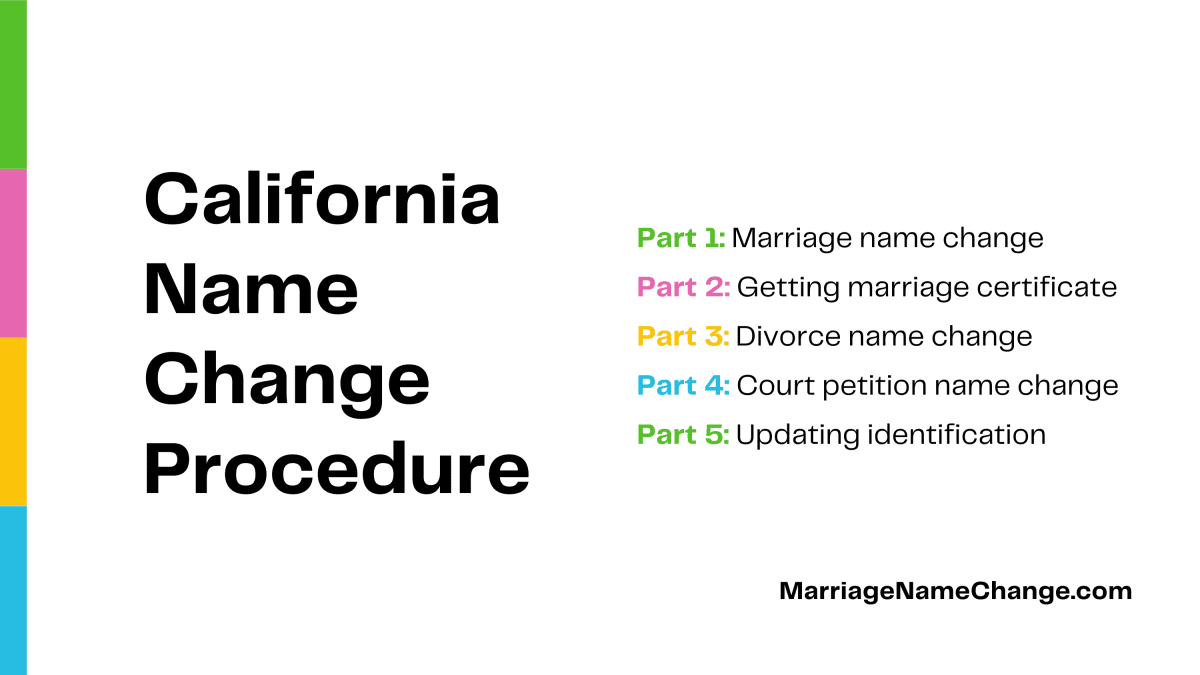
Changing your last name in California can be a significant step, often associated with major life events like marriage or divorce, or simply a desire for personal rebranding. The Golden State offers a structured legal process to facilitate this change, ensuring that the transition is official and recognized across all your identification and legal documents. While the procedures might seem intricate, understanding each step can demystify the process and empower you to navigate it with confidence. This guide will walk you through the essential requirements and procedures for legally changing your last name in California.
Understanding the Legal Framework for Name Changes in California
The legal process for changing your name in California is primarily governed by the California Code of Civil Procedure, specifically sections related to petitions for change of name. This framework allows individuals to petition the court for a legal name change, provided certain conditions are met. The core principle is that a name change must not be sought for fraudulent purposes, such as evading debts, avoiding criminal prosecution, or impersonating another individual.
Eligibility and Grounds for Name Change
Any adult resident of California can petition for a legal name change. Minors can also have their names changed, but this requires a petition filed by their parents or legal guardians. The grounds for a name change are broad, encompassing:
- Marriage: While marriage itself often allows for a name change through the marriage certificate, a formal court order can provide a more robust legal document, especially if you wish to change your name to something other than your spouse’s surname or to a hyphenated combination.
- Divorce or Dissolution of Marriage: Upon divorce, individuals often wish to revert to their maiden name or a former surname. A court can grant this request as part of the divorce proceedings or through a separate name change petition.
- Personal Preference: Many individuals choose to change their name for personal reasons, such as disliking their current name, wanting to honor a family member, or adopting a name that better reflects their identity.
- Adoption: When a child is adopted, their name is typically changed as part of the adoption decree.
- Gender Transition: Individuals undergoing gender transition may legally change their name and gender marker to align with their gender identity.
Prohibited Reasons for Name Change
It is crucial to understand that the court will deny a petition for name change if it finds that the requested change is sought for purposes of fraud, misrepresentation, or other illegal activities. This includes attempting to escape financial obligations, evade legal judgments, or hide from law enforcement. The court requires a genuine and lawful reason for the alteration of one’s legal identity.
The Petition Process: Step-by-Step
The standard legal pathway to changing your last name in California involves filing a petition with the superior court in the county where you reside. The process can be broken down into several key stages.
Step 1: Obtain and Complete the Necessary Forms
The first practical step is to gather the required legal forms. These are typically available from the California Courts website or directly from the clerk’s office at your local superior court. The primary form is the Petition for Change of Name (Form NC-100), along with supporting documents such as the Civil Case Cover Sheet (Form CM-010) and, in most cases, a Decree Changing Name (Form NC-130).
- Petition for Change of Name (NC-100): This document requires you to provide your current name, the name you wish to adopt, your address, your date and place of birth, and the reasons for your name change. You will also need to declare that the change is not for any fraudulent purpose.
- Civil Case Cover Sheet (CM-010): This form provides basic information about the case for court filing purposes.
- Decree Changing Name (NC-130): This is the court order that, once signed by the judge, legally changes your name. You will often prepare this in advance, leaving blanks for the judge to fill in.
Carefully review the instructions accompanying each form to ensure accurate completion. Errors or omissions can cause delays or lead to your petition being rejected.
Step 2: File the Petition with the Court
Once the forms are completed, you must file them with the clerk of the superior court in your county. There will be a filing fee associated with this process. If you cannot afford the fee, you can apply for a fee waiver by submitting a Request to Waive Court Fees (Form FW-001).
After filing, the court clerk will assign a case number to your petition and may stamp your forms with the filing date.
Step 3: Publish Notice of the Petition
A critical requirement for most name change petitions in California is to publish a notice of your intended name change in a designated newspaper. This publication serves to inform the public of your petition and allows any interested parties to object.
- Order to Show Cause (Form NC-120): After filing the petition, you will typically receive an Order to Show Cause from the court. This order sets a hearing date and specifies the requirements for publication.
- Newspaper Publication: You will need to arrange for the Order to Show Cause to be published in a newspaper of general circulation in your county. The court will usually provide a list of approved newspapers. The publication must occur for a specific period (typically once a week for four consecutive weeks) before your hearing date. You will need to obtain a “Proof of Publication” from the newspaper, which you will then file with the court.
There are exceptions to the publication requirement, such as for individuals seeking to change their name as part of marriage or divorce proceedings, or for victims of domestic violence who have obtained a protective order. However, for most personal name change petitions, publication is mandatory.
Step 4: Attend the Court Hearing
On the scheduled hearing date, you must appear before the judge. The judge will review your petition, the proof of publication (if applicable), and any objections that may have been filed. If there are no objections and all requirements have been met, the judge will likely grant your petition.
- Presenting Your Case: Be prepared to briefly explain your reasons for wanting to change your name. The judge may ask you questions about your petition.
- Objections: In rare cases, someone may object to your name change. If this occurs, the judge will hear arguments from both sides before making a decision.
Step 5: Obtain the Final Decree
If the judge grants your petition, they will sign the Decree Changing Name (Form NC-130). This is the official court order that legally changes your name. Make sure to obtain several certified copies of the decree from the court clerk. These certified copies will be necessary for updating your identification and other important documents.
Updating Your Records After a Legal Name Change
Once you have your certified copies of the Decree Changing Name, the legal part of the process is complete. However, the administrative work of updating your name across various institutions is essential to ensure your new identity is recognized everywhere.
Updating Identification Documents
The most crucial step is to update your name on your primary forms of identification. This includes:
- Social Security Card: You will need to visit a Social Security Administration office with your certified court order and proof of identity.
- Driver’s License or State ID: Visit your local Department of Motor Vehicles (DMV) office with your certified court order and existing identification.
- Passport: You will need to apply for a new passport from the U.S. Department of State, providing your certified court order.
Notifying Other Agencies and Institutions
Beyond your core identification, you will need to inform numerous other entities of your name change. This can be a lengthy process, so prioritize the most important ones first.
- Banks and Financial Institutions: Update your name on all bank accounts, credit cards, and investment accounts.
- Employer: Inform your HR department and ensure your payroll and benefits are updated.
- Landlord or Mortgage Company: Update your lease agreement or mortgage records.
- Utility Companies: Contact providers for electricity, gas, water, and internet.
- Insurance Providers: Notify your health, auto, and homeowner’s insurance companies.
- Schools and Educational Institutions: Update your records if you are a student or have children attending school.
- Voter Registration: Update your voter registration information.
- Professional Licenses and Memberships: If you hold any professional licenses, ensure they are updated.
- Medical Providers: Inform your doctors and dentists.
- Online Accounts: Update your name on social media, email, and other online profiles.
Name Changes Related to Marriage and Divorce
While the general petition process is available, California offers streamlined options for name changes directly tied to marriage or divorce.
Marriage
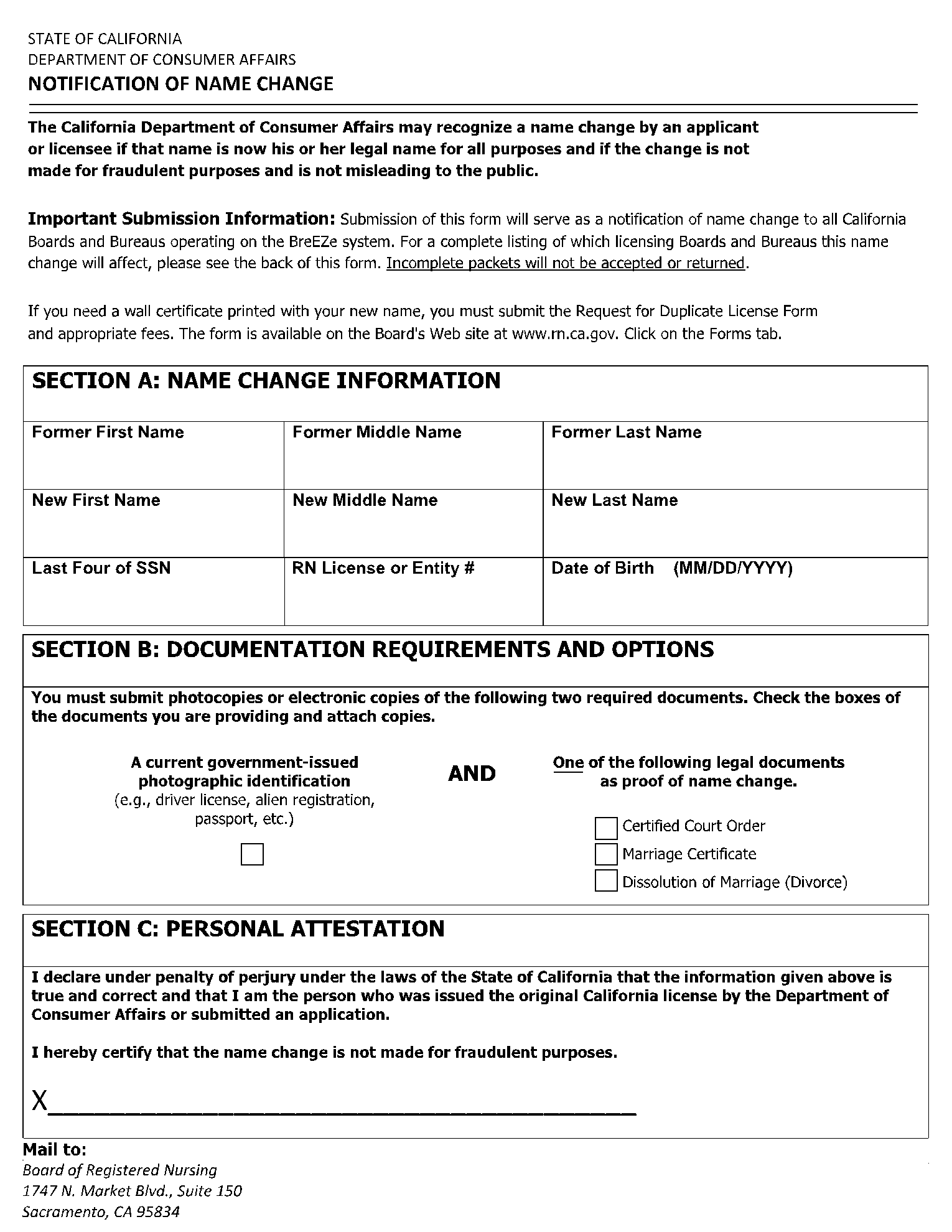
When you get married in California, you can use your marriage certificate as proof for many name change purposes. You can adopt your spouse’s surname, hyphenate your last names, or revert to a former name. The application for a marriage license will have a section for your desired name after marriage. If you choose to change your name, your completed marriage certificate will serve as the legal document for updating your identification with entities like the Social Security Administration and the DMV. However, if you wish to change your name to something other than a direct adoption of your spouse’s surname or a simple hyphenation, you may still need to go through the formal court petition process.
Divorce
During divorce proceedings, a party can request to resume their former or maiden name. This request is typically included in the final divorce judgment. Once the judgment is entered by the court, the divorce decree serves as the legal document for name change purposes. If you have already finalized your divorce and did not request a name change at that time, or if you wish to change your name to something other than your pre-marriage name, you will need to file a separate Petition for Change of Name as described in the general process.

Seeking Legal Assistance
Navigating the legal system can be complex, and name change petitions are no exception. While many individuals successfully manage the process independently, seeking legal assistance can provide peace of mind and ensure accuracy.
- Attorneys: A family law attorney or an attorney specializing in civil litigation can guide you through the entire process, prepare your documents, and represent you in court if necessary. This is particularly advisable if your situation is complicated, involves potential objections, or if you are concerned about fulfilling all legal requirements.
- Legal Aid Societies and Pro Bono Services: If you have a low income, you may qualify for free or low-cost legal services. Many counties have legal aid societies or bar associations that offer pro bono assistance to individuals who cannot afford an attorney.
- Court Self-Help Centers: Most superior courts in California offer self-help centers or legal assistants who can provide information and assistance with legal forms and procedures, including name changes. They cannot provide legal advice but can help you understand the process and complete your paperwork correctly.
Changing your last name is a significant personal and legal undertaking. By understanding the requirements, diligently following the steps, and knowing where to seek help, you can successfully navigate the California name change process and establish your new legal identity with confidence.
LifeOutOfTheBox is a participant in the Amazon Services LLC Associates Program, an affiliate advertising program designed to provide a means for sites to earn advertising fees by advertising and linking to Amazon.com. Amazon, the Amazon logo, AmazonSupply, and the AmazonSupply logo are trademarks of Amazon.com, Inc. or its affiliates. As an Amazon Associate we earn affiliate commissions from qualifying purchases.