
Navigating the complexities of housing in California can be a significant undertaking, whether you’re a long-term resident or considering an extended stay. Among the more challenging aspects of accommodation is the process of eviction—a legal procedure that allows a landlord to remove a tenant from a rental property. The duration of an eviction in California is not a fixed timeline; it is influenced by a myriad of factors, ranging from the specific circumstances of the case to the efficiency of the local court system. Understanding this process is crucial for both landlords seeking to regain possession of their property and tenants facing the prospect of displacement. This article will delve into the intricacies of California’s eviction laws, outlining the typical stages, potential timelines, and the factors that can significantly alter the duration of this often-stressful procedure.
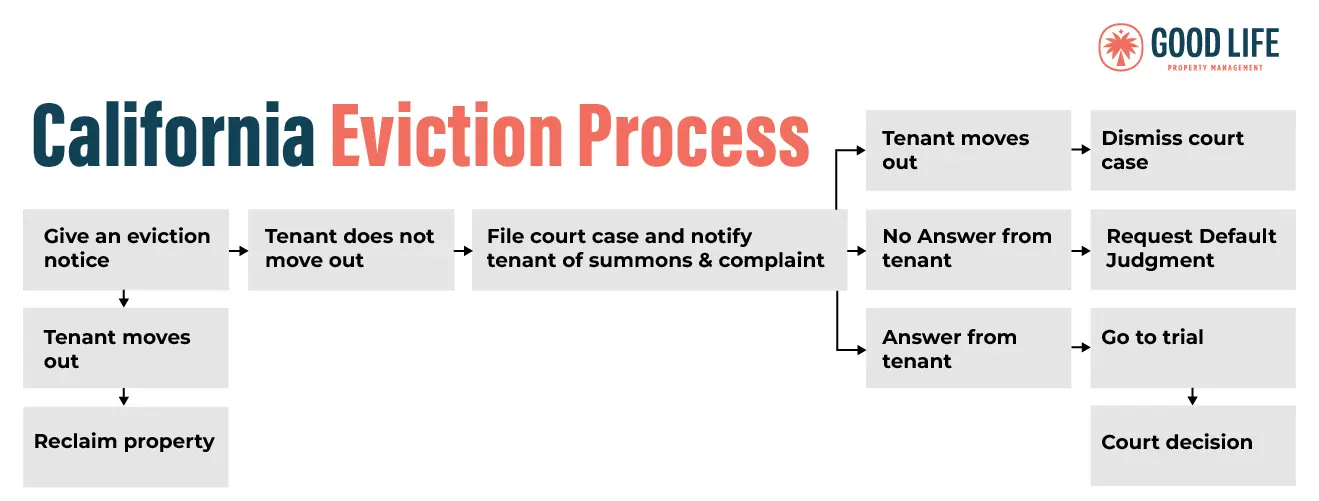
Understanding the Eviction Process in California
The eviction process in California, legally known as an “unlawful detainer” action, is designed to be relatively swift compared to other civil lawsuits. However, “swift” in a legal context can still mean weeks, or even months, depending on the specifics. It’s a highly regulated process with strict rules that landlords must follow to ensure due process for tenants. Any deviation from these rules can lead to delays or even the dismissal of an eviction case. The overarching goal of these regulations is to protect tenant rights while providing landlords with a clear path to reclaim their property when necessary.
Just Cause Eviction Requirements
One of the most significant aspects influencing evictions in California is the “just cause” eviction protection, particularly under the Tenant Protection Act of 2019 (AB 1482) and various local rent control ordinances. This means that a landlord cannot evict a tenant without a specific, legally recognized reason. There are two main categories of just cause:
- At-Fault Just Cause: This includes tenant actions such as non-payment of rent, breach of a material term of the lease, nuisance, criminal activity on the premises, or refusal to allow lawful entry by the landlord. These evictions generally proceed more quickly if the landlord can clearly prove the tenant’s fault.
- No-Fault Just Cause: These evictions occur for reasons not related to the tenant’s actions, such as the landlord’s intent to move into the property, intent to withdraw the property from the rental market, or substantial remodelling that requires the tenant to vacate. No-fault evictions often require landlords to provide relocation assistance to tenants, and the process can be more scrutinized, potentially adding to the overall timeline.
The existence of just cause requirements means landlords must have a legitimate reason before initiating any eviction proceedings. This foundational step is critical and, if overlooked, can prevent an eviction from ever reaching the courtroom.
Key Stages and Timelines of an Eviction
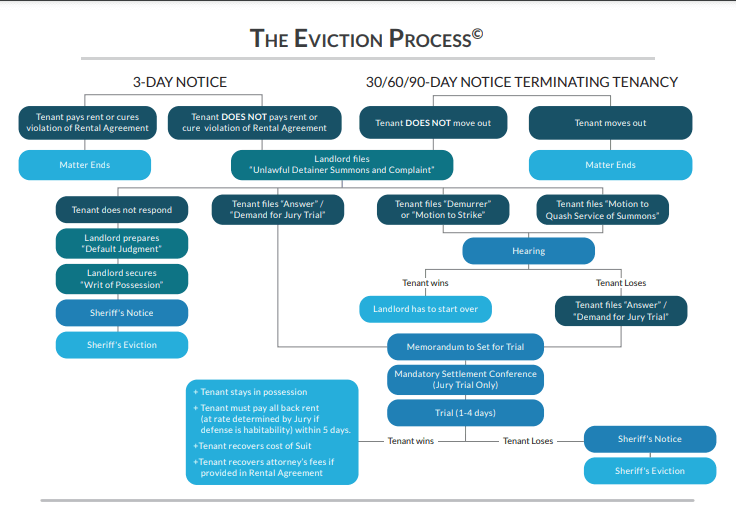
The eviction process in California follows a structured, multi-stage legal pathway. While each stage has its own typical duration, the overall timeline can fluctuate widely.
1. Serving the Notice to Vacate (3 to 60 Days)
The first formal step a landlord must take is to serve the tenant with a written “Notice to Vacate” or “Notice to Quit.” The type of notice and its required duration depend on the reason for eviction:
- 3-Day Notice to Pay Rent or Quit: For non-payment of rent. This is the most common notice. Tenants have three calendar days to pay the overdue rent or move out. Weekends and holidays count unless they are the final day.
- 3-Day Notice to Perform Covenants or Quit: For a breach of a lease term (e.g., having unauthorized pets, excessive noise). The tenant has three days to fix the violation or move out.
- 3-Day Notice to Quit (Uncurable Breach): For serious breaches that cannot be remedied, such as significant property damage or illegal activity. The tenant must vacate within three days with no opportunity to fix the issue.
- 30-Day or 60-Day Notice to Quit: For “no-fault” evictions, or for terminating a month-to-month tenancy where the tenant has resided for less than a year (30 days) or a year or more (60 days). These notices typically apply when there is no lease violation, but the landlord wishes to end the tenancy.
The landlord must correctly serve this notice, usually by personal delivery, substituted service, or “post and mail.” Incorrect service can invalidate the notice and delay the entire process. This initial phase typically takes 3 to 60 days, depending on the notice type.
2. Filing the Unlawful Detainer Lawsuit (1 to 2 Weeks)
If the tenant does not comply with the notice within the specified timeframe, the landlord can then file an “unlawful detainer” complaint with the superior court in the county where the property is located. This involves preparing and filing legal documents and paying court fees. Once filed, the tenant must be legally “served” with the summons and complaint. Service must be done by a registered process server, sheriff, or other authorized person, not the landlord themselves. This stage, including filing and service, generally takes about 1 to 2 weeks.
3. Tenant’s Response (5 to 15 Days)
After being served, the tenant has a limited time to respond to the lawsuit.
- If the tenant was personally served, they have 5 calendar days to file a written response (Answer) with the court.
- If served by substituted service or “post and mail,” they typically have 15 calendar days (10 days after mailing plus 5 days for mailing).
- If the tenant does not file a response within the legal timeframe, the landlord can request a “default judgment,” which can significantly expedite the process.
This period is crucial as it determines whether the case will proceed to trial or default.
4. Court Proceedings and Judgment (2 to 8 Weeks, or Longer)
If the tenant files an answer, the case proceeds to court. Unlawful detainer cases are given priority on court calendars due to their expedited nature.
- Discovery: Both sides may engage in limited discovery (e.g., requests for documents, interrogatories), though this is often abbreviated in unlawful detainer cases.
- Settlement Conference/Mediation: Many courts offer mediation services to help landlords and tenants reach a mutual agreement, which can resolve the case without a trial.
- Trial: If no settlement is reached, the case goes to trial. Unlawful detainer trials are typically bench trials (decided by a judge, not a jury) and are usually shorter than other civil trials, often lasting only a day or two.
- Judgment: After the trial, the judge issues a judgment. If the landlord wins, the judgment will include an order for possession of the property and often an order for unpaid rent and damages.
The time from the tenant’s response to a final judgment can range from 2 weeks in a very straightforward case to 2-3 months or more if there are significant legal defenses, multiple court appearances, or court backlogs.
5. Writ of Possession and Lockout (5 to 15 Days)
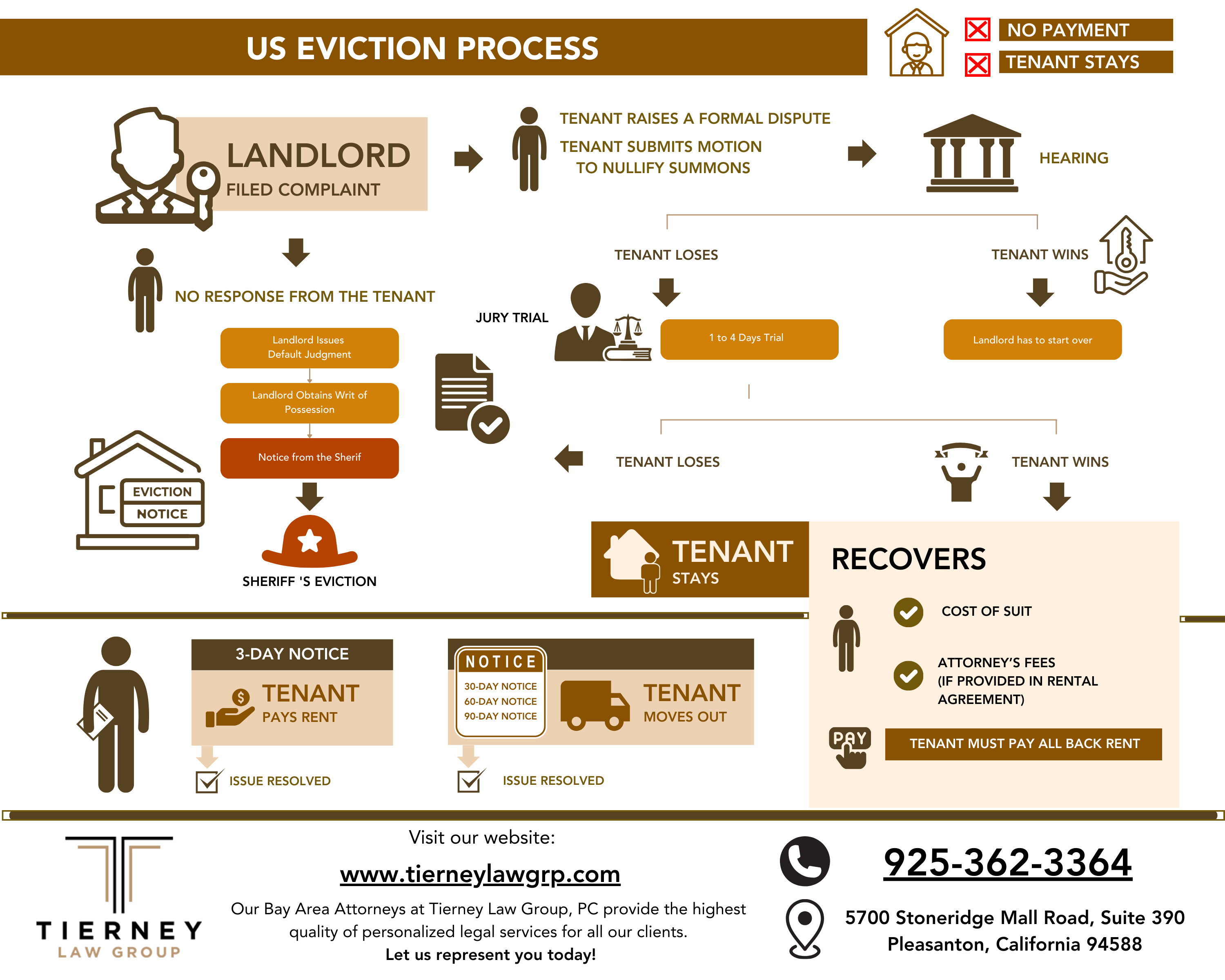
If the landlord wins the judgment, they must obtain a “Writ of Possession” from the court. This is a court order directing the sheriff to remove the tenant.
- The landlord delivers the writ to the county sheriff’s department.
- The sheriff then serves the tenant with a 5-day Notice to Vacate (sometimes referred to as a “red tag notice”). During these five days, the tenant still has an opportunity to move out voluntarily.
- If the tenant does not leave, the sheriff will physically remove them and restore possession of the property to the landlord. This is known as a “lockout.”
This final stage, from obtaining the writ to the actual lockout, typically adds another 5 to 15 days to the process.
Tenant Rights and Protections During Eviction
California is known for having some of the strongest tenant protections in the United States. These protections can significantly impact the eviction timeline and outcome.
Rent Control and Local Ordinances
Many cities and counties within California, such as San Francisco, Los Angeles, Oakland, and San Jose, have their own local rent control and eviction ordinances that provide additional protections beyond state law. These local laws can introduce:
- Stricter just cause requirements.
- Higher relocation assistance payments for no-fault evictions.
- Longer notice periods.
- Rent caps and limitations on rent increases.
- More robust appeal processes for tenants.
Landlords operating in these areas must be acutely aware of both state and local laws, as violating local ordinances can invalidate an eviction attempt or lead to significant penalties.
Legal Defenses and Assistance
Tenants in California have several legal defenses they can raise in an unlawful detainer action, which can prolong the eviction process:
- Improper Notice: If the landlord failed to provide a valid notice or properly serve it.
- Breach of Warranty of Habitability: If the landlord failed to maintain the property in a safe and habitable condition.
- Retaliatory Eviction: If the landlord is evicting the tenant in retaliation for the tenant exercising their legal rights (e.g., reporting code violations).
- Discrimination: If the eviction is based on discriminatory reasons.
- Payment or Attempted Payment: If the tenant paid or attempted to pay rent after receiving a 3-day notice, and the landlord refused it.
Many legal aid organizations and tenant advocacy groups in California offer free or low-cost legal assistance to tenants facing eviction. Having legal representation can significantly improve a tenant’s chances of successfully defending against an eviction or negotiating a more favorable outcome, often extending the timeline for resolution.
Factors Influencing Eviction Duration
Beyond the standard legal steps, several practical and procedural elements can either speed up or slow down the eviction process in California.
Case Complexity and Court Backlogs
The more complex the eviction case—for example, if there are multiple tenants, complicated lease agreements, or significant factual disputes—the longer it is likely to take. Additionally, court caseloads and backlogs can vary widely by county. In larger metropolitan areas, courts may have more cases to process, leading to longer waits for hearings and trials. During public health emergencies or other crises, courts may experience even greater delays, as seen during the COVID-19 pandemic, which introduced temporary eviction moratoriums and extended timelines.
Tenant’s Legal Representation
When a tenant secures legal counsel, they are often better equipped to understand their rights, identify potential defenses, and navigate the intricate legal system. This can lead to:
- More robust challenges to the landlord’s claims.
- Requests for continuances (delays) in court proceedings.
- Negotiations for settlement agreements that provide the tenant more time to vacate.
- The proper filing of motions and discovery requests, which can add steps to the process.
While landlords can also have legal representation, an unrepresented tenant often faces an uphill battle, potentially leading to a quicker default judgment if they fail to respond appropriately.
Negotiation and Settlement
Paradoxically, negotiation and settlement, while potentially extending the initial notice period, can ultimately shorten the overall eviction timeline if successful. Both landlords and tenants often prefer to avoid a full-blown court battle due to the costs, stress, and uncertainty involved.
- “Cash for Keys” Agreements: Landlords might offer a tenant a lump sum of money to vacate the property quickly and voluntarily. This avoids court entirely.
- Payment Plans: For non-payment of rent cases, landlords might agree to a payment plan in exchange for the tenant withdrawing their defense, allowing them to stay, or moving out by a specific date.
A well-negotiated settlement can resolve the issue much faster than pursuing a contested unlawful detainer lawsuit through all its stages.
In conclusion, while the shortest eviction in California could theoretically take around 3-4 weeks in an uncontested, straightforward case where the tenant defaults immediately after a 3-day notice, a more realistic timeframe for a contested eviction is typically 2 to 3 months, and potentially longer if there are significant legal defenses, unique local ordinances, or extensive court backlogs. For anyone involved in a long-term stay accommodation dispute in California, understanding these timelines and seeking appropriate legal counsel is paramount.
LifeOutOfTheBox is a participant in the Amazon Services LLC Associates Program, an affiliate advertising program designed to provide a means for sites to earn advertising fees by advertising and linking to Amazon.com. Amazon, the Amazon logo, AmazonSupply, and the AmazonSupply logo are trademarks of Amazon.com, Inc. or its affiliates. As an Amazon Associate we earn affiliate commissions from qualifying purchases.