
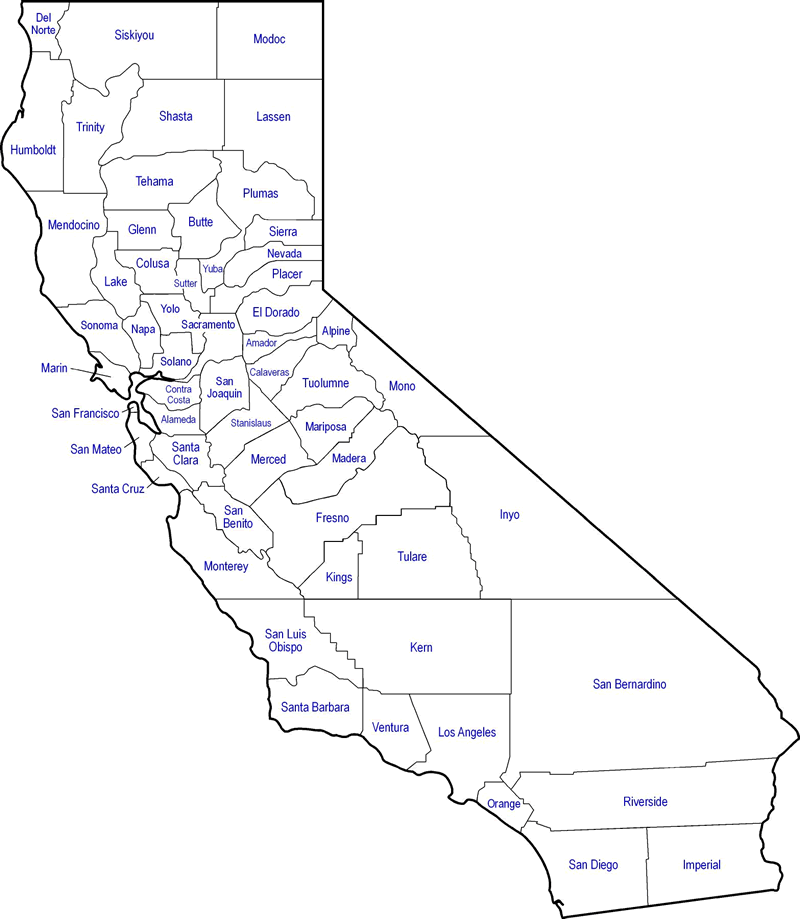
The question “How many counties are in the state of California?” might seem like a simple trivia query, but for the discerning traveler, the answer unlocks a deeper understanding of one of the most diverse and captivating destinations in the world. California is home to 58 distinct counties, each a unique geographical, cultural, and administrative entity that shapes the travel experiences within its borders. Far from being mere lines on a map, these counties are the fundamental building blocks of the Golden State’s incredible variety, influencing everything from the local cuisine and cultural events to the landscapes, climate, and attractions you’ll encounter.
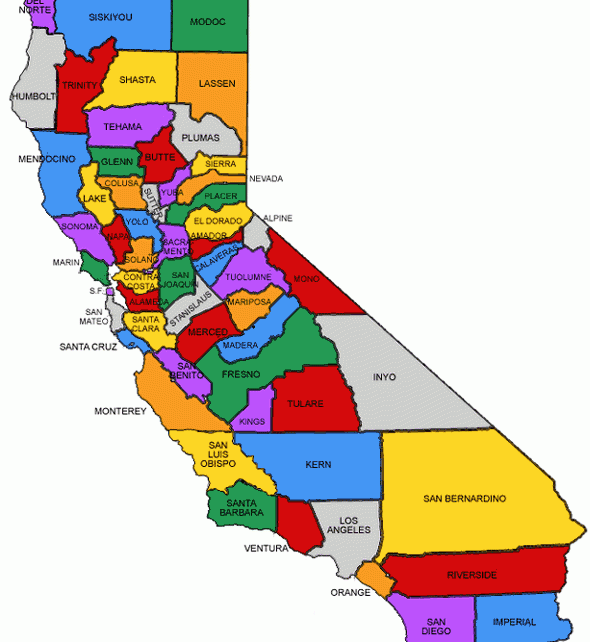
For travelers, recognizing the county structure is more than an exercise in memorization; it’s a strategic tool. It helps in planning road trips, understanding regional identities, discovering hidden gems, and navigating the vastness of a state that stretches from the temperate rainforests in the north to the scorching deserts in the south, and from the pristine Pacific Ocean coast to the towering peaks of the Sierra Nevada mountains. Each of the 58 counties offers a distinct flavor of California, making every journey an opportunity to explore a new facet of this remarkable state. This article delves into the significance of California’s county count for travelers, offering insights into how to leverage this knowledge for richer, more informed adventures.
The Golden State’s Geographic Tapestry: 58 Counties of Diverse Wonder
California’s administrative divisions are a testament to its immense scale and varied characteristics. The number 58 signifies a sprawling landscape, where each county often boasts its own micro-climate, unique history, and distinct blend of natural beauty and human development. This granular division is incredibly beneficial for travelers, as it helps segment a massive state into more manageable and understandable regions, each with its own appeal.
A Numerical Overview
With 58 counties, California stands among the states with a significant number of administrative divisions, a fact that directly correlates with its status as the third-largest state by area in the United States. This numerical reality underpins the incredible diversity that defines the California travel experience. From the sprawling urban centers to the serene wilderness areas, and from the productive agricultural lands to the dramatic coastlines, each county contributes a vital thread to the state’s vibrant tapestry. This count isn’t just an arbitrary number; it reflects the historical development, population distribution, and geographical segmentation that have shaped California into the multifaceted destination it is today.
Why Counties Matter for Travelers
Understanding California’s counties offers a powerful framework for travel planning and exploration. Firstly, counties often delineate distinct geographical and cultural regions. For example, the wine country experience is largely defined by Napa County and Sonoma County. The bustling urban adventures are centered in Los Angeles County and San Francisco County. Secondly, knowing which county an attraction or destination falls within can help travelers better organize their itineraries, group nearby points of interest, and understand local regulations or event schedules, which can vary significantly from one county to another. It also aids in pinpointing specific local resources, such as visitor centers, regional parks, or unique dining establishments that might be promoted at a county level rather than a state level. Ultimately, this knowledge transforms a generic trip to California into a series of curated, regional adventures.
Navigating California’s Regions: A County-by-County Perspective
To truly appreciate the richness of California, it’s essential to look beyond the major cities and understand how its 58 counties define its diverse regions. Each area offers distinct attractions and experiences, catering to every type of traveler.
Northern California’s Charms
The northern part of California is characterized by its dramatic coastline, ancient forests, and world-renowned wine regions. San Francisco County, home to the iconic city of San Francisco, is a hub of culture, innovation, and famous landmarks like the Golden Gate Bridge. Just north, Marin County offers stunning natural beauty, from the redwoods of Muir Woods to the picturesque town of Sausalito. East of Marin, Napa County and Sonoma County form the heart of California’s wine country, with destinations like Napa Valley and Sonoma Valley drawing visitors for exquisite culinary and viticultural experiences. Further north, Humboldt County and Del Norte County are home to some of the world’s most impressive redwood forests, offering unparalleled opportunities for hiking and nature immersion. In the eastern part of Northern California, counties like Placer County and El Dorado County provide access to the stunning alpine beauty of Lake Tahoe, a year-round destination for outdoor enthusiasts.
Central California’s Hidden Gems
Moving south, Central California presents a different array of experiences, from fertile agricultural valleys to rugged coastlines and majestic national parks. The Central Valley, encompassing counties such as Fresno County, Kern County, and San Joaquin County, is the agricultural heartland, offering insights into the state’s food production and a taste of authentic rural California. Along the central coast, Monterey County is famed for its dramatic coastline, including Big Sur and the charming towns of Monterey and Carmel-by-the-Sea. Neighboring San Luis Obispo County boasts burgeoning wine regions around Paso Robles and picturesque coastal towns like Morro Bay. Inland, Mariposa County, Tuolumne County, and Madera County are gateway counties to the world-renowned Yosemite National Park, offering access to its iconic waterfalls, granite cliffs, and ancient giant sequoias.
Southern California’s Iconic Destinations
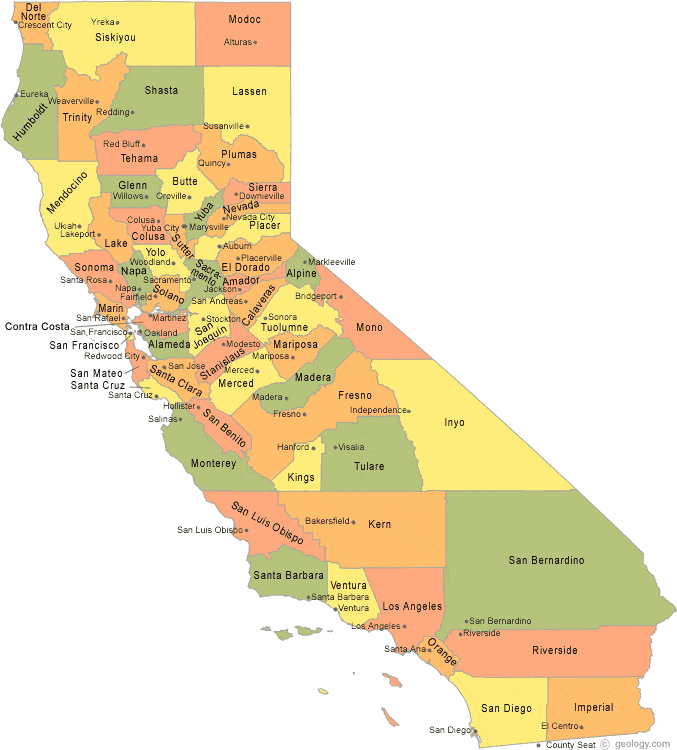
Southern California is perhaps the most famous for its vibrant cities, stunning beaches, and desert landscapes. Los Angeles County is a sprawling metropolis, home to the city of Los Angeles, Hollywood, and a myriad of cultural attractions, world-class dining, and entertainment venues. South of Los Angeles, Orange County is synonymous with pristine beaches, surf culture, and family fun, most notably Disneyland in Anaheim. Further down the coast, San Diego County offers a relaxed vibe with beautiful beaches, the vibrant city of San Diego, and upscale coastal communities like La Jolla. Inland, the desert counties like Riverside County and San Bernardino County offer unique experiences. Riverside County includes the desert oasis of Palm Springs and a portion of Joshua Tree National Park, while San Bernardino County, the largest county by area in the contiguous United States, encompasses vast stretches of the Mojave Desert, offering stark beauty and adventure.
Planning Your California Adventure: Leveraging County Knowledge
Armed with the knowledge of California’s 58 counties, travelers can approach their planning with a much more refined and strategic perspective. This understanding empowers you to move beyond generic itineraries and craft a journey that truly reflects the regional nuances and diverse offerings of the state.
Route Optimization and Regional Exploration
Thinking in terms of counties allows for incredibly efficient route planning, especially for road trips. Instead of just jumping from one major city to the next, you can string together attractions and destinations within the same or neighboring counties, minimizing travel time and maximizing exploration. For instance, if you’re exploring the Central Coast, grouping your visits to Monterey, Carmel-by-the-Sea, and Big Sur within Monterey County makes perfect sense. Similarly, if your interest lies in mountain adventures, focusing on counties like Mono County or Inyo County for the Eastern Sierra can create a cohesive and deeply immersive experience. This approach helps in discovering regional specialties, from specific varietals of wine unique to a particular viticultural area within a county, to local festivals and events that reflect the community’s identity.
Understanding Local Regulations and Resources
One often-overlooked aspect of travel is the variation in local regulations and available resources. Counties in California have different ordinances regarding everything from short-term rentals and camping permits to fire restrictions in wilderness areas and even specific rules for beach access or drone usage. Familiarizing yourself with the county you plan to visit can save you from unexpected complications. Moreover, county-level tourism boards and visitor centers often provide highly localized information that state-wide guides might miss. These resources can offer invaluable insights into community events, farmer’s markets, lesser-known hiking trails, or family-run eateries that provide an authentic taste of the region. Knowing the county allows you to tap into these invaluable local knowledge bases.
Discovering Off-the-Beaten-Path Experiences
While major cities and national parks draw millions, many of California’s most charming and authentic experiences are found in its smaller towns and less-traveled areas, often defined by their county location. Exploring the diverse counties opens the door to truly off-the-beaten-path adventures. Think of discovering a quaint artist community in Mendocino County, experiencing gold rush history in Amador County, or stargazing in the remote expanses of Modoc County. Each county, with its distinct character and local pride, holds the promise of unique encounters, from small-town parades and local gastronomic delights to untouched natural wonders and historical sites that tell a localized story of California’s rich past.
The Smallest and Largest: Extremes of California’s Counties
The sheer variation among California’s 58 counties is perhaps best exemplified by its extremes in size and population, each offering a vastly different travel narrative.
San Francisco: The Urban Jewel
San Francisco County stands as the smallest county in California by land area, encompassing just under 47 square miles. Despite its diminutive size, it is one of the most densely populated counties and is almost entirely occupied by the city of San Francisco. This geographical constraint has fostered a unique urban travel experience characterized by compact, walkable neighborhoods, efficient public transportation, and a concentrated wealth of cultural institutions, iconic landmarks, and diverse culinary scenes. Travelers here can effortlessly hop between world-class museums, historic sites, and vibrant districts, all within a small geographic footprint, making it a prime destination for those seeking an intense urban adventure without extensive travel time between attractions.
San Bernardino: The Desert Giant
In stark contrast, San Bernardino County reigns as the largest county in California by land area, sprawling across more than 20,000 square miles—an area larger than nine U.S. states. This colossal size primarily comprises vast desert landscapes, including significant portions of the Mojave Desert and parts of Joshua Tree National Park. Traveling through San Bernardino County is an experience of expansive wilderness, dramatic geological formations, and endless skies. It offers opportunities for solitude, stargazing, off-roading, and exploring the unique flora and fauna of the desert. The scale of this county dictates a different mode of travel, often requiring more extensive planning for provisions and distances, but rewarding visitors with awe-inspiring natural beauty and a sense of profound tranquility. Another notable county for its small population is Alpine County, tucked away in the Sierra Nevada, offering rugged wilderness and outdoor recreation.
Conclusion
California is a state of boundless opportunity for travelers, and its division into 58 counties is more than just an administrative detail; it’s a foundational aspect of its travel appeal. Each county contributes a unique voice to the Golden State’s narrative, offering a distinct blend of landscapes, cultures, and experiences. By understanding and utilizing this county framework, you can transform your California adventures from general sightseeing into deeply immersive, regionally focused explorations. Whether you’re drawn to the vibrant city life, the serene wilderness, the sun-drenched beaches, or the rolling vineyards, acknowledging the unique identity of each county allows for a richer, more informed, and ultimately more rewarding journey through this magnificent state. So, as you plan your next Californian escape, remember the 58 counties – they hold the keys to unlocking an unparalleled tapestry of travel experiences.
LifeOutOfTheBox is a participant in the Amazon Services LLC Associates Program, an affiliate advertising program designed to provide a means for sites to earn advertising fees by advertising and linking to Amazon.com. Amazon, the Amazon logo, AmazonSupply, and the AmazonSupply logo are trademarks of Amazon.com, Inc. or its affiliates. As an Amazon Associate we earn affiliate commissions from qualifying purchases.