
Understanding the regulations surrounding rent increases in California is a critical aspect of navigating the state’s complex housing market, whether you are a long-term resident or considering a move. As one of the most populous states with diverse urban and rural landscapes, California has grappled with housing affordability for decades. This has led to a patchwork of laws designed to balance the interests of landlords and tenants, ensuring that housing remains accessible while allowing property owners to maintain their investments. For anyone involved in a rental agreement, knowing the specifics of how often and by how much rent can be raised is not just helpful—it’s essential. This guide delves into the nuances of statewide and local rent control measures, notice requirements, and crucial exemptions that define the landscape of rent adjustments in the Golden State.

Understanding California’s Statewide Rent Control (AB 1482)
In 2019, California enacted Assembly Bill 1482, commonly known as AB 1482, the “Tenant Protection Act of 2019.” This landmark legislation introduced statewide rent caps and “just cause” eviction protections, significantly altering the dynamics of tenancy for millions. While not a blanket solution to the housing crisis, AB 1482 established a baseline of protection for many tenants who previously had none. It aimed to curb egregious rent hikes and provide greater stability in a volatile market.
Who is Covered by AB 1482?
The applicability of AB 1482 is not universal across all rental properties. Several key criteria determine whether a unit falls under its protections:
- Age of Property: The law generally applies to multi-family properties that are at least 15 years old. This is a “rolling” exemption, meaning a building constructed in 2008 would be covered starting in 2023, and one built in 2009 would be covered in 2024, and so on. This exemption encourages new construction by not immediately subjecting it to rent control.
- Type of Property:
- Covered: Most multi-family residential units, including apartments, duplexes, triplexes, and condominiums, are typically covered, provided they meet the age requirement.
- Exempt: Single-family homes and condominiums are exempt if they are not owned by a corporation, a real estate investment trust (REIT), or an LLC with at least one corporate member, and the landlord provides specific notice of this exemption to the tenant. Owner-occupied duplexes where the owner lives in one unit and rents out the other are also exempt. Housing that is already subject to stricter local rent control ordinances is also exempt from AB 1482, as local laws offering more protections take precedence. Dormitories, hotels, and transient occupancy housing are also excluded.
Understanding these criteria is the first step for both landlords and tenants to determine their rights and obligations under statewide law.
The Annual Rent Increase Cap
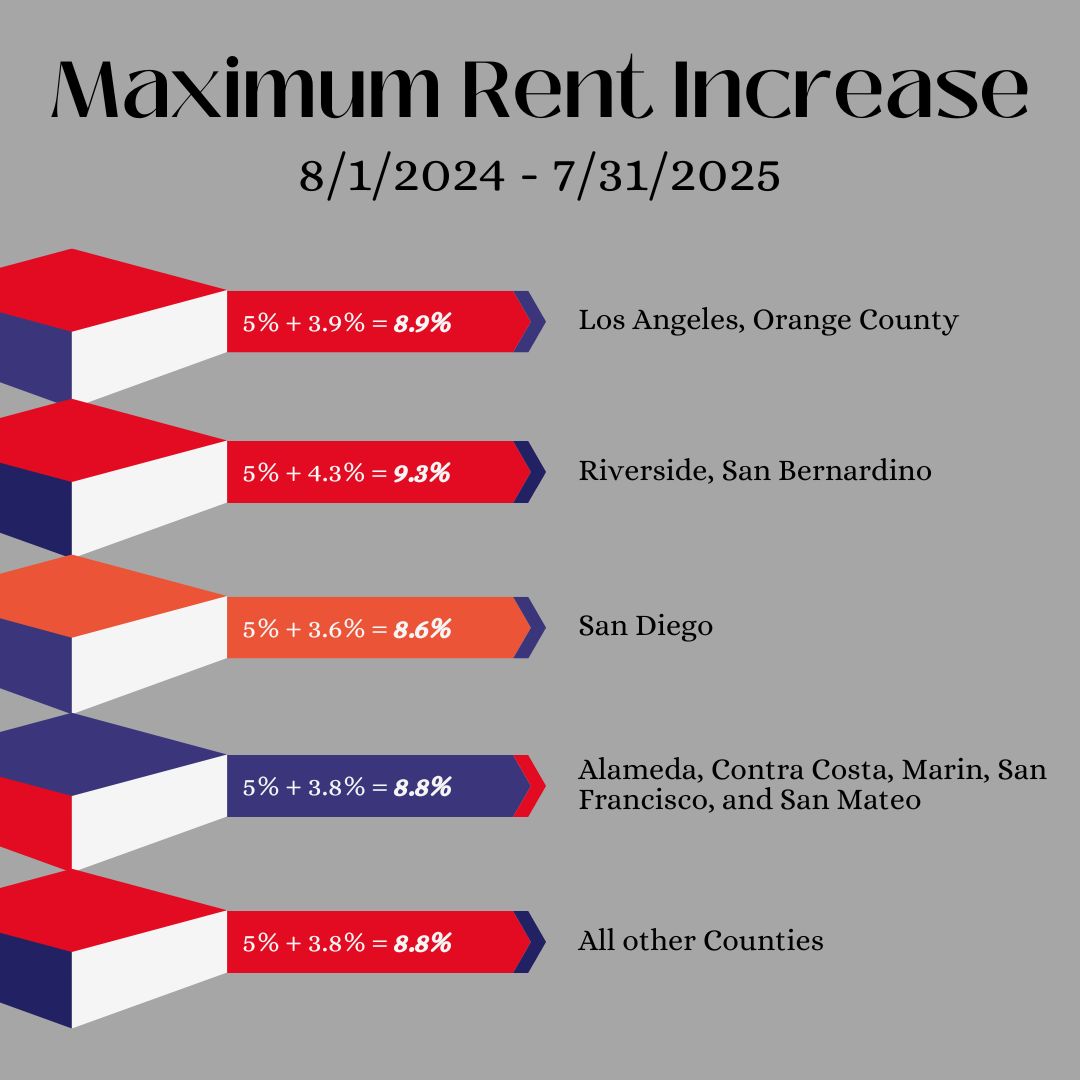
For properties covered by AB 1482, landlords are limited in how much they can raise the rent each year. The cap is set at 5% plus the percentage change in the cost of living (Consumer Price Index, or CPI), or 10%, whichever is lower.
- Consumer Price Index (CPI): The CPI component is crucial. It reflects the average change over time in the prices paid by urban consumers for a market basket of consumer goods and services. The specific CPI used is typically the CPI for All Urban Consumers for the metropolitan area in which the property is located, published by the U.S. Bureau of Labor Statistics. Landlords must use the CPI from April 1st of the preceding year.
- Calculation Example: If the CPI for the relevant area increased by 3.5% in the previous year, the maximum allowable rent increase would be 5% + 3.5% = 8.5%. If the CPI was, say, 6%, then 5% + 6% = 11%, but the cap would be the lower 10%.
- Frequency: Landlords can only implement one rent increase within any 12-month period, even if the total percentage increase over that period remains within the annual cap. This prevents landlords from imposing multiple small increases in short succession.
“Just Cause” Eviction Protections
While directly related to tenancy, AB 1482’s “just cause” eviction provisions are important because they provide tenants with greater security, complementing the rent cap. It means that after a tenant has resided in a unit for 12 months (or at least one tenant has resided for 24 months), a landlord can only terminate a tenancy for specific, legally defined “just causes.” These causes are categorized as “at-fault” (e.g., non-payment of rent, lease violations) or “no-fault” (e.g., owner move-in, withdrawal from the rental market). This prevents landlords from using eviction as a retaliatory measure against tenants who question rent increases or exercise their rights.
Navigating Local Rent Control Ordinances
While AB 1482 provides a statewide floor for tenant protections, many California cities have had their own rent control ordinances in place for decades. These local laws often offer stronger protections than the state law, and in such cases, the local regulations take precedence. It is crucial for both landlords and tenants to understand that residing in a city with its own rent control means abiding by those specific rules, which can vary significantly.
Cities with Stronger Protections
Some of California‘s most populous and expensive cities have robust rent control and eviction protection laws. These include, but are not limited to:
- Los Angeles (City and County): The City of Los Angeles has one of the oldest rent stabilization ordinances, covering units built before October 1, 1978. It has its own annual allowable rent increases and comprehensive “just cause” eviction rules. Los Angeles County also has a temporary rent stabilization ordinance for unincorporated areas.
- San Francisco: Known for its tight housing market, San Francisco’s rent control applies to units built before June 1979 and offers very specific annual rent increase percentages based on CPI, often lower than AB 1482.
- Oakland: The City of Oakland has an expansive rent adjustment program covering units built before 1995, with specific annual caps and extensive “just cause” eviction provisions.
- San Jose: San Jose’s Apartment Rent Ordinance covers units built before September 7, 1979, with a unique annual rent increase cap based on 5% of the existing rent.
- Santa Monica and Berkeley: These cities are known for their particularly strong and long-standing rent control boards, offering detailed regulations that often predate and are more stringent than statewide laws.
This list is not exhaustive, and many other cities (e.g., West Hollywood, Hayward, Palm Springs) have their own distinct rent control provisions.
Key Differences in Local Laws
The primary differences between local ordinances and AB 1482 often revolve around:
- Coverage Date: Local laws frequently cover older buildings (e.g., pre-1978 or pre-1979) than the 15-year rolling exemption of AB 1482.
- Annual Cap: Local annual rent increase caps are sometimes lower than the state’s 5% + CPI formula.
- Eviction Protections: While AB 1482 introduced “just cause” statewide, many local ordinances have more specific or comprehensive “just cause” requirements, sometimes requiring higher relocation assistance for “no-fault” evictions.
- Vacancy Decontrol/Control: Most California rent control laws operate under vacancy decontrol, meaning that once a tenant moves out, the landlord can raise the rent to market rate for the next tenant. Very few areas retain elements of vacancy control, which would limit rent increases even between tenants. The Ellis Act is a state law that allows landlords to exit the rental business entirely, often leading to evictions, even in rent-controlled units.
It is paramount for individuals to check the specific rent control laws of their city or county, as compliance can be complex and non-compliance can lead to significant penalties.
The Rent Increase Notice Requirement
Regardless of whether a property is subject to statewide or local rent control, landlords in California are legally required to provide tenants with proper notice before implementing any rent increase. This ensures transparency and gives tenants sufficient time to plan or make decisions about their housing.
Standard Notice Periods
The duration of the required notice depends on the magnitude of the rent increase:
- 30-Day Notice: For any rent increase that is 10% or less of the tenant’s current rent, landlords must provide at least a 30-day written notice.
- 60-Day Notice: If the proposed rent increase is more than 10% of the tenant’s current rent, landlords must provide at least a 60-day written notice. This longer period allows tenants more time to assess the increase, budget accordingly, or seek alternative housing if necessary.
- Local Ordinance Exceptions: Some local rent control ordinances may require even longer notice periods, particularly for larger increases. Always consult local laws.
These notice periods are critical and must be strictly adhered to. A rent increase imposed without proper notice is generally considered invalid, and tenants are not obligated to pay the higher rent until proper notice has been given.
Proper Delivery of Notice
Beyond the timing, the method of delivering the rent increase notice is also regulated to ensure the tenant actually receives it. A verbal notice is never sufficient; all rent increase notices must be in writing. Acceptable methods of delivery typically include:
- Personal Delivery: Handing the notice directly to the tenant.
- First-Class Mail: Mailing the notice via regular mail. It’s often recommended to add a few extra days to account for mail delivery time.
- Certified Mail: Sending the notice via certified mail with a return receipt requested provides proof of mailing and delivery, which can be valuable in case of a dispute.
- Posting and Mailing: In some cases, notice can be posted on the property and also mailed.
- Electronic Delivery: If the lease agreement specifically allows for electronic communication and the tenant has agreed to receive notices this way, email might be permissible, but this is less common for formal notices like rent increases.
Landlords must ensure they can prove the notice was properly served, as this will be crucial if a tenant disputes the increase. Similarly, tenants should keep all official notices received from their landlord.
Exemptions and Special Circumstances
Even with statewide and local rent control laws, various properties and situations may be exempt from, or subject to different rules regarding, rent increases. Understanding these exceptions is vital for both parties.
New Construction and Specific Property Types
- New Construction Exemption: As mentioned with AB 1482, newly constructed units are often exempt from rent control for a specified period (e.g., 15 years under state law, or permanently for buildings constructed after a certain date under many local ordinances). This exemption aims to incentivize developers to build more housing.
- Owner-Occupied Duplexes and Single-Family Homes: These are significant exemptions under AB 1482. If a landlord owns a duplex and lives in one of the units, the other unit is exempt from AB 1482’s rent caps and just cause eviction rules. Similarly, single-family homes and condominiums not owned by corporate entities are often exempt, provided the landlord gives proper notice.
- Subsidized Housing: Properties that are affordable housing units subject to deed restrictions, regulatory agreements, or other governmental affordable housing programs are generally exempt from AB 1482, as they have their own specific rent restrictions.
Vacancy Decontrol vs. Vacancy Control
Most rent control systems in California operate under vacancy decontrol. This means that when a tenant voluntarily moves out or is evicted for an “at-fault” reason, the landlord is generally allowed to reset the rent to market rate for the next tenant. This can lead to significant rent increases between tenancies, even in rent-controlled units.
- The Ellis Act: This state law grants landlords the right to exit the rental business, allowing them to evict tenants (even those in rent-controlled units) to remove a property from the rental market. While landlords must pay relocation assistance and follow strict procedures, it is a legal means to bypass rent control.
It’s important to differentiate this from vacancy control, a much stricter form of rent control that limits rent increases even when a unit becomes vacant. Very few jurisdictions in California have practiced true vacancy control (some aspects existed in Berkeley before the Ellis Act), and the general trend is towards vacancy decontrol, especially following state-level legislation.
Rights and Resources for Tenants and Landlords
Navigating California’s landlord-tenant laws can be challenging. Both tenants and landlords have specific rights and responsibilities, and understanding where to find reliable information and assistance is key to a fair and legal rental experience.
Tenant Advocacy Groups and Legal Aid
Tenants who believe their rent has been illegally increased or their rights violated have several avenues for recourse:
- Local Tenant Unions and Housing Rights Organizations: Many cities and counties have non-profit organizations dedicated to tenant advocacy. These groups offer free or low-cost advice, workshops, and sometimes legal representation. Examples include the Eviction Defense Collaborative in San Francisco or Legal Aid Foundation of Los Angeles.
- City/County Housing Departments: Many municipal governments have departments that oversee rent control ordinances and can provide specific information about local laws and complaint processes.
- Small Claims Court: For disputes over security deposits or illegal rent overcharges, small claims court can be an option for tenants.
- California Department of Consumer Affairs: While not providing direct legal advice, the California Department of Consumer Affairs offers extensive online guides and resources on landlord-tenant law.
Landlord Associations and Legal Counsel
Landlords must ensure full compliance with all applicable laws to avoid costly legal disputes. Resources for landlords include:
- Apartment Associations: Organizations like the California Apartment Association provide landlords with up-to-date information on legislation, forms, educational resources, and legal guidance.
- Legal Counsel: Given the complexity of California housing laws, especially in rent-controlled jurisdictions, retaining an attorney specializing in landlord-tenant law is often advisable for property owners, particularly when drafting leases, issuing notices, or handling evictions.

Importance of Documentation
For both parties, maintaining thorough documentation is paramount. This includes:
- Lease Agreements: The original signed lease and any amendments.
- Rent Payment Records: Proof of all rent payments made and received.
- Notices: Copies of all official notices, including rent increase notices, eviction notices, and notices of entry.
- Communication: Records of all written correspondence (emails, letters) related to the tenancy.
In the event of a dispute, comprehensive documentation can significantly strengthen a party’s position.
In conclusion, the question of how often a landlord can raise rent in California is not a simple one-size-fits-all answer. It depends heavily on whether the property is covered by the statewide AB 1482, a local rent control ordinance, or if it falls under specific exemptions. Both landlords and tenants must proactively educate themselves on the applicable laws in their specific location, utilize available resources, and maintain clear communication and documentation to ensure fair and lawful tenancy.
LifeOutOfTheBox is a participant in the Amazon Services LLC Associates Program, an affiliate advertising program designed to provide a means for sites to earn advertising fees by advertising and linking to Amazon.com. Amazon, the Amazon logo, AmazonSupply, and the AmazonSupply logo are trademarks of Amazon.com, Inc. or its affiliates. As an Amazon Associate we earn affiliate commissions from qualifying purchases.