
For any resident of California planning domestic air travel or needing to access secure federal facilities, understanding the Real ID program is not just recommended, it’s essential. As a crucial element of modern travel preparedness, the Real ID card serves as a federally compliant identification, impacting everything from your ability to board a flight to entering a military base. This comprehensive guide is designed to navigate you through the application process in California, ensuring you’re well-equipped for your next journey without unexpected hurdles.
Understanding the Real ID Mandate for Travelers
The Real ID Act, passed by Congress in 2005, established minimum security standards for state-issued driver’s licenses and identification cards and prohibits federal agencies from accepting for certain purposes driver’s licenses and identification cards from states that do not meet these standards. For travelers, this means a significant shift in how domestic air travel is conducted.
What is Real ID and Why Do You Need It?
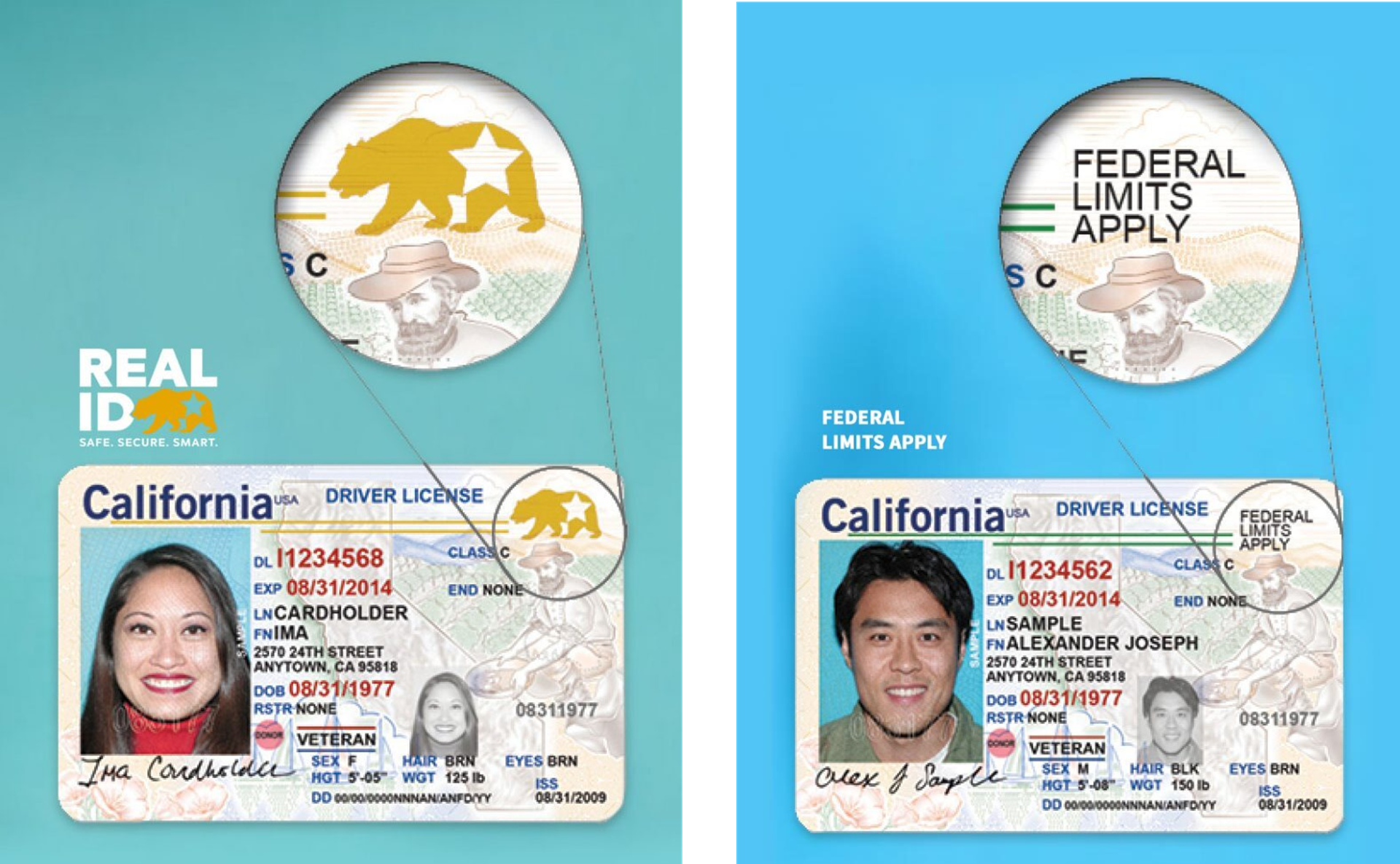
At its core, a Real ID is a state-issued driver’s license or identification card that meets the security standards set by the federal government. You can easily spot a Real ID by the gold bear with a star on the top right corner of the card in California. The primary reason travelers need a Real ID is for domestic air travel. Without a Real ID, or an acceptable alternative such as a U.S. passport, permanent resident card, or other federally approved identification, you will not be allowed to board a federally regulated commercial flight. This also extends to accessing certain federal facilities, military bases, and nuclear power plants. It’s a fundamental document ensuring verified identity for national security purposes, making it a critical component of stress-free travel within the United States. For residents of California who rely on air travel for business, leisure, or family visits, securing a Real ID is a proactive step toward seamless mobility.
The Importance for California Residents and Travelers
As one of the most populous states, California sees millions of its residents traveling domestically each year. Whether it’s a quick business trip from Los Angeles to New York, a family vacation to Florida, or a visit to relatives across the country, a valid Real ID eliminates potential travel disruptions. The alternative, carrying a passport for domestic flights, is an option, but for many, having a Real ID simplifies the process, keeping their passport secure for international journeys. Furthermore, for those who might need to access federal buildings or military installations as part of their profession or personal life, a Real ID serves as the convenient, compliant form of identification. Its importance cannot be overstated in a world where security and identity verification are paramount, particularly when traversing diverse landscapes and engaging with federal entities across the nation.
Key Deadlines and Compliance
While the original enforcement deadline for Real ID was postponed multiple times, the most current deadline mandates that starting May 7, 2025, every air traveler 18 years of age or older will need a Real ID-compliant driver’s license or identification card, or another acceptable form of ID, to fly within the United States. This date is set by the Department of Homeland Security and enforced by the Transportation Security Administration (TSA) at airport security checkpoints. Missing this deadline could mean being turned away at the airport, causing significant inconvenience and financial loss. Therefore, all eligible California residents are strongly encouraged to apply for their Real ID well in advance of this date to avoid any last-minute rush or complications. Planning ahead ensures a smooth transition and uninterrupted travel experiences for years to come.
Preparing Your Application: Essential Documents
The process of applying for a Real ID in California requires a precise collection of documents to verify your identity, residency, and Social Security information. Gather these items meticulously before heading to the DMV to ensure a single, successful visit.
Proof of Identity
This is the cornerstone of your Real ID application. You must provide one document to establish your identity. Accepted documents typically include:
- U.S. Birth Certificate: An original or certified copy issued by a state or local government.
- Valid U.S. Passport or Passport Card: Unexpired.
- Foreign Passport with a valid U.S. Visa and an approved I-94 form: For non-citizens.
- Certificate of Naturalization (Form N-550 or N-570): For naturalized citizens.
- Permanent Resident Card (Form I-551): For lawful permanent residents.
Ensure the document is original or a certified copy; photocopies are generally not accepted. The name on this document will be the primary name on your Real ID.
Proof of Residency in California
You will need to provide two different documents that show proof of your California residency. These documents must include your name and your current California residential address. Acceptable documents include:
- Utility bills: Gas, electric, water, cell phone, or cable bill (must be recent, typically within the last 2-3 months).
- Rental or lease agreements: Signed by both landlord and tenant.
- Mortgage bills or statements.
- Bank statements: Recent, showing your current address.
- Medical documents.
- Employer documents: Pay stubs, letters from employers.
- Insurance documents: Homeowner’s, renter’s, or vehicle insurance policy.
- Vehicle registration or title.
Each document must be from a different source. For example, two different utility bills will count as two separate proofs of residency. For younger applicants or those living with family, specific rules for shared residency apply, often requiring a statement from the homeowner and additional proofs.
Proof of Social Security Number
You must present one document that displays your full Social Security Number (SSN). Examples include:
- Social Security card: The actual card is preferred.
- W-2 form: From your employer.
- Pay stub with your full SSN.
- SSA-1099 form.
- Non-SSA-1099 form.
The name on your Social Security document must match your identity document. If there are discrepancies, you may need to resolve them with the Social Security Administration before applying for your Real ID.
Name Change Documents
If the name on your identity document (e.g., birth certificate or passport) does not match your current legal name, you must provide documents that demonstrate the legal name change. This could include:
- Marriage certificate(s).
- Divorce decree(s).
- Adoption papers.
- Court order for a name change.
It is crucial that there is a complete chain of legal documents to connect your birth name to your current legal name. For instance, if you changed your name multiple times due to marriage and divorce, you might need to present all relevant marriage certificates and divorce decrees.
The Online Application Start
Before your visit to the DMV, California allows you to complete an online application to save time. Visit the official California DMV website, fill out the Real ID application form, and upload your documents digitally. While uploading helps, you will still need to bring all original physical documents to your in-person appointment for verification. Starting online pre-fills your information, potentially reducing your wait time at the office and ensuring you haven’t overlooked any crucial steps.
The California DMV Appointment and Process
Once your documents are in order and your online application is initiated, the next step involves an in-person visit to a California DMV office. This stage is critical for verification, photos, and finalizing your application.
Scheduling Your Appointment
The California DMV strongly recommends scheduling an appointment for Real ID applications. Walking in without one can lead to extremely long wait times, sometimes hours. Appointments can be made easily through the official California DMV website or by calling their customer service line. When scheduling, select “Real ID” as the service you require to ensure you are allocated sufficient time and resources. Choosing a weekday morning, if possible, often yields shorter wait times even with an appointment. Be prepared to travel to your chosen DMV location, so factor in travel time and potential parking challenges.
What to Expect at the DMV Office
Upon arrival for your appointment, you will check in and likely receive a queue number. When your number is called, you will meet with a DMV representative. This is where your diligently gathered documents come into play.
- Document Verification: The representative will meticulously review all your original identity, residency, and Social Security documents. They will ensure they are legitimate, current, and meet all specified requirements. Any discrepancies or missing documents will halt the process.
- Application Review: Your online application information will be pulled up and cross-referenced with your physical documents. You may be asked to confirm details.
- Photo: A new photo will be taken for your Real ID card. Ensure you present yourself clearly, adhering to standard identification photo guidelines (no hats, clear face, neutral expression).
- Fingerprint Scan: A digital fingerprint scan will be taken for security purposes.
- Signature: You will provide a digital signature.
- Fee Payment: A fee will be required for the Real ID card. Ensure you are aware of the current fee and have an accepted payment method (cash, debit, credit card).
The entire in-person process, if all documents are in order, typically takes about 20-30 minutes after your turn begins, though wait times can vary.
The Temporary ID and Receiving Your Card
After successfully completing the in-person application at the DMV, you will be issued a temporary Real ID document. This temporary document is valid immediately and can be used for driving purposes, but it cannot be used for domestic air travel or accessing federal facilities. The physical Real ID card will be mailed to your confirmed residential address. The mailing process typically takes anywhere from 2 to 4 weeks, but can sometimes extend longer due to processing volumes. It’s crucial to wait for and receive your permanent card before relying on it for travel. If you do not receive your card within a reasonable timeframe, contact the DMV to inquire about its status.
Common Pitfalls and Pro Tips for a Smooth Application
Applying for a Real ID can be straightforward with proper preparation. However, certain issues frequently arise. Being aware of these and adopting some pro tips can make your experience seamless.
Double-Checking Document Requirements
The most common reason for a failed Real ID application is incomplete or incorrect documentation. Before your DMV appointment, use the official California DMV checklist to double-check every required document. Pay close attention to expiration dates, the need for original vs. certified copies, and the requirement for two different residency documents. A small oversight, such as bringing a photocopy instead of an original birth certificate, can result in your application being rejected, forcing you to reschedule and return.
Understanding Name Consistency
Ensure that your name appears consistently across all your identity, Social Security, and name change documents. Minor variations, such as a missing middle initial or a hyphenation difference, can cause issues. If there are inconsistencies, it’s best to resolve them with the issuing agencies (e.g., Social Security Administration) before attempting to apply for your Real ID. A complete and unbroken chain of legal name change documents (marriage certificates, divorce decrees, court orders) is vital to link your birth name to your current legal name.
International Travel Considerations
While a Real ID is essential for domestic air travel, it is not valid for international travel. For international flights, you will always need a valid U.S. passport. Do not confuse the Real ID with a passport; they serve different purposes. If you frequently travel internationally, ensure your passport is also up-to-date. The Real ID simplifies domestic journeys, allowing your passport to remain safe for overseas adventures.
Planning Ahead for Travel
Given the mailing time for the physical Real ID card (2-4 weeks or more), it is imperative to apply well in advance of any planned domestic air travel. Do not wait until a few weeks before your trip, as you risk not receiving your card in time. The temporary paper ID is not accepted by the TSA for boarding flights. Apply several months ahead to avoid any last-minute stress or the need to carry an alternative form of ID, like your passport, for a domestic flight.
Real ID vs. Standard Driver’s License/ID Card
It’s important to understand the distinctions between a Real ID-compliant card and a standard California driver’s license or identification card, as their uses differ significantly.
Differentiating Features and Uses
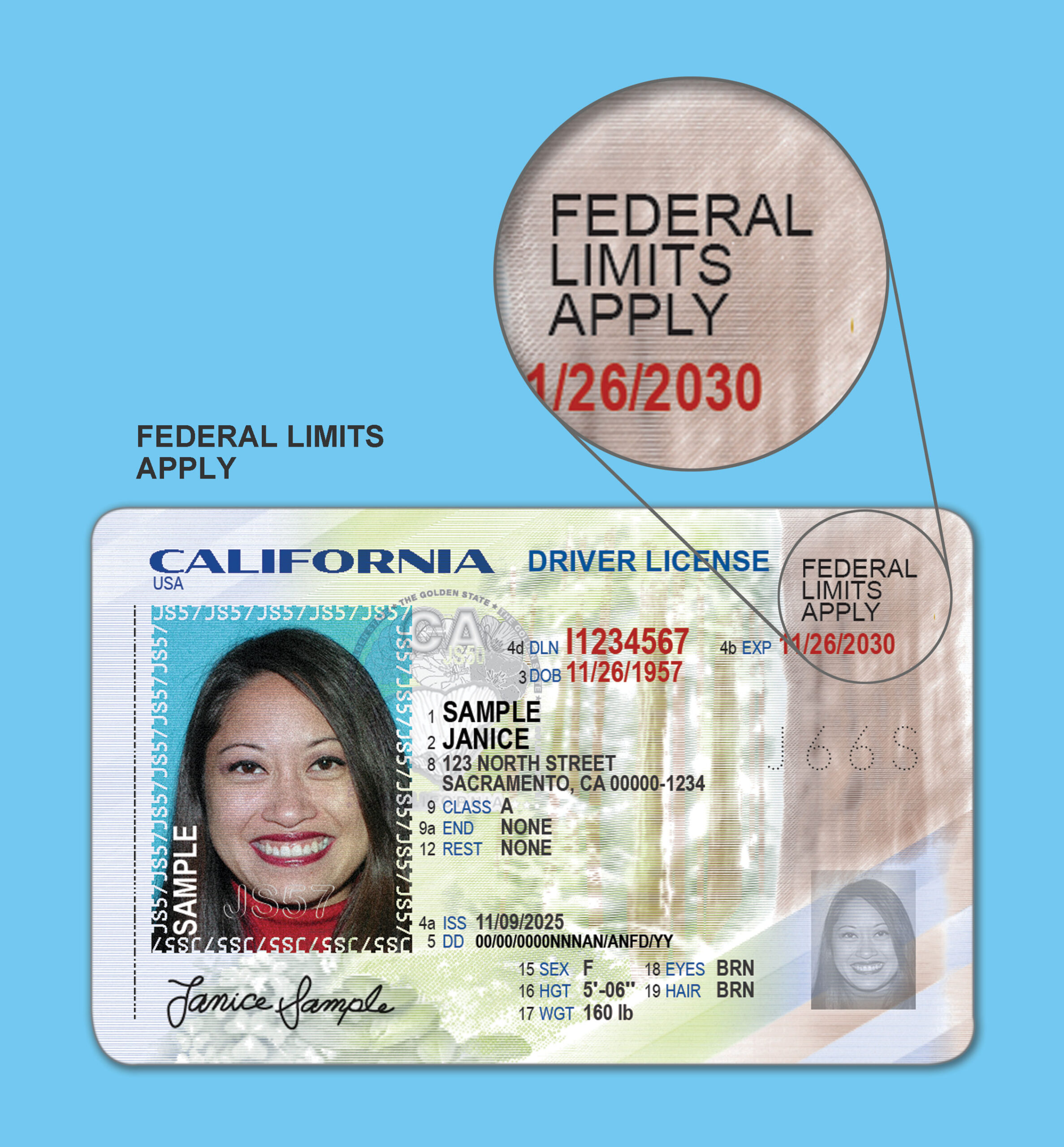
The most obvious visual differentiator is the gold bear with a star on the top right corner of the Real ID card. A standard California driver’s license or ID card issued after the Real ID implementation will say “FEDERAL LIMITS APPLY” in the same corner. Functionally, a Real ID allows you to board federally regulated commercial aircraft and enter certain federal facilities, military bases, and nuclear power plants. A standard card, while valid for driving and general identification within California, does not grant these federal access privileges.
When a Standard ID is Sufficient
A standard California driver’s license or identification card is perfectly sufficient for many daily activities. It allows you to legally drive a vehicle, verify your age, open bank accounts, register to vote, and interact with state and local law enforcement. For individuals who do not plan to fly domestically, access federal facilities, or visit military bases, a standard ID card remains a completely valid and acceptable form of identification for purposes where federal compliance is not mandated.
The Benefits of Real ID for the Frequent Traveler
For the frequent traveler, the Real ID offers unparalleled convenience and peace of mind. It streamlines the airport security process, eliminating the need to carry a passport for domestic flights. This not only lightens your load but also reduces the risk of losing your passport, a critical document for international travel. Business travelers, families on vacation, and individuals visiting relatives across state lines will find the Real ID an indispensable part of their travel toolkit, ensuring every journey begins and ends without identity-related complications at the airport checkpoint. It represents a commitment to secure and efficient travel for all U.S. citizens and eligible residents.
In conclusion, obtaining your Real ID in California is a straightforward process when approached with diligence and preparation. By understanding the requirements, gathering the necessary documents, and scheduling your DMV appointment in advance, you can ensure a smooth application experience. This federally compliant identification card is more than just a piece of plastic; it’s your key to seamless domestic air travel and access to vital federal facilities, paving the way for unrestricted mobility and peace of mind in your personal and professional life. Don’t wait until the last minute; secure your Real ID today and simplify your future travels within the United States.
LifeOutOfTheBox is a participant in the Amazon Services LLC Associates Program, an affiliate advertising program designed to provide a means for sites to earn advertising fees by advertising and linking to Amazon.com. Amazon, the Amazon logo, AmazonSupply, and the AmazonSupply logo are trademarks of Amazon.com, Inc. or its affiliates. As an Amazon Associate we earn affiliate commissions from qualifying purchases.