
The vibrant economic and social landscape of California offers myriad opportunities for individuals seeking to enhance their professional portfolio and cultivate a flexible, service-oriented lifestyle. Among these, becoming a Notary Public stands out as a rewarding path, providing a valuable service to the community while offering potential for supplemental income or even a full-time career. This guide delves into the comprehensive process of becoming a Notary Public in the Golden State, exploring the requirements, steps, and the fulfilling professional lifestyle this role can afford.
Becoming a Notary Public in California is more than just obtaining a stamp; it’s about upholding legal integrity, facilitating crucial transactions, and serving as a trusted, impartial witness. For many, it represents an ideal blend of professional responsibility and personal autonomy, allowing them to dictate their work hours and build a client base on their own terms. Whether you’re looking to bolster your existing career, launch a new entrepreneurial venture, or simply contribute to your community, understanding the nuances of the California Notary Public system is the first step toward embracing this enriching lifestyle choice.
Understanding the Notary Public Role in California
At its core, the role of a Notary Public in California is to act as an impartial witness to the signing of important documents and to administer oaths and affirmations. This position carries significant legal weight and ethical responsibilities, designed to prevent fraud and ensure the authenticity of signatures on critical legal, financial, and personal papers.
What is a Notary Public?
A Notary Public is a public officer appointed by the California Secretary of State whose primary function is to deter fraud. They do this by verifying the identity of the signers, ensuring the signers are aware of what they are signing, and recording the transaction in an official journal. Common documents requiring notarization include real estate deeds, loan documents, wills, powers of attorney, and various affidavits. The notary’s seal and signature attest to the proper execution of these documents, granting them legal validity. The integrity of the notary is paramount, as they act as a gatekeeper against deception in countless transactions that impact individuals, businesses, and government agencies alike.
Why Become a Notary? Embracing a Flexible Lifestyle
The decision to become a Notary Public often stems from a desire for professional flexibility and an opportunity for meaningful service. For many professionals—from paralegals and real estate agents to financial advisors and administrative assistants—a notary commission can be an invaluable asset, enhancing their existing service offerings and client trust. Beyond these professions, individuals often pursue notarization as a standalone venture.
The lifestyle benefits are compelling:
- Supplemental Income: Notary work can be an excellent source of additional income, fitting around existing employment or family commitments.
- Flexible Schedule: Mobile notaries, in particular, can set their own hours and choose assignments that align with their availability, offering unparalleled work-life balance.
- Community Service: Notaries play a vital role in their communities by ensuring legal transactions are conducted fairly and securely, providing an impactful way to contribute.
- Professional Growth: The role sharpens organizational skills, attention to detail, and a deep understanding of legal compliance, fostering significant personal and professional development.
- Entrepreneurial Opportunity: For those aspiring to be self-employed, establishing a mobile notary service or a notary signing agent business provides a direct path to entrepreneurship with relatively low startup costs.
Essential Eligibility Requirements
Before embarking on the application process, prospective notaries must meet several strict eligibility criteria set forth by the California Secretary of State:
- You must be at least 18 years of age.
- You must be a legal resident of California.
- You must be able to read, write, and understand English.
- You must not have been convicted of a felony or a disqualifying misdemeanor. A thorough background check, including fingerprinting, is a mandatory part of the application process. Certain offenses, even if they are not felonies, can disqualify an applicant if they are related to honesty, integrity, or fitness for the office.
- You must complete a mandatory notary education course.
Meeting these fundamental requirements is the bedrock upon which your journey to becoming a Notary Public in California will be built.
The Application and Training Process
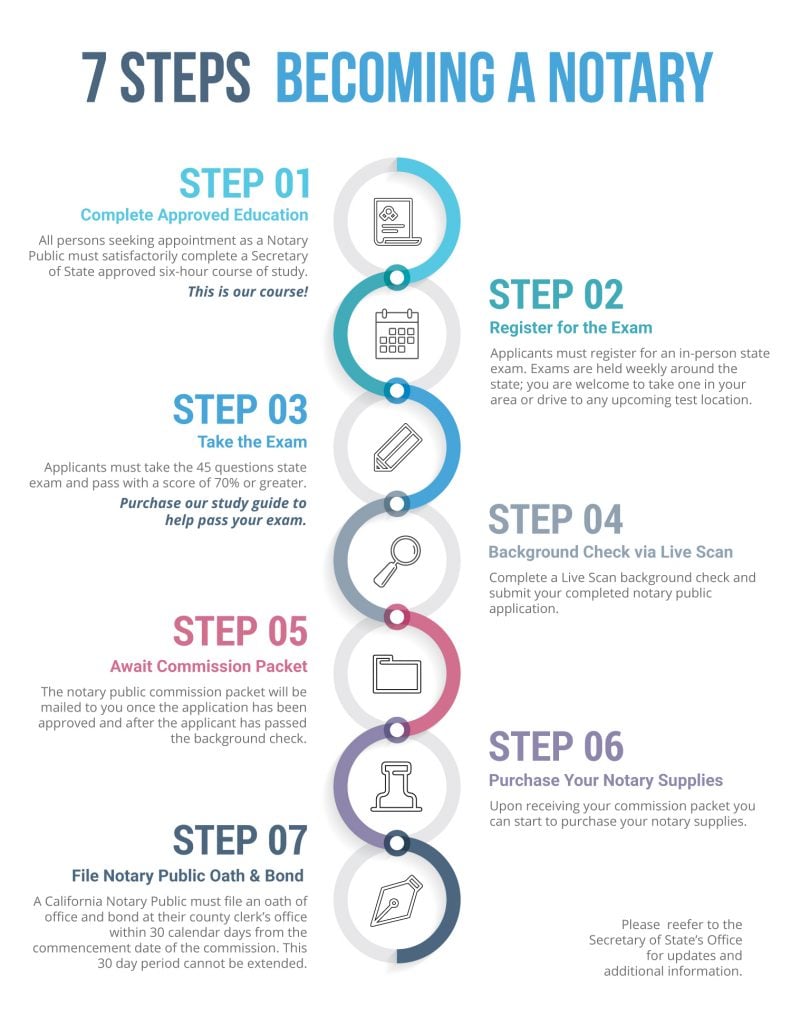
The path to becoming a Notary Public in California is a structured one, involving mandatory education, a rigorous examination, and a thorough background investigation. Each step is designed to ensure that appointed notaries are well-prepared, knowledgeable, and trustworthy individuals capable of upholding the duties of their office.
Notary Education Course
All first-time applicants for a notary public commission in California are required to complete an approved six-hour course of study. This comprehensive training program covers a wide array of topics essential for effective notary practice, including:
- Notary Public Law: A detailed review of the laws governing notaries in California, including statutory duties and prohibitions.
- Ethical Practices: Guidance on maintaining impartiality, avoiding conflicts of interest, and upholding the highest ethical standards.
- Document Types and Procedures: Understanding different types of notarizations (acknowledgments, jurats, oaths/affirmations, copy certifications) and the correct procedures for each.
- Record Keeping: The importance of the notary journal, required entries, and proper storage.
- Fees and Charges: Permissible fees for notary services and the regulations surrounding them.
This course is crucial for building a strong foundation of knowledge and confidence, preparing applicants not only for the exam but also for the practical realities of the role. Several state-approved vendors offer these courses, available in various formats, including online, in-person, and hybrid options, allowing applicants to choose a learning style that best fits their lifestyle.
The Notary Exam
Upon completing the required education, applicants must pass a proctored written examination administered by the California Secretary of State or an approved vendor. The exam is designed to test an applicant’s understanding of notary law, procedures, and ethics.
- Format: The exam typically consists of multiple-choice questions.
- Passing Score: A minimum score is required to pass.
- Retakes: If an applicant does not pass the exam on the first attempt, they are permitted to retake it. However, it’s essential to review the material thoroughly and re-register for a new exam date.
Preparation is key. Many applicants find success by thoroughly reviewing their course materials, utilizing practice tests, and familiarizing themselves with the California Notary Public Handbook, a vital resource published by the California Secretary of State.
Background Check and Live Scan
A mandatory component of the application process is a comprehensive background check, which includes electronic fingerprinting via a service known as Live Scan. This process allows the California Department of Justice and the Federal Bureau of Investigation to review an applicant’s criminal history.
- Purpose: The background check ensures the applicant has the integrity and moral character required for a position of public trust.
- Live Scan Process: Applicants must visit an authorized Live Scan provider, who will digitally capture their fingerprints and submit them electronically to the relevant agencies. A specific form provided by the California Secretary of State is required for this purpose.
- Disqualifying Offenses: As mentioned, convictions for felonies or certain misdemeanors (especially those involving fraud, dishonesty, or violence) can lead to disqualification. It’s crucial for applicants with any criminal history to review the California Secretary of State’s guidelines carefully or seek legal counsel.
Successfully navigating these training and vetting stages demonstrates an applicant’s commitment to the role and prepares them for the responsibilities that lie ahead.

Completing Your Notary Commission
Once you’ve passed the exam and cleared the background check, the final steps involve submitting your application, securing a surety bond, and acquiring the necessary tools of the trade. These actions formalize your commission and equip you to begin your notary practice.
Filing Your Application and Bond
After receiving notification that you’ve passed the exam, you’ll need to complete and submit your official application for appointment to the California Secretary of State. A critical part of this submission is securing a notary public surety bond.
- Surety Bond: California law requires all notaries to obtain a $15,000 surety bond. This bond serves as a financial guarantee to protect the public against any damages caused by the notary’s misconduct or negligence. It is not liability insurance for the notary but rather a safeguard for individuals harmed by a notary’s errors.
- Filing: The original bond, along with your oath of office, must be filed with the county clerk in your principal place of business within 30 days of the commencement date of your commission. It’s crucial to adhere to this strict deadline; failure to do so can result in your commission being voided.
- Application Submission: The completed application, along with your exam results and proof of bond, will be processed by the California Secretary of State, who will then issue your Notary Public Commission certificate.
Obtaining Your Notary Supplies
With your commission in hand, you’ll need to acquire the essential tools necessary to perform your duties legally and effectively:
- Notary Public Seal (Stamp): This is a mandatory tool, uniquely identifying you as a notary. It must contain specific information, including your name, the words “Notary Public,” the State of California, your commission number, the county of your principal place of business, and the expiration date of your commission. It must be photographically reproducible.
- Notary Journal: A sequential journal of all official acts performed is required by law. This journal serves as a record of your notarizations and is a critical document for protecting both the public and the notary.
- Notary Public Handbook: While not a “supply” in the traditional sense, having a current copy of the California Notary Public Handbook is indispensable for reference and ensuring compliance with the latest regulations.
- Optional Supplies: Many notaries also invest in an embosser (though not required), a sturdy carrying case for mobile work, and error & omissions (E&O) insurance, which provides personal liability coverage.
Understanding Your Notary Journal
The notary journal is arguably the most vital tool a Notary Public possesses. California law mandates detailed entries for every official act, ensuring transparency and accountability.
- Required Entries: Each entry must include the date and time of the notarization, the type of notarization, the character of every instrument sworn to or acknowledged, the signature of each person whose signature is notarized, a description of the evidence used to identify the signer, the fee charged, and the signer’s thumbprint for certain documents (primarily real estate documents).
- Importance: The journal serves as a primary defense against claims of fraud or negligence, providing an irrefutable record of your actions. It must be kept secure and surrendered to the county clerk upon resignation, death, or removal from office.
Maintaining Your Notary Commission and Ethical Practices
Becoming a Notary Public is just the beginning; maintaining your commission and adhering to the highest ethical standards are ongoing responsibilities. Continuous education and strict compliance with California notary law are paramount to a successful and legally sound notary lifestyle.
Continuing Education and Renewal
Notary Public commissions in California are valid for four years. Before the expiration of your commission, you must apply for reappointment if you wish to continue serving.
- Renewal Course: While first-time applicants complete a 6-hour course, renewing notaries are required to complete a 3-hour approved refresher course. This ensures notaries stay abreast of any changes in law or procedure.
- Reapplication Process: The renewal process is similar to the initial application, requiring a new application, a background check (including Live Scan), and passing the notary exam again. It is advisable to begin the renewal process several months before your commission expires to avoid any lapse in service.
Adhering to Notary Laws
The integrity of the notary public system rests on the strict adherence to legal mandates. Notaries are entrusted with significant power and, therefore, face severe consequences for non-compliance.
- Consequences of Non-Compliance: Violations of notary law can range from administrative penalties (fines, suspension, or revocation of commission) to criminal charges, including imprisonment, depending on the severity and intent of the offense.
- Key Prohibitions: Notaries must never notarize a document if the signer is not physically present, if they do not personally know or properly identify the signer, or if they have a financial interest in the transaction. Performing acts beyond the scope of a notary’s authority (e.g., giving legal advice) is also strictly prohibited.
- Due Diligence: A diligent notary consistently refers to the California Notary Public Handbook and stays informed of any legislative updates from the California Secretary of State.
Professionalism and Client Interaction
Beyond legal compliance, a notary’s professionalism significantly contributes to their success and reputation.
- Impartiality: Maintaining strict impartiality is non-negotiable. A notary must never favor one party over another or refuse service based on discrimination.
- Customer Service: Providing courteous, efficient, and reliable service is crucial, especially for mobile notaries who often interact directly with clients in various settings. Clear communication, punctuality, and a helpful demeanor foster trust and repeat business.
- Confidentiality: Notaries often handle sensitive personal and financial information. Upholding confidentiality and securing personal data is an ethical imperative.
Building a Notary Business or Integrating into Your Lifestyle
For many, becoming a Notary Public in California is a strategic lifestyle choice, offering pathways to entrepreneurship, supplementary income, or enhanced professional value within an existing career. The flexibility inherent in the role allows for seamless integration into diverse personal and professional lives.
Opportunities for Notaries
The demand for notary services in California is robust and varied, opening several avenues for practice:
- General Notary Work: This involves notarizing everyday documents for individuals and businesses, often at a fixed fee.
- Mobile Notary Services: Offering convenience by traveling to clients’ homes, offices, hospitals, or other locations. This service commands higher fees due to the added convenience and travel time. This is a popular option for those seeking a highly flexible, on-demand work lifestyle.
- Loan Signing Agent (LSA): This specialized field requires additional training and certification (though not state-mandated). LSAs notarize real estate loan documents for title companies, escrow officers, and lenders. The pay per signing is significantly higher, making it an attractive option for full-time notaries. The property market in California, especially in bustling cities like Los Angeles or San Francisco, creates consistent demand for LSAs.
- Remote Online Notarization (RON): While California has historically lagged in fully implementing RON, legislative efforts are ongoing to allow notaries to perform notarizations online. Keeping an eye on these developments is crucial for future-proofing a notary business and expanding service offerings.
Marketing Your Services
For those embracing the entrepreneurial notary lifestyle, effective marketing is essential:
- Online Presence: Creating a professional website or a strong profile on online notary directories (e.g., SigningAgent.com, NotaryPublicLocator.com) is crucial for visibility. Optimizing for local SEO can help clients in California find your services.
- Networking: Connecting with local businesses such as law firms, real estate agencies, mortgage brokers, hospitals, and elder care facilities can lead to consistent referrals. Attending local business events in areas like San Diego or Sacramento can be highly beneficial.
- Professionalism and Reputation: Word-of-mouth remains a powerful marketing tool. Providing exceptional service, being reliable, and maintaining professionalism will build a strong reputation that attracts more clients.

Financial Considerations
Understanding the financial aspects is key to integrating notary work into your lifestyle effectively.
- Fees: California law sets the maximum fees a notary can charge for various notarial acts (e.g., $15 per signature for an acknowledgment or jurat). Mobile notaries can also charge separate travel fees, which are not set by law but should be reasonable and disclosed upfront.
- Expenses: Startup costs include the education course, exam fee, background check, bond, notary supplies, and potentially E&O insurance. Ongoing expenses might include marketing, website maintenance, and transportation for mobile services.
- Income Potential: While income varies widely based on effort, specialization (like loan signings), and marketing, a dedicated notary in California can generate substantial supplementary or even primary income, making it a viable and attractive lifestyle choice.
Becoming a Notary Public in California is a journey that intertwines legal responsibility with personal ambition. It offers a unique professional path that champions integrity, community service, and the enviable flexibility to shape one’s work life around personal aspirations. By understanding the process, embracing ethical practices, and strategically building a service, individuals can unlock a rewarding lifestyle that contributes meaningfully to both their personal growth and the broader community.
LifeOutOfTheBox is a participant in the Amazon Services LLC Associates Program, an affiliate advertising program designed to provide a means for sites to earn advertising fees by advertising and linking to Amazon.com. Amazon, the Amazon logo, AmazonSupply, and the AmazonSupply logo are trademarks of Amazon.com, Inc. or its affiliates. As an Amazon Associate we earn affiliate commissions from qualifying purchases.