
Navigating the complexities of labor law can be a daunting task, particularly when it comes to understanding wages and overtime. For anyone working in, or employing staff within, California, mastering the nuances of overtime calculation is not just a legal obligation but a cornerstone of financial stability and fair compensation. California stands apart with some of the most robust and employee-friendly labor laws in the United States, often providing greater protections than federal standards. This comprehensive guide aims to demystify the process, offering a clear, insightful, and practical approach to calculating overtime pay, ensuring both employers and employees are equipped with the knowledge to maintain compliance and secure proper remuneration.
Understanding your entitlement or obligation regarding overtime pay is fundamental to managing your personal finances or operating a responsible business. It influences everything from daily budgeting to long-term financial planning, making it an indispensable piece of knowledge for a thriving lifestyle in the Golden State.
Understanding California’s Unique Overtime Laws
California’s approach to overtime is notably distinct from federal guidelines, creating a framework designed to protect workers from excessive hours without fair compensation. These state-specific provisions mean that simply adhering to federal law is often insufficient for compliance in California.
Federal vs. State Overtime Standards
At the federal level, the Fair Labor Standards Act (FLSA) mandates overtime pay at 1.5 times an employee’s regular rate of pay for all hours worked over 40 in a workweek. While this is the baseline, California’s Labor Code often goes further, imposing more rigorous requirements. The most significant difference lies in daily overtime: California requires overtime for hours worked beyond eight in a workday, whereas federal law only considers a weekly threshold. This dual standard means employers must always apply the law that provides the greater benefit to the employee, which, in most cases, will be California law.
Who Is Covered? Exemptions and Non-Exempt Employees
The application of overtime rules hinges on an employee’s classification as either “exempt” or “non-exempt.” Non-exempt employees are entitled to overtime pay, while exempt employees are not. California has strict criteria for an employee to be considered exempt, primarily falling into categories such as executive, administrative, or professional roles. To qualify for exemption, employees must generally meet three key tests:
- Salary Basis Test: They must earn a salary that is at least twice the state minimum wage for full-time employment (40 hours/week). This threshold is subject to change with the minimum wage.
- Salary Level Test: They must primarily perform duties that are intellectual, managerial, or creative, and that require the exercise of discretion and independent judgment.
- Duties Test: Their primary duties must involve specific administrative, executive, or professional functions as defined by the Industrial Welfare Commission (IWC) Wage Orders and the California Labor Code.
Misclassifying an employee as exempt when they should be non-exempt is a common and costly error for employers, leading to significant back pay liabilities and penalties.
The Importance of Accurate Timekeeping
Accurate and meticulous timekeeping is the bedrock of proper overtime calculation. Employers are legally obligated to maintain precise records of all hours worked by non-exempt employees, including start and end times, meal periods, and any split shifts. For employees, diligently recording your hours is crucial for ensuring you are paid correctly. Inaccurate timekeeping can lead to disputes, underpayment, and legal challenges. Leveraging reliable time tracking systems—whether digital or manual—is essential for both parties to uphold their responsibilities and rights under California law.
The Core Principles of California Overtime Calculation
California’s overtime rules are comprehensive, covering daily, weekly, and even consecutive-day thresholds. Understanding these distinct triggers is vital for accurate computation.
Daily and Weekly Overtime Rules
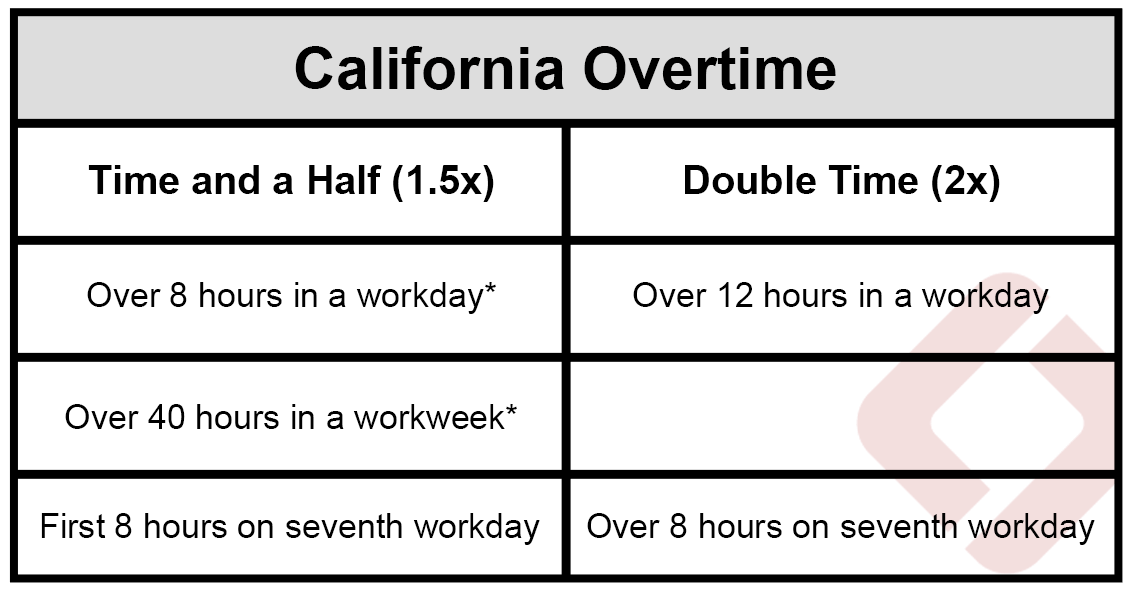
Unlike federal law, California mandates overtime for specific daily thresholds, not just weekly:
- Time and a Half (1.5x):
- All hours worked over 8 hours up to and including 12 hours in any workday.
- All hours worked over 40 hours in any workweek.
- Double Time (2x):
- All hours worked over 12 hours in any workday.
It’s crucial to note that these rules apply cumulatively. An employee working 10 hours in a day and 45 hours in a week would earn 2 hours of daily overtime (1.5x) and then an additional 3 hours of weekly overtime (1.5x) if those 3 hours fell within the 8-12 hour daily range. However, hours paid as daily overtime are not counted again as weekly overtime. For instance, if an employee worked four 10-hour days and zero hours on other days, they would have 8 hours of daily overtime (2 hours per day * 4 days). Their total weekly hours are 40, so no additional weekly overtime would apply.
The “Seventh Consecutive Day” Rule
California also has a unique “seventh consecutive day” rule, designed to ensure employees receive adequate rest.
- Time and a Half (1.5x): The first 8 hours worked on the seventh consecutive day of work in a workweek.
- Double Time (2x): All hours worked over 8 hours on the seventh consecutive day of work in a workweek.
This rule applies regardless of whether the employee has already hit daily or weekly overtime thresholds. For this rule, the “workweek” is defined by the employer but must be a fixed and regularly recurring period of 7 consecutive 24-hour days.
Understanding Different Overtime Rates (1.5x, 2x)
As detailed above, California utilizes two distinct overtime rates:
- Time and a half (1.5x): This is the standard overtime rate for hours exceeding 8 daily or 40 weekly, and for the first 8 hours on the seventh consecutive day.
- Double time (2x): This premium rate applies to hours worked beyond 12 in a single day, or for any hours worked beyond 8 on the seventh consecutive day.
These rates are multiplied by the employee’s “regular rate of pay,” which itself can be a complex calculation, as we’ll explore next.
Calculating the Regular Rate of Pay
The “regular rate of pay” is the foundation upon which all overtime calculations are built. It’s not always just the hourly wage; it encompasses various forms of compensation an employee receives for their work.
What to Include (Wages, Non-Discretionary Bonuses, Commissions)
The regular rate of pay must include nearly all remuneration for employment. This typically includes:
- Hourly wages: The most straightforward component.
- Non-discretionary bonuses: Bonuses promised to employees (e.g., for meeting production goals, attendance bonuses). If an employer promises a bonus beforehand, it must be included.
- Commissions: Payments based on a percentage of sales or other metrics.
- Shift differentials: Additional pay for working less desirable shifts (e.g., night shifts).
- On-call pay: Payments for being available to work.
- Production bonuses: Bonuses tied to output or productivity.
- Value of meals and lodging: If these are provided by the employer and are considered part of wages.
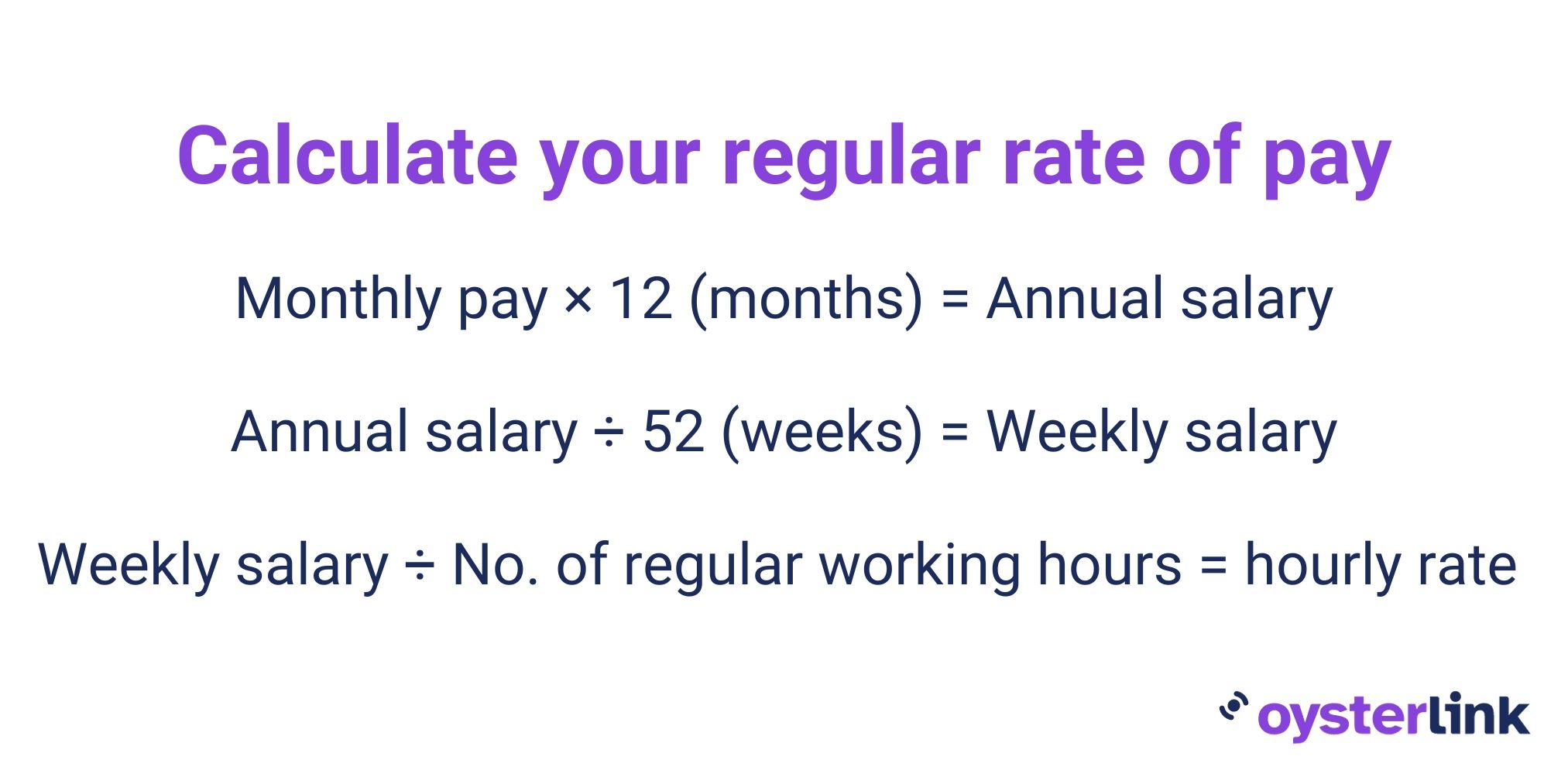
To calculate the regular rate of pay for a given pay period, you generally sum all includable earnings and divide by the total number of non-overtime hours worked in that period.

What to Exclude (Expense Reimbursements, PTO, True Gifts)
Certain payments are specifically excluded from the regular rate of pay calculation:
- Expense reimbursements: Payments for business expenses incurred by the employee.
- Paid time off (PTO), vacation, holiday pay: These are payments for not working.
- True gifts and discretionary bonuses: Bonuses that are truly at the employer’s sole discretion, not promised or expected (e.g., a spontaneous holiday bonus).
- Premium payments for overtime work: The overtime premium itself is not factored into the regular rate for future overtime calculations.
- Retirement plan contributions: Employer contributions to 401(k)s or similar plans.
Piece-Rate and Fluctuating Workweek Considerations
California has specific rules for employees paid by piece-rate, commission, or a fluctuating workweek schedule.
- Piece-Rate and Commission: For these workers, the regular rate of pay is generally calculated by dividing the total earnings for the workweek (excluding non-includable items) by the total number of hours worked in that workweek. Overtime is then paid on this calculated regular rate.
- Fluctuating Workweek: While allowed under federal law, the fluctuating workweek method of calculating overtime is generally not permitted in California because California law requires overtime to be calculated based on the employee’s “regular rate of pay,” which must reflect all earnings. The federal fluctuating workweek method often pays only half-time for overtime hours, which conflicts with California’s full time-and-a-half or double-time requirement.
Practical Scenarios and Examples
Let’s illustrate these rules with practical examples to solidify understanding. Assume a non-exempt employee earns $20.00 per hour.
Standard Workweek Example
An employee works the following schedule:
- Monday: 9 hours
- Tuesday: 8 hours
- Wednesday: 10 hours
- Thursday: 8 hours
- Friday: 8 hours
- Saturday & Sunday: Off
Calculation:
- Monday: 8 hours at $20.00 ($160) + 1 hour at $30.00 (1.5x) = $190
- Tuesday: 8 hours at $20.00 = $160
- Wednesday: 8 hours at $20.00 ($160) + 2 hours at $30.00 (1.5x) = $220
- Thursday: 8 hours at $20.00 = $160
- Friday: 8 hours at $20.00 = $160
- Total Weekly Hours: 43 hours
- Total Daily Overtime Hours: 1 (Mon) + 2 (Wed) = 3 hours
- Total Regular Hours (for weekly calculation): 43 total – 3 daily OT = 40 hours
- Weekly Overtime: No additional weekly overtime, as hours paid as daily OT are not counted towards 40-hour weekly OT. The employee worked 40 “regular” hours and 3 daily OT hours.
Total Pay: ($20 * 40 regular hours) + ($30 * 3 daily OT hours) = $800 + $90 = $890.
Compressed Work Schedule Example
An employee works four 10-hour shifts (Monday-Thursday) and is off Friday-Sunday.
Calculation:
- Each of the four days has 2 hours of daily overtime (10 hours – 8 regular hours = 2 OT hours).
- Total daily overtime hours: 2 hours/day * 4 days = 8 hours.
- Regular hours: 8 hours/day * 4 days = 32 hours.
- Total weekly hours: 40 hours.
Total Pay: ($20 * 32 regular hours) + ($30 * 8 daily OT hours) = $640 + $240 = $880.
No additional weekly overtime applies as total hours are 40 and the additional hours were already paid as daily overtime.
Dealing with Multiple Rates of Pay
If an employee works at different rates of pay for different jobs during a workweek for the same employer, California requires the regular rate of pay for overtime purposes to be a weighted average. You sum all earnings for the pay period and divide by the total hours worked.
Example: An employee works 30 hours at $18.00/hour and 15 hours at $22.00/hour in the same week.
- Earnings at Rate 1: 30 hours * $18.00 = $540
- Earnings at Rate 2: 15 hours * $22.00 = $330
- Total Earnings: $540 + $330 = $870
- Total Hours Worked: 30 + 15 = 45 hours
- Weighted Average Regular Rate: $870 / 45 hours = $19.33 per hour.
Overtime Calculation:
- Total hours worked: 45.
- Hours over 40: 5 hours (weekly overtime).
- Overtime Pay: 5 hours * ($19.33 * 1.5) = 5 hours * $28.995 = $144.98.
- Total Pay: $870 (regular earnings) + $144.98 (overtime) = $1014.98.
Ensuring Compliance and Protecting Your Rights
Adhering to California’s overtime laws is non-negotiable for employers and vital for employees to safeguard their earnings.
Employer Responsibilities
Employers bear the primary responsibility for ensuring accurate overtime calculation and timely payment. This includes:
- Maintaining Accurate Records: Detailed and legible records of all hours worked, meal periods, and wages paid.
- Correct Classification: Ensuring all employees are correctly classified as exempt or non-exempt.
- Posting Notices: Displaying required labor law posters detailing minimum wage, overtime, and other employment standards.
- Timely Payment: Paying all earned wages, including overtime, on scheduled paydays.
- Providing Itemized Wage Statements: Furnishing employees with detailed wage statements that show regular and overtime hours, rates, and earnings.
Failure to comply can result in significant penalties, including back pay, liquidated damages, and civil penalties enforced by the Division of Labor Standards Enforcement (DLSE).
Employee Rights and Recourse
Employees have clear rights regarding overtime pay. If you believe your employer has miscalculated or failed to pay you proper overtime, you have several avenues for recourse:
- Communicate with Employer: Often, a simple oversight or misunderstanding can be resolved by discussing the issue directly with your employer or HR department.
- File a Wage Claim: If direct communication doesn’t resolve the issue, you can file a wage claim with the DLSE. The DLSE is responsible for enforcing California’s labor laws.
- Consult an Attorney: For complex cases or larger disputes, consulting with an employment law attorney can provide guidance and representation.
- Retaliation Protection: California law protects employees from retaliation for exercising their rights, such as inquiring about wages or filing a complaint.
Staying Informed with DLSE Resources
The DLSE website (California Department of Industrial Relations) is an invaluable resource for both employers and employees. It provides detailed guides, fact sheets, FAQs, and updates on California labor laws. Regularly checking these resources can help ensure ongoing compliance and understanding of any legislative changes.
Mastering overtime calculation in California is more than just a legal requirement; it’s a fundamental aspect of fair labor practices and responsible financial management. By understanding these intricate rules, both employers can foster a compliant and equitable work environment, and employees can ensure they are properly compensated for their hard work, contributing to a stable and predictable lifestyle.
LifeOutOfTheBox is a participant in the Amazon Services LLC Associates Program, an affiliate advertising program designed to provide a means for sites to earn advertising fees by advertising and linking to Amazon.com. Amazon, the Amazon logo, AmazonSupply, and the AmazonSupply logo are trademarks of Amazon.com, Inc. or its affiliates. As an Amazon Associate we earn affiliate commissions from qualifying purchases.