
Navigating daily life, especially when faced with mobility challenges, requires thoughtful planning and access to essential resources. For residents and visitors alike in California, obtaining a Disabled Person Parking Placard is a critical step towards enhancing independence and quality of life. This placard is more than just a piece of paper; it’s a gateway to improved accessibility, allowing individuals with qualifying disabilities to park closer to their destinations, reducing physical strain and increasing participation in community life. Understanding the process, eligibility criteria, and responsibilities associated with these placards is fundamental for anyone seeking to utilize this vital resource. This guide delves deep into the specifics of acquiring and using a handicap placard in the Golden State, framed within the broader context of promoting a more accessible and fulfilling lifestyle.
Understanding the California Disabled Person Parking Placard Program
The California Disabled Person Parking Placard Program is administered by the California Department of Motor Vehicles (DMV) and is designed to facilitate access for individuals with specific medical conditions that impair their mobility. This program is a cornerstone of accessibility infrastructure, reflecting the state’s commitment to supporting its residents with disabilities.
What is a Disabled Person Parking Placard?
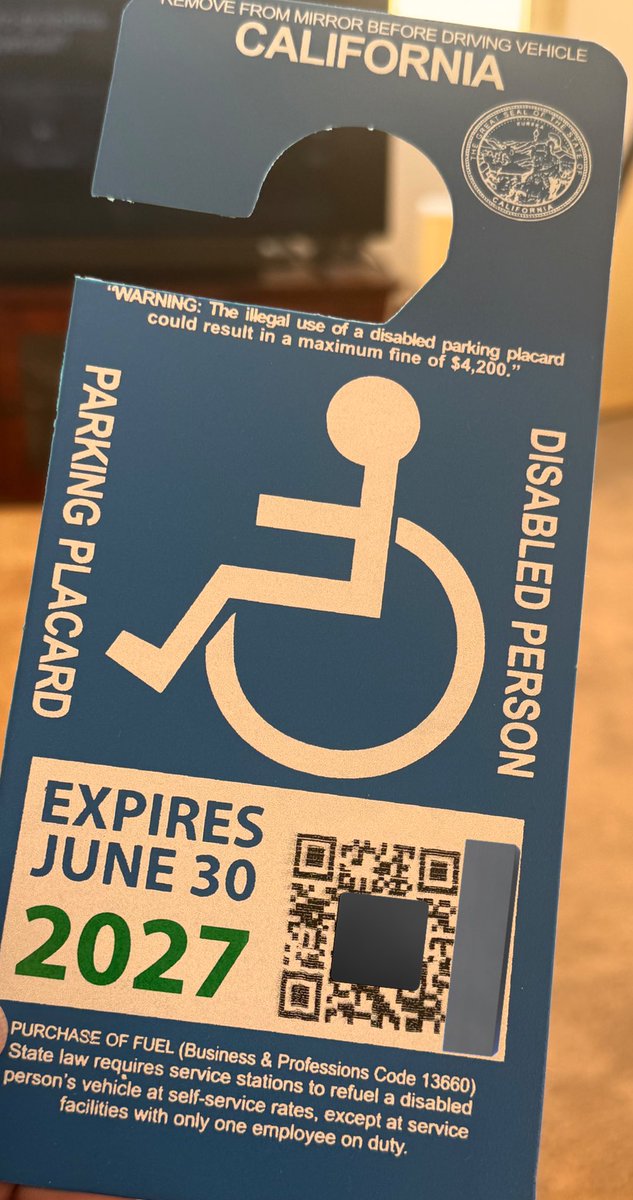
A Disabled Person Parking Placard (DPP) is a special permit issued by the DMV that allows individuals with qualifying disabilities to park in designated accessible parking spaces. These spaces are typically wider, located closer to entrances, and marked with the international symbol of accessibility (a wheelchair user). The placard must be displayed prominently, usually hanging from the rearview mirror, when the vehicle is parked in an accessible space. Its purpose is to alleviate the physical challenges associated with walking long distances or maneuvering in crowded parking lots, thereby promoting greater independence and participation in various aspects of life, from errands and appointments to leisure activities and employment.
Who is Eligible for a Placard in California?
Eligibility for a disabled person parking placard in California is strictly defined and requires certification from a licensed medical professional. The primary criterion revolves around conditions that severely impair mobility. This includes, but is not limited to:
- Inability to walk without the aid of an assistive device: This covers individuals who use crutches, canes, walkers, wheelchairs, or other mobility aids.
- Severe limitation in ability to walk due to an arthritic, neurological, or orthopedic condition: Conditions such as multiple sclerosis, cerebral palsy, severe arthritis, or spinal cord injuries can qualify.
- Heart disease classified by the American Heart Association (AHA) as Class III or IV: This refers to significant cardiac impairment affecting daily activity.
- Specific lung diseases: Conditions where forced (respiratory) expiratory volume for one second is less than one liter, or the arterial oxygen tension (PAO2) is less than 60 mm/Hg on room air at rest.
- Loss of use of one or both hands: This can include conditions that make it difficult or impossible to operate parking meters or engage in other parking-related tasks.
- Vision impairment (low vision) or total blindness: Even if mobility isn’t directly impaired, specific visual impairments can qualify an individual for a placard.
- Diseases that severely impair mobility: This broad category covers a range of conditions that, while not explicitly listed, significantly affect an individual’s ability to walk or move around.
It’s crucial to understand that eligibility is not based solely on having a disability, but specifically on how that disability impacts one’s ability to walk or perform related tasks. The medical certification process ensures that placards are issued to those who genuinely require them.
Types of Placards Available
The DMV offers several types of placards to accommodate different needs and durations:
- Permanent Placard (Blue): This is issued to individuals with permanent disabilities and is valid for two years. It must be renewed every two years.
- Temporary Placard (Red): Intended for individuals with temporary disabilities, this placard is valid for a maximum of six months or the date indicated by the certifying medical professional, whichever is shorter. Only two temporary placards may be issued to a person within any 12-month period.
- Travel Placard (Paper): This can be issued to permanent placard holders who plan to travel and need a separate display for a rental car, or to non-residents with a permanent disability for use while visiting California. It is valid for 30 days.
- Organizational Placard: Issued to organizations that transport disabled persons, such as non-profit groups or care facilities.
Each type serves a specific purpose, ensuring that individuals receive the appropriate level of access based on the nature and duration of their disability.
The Application Process: Step-by-Step Guide
Obtaining a disabled person parking placard in California involves a clear, multi-step process. While it requires attention to detail, following these steps meticulously can ensure a smooth application.
Obtaining the Application Form (REG 195)
The first step is to acquire the “Application for Disabled Person Placard or Plates” form, officially known as form REG 195. This form is readily available through several channels:
- Online: The easiest way is to download and print the form directly from the official California DMV website.
- By Mail: You can request the form to be mailed to you by contacting the DMV.
- In Person: Forms are available at any DMV field office throughout California. While visiting a DMV office in person, such as the one in Sacramento, can be an option, utilizing online resources or mail can save time and effort.
Ensure you obtain the most current version of the form, as requirements can sometimes be updated.
Medical Certification Requirements
This is arguably the most critical part of the application. Section B of the REG 195 form must be completed and signed by a licensed medical professional. Acceptable certifiers include:
- Licensed physicians (MD or DO)
- Surgeons
- Chiropractors
- Optometrists (for vision-related disabilities)
- Physician assistants
- Nurse practitioners
- Certified nurse midwives
The medical professional must attest to the applicant’s qualifying disability, specifying the nature of the condition and its impact on mobility. They will also indicate whether the disability is permanent or temporary. It is essential that this section is filled out completely and accurately, as any omissions or errors can lead to delays or rejection of the application. The medical professional’s license number and contact information are required, enabling the DMV to verify the certification if necessary.
Submitting Your Application
Once both sections of the form (applicant’s information and medical certification) are complete, you can submit your application. There are two primary methods for submission:
- By Mail: This is the most common and often preferred method. Mail the completed REG 195 form to the address provided on the form itself, usually the DMV Placard Program, P.O. Box 932345, Sacramento, CA 94232-3450.
- In Person: While you can submit the form at a DMV field office, processing usually takes place centrally, so mailing is often just as efficient, if not more so, for the initial application. However, if you need immediate assistance or have questions, visiting an office can be beneficial.
There is no fee for a permanent placard. For a temporary placard, a small fee may be required. Always check the current fee schedule on the DMV website.
What to Expect After Application
After submitting your application, the DMV will review it. If everything is in order, your placard will be mailed to you. The processing time can vary, but generally, applicants can expect to receive their placard within a few weeks. If there are any issues with your application, such as incomplete information or a need for further verification, the DMV will contact you. It’s advisable to keep a copy of your submitted application for your records. Once you receive your placard, ensure you sign it immediately, as an unsigned placard is invalid.
Rights, Responsibilities, and Renewal
Receiving a disabled person parking placard grants significant privileges, but it also comes with important responsibilities. Understanding these aspects ensures proper use and continued access to the program.
Where You Can Park with a Placard
A valid disabled person parking placard allows you to park in a variety of locations:
- Designated disabled parking spaces: These are marked with the international symbol of access.
- On-street metered parking spaces: You are exempt from paying parking meter fees.
- “Green” curb spaces: These indicate limited-time parking, but placard holders are exempt from the time limits.
- Residential permit parking areas: You can park in these areas without a permit.
- “Blue” curb spaces: These are generally reserved for permanent placard holders.
It’s crucial to note that parking is not permitted in spaces marked with a crosshatched pattern adjacent to a disabled parking space, as these are reserved for wheelchair loading and unloading. Additionally, normal parking prohibitions, such as red curbs (no parking anytime) or fire lanes, still apply. Always be mindful of local parking ordinances, as some very specific rules may vary slightly by city or county, though the core California DMV rules apply universally.
Proper Use and Avoiding Misuse
The placard is issued to the individual with the disability, not to a vehicle. This means:
- The placard holder must be present in the vehicle, either as the driver or a passenger, for the placard to be used.
- The placard must be hung from the rearview mirror when parked in an accessible space and removed when the vehicle is in motion.
- Lending your placard to others is illegal and carries severe penalties, including fines and potential suspension of driving privileges.
- Misuse of a placard by anyone, including family members, is a serious offense. Enforcement agencies actively monitor for misuse to ensure spaces are available for those who genuinely need them. Penalties for misuse can include substantial fines (up to $1,000), imprisonment for up to six months, or both.
Strict adherence to these rules is vital to maintain the integrity of the program and ensure accessibility for all eligible individuals.
Renewal Procedures and Temporary Placards
Permanent Placards: A permanent placard is valid for two years and expires on June 30th of odd-numbered years. The DMV typically mails a renewal notice approximately 60 days before the expiration date. Renewal usually does not require a new medical certification for permanent placards, as the original certification is considered ongoing. Simply complete and return the renewal notice by mail.
Temporary Placards: Temporary placards are not renewable. If your temporary disability extends beyond the initial six-month period (or less, as specified by your doctor), you must reapply by submitting a new REG 195 form with updated medical certification. Remember, only two temporary placards can be issued within a 12-month period.
Lost, Stolen, or Damaged Placards
If your placard is lost, stolen, or damaged, it’s important to request a replacement promptly. You will need to complete a new REG 195 form, checking the box indicating a replacement request. For a permanent placard, a new medical certification is generally not required for a replacement, but you will need to sign a statement under penalty of perjury confirming the loss or theft. For a temporary placard, a new medical certification will likely be required. There may be a small fee for replacement temporary placards. It is advisable to report stolen placards to local law enforcement.
Enhancing Mobility and Independence in California
The Disabled Person Parking Placard program is a critical component of a larger ecosystem aimed at fostering mobility and independence for individuals with disabilities in California. Beyond the convenience of parking, the program contributes significantly to a more inclusive lifestyle.
Beyond Parking: The Broader Impact
While the immediate benefit of a handicap placard is convenient parking, its impact extends much further into the daily lives of individuals. It reduces physical stress, conserves energy, and ultimately allows people to engage more fully in their communities. This access is crucial for:
- Employment: Easier access to workplaces.
- Healthcare: Reducing the burden of reaching medical appointments.
- Education: Facilitating access to campuses and learning environments.
- Social & Recreational Activities: Enabling participation in cultural events, dining out, and visiting attractions.
- Daily Errands: Making grocery shopping, banking, and other essential tasks more manageable.
For many, a placard isn’t just a parking permit; it’s a tool for maintaining an active and fulfilling lifestyle, breaking down barriers that might otherwise lead to isolation or dependence. It embodies the principle of equal access, allowing individuals to navigate the vibrant landscape of California with greater ease and dignity.

Resources for Accessible Travel and Living in California
California is continually working to enhance accessibility across its vast and diverse offerings. For those with placards, and indeed all individuals with disabilities, a wealth of resources exists to support accessible travel and living:
- California State Parks: Many California State Parks offer accessible trails, facilities, and programs. Websites often provide detailed accessibility information for each park.
- Local Disability Advocacy Groups: Organizations such as the Disability Rights California or independent living centers in various cities (e.g., in Los Angeles or San Francisco) offer support, information, and advocacy services.
- Public Transportation: Major cities like Los Angeles, San Francisco, and San Diego offer accessible public transit options, including buses and trains equipped for wheelchair users. Paratransit services are also often available.
- Travel Guides: Specific travel guides and online platforms focus on accessible travel within California, highlighting hotels, attractions, and routes designed for ease of access.
- DMV Website: The official California DMV website remains a primary source for the most up-to-date information regarding placard regulations, renewals, and related services.
Obtaining a handicap placard is a crucial step for many in California, streamlining access and fostering greater independence. By understanding the application process, adhering to proper usage guidelines, and leveraging available resources, individuals can maximize the benefits of the program, enabling a richer, more engaged, and truly Californian lifestyle. The commitment to accessibility is not just a regulatory mandate but a reflection of a society that values the contribution and well-being of all its members, empowering them to explore, participate, and thrive.
LifeOutOfTheBox is a participant in the Amazon Services LLC Associates Program, an affiliate advertising program designed to provide a means for sites to earn advertising fees by advertising and linking to Amazon.com. Amazon, the Amazon logo, AmazonSupply, and the AmazonSupply logo are trademarks of Amazon.com, Inc. or its affiliates. As an Amazon Associate we earn affiliate commissions from qualifying purchases.