
For many young adults, the allure of the open road, the wind in their face, and the undeniable sense of freedom that comes with riding a motorcycle is an irresistible dream. In a state as diverse and expansive as California, with its scenic coastal highways, winding mountain passes, and vibrant urban landscapes, motorcycling offers an unparalleled way to experience its beauty. However, for those under the age of 21, the path to obtaining a motorcycle license isn’t merely a matter of passing a test; it involves a specific set of requirements designed to ensure safety, responsibility, and adequate preparation.
Navigating the regulations set by the California Department of Motor Vehicles (DMV) can seem complex, especially for younger riders. This comprehensive guide aims to demystify the process, providing a professional, insightful, and engaging roadmap for aspiring motorcyclists under 21 to earn their M1 license in the Golden State. It’s not just about getting a license; it’s about embracing a lifestyle with a full understanding of the commitment required.
Understanding the California DMV Requirements for Young Riders
The California DMV places a strong emphasis on rider safety, particularly for those new to motorcycling and individuals under 21. Unlike obtaining a standard Class C driver’s license, the process for an M1 motorcycle license involves mandatory training and a provisional period.
Age Restrictions and Provisional Licenses
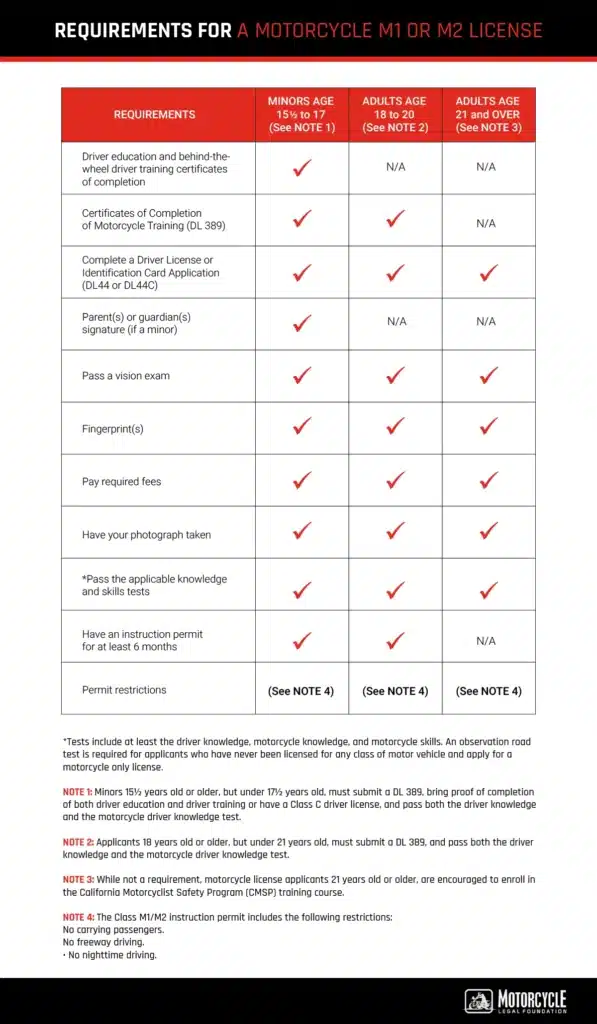
In California, the minimum age to obtain a motorcycle permit is 15 and a half years old. However, there are crucial distinctions for individuals under 21:
- Under 18: If you are under 18 years old, you must first obtain a motorcycle permit and hold it for a minimum of six months before you can apply for a full M1 license. You are also required to complete an approved motorcycle rider training course. Furthermore, you will initially receive a provisional M1 license, which comes with certain restrictions, similar to a provisional Class C driver’s license.
- 18 to 20: If you are between 18 and 20 years old, the six-month permit holding period is waived. However, you are still legally required to complete an approved motorcycle rider training course. Upon successful completion and passing the DMV tests, you will be issued a full M1 license without the provisional restrictions typically applied to younger riders.
These age-based requirements highlight the state’s commitment to ensuring young riders gain adequate experience and formal training before being fully licensed.
The Motorcycle Permit: Your First Step
Before you can even think about riding, you need a motorcycle permit. This permit allows you to practice riding under specific conditions. To get one, you must:
- Be at least 15 ½ years old.
- Possess a California driver’s license or complete the driver’s education and training requirements. If you don’t have a Class C license, you’ll need to pass the regular Class C knowledge test first.
- Complete a motorcycle license application (DL 44).
- Provide proof of identity and residency.
- Pay the application fee.
- Pass a vision test.
- Pass the written motorcycle knowledge test. This test covers traffic laws specific to motorcyclists, safe riding practices, and general road rules. It’s imperative to study the California Motorcycle Handbook thoroughly.
Once you have your permit, remember its limitations: no carrying passengers, no riding on freeways, and no riding during darkness. These restrictions are in place to allow new riders to gain experience in safer, more controlled environments.
Mandatory Safety Training
A cornerstone of California’s licensing process for riders under 21 is the mandatory motorcycle safety training. Regardless of whether you are under 18 or between 18 and 20, completing an approved California Motorcyclist Safety Program (CMSP) course is a non-negotiable requirement. This program is designed to teach fundamental riding skills, hazard awareness, and defensive riding techniques. It’s more than just a hurdle; it’s an invaluable investment in your safety and riding proficiency.
Navigating the Application Process
The journey to an M1 license involves several administrative steps that require careful attention to detail.
Gathering Necessary Documents
Before heading to the DMV for any tests or applications, ensure you have all the required documentation. This typically includes:
- Your completed DL 44 application.
- Proof of identity (e.g., birth certificate, passport, official California ID card).
- Proof of residency (e.g., utility bill, rental agreement).
- Your social security number.
- For those under 18, proof of completion of driver’s education and training, or a valid California Class C driver’s license.
- The Certificate of Completion for your California Motorcyclist Safety Program (CMSP) course.
Having everything organized will streamline your visit to the DMV and prevent delays.
Written Test Preparation and Procedure
The written motorcycle knowledge test is a critical early step. It assesses your understanding of motorcycle-specific laws, road rules, and safe riding practices. The best way to prepare is to thoroughly study the official California Motorcycle Handbook. This free resource, available online and at DMV offices, contains all the information you need to pass.
When you take the test at the DMV, you’ll typically be asked a series of multiple-choice questions. It’s essential to read each question carefully and choose the best answer. Don’t rush; take your time to ensure accuracy. If you fail, you’ll usually have to wait a specified period (e.g., one week) before you can retake it, and you may incur additional fees.
Parental Consent and Financial Responsibility
For applicants under 18, parental consent is a non-negotiable part of the process. Your parents or legal guardians must sign your application, thereby assuming financial responsibility for any damages or injuries you might cause while operating a motorcycle. This is a significant responsibility, and it’s vital for young riders to understand the implications of this consent. It reinforces the importance of safe and responsible riding habits from the outset. Discussing this with your guardians beforehand will ensure they are fully informed and prepared to provide their consent.
The Motorcycle Training Course (MTC): A Critical Component
The mandatory motorcycle training course, often referred to as the Motorcyclist Safety Program or CMSP, is perhaps the most crucial step for riders under 21. This program is designed to build foundational skills and instill safe riding practices.
What to Expect from the MTC
The standard CMSP course typically spans two to three days, combining classroom instruction with practical, on-motorcycle exercises in a controlled environment.
- Classroom Sessions: These sessions cover topics like risk management, protective gear, basic maintenance, traffic strategies, and how to handle various road conditions. You’ll learn about rider perception, decision-making, and the unique challenges faced by motorcyclists.
- Range Sessions: This is where you get hands-on experience. Under the guidance of certified instructors, you’ll learn and practice essential skills such as:
- Basic motorcycle controls (throttle, clutch, brakes).
- Starting, stopping, and shifting gears.
- Low-speed maneuvering and balance.
- Cornering techniques.
- Emergency braking and swerving.
- Road hazard avoidance.
Most courses provide motorcycles for training, usually smaller, learner-friendly models. They also often provide helmets, though bringing your own DOT-approved helmet and other protective gear (gloves, sturdy jacket, long pants, ankle-covering footwear) is highly recommended.
Choosing an Approved Training Provider
It is imperative to choose a training provider that is approved by the California Highway Patrol (CHP) and part of the official California Motorcyclist Safety Program. A list of approved training sites can be found on the CMSP website. These sites are located throughout California, from San Diego to Sacramento, ensuring accessibility for most residents. While the courses involve a fee, the investment in safety and the convenience of waiving the DMV riding test makes it well worth it.
Benefits Beyond Licensing
While the primary goal of the MTC is to fulfill a licensing requirement, its benefits extend far beyond. The course significantly enhances a new rider’s confidence, skill, and awareness, making them safer on the road. Insurance companies often offer discounts to riders who have completed an approved safety course, providing a tangible financial benefit. More importantly, it provides a solid foundation of defensive riding skills that can prevent accidents and save lives, laying the groundwork for a lifetime of enjoyable and safe motorcycling.
The Driving Test and Beyond: Earning Your M1
After successfully completing the CMSP and meeting all other requirements, the final steps to obtaining your M1 license are within reach.
Preparing for the Skills Test
One of the significant advantages of completing an approved CMSP course is that it waives the riding skills test at the DMV. This means that if you pass the practical portion of your CMSP course, you generally won’t need to take another on-cycle test at the DMV. This can alleviate a lot of stress, as the DMV riding test can be challenging, especially for inexperienced riders on unfamiliar motorcycles.
If, for some reason, you choose not to take the CMSP course (which is not an option for those under 21 who must take it), or if you are over 21 and choose to opt out, you would then need to schedule and pass a riding skills test at the DMV on your own motorcycle. This test involves various maneuvers like weaving cones, sharp turns, and emergency stops.
What Happens After Passing the MTC
Upon successful completion of the CMSP course, you will receive a Certificate of Completion (Form DL 389). Take this certificate, along with your motorcycle permit, application, and other required documents, to the DMV. If you’ve passed all other tests (vision, written), paid all fees, and for those under 18, held your permit for six months, the DMV will then issue your provisional M1 license.
Provisional License Period and Restrictions
For riders under 18, the initial M1 license is provisional. This means that for the first 12 months, you are subject to certain restrictions:
- No Passengers: You cannot transport passengers who are under 20 years old.
- No Driving Between 11 PM and 5 AM: You are generally prohibited from riding between these hours.
There are some exceptions to these rules, such as for employment, school-authorized activities, or medical necessity, but generally, young riders should adhere strictly to these limitations. These provisional restrictions are in place to allow new, young riders to gain experience without the added complexities of night riding or carrying passengers, further promoting safety. Once you turn 18, or after 12 months (whichever comes first), these provisional restrictions are automatically lifted.
Embracing the Motorcycle Lifestyle Responsibly
Obtaining your motorcycle license is just the beginning of an exciting journey. The freedom of motorcycling comes with significant responsibilities, particularly for young riders.
Safety Gear and Practices
Safety should always be paramount. Investing in high-quality, proper safety gear is non-negotiable. This includes:
- DOT-approved helmet: Full-face helmets offer the best protection.
- Eye protection: Whether integrated into your helmet or separate goggles.
- Motorcycle jacket: Abrasion-resistant material with armor.
- Motorcycle gloves: To protect hands and improve grip.
- Sturdy pants: Leather or specialized motorcycle riding pants.
- Over-the-ankle boots: For foot and ankle protection.
Beyond gear, adopting safe riding practices is crucial: always assume other drivers don’t see you, maintain ample following distance, scan for hazards, and ride within your skill limits. Continuously honing your observation skills and practicing defensive riding will contribute to a long and safe riding career.
Continuing Education and Skill Development
The CMSP provides an excellent foundation, but learning doesn’t stop once you have your license. Consider taking advanced rider courses as you gain experience. These courses delve into more advanced cornering, braking, and hazard avoidance techniques. Joining local motorcycle clubs or groups can also provide opportunities to ride with more experienced individuals, learn new routes, and stay engaged with the riding community. Many resources are available from organizations like the Motorcycle Safety Foundation (MSF) for ongoing education.
The Freedom and Responsibilities of Riding
Riding a motorcycle in California is an exhilarating experience, offering a unique perspective of the state’s diverse landscapes. From cruising along the Pacific Coast Highway to exploring the scenic routes around Lake Tahoe or traversing the desert roads near Palm Springs, the possibilities are endless. This lifestyle, however, demands respect, discipline, and a constant commitment to safety. For young riders under 21, successfully navigating the DMV requirements is a rite of passage that not only grants them the legal right to ride but also equips them with the skills and knowledge necessary to enjoy the open road responsibly and safely. Embrace the journey, ride smart, and savor every moment on two wheels.
LifeOutOfTheBox is a participant in the Amazon Services LLC Associates Program, an affiliate advertising program designed to provide a means for sites to earn advertising fees by advertising and linking to Amazon.com. Amazon, the Amazon logo, AmazonSupply, and the AmazonSupply logo are trademarks of Amazon.com, Inc. or its affiliates. As an Amazon Associate we earn affiliate commissions from qualifying purchases.