
Embarking on a career in real estate in California offers an unparalleled opportunity to shape lives and communities by facilitating access to one of life’s most fundamental needs: accommodation. From sprawling family homes in the suburbs of Los Angeles to chic urban apartments in San Francisco, and picturesque coastal properties in San Diego, the Golden State’s housing market is as diverse as its landscape. Becoming a licensed realtor is your gateway to professionally navigate this dynamic sector, connecting individuals and families with their ideal long-term stays, investment properties, or dream homes. This comprehensive guide will walk you through the precise steps to obtain your realtor license, anchoring each stage within the broader context of providing essential accommodation services across California.
The Realtor’s Essential Role in California’s Accommodation Market
The role of a realtor extends far beyond merely showing properties. They are vital intermediaries, market experts, and trusted advisors who ensure that the complex process of buying, selling, or leasing accommodation is seamless, compliant, and ultimately successful for all parties involved. In a state as populous and economically significant as California, understanding the nuances of the accommodation market is not just an advantage—it’s a necessity.
Understanding the Landscape of Residential Accommodation
California’s accommodation market is extraordinarily diverse, encompassing everything from single-family detached homes and condominiums to multi-unit apartment buildings and luxury estates. Each segment caters to different demographic needs, financial capacities, and lifestyle preferences. Realtors specializing in residential sales and leasing are instrumental in helping clients navigate these varied options, whether they are first-time homebuyers searching for an entry-level property, investors seeking lucrative rental units for long-term stays, or families upgrading to larger accommodations. They possess the local market insight to identify suitable properties, assess their value, and anticipate future trends that could impact a client’s investment in their chosen accommodation. Without knowledgeable realtors, individuals would struggle to make informed decisions in a market characterized by rapid change and intense competition, particularly in desirable urban centers and coastal regions.
Why a Licensed Professional is Crucial for Property Transactions
The intricacies of property transactions demand the expertise of a licensed professional. Real estate law in California is complex, covering everything from disclosure requirements and contract law to financing regulations and property rights. A licensed realtor possesses the foundational knowledge to guide clients through these legal labyrinths, ensuring that all documentation is accurate, legal obligations are met, and transactions proceed without undue risk. Their market knowledge is equally invaluable, helping clients understand pricing trends, available inventory, and negotiation strategies—all critical factors when securing or divesting a piece of accommodation. Moreover, licensed realtors operate under a strict code of ethics enforced by professional bodies and regulatory agencies. This commitment to ethical practice instills trust, providing assurance to clients that their interests are paramount throughout the entire process of acquiring or selling accommodation. This professionalism safeguards consumers from potential pitfalls and fraud, making licensed realtors indispensable to the integrity and efficiency of the accommodation sector.
Prerequisites to Begin Your Journey in California’s Real Estate Accommodation Sector
Before you can even consider taking the state examination, there are fundamental requirements and educational steps you must fulfill. These prerequisites ensure that all aspiring real estate professionals have a baseline understanding of the industry and possess the necessary personal qualities to serve the public effectively within the accommodation market.
Eligibility Requirements: The Foundation
To be eligible to apply for a real estate salesperson license in California, you must meet several basic criteria. First and foremost, you must be at least 18 years of age. There is no residency requirement, meaning you do not have to be a California resident to apply, although practically, most individuals pursuing this license intend to work within the state. Perhaps most critically, the California Department of Real Estate (DRE), the state’s licensing authority, emphasizes the importance of honesty and integrity. All applicants undergo a background check, which includes fingerprinting. Any past convictions, especially those related to fraud, dishonesty, or certain felonies, could lead to denial of a license. This strict vetting process ensures that individuals entrusted with guiding significant accommodation transactions uphold the highest standards of ethical conduct.
Educational Pathways: Building Expertise in Accommodation Transactions
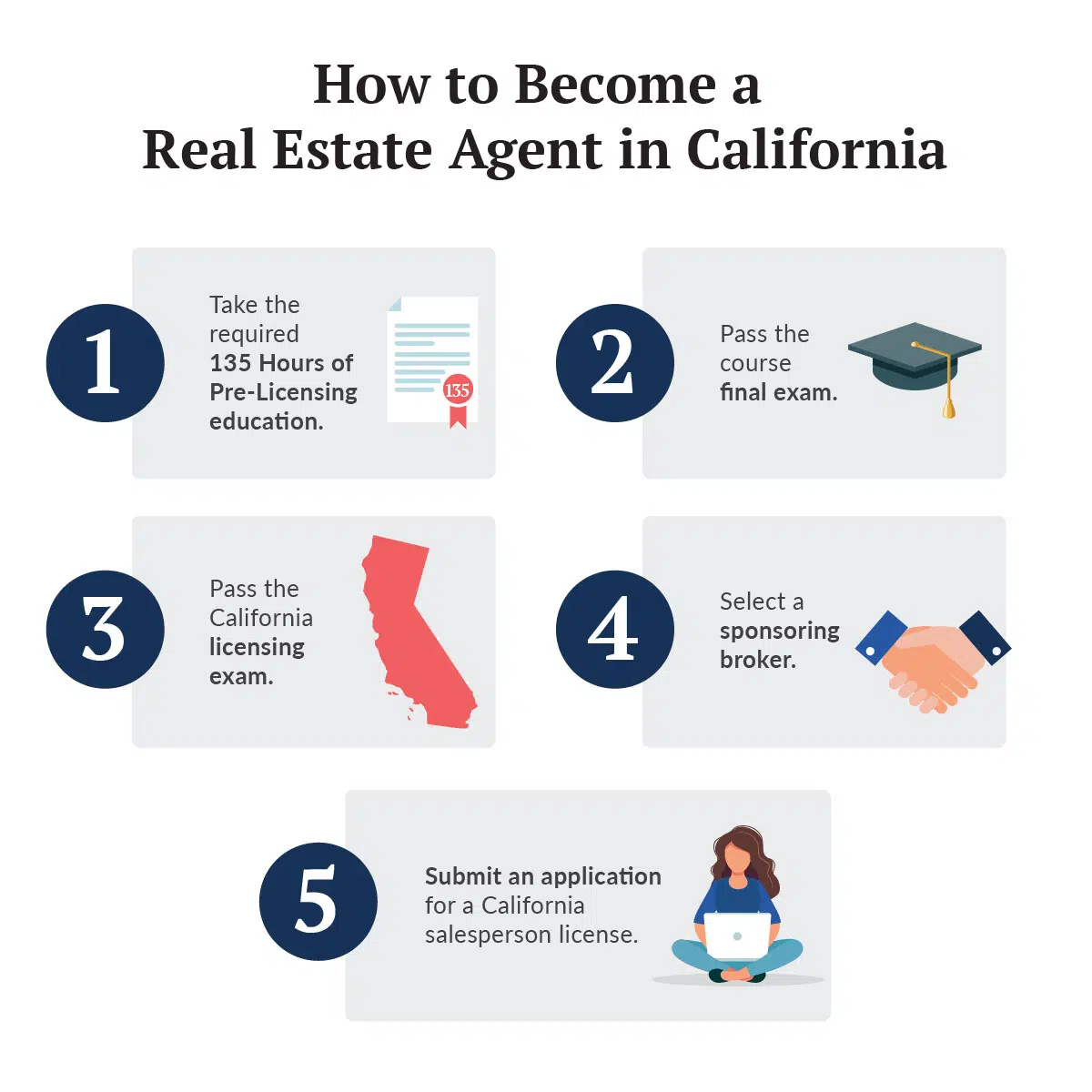
The cornerstone of becoming a licensed realtor in California is completing the mandatory pre-licensing education. The California DRE requires aspiring salespersons to complete three college-level courses, totaling 135 hours of instruction. These courses can be taken at approved community colleges, universities, or private real estate schools, many of which offer online programs for flexibility. The three required courses are:
- Real Estate Principles (45 hours): This course provides a foundational understanding of real estate concepts, including property rights, types of estates, legal descriptions, contracts, and agency relationships. It sets the stage for understanding the basic legal framework governing accommodation.
- Real Estate Practice (45 hours): Focusing on the practical aspects of real estate, this course covers topics such as listing agreements, marketing properties (including various types of accommodation), handling offers, negotiations, and escrow procedures. It’s about the ‘how-to’ of daily real estate operations.
- One Elective Course (45 hours): Applicants must choose one additional course from an approved list. Popular choices often include Real Estate Finance, which delves into mortgages and lending for property purchases; Property Management, directly relevant for those interested in managing rental accommodations; or Real Estate Appraisal, which teaches how to value properties. This elective allows individuals to deepen their expertise in a particular facet of the broad accommodation market.
Successful completion of these 135 hours, evidenced by passing course exams and receiving certificates, is absolutely essential before you can apply to take the state licensing examination.
Navigating the Application and Examination Process
With your educational requirements met, the next critical phase involves formally applying to the state and then successfully passing the rigorous licensing examination. This stage is where your preparation is put to the test, determining your readiness to professionally serve the California accommodation market.
Submitting Your Application to the California Department of Real Estate (DRE)
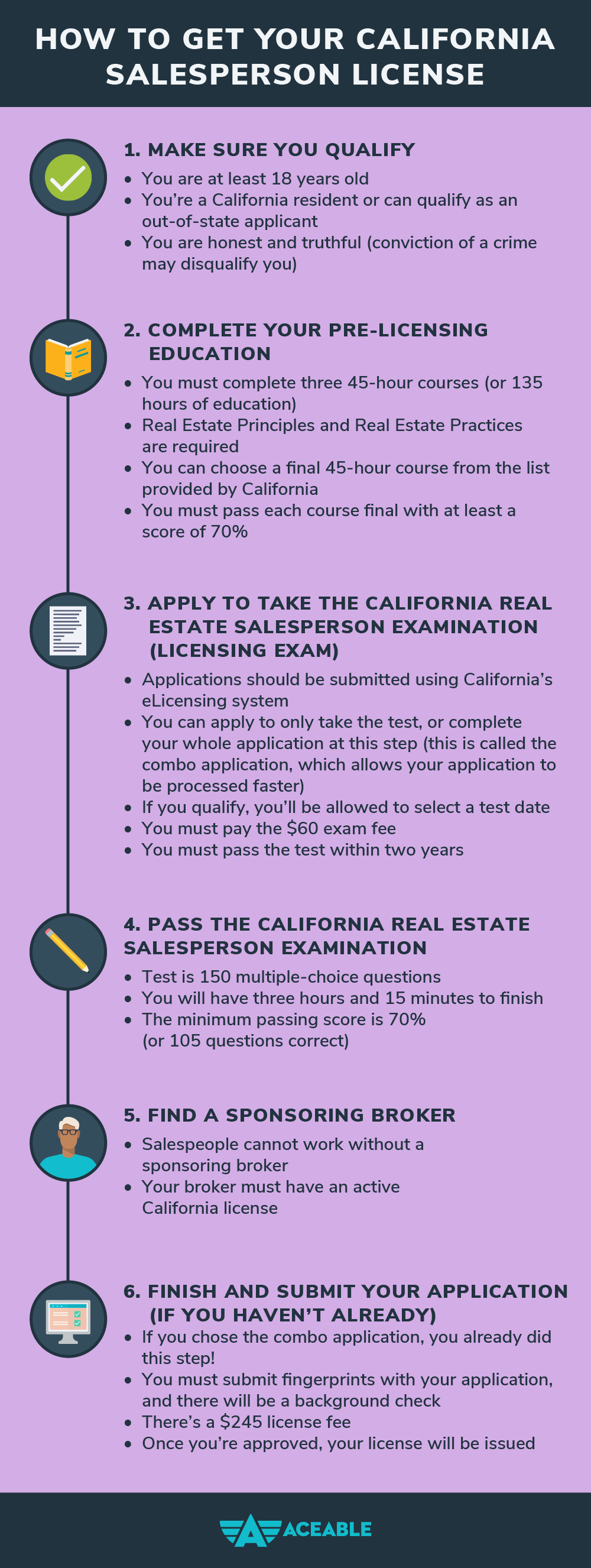
Once you have completed your 135 hours of pre-licensing education, you are ready to submit your application to the California Department of Real Estate. The primary form for this is the Salesperson Examination Application (RE 400A). This form requires you to provide personal details, educational history, and respond to questions regarding any criminal history. Along with the application, you must submit proof of course completion for your 135 hours of education (official transcripts or certificates) and pay the required application and examination fees. Additionally, you will need to undergo a fingerprinting process, typically through Live Scan, for your background check. It’s crucial to submit all required documents accurately and completely to avoid delays in processing. The California DRE meticulously reviews each application to ensure candidates meet all eligibility and ethical standards necessary to work with the public in significant accommodation transactions.
Conquering the California Real Estate Salesperson Exam
After your application is processed and approved, the California DRE will provide you with a notice of examination, allowing you to schedule your test. The California Real Estate Salesperson Exam is a challenging assessment designed to ensure that licensed professionals have a thorough understanding of real estate principles, practices, and laws.
- Format: The exam consists of 150 multiple-choice questions. You are given 3 hours and 15 minutes to complete it.
- Content: Questions cover a broad range of topics, including property ownership and land use controls, valuation and market analysis, financing, real estate law (including agency, contracts, and disclosures vital for accommodation dealings), and ethics. A significant portion of the exam focuses on the laws and regulations specific to California, which are critical for navigating the state’s unique accommodation market.
- Passing Score: To pass, you must correctly answer at least 70% of the questions.
Preparation is key. Many candidates enroll in exam prep courses or utilize study guides that simulate the exam environment and focus on high-yield topics. Understanding the state-specific laws related to property rights, disclosures, and fair housing is particularly crucial, as these directly impact the ethical and legal provision of accommodation services. Upon passing the exam, you will be notified immediately, marking a significant milestone on your path to becoming a licensed realtor.
Activating Your License and Launching Your Career in Accommodation Services
Passing the exam is a monumental achievement, but it’s not the final step. To actively work as a real estate salesperson in California and begin helping clients with their accommodation needs, you must formally activate your license and commit to ongoing professional development.
Finding a Sponsoring Broker: Your Gateway to the Market
In California, a real estate salesperson cannot operate independently. By law, you must be employed by or associated with a licensed real estate broker. This broker acts as your sponsor, overseeing your transactions and providing guidance as you gain experience. Selecting the right sponsoring broker is a critical decision that can significantly impact your career trajectory in the accommodation sector. Consider brokers who:
- Offer comprehensive training and mentorship: Especially for new licensees, a robust training program is invaluable.
- Specialize in your desired niche: If you’re passionate about residential sales, property management for long-term stays, or investment properties, find a broker with a strong presence in that area.
- Have a supportive office culture: A collaborative environment can enhance your learning and networking opportunities.
- Provide necessary resources: Access to marketing tools, technology, and administrative support can boost your productivity.
Once you’ve found a broker, they will submit a “Salesperson Change Application” (RE 214) to the California DRE, linking your newly issued license to their brokerage. Only then can you legally begin representing clients in property transactions and providing accommodation services.
Ongoing Education and Professional Development
The real estate market, particularly the accommodation sector, is constantly evolving due to economic shifts, new legislation, and technological advancements. To ensure that realtors remain competent and up-to-date, the California DRE mandates continuing education for license renewal. For your first renewal, you are required to complete 45 hours of approved continuing education within four years of your license issuance. These hours must include specific courses covering ethics, agency, fair housing, and risk management, along with additional elective hours. Subsequent renewals also require 45 hours of continuing education. This commitment to lifelong learning is crucial for maintaining your expertise, adapting to market changes, and continuing to offer invaluable service to clients navigating the complexities of buying, selling, or managing accommodation in California.
The Impact of Licensed Realtors on California’s Accommodation Ecosystem
Licensed realtors are more than just agents; they are essential pillars of the accommodation ecosystem, driving economic activity, ensuring consumer protection, and contributing to the social fabric of communities across California. Their professional integrity and expertise underpin a functioning and fair housing market.
Ensuring Fair and Transparent Accommodation Transactions
One of the most significant contributions of licensed realtors is their role in upholding standards of fairness and transparency in accommodation transactions. Through adherence to state laws and a professional code of ethics, realtors protect both buyers seeking suitable accommodation and sellers offering properties. They ensure that all disclosures are made, contracts are understood, and negotiations are conducted honorably. This reduces the likelihood of disputes, fosters trust, and ultimately creates a more stable and reliable housing market. In a state where accommodation costs can be exceptionally high, particularly in metropolitan areas like Los Angeles and San Francisco, the presence of regulated, knowledgeable professionals is critical for consumer protection and the equitable distribution of housing opportunities. Without them, the market would be far more susceptible to misinformation, unfair practices, and significant financial risks for individuals.

Contributing to Community Development and Housing Solutions
By expertly matching individuals and families with appropriate homes, realtors play a direct role in community development. They help stabilize neighborhoods, support local economies through property transactions, and facilitate population movement that is essential for urban and rural growth. In a state facing ongoing housing challenges, licensed realtors are on the front lines, helping clients navigate affordable housing options, understanding regional development plans, and connecting people with housing solutions that meet their diverse needs. Whether it’s guiding a family to their first home, assisting seniors in finding suitable downsizing options, or helping investors develop rental properties for long-term stays, realtors are integral to addressing California’s broad accommodation landscape. Their work extends beyond individual sales, impacting the overall health and vitality of California’s communities and contributing significantly to the social and economic well-being of its residents.
LifeOutOfTheBox is a participant in the Amazon Services LLC Associates Program, an affiliate advertising program designed to provide a means for sites to earn advertising fees by advertising and linking to Amazon.com. Amazon, the Amazon logo, AmazonSupply, and the AmazonSupply logo are trademarks of Amazon.com, Inc. or its affiliates. As an Amazon Associate we earn affiliate commissions from qualifying purchases.