
The Hotel California stands as one of the most enigmatic and discussed songs in rock history. Far from being a mere narrative, the Eagles classic is a masterclass in metaphor, using the opulent yet unsettling setting of a fictional hotel to explore profound themes. For those within the hospitality and travel sectors, the song resonates with particular potency, dissecting the very essence of what a hotel represents—not just a place of rest, but a nexus of desire, illusion, and consequence. Understanding the song’s meaning requires peeling back the layers of its lyrical tapestry, examining how the concept of a hotel is transformed into a powerful symbol for larger societal and personal struggles.

The Allure of the Hotel: A Golden Trap
At its surface, the “Hotel California” narrative opens with an image of idyllic escape, a weary traveler finding refuge in a seemingly luxurious haven. This initial impression perfectly mirrors the promise inherent in the hospitality industry: an oasis designed to cater to every whim, offering a temporary reprieve from the outside world. However, the song quickly subverts this promise, revealing a darker undercurrent that transforms the alluring facade of the hotel into a psychological trap.
The Promise of Luxury and Escape
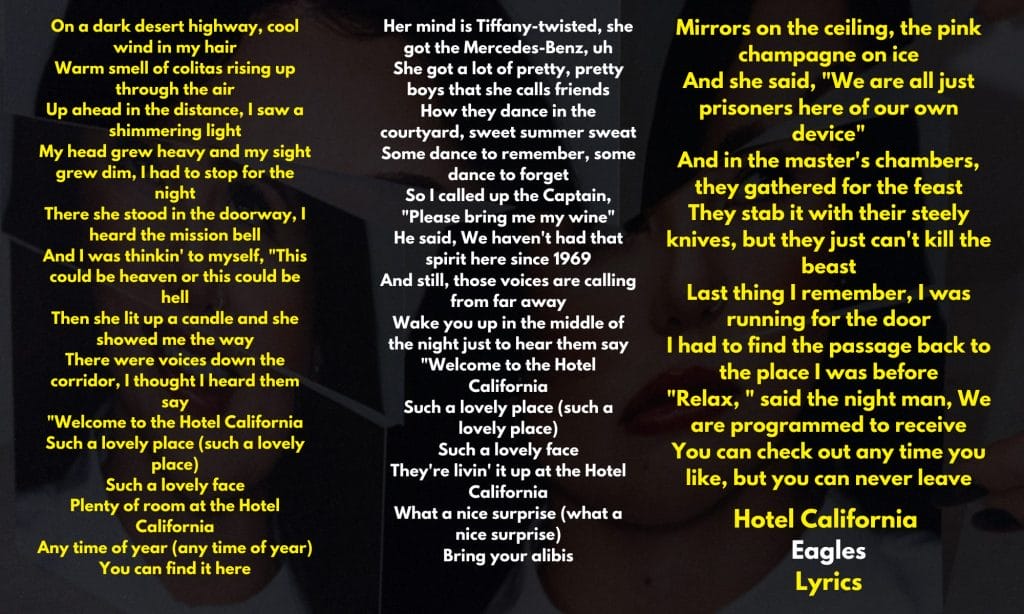
The opening verses of “Hotel California” paint a vivid picture of a mirage-like haven in the desert. “On a dark desert highway, cool wind in my hair… I saw a shimmering light in the distance.” This imagery immediately taps into the universal desire for escape, a longing for a place where comfort and indulgence await. Luxury hotels and resorts are meticulously designed to fulfill this very fantasy. They promise an experience divorced from daily life, a temporary paradise complete with “warm smell of colitas, rising up through the air” and “pink champagne on ice.” These sensory details evoke the quintessential high-end hotel experience: exotic fragrances, refined beverages, and an ambiance steeped in hedonism. The song suggests that this allure, the siren call of extravagant comfort and seamless service, is incredibly powerful, drawing in those who seek a momentary lapse into bliss. It speaks to the fundamental appeal of checking into a grand establishment, leaving one’s troubles at the door, and immersing oneself in an environment where every need is anticipated.
Beyond the Amenities: A Place of Illusion
Yet, the song rapidly introduces elements that hint at the superficiality and potential danger beneath this opulent veneer. The phrase “Her mind is Tiffany twisted, she’s got the Mercedes bends” immediately shifts the focus from genuine comfort to a superficiality defined by material wealth and status. This reflects a critical perspective on certain luxury hotels or resorts that prioritize outward grandeur over genuine substance, creating an environment where reality blurs. The “Hotel California” becomes a place where “mirrors on the ceiling, the pink champagne on ice” are not just amenities but symbols of self-reflection to the point of vanity, and excess bordering on indulgence.
The lack of genuine connection (“We haven’t had that spirit here since nineteen sixty-nine”) suggests a loss of authenticity, an emotional void masked by lavish surroundings. This is a powerful commentary on how some establishments, despite their impeccable service and luxurious features, can feel strangely impersonal or even artificial. The hotel, in this context, is not merely a building but a stage for an elaborate illusion, where guests are encouraged to shed their true selves and embrace a performative existence. The surreal events within the song—the dancing in the courtyard, the “some dance to remember, some dance to forget”—underscore this sense of unreality, a blurring of lines between what is genuine and what is meticulously crafted to fit a desired perception. The hotel, therefore, embodies a world where desires are catered to, but often at the cost of genuine connection and meaning.
Check-In, But Never Check-Out: The Hotel as Entrapment
The most chilling and famous line of “Hotel California” — “You can check-out any time you like, but you can never leave!” — transforms the seemingly welcoming hotel into a symbol of inescapable entrapment. This concept resonates deeply when considering the psychological dimensions of certain environments, particularly those that offer such seductive comforts that they become difficult to abandon. The song masterfully uses the physical structure and operational aspects of a hotel to represent a more profound spiritual or existential captivity.
The Metaphor of the Permanent Guest
In the literal sense, hotels are designed for transient stays; guests arrive, enjoy their visit, and then depart. The “Hotel California” fundamentally upends this expectation, creating a situation where departure is an illusion. This metaphor powerfully critiques a lifestyle of unchecked indulgence and self-gratification, suggesting that once one fully embraces such an existence, it becomes almost impossible to extricate oneself. The “permanent guest” in the Hotel California isn’t necessarily bound by physical chains, but by the psychological grip of its offerings.
This can be likened to the way some individuals become inextricably tied to a certain lifestyle associated with luxury resorts or exclusive clubs. The comfort, the perceived status, the effortless catering to every desire—these elements can create a powerful inertia, making the thought of returning to a “normal” life unbearable. The song’s repeated phrase highlights the insidious nature of this entrapment: you think you have agency (“check-out any time you like”), but the reality is that you are no longer truly free (“you can never leave”). This speaks to a deeper human fear of losing control, of being ensnared by choices or environments that initially seemed benign or even desirable. The hotel, in this light, becomes a gilded cage, its amenities serving not liberation but deeper confinement.
The Dark Side of Opulence and Service
The song continues to layer sinister details over the opulent setting. The imagery of “They stab it with their steely knives, but they just can’t kill the beast” and the “darkness and desire” within the hotel walls present a stark contrast to the expected tranquility of a luxury establishment. This suggests that beneath the immaculate service and pristine facilities, there lies a core of depravity or moral decay. In the context of the hospitality industry, this can be interpreted as a commentary on the potential for superficiality, moral compromises, or even exploitation that can occur within establishments focused solely on catering to base desires.
The “beast” could symbolize addiction, unchecked hedonism, or the destructive forces within human nature itself, which the hotel—with its endless amenities and lack of moral boundaries—allows to fester. The staff, far from being helpful, become part of this unsettling landscape, embodying a complicit or even malevolent presence (“We are programmed to receive. You can check-out any time you like, but you can never leave!”). This subversion of the traditional welcoming role of hotel staff is particularly potent. It transforms the service industry from one of comfort providers to guardians of a metaphorical prison, hinting that the very systems designed to please can ultimately confine. The dark side of opulence, then, is not just extravagance but the moral vacuum it can create, where comfort becomes a distraction from deeper truths and consequences.
The Hotel California as a Symbolic Resort
Beyond its literal interpretation as a specific establishment, the “Hotel California” transcends into a potent symbol, serving as a metaphorical resort that reflects broader societal themes. It offers a critical lens through which to examine aspects of modern culture, particularly the pursuit of the “American Dream” and the pervasive influence of consumerism and instant gratification. This abstract interpretation allows the song to remain eternally relevant, speaking to anxieties that extend far beyond the literal confines of a building.
Reflections of Society and Lifestyle
Many interpretations of “Hotel California” tie it directly to the excesses and disillusionment of the Californian lifestyle, particularly in the 1970s. The state of California, often seen as the epitome of the “American Dream”—a land of sunshine, opportunity, and endless possibilities—is subtly referenced. The song critiques the darker side of this dream, where the relentless pursuit of pleasure, fame, and material wealth can lead to emptiness, moral decay, and a sense of being trapped. The “Hotel California” thus becomes a microcosm for this societal condition: a beautiful, seductive facade hiding a deeper, unsettling reality.
Think of how large resorts often become self-contained worlds, catering to specific lifestyles and insulated from the broader community. The song extrapolates this idea, presenting a hotel that embodies a particular cultural ethos—one where indulgence is paramount, and the consequences are often overlooked until it’s too late. The “spirit here since nineteen sixty-nine” could be interpreted as a lament for a lost innocence or idealism, replaced by a more jaded, cynical hedonism. The hotel, therefore, serves as a powerful metaphor for societal trends that prioritize superficial satisfaction over genuine well-being, reflecting the complexities and contradictions of modern existence within a seemingly idyllic setting.
The Hospitality Industry’s Deeper Meanings
The “Hotel California” also provides a fascinating, albeit dark, commentary on the very nature of the hospitality industry. While hotels and resorts are typically beacons of welcome, safety, and comfort, the song deliberately subverts these expectations. It transforms a place of temporary refuge into a place of psychological confinement, where the promise of comfort becomes a bait for a subtle form of imprisonment. This recontextualization invites us to consider the deeper implications of spaces designed purely for consumption and escape.
What does it mean when an institution built on service and guest satisfaction becomes a symbol of being “programmed to receive” and never truly leave? It highlights the subtle power dynamics inherent in the guest-host relationship, pushing it to an extreme where hospitality veils a more insidious form of control. The song’s enduring resonance within discussions of lifestyle and culture demonstrates how potent the hotel metaphor truly is. It encourages us to look beyond the brochures and glossy advertisements of any establishment, urging a critical examination of the underlying values and potential consequences of the experiences they offer. In this sense, “Hotel California” serves as a cautionary tale woven into the fabric of what a “hotel” means, reminding us that even the most inviting spaces can conceal hidden depths and challenging implications for personal freedom and societal values.
Enduring Enigma: The Hotel’s Lasting Legacy
The persistent fascination with “Hotel California” over decades speaks volumes about its depth and the universal appeal of its central metaphor. Even without a definitive, universally agreed-upon meaning, the song’s imagery, particularly its use of the hotel, has cemented its place in cultural consciousness, transforming a fictional locale into a true cultural landmark.
The Universal Appeal of the Hotel Metaphor
The genius of “Hotel California” lies in its use of a universally recognizable setting: the hotel. Almost everyone has experienced checking into a new, temporary space, whether for business or pleasure. This common experience makes the song’s themes broadly accessible. The initial welcoming atmosphere, the expectation of comfort, and the eventual need to depart are all familiar concepts. By twisting these familiar elements into something sinister, the song taps into deeper anxieties about freedom, choice, and the allure of escapism.
The “hotel” metaphor allows for multiple interpretations without losing its core impact. It can represent a state of mind, an addiction, the music industry itself, or a broader societal critique. Regardless of the specific interpretation, the central idea of a beautiful place that offers much but demands everything in return resonates across cultures and personal experiences. This universality is what gives the song its enduring power, allowing new generations to find their own meanings within its opulent, yet unsettling, halls. The hotel, in this context, becomes a powerful container for complex human emotions and societal critiques, understood by all because the concept of a temporary, serviced dwelling is so fundamental.

From Fiction to Cultural Landmark
Despite being an entirely fictional creation, the Hotel California has achieved a status akin to a real cultural landmark. It has entered the global lexicon, invoked in discussions about luxury, temptation, the American Dream, and the darker side of paradise. Its influence extends far beyond the realm of music, shaping perceptions and discussions about the very nature of lavish indulgence and its potential consequences. Much like real iconic hotels—be it the Ritz Paris or the Plaza Hotel—that carry layers of history and symbolism, the Hotel California carries a heavy weight of metaphorical meaning.
The song doesn’t just describe a place; it creates a place in the listener’s imagination, a vivid and unforgettable setting that embodies a complex set of ideas. This fictional hotel has become a touchstone, a shorthand for situations where one finds themselves in an alluring but ultimately inescapable predicament. Its legacy is a testament to the power of artistic expression to craft potent symbols that transcend their original medium. The Hotel California, therefore, stands not as a physical building one can visit, but as an enduring monument in the landscape of popular culture, forever reminding us to look beyond the immediate facade of places and experiences, whether they are real hotels or the metaphorical ones we encounter in life.
In conclusion, “What Does The Hotel California Song Mean?” is a question that leads us deep into the symbolic heart of what a hotel can represent. It’s a journey not just into the meaning of a song, but into the profound ways that spaces of hospitality can embody desires, illusions, and the intricate web of choices that define human experience. The song’s brilliance lies in its transformation of a familiar concept—the hotel—into a multifaceted metaphor for aspiration, indulgence, and the sometimes-unseen costs of paradise.
LifeOutOfTheBox is a participant in the Amazon Services LLC Associates Program, an affiliate advertising program designed to provide a means for sites to earn advertising fees by advertising and linking to Amazon.com. Amazon, the Amazon logo, AmazonSupply, and the AmazonSupply logo are trademarks of Amazon.com, Inc. or its affiliates. As an Amazon Associate we earn affiliate commissions from qualifying purchases.