
Understanding the intricacies of taxation is a fundamental aspect of managing one’s lifestyle, especially for those considering a move, an extended stay, or significant purchases within the vibrant state of California. While sales tax is a familiar concept to most consumers, the “use tax” often remains a mystery. This companion tax plays a crucial role in California’s fiscal landscape, ensuring fairness and funding essential public services. For individuals curating a specific lifestyle—whether it involves luxury acquisitions, establishing a new home, or simply making cross-border purchases—a clear grasp of use tax is indispensable for financial peace of mind and compliance.
Understanding California’s Use Tax in Your Lifestyle
The use tax in California isn’t just another bureaucratic formality; it’s a deliberate mechanism designed to maintain equity in the marketplace and secure revenue for the state. For those embracing a California lifestyle, comprehending this tax is key to informed financial decisions.
The Core Concept: Why Use Tax Exists
At its heart, the California use tax is a levy on the storage, use, or other consumption of tangible personal property purchased from an out-of-state retailer for use in California. Its primary purpose is to level the playing field between California retailers, who are required to collect sales tax, and out-of-state retailers, who might not be. Without use tax, consumers could avoid paying sales tax by purchasing goods from outside the state, creating an unfair advantage for out-of-state businesses and depriving California of crucial revenue.
For individuals establishing a new life in a bustling city like Los Angeles or a tranquil retreat in Napa Valley, this means that even if you buy furniture from a store in New York or art from a gallery in Europe and bring it into California for your personal use, you are generally expected to pay use tax if sales tax wasn’t collected at the point of sale. This ensures that all tangible personal property consumed within the state contributes fairly to its economic ecosystem.
Sales Tax vs. Use Tax: A Key Distinction for California Lifestyles
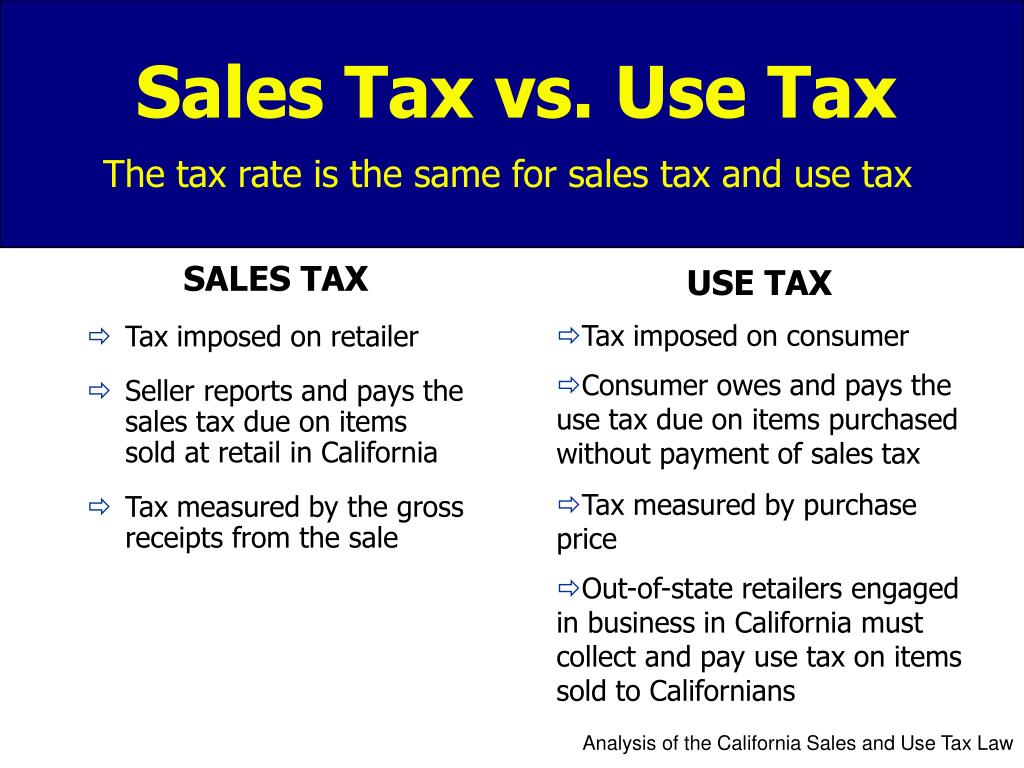
While both sales tax and use tax apply to the same types of transactions and are generally at the same rate, they differ significantly in who collects and who pays. Sales tax is imposed on retailers for the privilege of selling tangible personal property at retail. The retailer collects this tax from the buyer and remits it to the state. This is the tax you typically see itemized on your receipt at a local store in San Francisco or San Diego.
Use tax, on the other hand, is imposed directly on the consumer. It’s self-assessed and paid directly to the state by the buyer. This comes into play when a seller is not required to collect California sales tax (e.g., they don’t have a physical presence or “nexus” in California) or fails to collect the correct amount of tax. For anyone furnishing a luxury apartment, acquiring a vintage car, or simply buying goods online from a non-California vendor, this distinction is paramount. It shifts the responsibility from the seller to the buyer to ensure the state receives its due.
When Does Use Tax Apply to Your California Lifestyle Choices?
The applicability of use tax extends to a wide array of scenarios relevant to a modern California lifestyle. From significant acquisitions to everyday online shopping, understanding these situations can help you navigate your financial obligations seamlessly.
Bringing Out-of-State Purchases into California
One of the most common instances where use tax applies is when individuals bring tangible personal property purchased outside of California into the state for their use. This is particularly relevant for those relocating to California or acquiring high-value items during travels.
Consider someone moving their primary residence to California. If they purchased a luxury vehicle, a boat, or even significant pieces of art and furniture in another state or country and did not pay sales tax equivalent to California’s rate, they would likely owe use tax once these items are brought into and used within the state. This extends to virtually any tangible item, from custom-built electronics to extensive wine collections, purchased elsewhere but destined for a California home or business. The intent to use or consume the item in California is the key trigger.
Online Shopping and the California Use Tax
In the age of e-commerce, online shopping has become an integral part of many lifestyles, and with it, the relevance of use tax has surged. When you purchase goods from an online retailer who does not have a physical presence (or “nexus”) in California, they may not be required to collect California sales tax. In such cases, the responsibility to pay the equivalent use tax falls squarely on the buyer.
While many major online retailers now collect sales tax for California sales due to evolving nexus laws, there are still numerous smaller or specialized vendors who may not. Whether you’re ordering bespoke fashion, unique home decor, or specialized equipment for your hobbies from out-of-state, it’s prudent to assume that if sales tax wasn’t charged, use tax might be due. This is particularly true for high-value items where the tax amount can be significant. The good news is that for small annual amounts, many individuals report it directly on their state income tax return.
Navigating Use Tax for Major Lifestyle Acquisitions
For those making substantial investments that shape their California lifestyle, such as acquiring vehicles or furnishing upscale properties, the use tax implications warrant closer attention.
Vehicles, Vessels, and Aircraft: Special Considerations
Purchasing a vehicle, vessel (boat), or aircraft is a significant lifestyle choice for many [California](https://lifeoutofthebox.com/california] residents and newcomers. These high-value items come with specific use tax reporting requirements that differ from general merchandise. If you purchase any of these from an out-of-state seller and bring them into California for use, you generally owe use tax.
For vehicles, this is often addressed during the registration process with the California Department of Motor Vehicles (DMV), which acts as a collection agent for use tax. Similarly, vessels and aircraft have their own registration and reporting mechanisms through which use tax is assessed. There are specific exemptions, such as if you paid sales tax at an equal or higher rate in another state, or if the item was acquired in a transaction explicitly exempt from [California](https://lifeoutofthebox.com/california] sales and use tax. However, the onus is on the individual to prove eligibility for any exemption. Understanding these rules is crucial to avoid unexpected costs when upgrading your mode of transport or leisure craft.
Furnishing Your California Home or Retreat
Establishing a new home or luxury retreat in California often involves sourcing unique or high-end furnishings and decor. Whether you’re importing antique furniture from Europe, commissioning custom pieces from artisans in New York, or purchasing a rare art collection from an out-of-state gallery, the use tax can significantly impact the total cost of these lifestyle choices.
If these items are purchased from sellers who do not collect [California](https://lifeoutofthebox.com/california] sales tax, then the use tax becomes due once they are brought into and used within the state. This also applies to items purchased for a vacation home or second residence in California. Factoring in this potential tax liability when budgeting for interior design, landscaping, or outfitting a personal gym or entertainment room is a smart financial practice for maintaining your desired California lifestyle without unwelcome surprises.
Compliance and Reporting: Ensuring a Smooth California Living Experience
Navigating the reporting and payment of use tax is a critical step towards financial compliance and a hassle-free living experience in California. Proactive management of these obligations can prevent future complications.
How to Report and Pay Use Tax
For most individual consumers, especially for smaller or infrequent out-of-state purchases, California provides a convenient way to report and pay use tax on their annual state income tax return (Form 540). There’s a dedicated line on the tax form where you can report your total out-of-state purchases subject to use tax. The California Franchise Tax Board then calculates the amount due.
For larger, more specific items like vehicles, vessels, or aircraft, the use tax is typically handled at the time of registration or title transfer with the respective state agencies (e.g., DMV, Department of Boating and Waterways). For businesses or for individuals with very substantial use tax liabilities not covered by their income tax return, direct reporting to the California Department of Tax and Fee Administration (CDTFA) might be necessary. Keeping meticulous records of out-of-state purchases, including receipts and proof of sales tax paid in other jurisdictions, is paramount for accurate reporting and to justify any exemptions claimed.
Penalties for Non-Compliance
Ignoring the obligation to pay California use tax can lead to unwanted consequences. The state is increasingly vigilant in identifying unreported use tax, especially for high-value items. Penalties for non-compliance can include interest charges on the unpaid tax, and monetary penalties that can significantly inflate the original amount owed. In some cases, audits might be triggered, which can be a time-consuming and stressful process.
For those embracing a sophisticated or high-net-worth lifestyle in California, the financial repercussions of non-compliance can be substantial. Ensuring adherence to use tax regulations is not just about avoiding penalties; it’s about upholding fiscal responsibility and contributing to the state’s infrastructure and services that enhance the very quality of life that attracts so many to California.
The Broader Impact: Use Tax and California’s Economic Landscape
Beyond individual financial obligations, the California use tax plays a vital role in the state’s overall economic health and the sustainability of its unique lifestyle offerings.
Supporting Local Commerce and Infrastructure
The revenue generated from use tax, alongside sales tax, is channeled into funding a vast array of public services and infrastructure projects. This includes everything from maintaining California’s extensive road networks and iconic state parks to supporting public education, healthcare, and emergency services. These are the cornerstones that underpin the attractive lifestyle California offers, whether it’s the ease of travel between its stunning destinations or the quality of life in its vibrant communities.
Moreover, the use tax helps create a fair competitive environment. By ensuring that goods purchased out-of-state are taxed similarly to those bought from local California businesses, it prevents a significant disincentive for residents to support their local economies. This equitable framework fosters a stronger local retail sector, preserving jobs and enhancing the commercial vibrancy that characterizes California’s cities and towns.
Expert Advice for California Residents and Newcomers
Given the nuances and potential complexities of use tax, especially for those with intricate purchasing patterns or high-value acquisitions, seeking professional advice is often a prudent step. Tax professionals specializing in [California](https://lifeoutofthebox.com/california] tax law can provide tailored guidance, clarify specific exemptions, and assist with accurate reporting. This is particularly valuable for new residents establishing their lives in California or for individuals who frequently engage in cross-border shopping.
A thorough understanding and diligent adherence to [California](https://lifeoutofthebox.com/california]’s use tax regulations are essential components of a financially responsible and enjoyable lifestyle within the state. By proactively addressing these tax obligations, individuals can contribute to the sustained prosperity of [California](https://lifeoutofthebox.com/california] while ensuring their own peace of mind.
LifeOutOfTheBox is a participant in the Amazon Services LLC Associates Program, an affiliate advertising program designed to provide a means for sites to earn advertising fees by advertising and linking to Amazon.com. Amazon, the Amazon logo, AmazonSupply, and the AmazonSupply logo are trademarks of Amazon.com, Inc. or its affiliates. As an Amazon Associate we earn affiliate commissions from qualifying purchases.