
Venturing through the scenic routes and bustling cities of California is an unforgettable experience for any traveler. From the sun-drenched beaches of Los Angeles to the majestic redwoods, the Golden State offers a diverse tapestry of landscapes and cultures. However, for those planning to explore California by car, whether in their own vehicle or a rental, understanding local regulations is paramount to ensure a smooth, enjoyable, and penalty-free trip. Among the often-overlooked details, window tinting laws stand out as a common point of confusion for out-of-state visitors and even some residents. Navigating these rules is crucial not just for avoiding fines, but also for safety and ensuring your journey through the state remains delightful. This comprehensive guide aims to demystify California’s window tinting laws, providing essential tips for tourists and anyone planning to hit the road in the Golden State.

Understanding California’s Window Tint Laws for Visitors
California’s Vehicle Code outlines specific requirements for window tinting, designed to balance driver comfort with safety and law enforcement visibility. The primary metric used to measure window tint is Visible Light Transmittance (VLT), which indicates the percentage of visible light allowed to pass through the window. A lower VLT percentage means a darker tint, allowing less light to pass through. For example, 70% VLT means 70% of light passes through, while 5% VLT (often called “limo tint”) means only 5% of light passes through, making it very dark.
The essence of California’s law is quite strict, particularly concerning the front windows of a vehicle. These regulations are in place to ensure that drivers have clear visibility of the road and surroundings, and that law enforcement officers can clearly see the occupants of a vehicle during a stop, contributing to overall public safety. For visitors, understanding these nuances is critical, as ignorance of the law is not an acceptable defense.
The California Vehicle Code and VLT
The specific section of the California Vehicle Code addressing window tinting is CVC Section 26708. This section prohibits any material or substance on the windshield or side windows that obstructs or reduces the driver’s clear view of the highway or the occupants of the vehicle. However, it does provide specific allowances under certain conditions, primarily for the rear windows and a small portion of the windshield. The general rule for front side windows is that they must allow a very high percentage of light through, effectively meaning no aftermarket tint is permitted.
For tourists, this means that if you are driving your own vehicle from another state with darker front window tints, you might be in violation of California law. Similarly, if you rent a car, it’s highly unlikely that the rental company would provide a vehicle with illegal tints, but it’s always wise to be aware.
Specific Tinting Regulations for Different Windows
California law differentiates between various windows of a vehicle, each with its own set of rules regarding tinting. This segmented approach ensures that critical visibility for the driver and safety for law enforcement are maintained while allowing some degree of privacy and sun protection for passengers.
Windshield Requirements
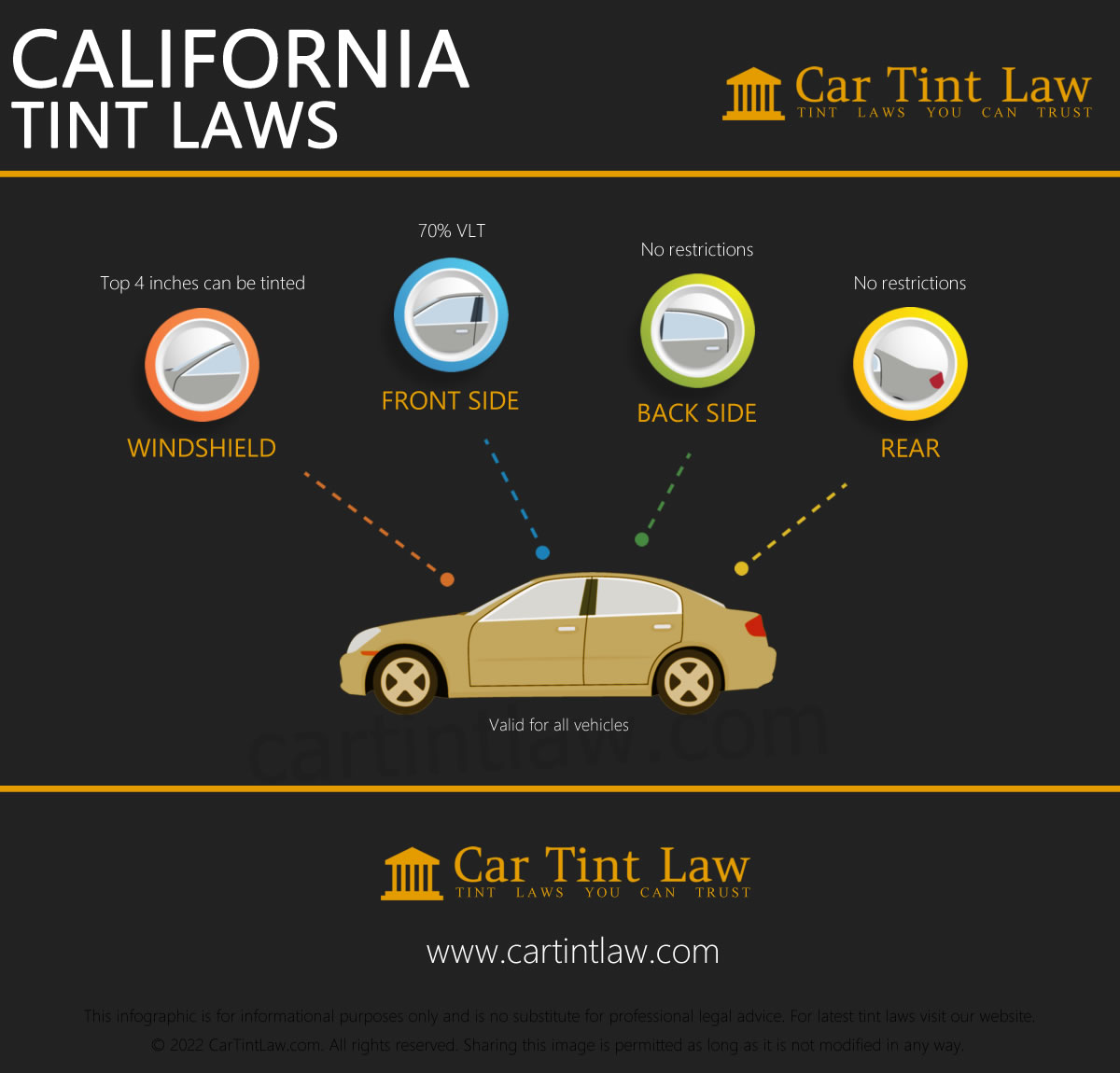
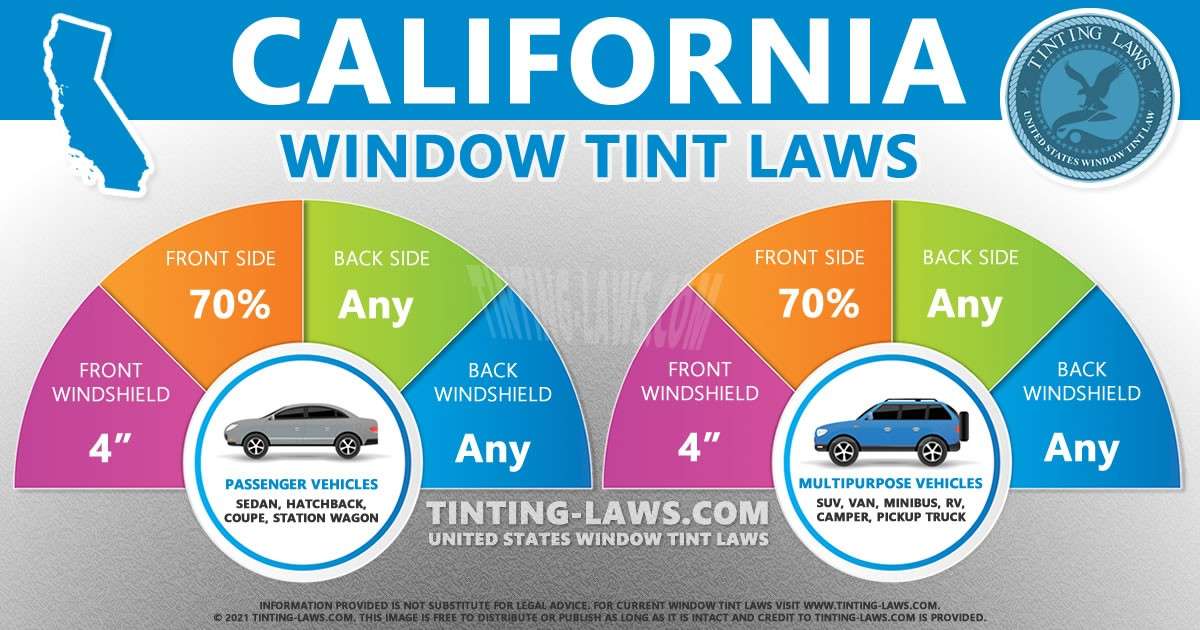
The windshield is the most strictly regulated window. California law permits tinting only on the top four inches of the windshield. This strip of tint must be non-reflective and allows for a darker tint, as long as it does not obstruct the driver’s clear view of the road ahead. Beyond this four-inch strip, no aftermarket tint or reflective material is allowed on the windshield. This ensures that the driver’s primary field of vision remains completely unobstructed, which is crucial for safe driving, especially during night hours or adverse weather conditions. Any tinting beyond this limit is considered illegal and can lead to a citation.
Front Side Windows
This is where many drivers, particularly those from other states, often find themselves in violation. For the front side windows (the windows to the immediate left and right of the driver), California law dictates that they must have a Visible Light Transmittance (VLT) of at least 70%. This effectively means that these windows must be nearly as clear as untinted glass. Most factory-installed “privacy glass” on SUVs and trucks typically meets this 70% VLT standard. However, any aftermarket film applied to these windows that reduces the VLT below 70% is illegal. The intent behind this strict regulation is to ensure that law enforcement officers can see into the vehicle, especially during traffic stops, for their safety and the safety of the vehicle’s occupants.
Rear Side Windows and Rear Window
The regulations are significantly more lenient for the rear side windows (behind the driver and front passenger) and the rear window. For these windows, there are no specific VLT limits. This means you can have any darkness of tint on these windows, including very dark “limo tint,” as long as the vehicle is equipped with dual side mirrors that provide a clear view to the rear. The requirement for dual side mirrors is crucial; if the rear window is tinted so darkly that it obscures visibility, the side mirrors become the primary means for the driver to see traffic behind them. This flexibility allows for increased passenger comfort, privacy, and protection from the sun’s glare for those in the back seats, without compromising critical driving visibility.
Why California Has These Tint Laws
California’s window tint laws are not arbitrary; they are meticulously crafted with several key objectives in mind, primarily centered around safety, security, and enforceability. Understanding these underlying reasons can help tourists appreciate the rationale behind these strict regulations, rather than viewing them merely as an inconvenience.
Safety for Drivers
The primary concern is driver safety. Clear windows, especially the windshield and front side windows, are essential for optimal visibility. This is particularly vital in California’s diverse driving conditions, which can range from bright, sunny days to foggy mornings in San Francisco or heavy rain. Dark tint can significantly reduce a driver’s ability to see pedestrians, cyclists, other vehicles, and road hazards, especially during dawn, dusk, or nighttime. It also impairs the ability to see through tinted windows of other vehicles, hindering predictive driving and hazard perception.
Law Enforcement and Public Safety
Another critical reason is the safety of law enforcement officers. During a traffic stop, an officer needs to be able to see into the vehicle to assess the situation and ensure their personal safety. Heavily tinted front windows can create a “black box” effect, preventing officers from seeing the occupants or their movements, which poses a significant risk. These laws are a measure to protect both the public and the officers on duty. Furthermore, clear windows aid in identifying drivers and passengers in the event of an accident or a crime, facilitating quicker investigations and responses.
Preventing Crime
While not the sole factor, limiting window tint also plays a role in deterring certain types of crime. Vehicles with excessively dark tints can be used to conceal illegal activities or identities, making it harder for witnesses or surveillance systems to identify individuals or what is happening inside the car. By maintaining clearer front windows, the law helps maintain a level of transparency that discourages illicit actions.
Penalties and Enforcement: What Tourists Need to Know
For tourists traversing California, understanding the consequences of non-compliance is essential. Unlike some minor traffic infractions, window tint violations can lead to more than just a simple fine; they often involve a requirement to rectify the issue.
Types of Penalties
If a law enforcement officer, such as a member of the California Highway Patrol or local police, determines that your vehicle’s window tint is illegal, you will typically receive a “fix-it ticket” or a “citation” for a vehicle code violation.
- Fix-It Ticket: This is the most common outcome. It requires you to remove the illegal tint and then have your vehicle inspected by a law enforcement agency to confirm compliance. Once verified, you provide proof to the court. If you fail to get the tint removed or verified, the fix-it ticket can escalate into a more substantial fine.
- Fine: In addition to, or sometimes instead of, a fix-it ticket, you may be issued a monetary fine. The initial fine for a window tint violation in California is generally around $25, but administrative fees and court costs can quickly elevate the total amount to over $200. Repeated violations or failure to comply with a fix-it ticket can lead to much higher fines and further legal complications.
For tourists, dealing with a fix-it ticket can be particularly inconvenient, as it requires addressing the issue while on vacation or returning to California to prove compliance. It’s far better to be proactive and ensure compliance before or during your trip.
Medical Exemptions
California law does provide for medical exemptions under certain circumstances. Individuals with a medical condition that makes them unusually sensitive to sunlight (e.g., lupus, porphyria) may be able to obtain a doctor’s certificate allowing for darker window tints. However, this certificate must be carried in the vehicle at all times and presented to law enforcement upon request. For tourists, this usually means having the proper documentation from a licensed physician and ensuring it specifically addresses the need for tinting under California law. It’s advisable to consult with a California Department of Motor Vehicles (DMV) office or legal professional regarding the precise requirements for such an exemption if you believe you qualify.
Practical Advice for Driving in California with Tinted Windows
Navigating California’s roads requires adherence to local laws, and window tinting is no exception. For tourists, being prepared can save time, money, and unnecessary stress.
Before You Arrive
If you are driving your own vehicle into California from another state, take the time to inspect your window tint. Compare your current VLT levels with California’s strict 70% VLT requirement for front side windows. If your tint is darker, consider having it removed before entering the state. While some officers might offer leniency to out-of-state drivers, especially for minor infractions, it’s not guaranteed, and the inconvenience of a ticket far outweighs the effort of pre-compliance.
Renting a Car in California
When renting a car in California (for instance, from San Diego or Sacramento), you generally won’t have to worry about illegal window tint. Rental companies ensure their fleet complies with state laws to avoid liability. However, always do a quick visual check. If you notice unusually dark tint on the front side windows of your rental, it’s worth flagging it with the rental agency.
What to Do If Stopped
If you are pulled over by law enforcement for a window tint violation, remain calm and cooperative.
- Pull Over Safely: Find a safe place to stop your vehicle as quickly as possible.
- Keep Hands Visible: Place your hands on the steering wheel where they are clearly visible to the officer.
- Provide Documentation: Have your driver’s license, vehicle registration, and proof of insurance readily available.
- Be Polite: Answer the officer’s questions respectfully and avoid arguing. Explain that you are a visitor if you are from out of state. While this might not exempt you from a ticket, a polite demeanor is always beneficial.
General Road Safety Tips
Beyond window tint, always remember to adhere to general road safety practices in California:
- Speed Limits: Obey posted speed limits, which can vary significantly between urban and rural areas.
- Seatbelts: Ensure all occupants are wearing seatbelts.
- Hands-Free Devices: Use hands-free devices for mobile phones; handheld use is strictly prohibited.
- DUI Laws: California has very strict DUI laws, with severe penalties.
By understanding and respecting California’s window tint laws and general traffic regulations, tourists can fully immerse themselves in the beauty and excitement of the Golden State, ensuring their travel experience is memorable for all the right reasons. A little preparation goes a long way in avoiding legal troubles and enjoying every moment of your adventure.
LifeOutOfTheBox is a participant in the Amazon Services LLC Associates Program, an affiliate advertising program designed to provide a means for sites to earn advertising fees by advertising and linking to Amazon.com. Amazon, the Amazon logo, AmazonSupply, and the AmazonSupply logo are trademarks of Amazon.com, Inc. or its affiliates. As an Amazon Associate we earn affiliate commissions from qualifying purchases.