
Proposition 8, often referred to simply as Prop 8, stands as a pivotal and controversial chapter in the modern history of California and the broader struggle for LGBTQ+ rights in the United States. This ballot initiative, passed by voters in November 2008, amended the California State Constitution to define marriage as exclusively between a man and a woman, thereby banning same-sex marriage. Its passage ignited a firestorm of legal challenges, social protests, and national debate that profoundly impacted the trajectory of marriage equality. While not a physical structure or a natural wonder, Proposition 8 represents a significant historical landmark, a defining moment that indelibly shaped the social, legal, and political landscape of the Golden State and beyond, marking a critical turning point in the nation’s ongoing conversation about civil rights and equality. Understanding Proposition 8 is crucial to appreciating the dynamic evolution of societal norms and legal protections that characterize contemporary California’s historical narrative.

A Defining Moment in Californian History
The story of Proposition 8 is intricately woven into the fabric of California’s progressive yet often conflicted social history. Before 2008, the state had been at the forefront of expanding rights for LGBTQ+ individuals, making the passage of Proposition 8 particularly jarring for many. Its origins lie in a complex interplay of legal decisions, legislative efforts, and public sentiment regarding the institution of marriage. This era was characterized by a rapid acceleration of civil rights advocacy, making the conservative backlash embodied by Prop 8 a significant historical counterpoint.
The Context: Marriage Equality Before Proposition 8
Prior to the 2008 election, California had already seen significant legal and legislative battles over same-sex relationships. In 2000, voters passed Proposition 22, a statutory initiative that stated only marriage between a man and a woman was valid or recognized in California. However, this was a statutory change, not a constitutional amendment. Over the next few years, various legislative attempts to legalize same-sex marriage were vetoed by then-Governor Arnold Schwarzenegger.
The real turning point came in May 2008, when the Supreme Court of California issued its landmark ruling in In re Marriage Cases. The court declared that the previous ban on same-sex marriage violated the fundamental right to marry under the California Constitution, specifically the rights to privacy and equal protection. This decision immediately legalized same-sex marriage in the state, leading to a period of jubilant weddings and celebrations across California, particularly in cities like San Francisco and Los Angeles. Thousands of same-sex couples legally married in the months that followed, marking a historic achievement for civil rights advocates. This brief window of marriage equality demonstrated the profound desire for recognition and equality within the LGBTQ+ community, setting the stage for the intense battle that was to follow.
The Proposal: What Proposition 8 Sought to Do
In direct response to the Supreme Court of California’s decision, opponents of same-sex marriage quickly mobilized to place Proposition 8 on the November 2008 ballot. The initiative was straightforward: it proposed to amend the California Constitution to add a new section, specifically Article I, Section 7.5, which read: “Only marriage between a man and a woman is valid or recognized in California.”
The implications were profound. If passed, it would not only overturn the recent court decision legalizing same-sex marriage but would enshrine a definition of marriage exclusively as between a man and a woman directly into the state’s foundational legal document. This constitutional amendment would make it far more difficult to challenge in state courts, as it would represent the explicit will of the voters rather than a legislative act or a judicial interpretation. The ballot measure was perceived by its proponents as a way to “restore” the traditional definition of marriage and by its opponents as a severe setback for fundamental civil rights and equality. This clash of deeply held values turned the Proposition 8 campaign into one of the most expensive and emotionally charged ballot initiatives in California’s history.
The Battle for Equality: Campaigns and Controversy
The campaign surrounding Proposition 8 was an unprecedented spectacle of political fundraising, grassroots organizing, and intense public debate. It garnered national attention, drawing significant financial contributions and celebrity endorsements from both sides, transforming California into a battleground for the future of marriage equality. The arguments put forth by supporters and opponents reflected deeply entrenched societal views and ethical considerations. This era marked a crucial historical juncture where diverse ideologies clashed over the very definition of family and rights, creating a landmark moment in the state’s civic life.
Supporters’ Arguments: Protecting Traditional Marriage
Proponents of Proposition 8, largely organized under the “Yes on 8” campaign, framed their arguments around the protection of what they termed “traditional marriage.” Their core message emphasized that marriage, as an institution, had historically and universally been defined as a union between a man and a woman. They argued that this definition was essential for the stability of society, the upbringing of children, and the preservation of religious freedom. Many supporters held sincere religious beliefs that same-sex marriage was contrary to their faith and that the state should not redefine such a sacred institution.
The “Yes on 8” campaign heavily utilized media advertisements that often depicted potential negative impacts on schools and religious organizations if same-sex marriage were allowed to stand. They also highlighted the idea that voters, not judges, should have the final say on such a fundamental social issue, rallying behind the concept of “protecting the will of the people” against judicial overreach. Significant funding came from religious organizations and conservative groups both within and outside California, contributing to a sophisticated and pervasive advertising effort.
Opponents’ Arguments: Equal Rights and Protections
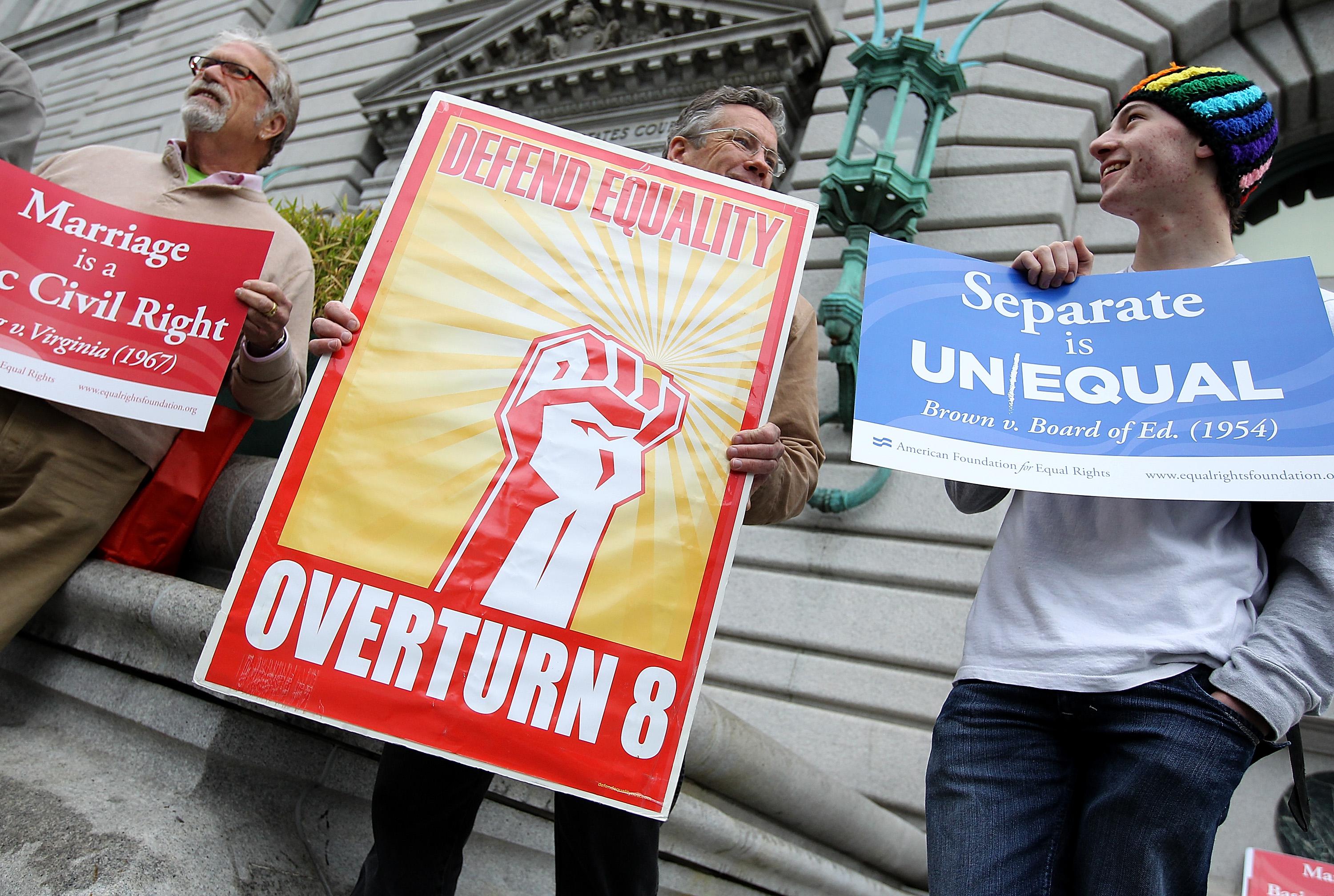
Opponents of Proposition 8, organized under the “No on 8” campaign, countered with arguments centered on civil rights, equality, and fairness. They asserted that denying same-sex couples the right to marry was a form of discrimination, akin to historical injustices faced by other minority groups. For them, marriage was a fundamental right that should be extended to all consenting adults, regardless of sexual orientation. They argued that denying marriage equality created a separate and unequal status for same-sex couples, impacting not only their dignity but also their legal protections, benefits, and social recognition.
The “No on 8” campaign emphasized the human stories of same-sex couples and their families, showcasing their love, commitment, and desire for the same legal and social recognition afforded to heterosexual couples. They also pointed out that domestic partnerships, while offering some legal protections, did not convey the same social status or legal breadth as marriage. Their efforts were bolstered by civil rights organizations, progressive political groups, and a wide array of celebrities and public figures. Despite a strong showing, and widespread public sympathy in more liberal areas like San Francisco and Los Angeles, the campaign ultimately faced an uphill battle against deeply ingrained social conservatism and the effective messaging of their opponents.
The Role of California’s Supreme Court
The Supreme Court of California played a critical, if controversial, role both before and after the passage of Proposition 8. Its In re Marriage Cases ruling was the catalyst for the ballot initiative. After Prop 8 passed, a new legal challenge immediately arose: was the initiative itself a valid amendment to the state constitution, or was it an impermissible “revision” that fundamentally altered the state’s governmental structure and the scope of its constitutional protections?
In May 2009, the Supreme Court of California issued another highly anticipated decision in Strauss v. Horton. The court upheld Proposition 8 as a valid constitutional amendment, concluding that the voters had the power to define marriage. However, in a crucial carve-out, the court ruled that the nearly 18,000 same-sex marriages performed during the brief period when it was legal in 2008 would remain valid. This decision left California in a unique and historically charged position: same-sex marriage was banned for future couples, but existing same-sex marriages were recognized. This complex legal landscape only intensified the calls for further action and set the stage for federal intervention.
The Aftermath: Legal Challenges and Societal Impact
The passage of Proposition 8 and the subsequent ruling by the Supreme Court of California did not end the battle for marriage equality; rather, it shifted the focus to the federal courts. The legal and social ramifications of Prop 8 reverberated throughout California and across the nation, establishing it as a landmark event whose impact extended far beyond its immediate result. This period showcased the persistent and determined efforts of advocates to achieve full equality under the law, illustrating a significant historical struggle for human rights.
The Legal Journey: Appeals and Federal Involvement
The most significant legal challenge to Proposition 8 came in the form of Perry v. Schwarzenegger (later Hollingsworth v. Perry), a federal lawsuit filed in 2009 by same-sex couples, represented by prominent lawyers David Boies and Theodore Olson (who had notably argued against each other in Bush v. Gore). This case bypassed the state courts and directly challenged the constitutionality of Proposition 8 under the Due Process and Equal Protection Clauses of the Fourteenth Amendment to the United States Constitution.
In August 2010, U.S. District Court Judge Vaughn Walker issued a historic ruling, declaring Proposition 8 unconstitutional. Judge Walker found that the initiative served no legitimate government interest and violated the rights of same-sex couples. This decision was appealed, and the case eventually made its way to the U.S. Supreme Court. In June 2013, the U.S. Supreme Court issued its decision in Hollingsworth v. Perry. While the Court did not rule on the constitutionality of Proposition 8 itself, it found that the proponents of Prop 8 lacked legal standing to defend the initiative in federal court after California’s state officials (Governor and Attorney General) refused to do so. This effectively allowed the original federal district court ruling, which struck down Prop 8, to stand. Consequently, same-sex marriage was restored in California, ending the ban. This complex legal maneuver represented a crucial step forward, directly leading to the full re-legalization of same-sex marriage in the state.
Social and Political Ripple Effects
The journey of Proposition 8 from ballot initiative to federal court decision had profound social and political ripple effects. It galvanized the LGBTQ+ rights movement, leading to increased activism, fundraising, and public awareness across the United States. The sheer intensity of the campaigns, the public protests, and the personal stories shared by affected couples brought the issue of marriage equality into mainstream conversations like never before. It also highlighted the deep divisions within society regarding LGBTQ+ rights, sparking both fervent support and passionate opposition.
Politically, Proposition 8 showcased the power of ballot initiatives in shaping civil rights, but also the vulnerability of minority rights to popular vote. It forced political leaders, including those in California, to take clearer stances on marriage equality. The legal battles illuminated the interplay between state and federal courts, and the evolving interpretation of constitutional rights. The struggle against Prop 8 also inspired similar movements and legal challenges in other states, contributing to a broader national dialogue that would ultimately culminate in a landmark federal decision.
A Historical Landmark: Proposition 8’s Enduring Legacy
Ultimately, Proposition 8 was a temporary setback in California, but its historical significance extends far beyond its initial effect. It stands as a profound historical landmark, not only for the way it tested the limits of civil rights legislation and judicial review but also for its catalyzing role in the national movement for marriage equality. Its story is a testament to the perseverance of advocacy and the power of legal challenges in shaping societal progress.
Paving the Way for National Marriage Equality
While Proposition 8 initially banned same-sex marriage in California, the lengthy and public legal battle it spawned directly contributed to the eventual nationwide legalization of same-sex marriage. The Hollingsworth v. Perry case, which struck down Prop 8, paved the way for broader legal arguments that would eventually reach the highest court in the land. Just two years after the Prop 8 decision, in June 2015, the U.S. Supreme Court issued its historic ruling in Obergefell v. Hodges, which declared that the right to marry is guaranteed to same-sex couples by both the Due Process Clause and the Equal Protection Clause of the Fourteenth Amendment to the United States Constitution. This landmark decision effectively legalized same-sex marriage across all 50 states, permanently resolving the issue that Proposition 8 had so fiercely contested. The legal arguments, public education, and political momentum generated by the Prop 8 struggle played an undeniable role in building the foundation for this national triumph of civil rights.

Lessons Learned and Ongoing Advocacy
The saga of Proposition 8 offers critical lessons for democracy, civil rights, and social change. It underscored the tension between direct democracy (ballot initiatives) and the protection of minority rights, a recurring theme in the history of the United States. It demonstrated the enduring power of grassroots activism and legal strategy in the face of significant political and social opposition. For California, it remains a powerful reminder of how rapidly societal norms can evolve and how fiercely certain battles for equality must be fought.
Even with the national legalization of marriage equality, the legacy of Proposition 8 continues to inform ongoing advocacy for LGBTQ+ rights. It highlights the importance of vigilance in protecting established rights and the need to address other forms of discrimination that persist. As a historical landmark, Proposition 8 marks a complex and often painful period, yet it ultimately symbolizes a turning point toward greater inclusivity and equality, solidifying its place as a defining moment in the modern history of California and the broader American civil rights movement.
LifeOutOfTheBox is a participant in the Amazon Services LLC Associates Program, an affiliate advertising program designed to provide a means for sites to earn advertising fees by advertising and linking to Amazon.com. Amazon, the Amazon logo, AmazonSupply, and the AmazonSupply logo are trademarks of Amazon.com, Inc. or its affiliates. As an Amazon Associate we earn affiliate commissions from qualifying purchases.