
For anyone considering a long-term stay, investment, or permanent residence in the Golden State, understanding the intricacies of California property taxes is not merely a bureaucratic chore—it’s a fundamental component of financial planning for accommodation. Whether you’re a prospective homeowner, a seasoned real estate investor, or simply budgeting for your long-term housing costs, knowing when these significant financial obligations are due is paramount. Unlike some states with a single annual payment, California operates on a bi-annual installment system, each with specific deadlines that, if missed, can incur substantial penalties. This comprehensive guide will illuminate the payment schedule, detail what comprises your tax bill, explain the consequences of delinquency, and provide essential resources, all framed within the context of securing and managing your accommodation in one of the nation’s most dynamic real estate markets.

The Bi-Annual Rhythm of California Property Tax Payments
California’s property tax system is structured around two distinct payment installments, each with its own due date and delinquency threshold. This rhythm is crucial for effective budgeting and ensuring continuous, hassle-free accommodation in your chosen property.
Understanding the Two Installments
Property tax bills in California are typically mailed out in the fall, usually by October. This bill covers the fiscal year, which runs from July 1st to June 30th of the following year. While the bill covers a full year, the payment is split into two convenient installments to ease the financial burden on property owners.
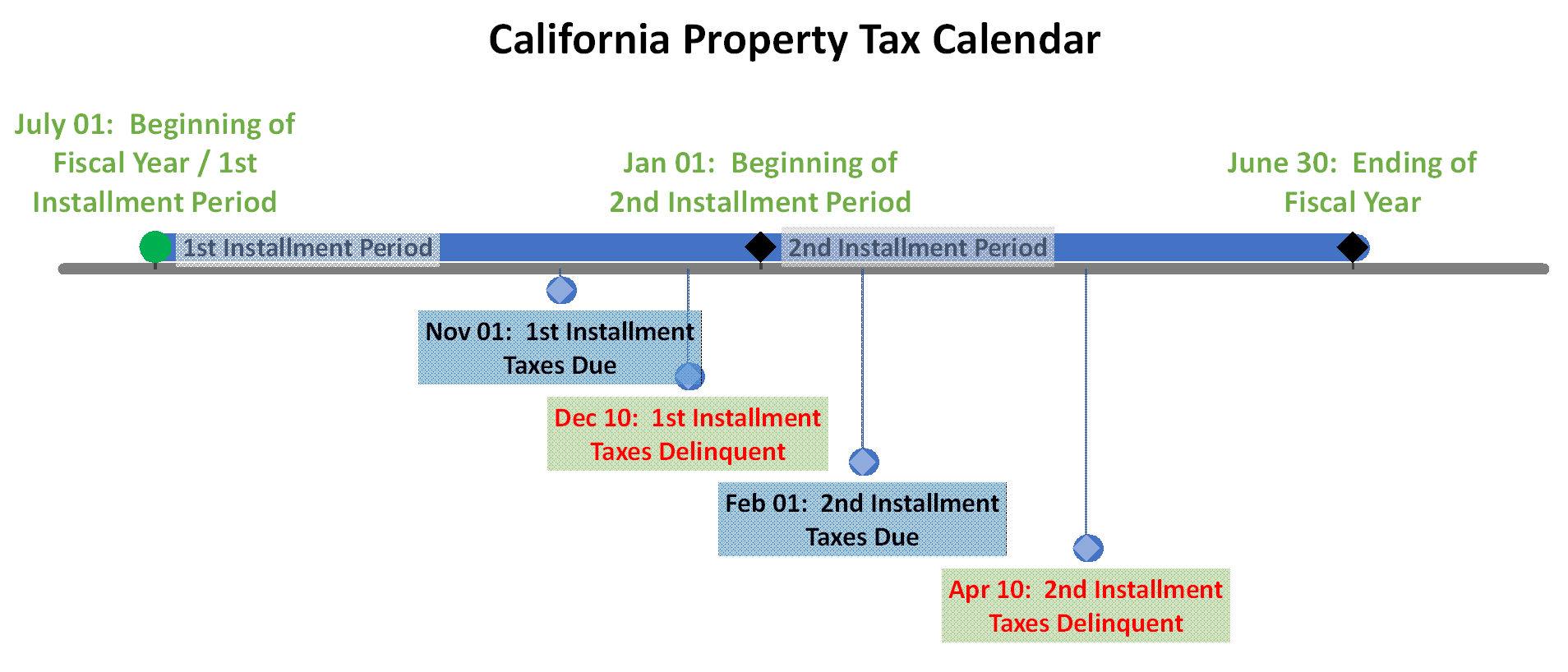
The first installment of your property taxes covers the period from July 1st through December 31st. This installment is due on November 1st. However, you have a grace period. It becomes delinquent if not paid by 5:00 p.m. on December 10th. If December 10th falls on a weekend or holiday, the delinquency date is extended to the next business day. Missing this deadline triggers a 10% penalty on the unpaid amount.
The second installment covers the period from January 1st through June 30th. This installment is due on February 1st of the following calendar year. Similar to the first installment, there’s a grace period before it’s considered late. It becomes delinquent if not paid by 5:00 p.m. on April 10th. Again, if April 10th falls on a weekend or holiday, the delinquency date shifts to the next business day. Failure to meet this deadline also incurs a 10% penalty on the unpaid second installment, plus a $10 redemption fee.
Understanding these critical dates is foundational for anyone budgeting for their long-term accommodation costs in California. Setting calendar reminders or utilizing automatic payment options can be invaluable tools to avoid late fees.
The Importance of Postmarks and Payment Methods
In the digital age, payment methods have diversified, but the principle of timely submission remains paramount. When mailing payments, the postmark date is critical. A payment must be postmarked by the delinquency date to be considered on time. Relying on last-minute mailing carries inherent risks, especially during peak tax season when postal services might experience delays. Most county tax collectors advise mailing payments several days in advance of the deadline.
Electronic payment options have become increasingly popular and are highly recommended for their convenience and immediacy. Most California counties offer online payment portals where property owners can pay using e-checks (often free or for a minimal fee) or credit/debit cards (which typically involve a convenience fee charged by a third-party processor). These methods generally provide instant confirmation, eliminating concerns about postmarks and mail delivery. Some counties also offer automatic payment plans or escrow services, where a portion of your property taxes is collected with your monthly mortgage payment and held by your lender, who then pays the tax bill on your behalf. This is a common arrangement for homeowners and significantly simplifies managing property tax obligations, effectively integrating it into your monthly accommodation expenses.
Beyond the Due Dates: Understanding Your Property Tax Bill
While knowing the due dates is essential for compliance, truly understanding your California property tax bill provides deeper insight into your long-term accommodation costs. The bill is more than just a number; it’s a reflection of your property’s assessed value and the public services it supports.
What Your Bill Includes
Your annual property tax bill is a detailed breakdown of various charges. The largest component is typically the general tax levy, which funds essential county and city services such as fire protection, law enforcement, parks, and schools. This levy is calculated based on your property’s assessed value and the local tax rate, which by state law (Proposition 13) is generally capped at 1% of the assessed value.
Beyond this base levy, your bill will often include direct assessments or special assessments. These are charges for specific local services or infrastructure improvements that directly benefit your property or community. Examples include assessments for Mello-Roos community facilities districts, irrigation districts, street maintenance, lighting districts, or local bond measures approved by voters to fund schools or other public projects. These direct assessments are not subject to the Proposition 13 1% cap and can significantly add to your overall property tax burden. Understanding these line items is crucial for a comprehensive view of your accommodation costs, especially if you are considering purchasing property in a new development or an area with specific community improvement districts.
Property Tax Assessments in California
The foundation of your property tax bill is its assessed value. In California, this is primarily governed by Proposition 13, a landmark amendment passed in 1978. Proposition 13 established that a property’s base year value is its market value at the time of purchase or new construction. Crucially, this base year value can only increase by a maximum of 2% per year, regardless of how much the market value might appreciate. This cap provides a significant measure of predictability for long-term accommodation costs, protecting homeowners from drastic tax increases due to surging market values.
However, the assessed value is reset to the current market value upon a change in ownership (e.g., when a property is sold) or upon the completion of new construction. This reassessment is a key factor influencing real estate transactions and is a critical consideration for anyone looking to buy property for long-term accommodation or investment. Understanding the nuances of Proposition 13 is vital for accurately projecting future property tax liabilities and fitting them into your overall financial strategy for housing in California.
Navigating Delinquency and Penalties
While the emphasis is always on timely payment, understanding the repercussions of missed deadlines and knowing potential avenues for relief is equally important for responsible property ownership and secure long-term accommodation.

Consequences of Missed Payments
Failing to pay your California property taxes by the delinquency dates can lead to a cascade of penalties. As mentioned, a 10% penalty is applied to each unpaid installment. If both installments remain unpaid, an additional $10 redemption fee is added. The penalties, however, do not stop there.
If property taxes remain unpaid even after the second installment’s delinquency date (April 10th), the property officially enters a state of “tax default” on July 1st. Once in default, additional penalties begin to accrue at a rate of 1.5% per month (18% per year) on the original unpaid tax amount plus the 10% penalty. This interest continues to accumulate for five years. During this five-year redemption period, the property owner can “redeem” the property by paying all outstanding taxes, penalties, and interest.
Should the property remain in tax default for five years, the tax collector has the authority to sell the property at a public tax sale. This is a severe consequence for long-term accommodation, as it results in the loss of ownership. Therefore, maintaining vigilance over property tax due dates and addressing any payment difficulties promptly is absolutely essential.
Options for Late Payments and Relief
Life happens, and sometimes, despite best intentions, a payment might be delayed. If you realize you’re going to miss a deadline, immediately contact your county tax collector’s office. While penalties for late payments are generally strict, some counties may offer options or advice depending on the specific circumstances.
In certain rare instances, such as a natural disaster affecting a widespread area, temporary relief measures might be enacted by state or local authorities. Additionally, some property owners, particularly seniors or those with disabilities, may be eligible for specific tax relief programs or deferrals. It’s crucial to research these options through your county or state tax authorities if you believe you might qualify. Proactive communication with the tax collector’s office can sometimes prevent escalation to tax default, preserving your long-term accommodation and investment.
Resources and Assistance for California Property Owners
Navigating property taxes can sometimes feel complex, but numerous resources are available to assist California property owners in understanding their obligations and managing their accommodation finances effectively.
County Tax Collector Websites
The most direct and reliable source of information for your specific property tax details is your local county tax collector’s website. Each of California’s 58 counties manages its own property tax collection process, including mailing bills, processing payments, and handling delinquencies. These websites typically offer:
- Online Property Tax Bill Lookup: You can usually search for your property tax bill by address or parcel number.
- Payment Portals: Secure platforms for making online payments.
- FAQs and Guides: Detailed explanations of the tax process, assessments, and penalties.
- Contact Information: Direct lines to speak with tax collector staff for personalized assistance.
For residents in major metropolitan areas, some key county tax collector websites include:
- Los Angeles County Treasurer and Tax Collector
- Orange County Treasurer-Tax Collector
- San Diego County Treasurer-Tax Collector
- San Francisco Office of the Treasurer & Tax Collector
Always refer to your specific county’s website for the most accurate and up-to-date information pertaining to your property and its associated taxes, which are a cornerstone of your long-term accommodation expenses.
Professional Financial Advice
For complex situations, such as inherited property, significant new construction, or navigating specific tax relief programs, consulting with a qualified financial advisor, tax accountant, or real estate attorney can be invaluable. These professionals can offer tailored advice, help you understand the nuances of California property tax law, and assist with strategic planning related to your property and long-term accommodation goals. They can provide insights into how property taxes fit into your broader financial picture, including estate planning or investment strategies, ensuring your accommodation remains a sustainable and well-managed asset.
Impact on Long-Term Accommodation and Investment in California
Understanding California property tax due dates and the broader taxation framework is more than just a compliance issue; it’s a critical element in the strategic planning of your long-term accommodation or real estate investments.
Budgeting for Ownership
For homeowners, property taxes represent a fixed, ongoing expense that must be meticulously factored into a monthly or annual budget. Alongside mortgage payments, insurance, and maintenance costs, property taxes significantly contribute to the true cost of accommodation. The predictability offered by Proposition 13’s 2% annual cap on assessed value increases provides a measure of stability, but direct assessments can still fluctuate. Savvy homeowners allocate funds throughout the year, often through escrow accounts, to ensure that the November and February installments are covered without financial strain. Effective budgeting for these recurring costs is key to sustainable homeownership and enjoying your long-term accommodation in California.
Investment Considerations
For real estate investors, particularly those focusing on long-term rental properties or developing new accommodations, property taxes are a fundamental part of the proforma. The due dates impact cash flow management, while the total tax burden affects profitability and return on investment. The assessed value reset upon change of ownership is a critical factor in acquisition analysis, as it dictates the base tax liability for the investment property. Investors must account for both the base 1% levy and any applicable direct assessments when evaluating potential properties, understanding that these costs directly influence the viability and profitability of their accommodation ventures. Strategic investors will also consider the tax implications of new construction, reassessments, and the potential for Proposition 13 exclusions (such as parent-child transfers, though these have become more restrictive) to optimize their long-term accommodation portfolio.
In conclusion, the question “When Are California Property Taxes Due?” unlocks a deeper understanding of responsible property ownership and financial planning for accommodation in the state. By meticulously tracking due dates, comprehending your bill’s components, and utilizing available resources, property owners can confidently navigate the tax landscape, ensuring their long-term stay or investment in California real estate remains both secure and financially sound.
LifeOutOfTheBox is a participant in the Amazon Services LLC Associates Program, an affiliate advertising program designed to provide a means for sites to earn advertising fees by advertising and linking to Amazon.com. Amazon, the Amazon logo, AmazonSupply, and the AmazonSupply logo are trademarks of Amazon.com, Inc. or its affiliates. As an Amazon Associate we earn affiliate commissions from qualifying purchases.