
The question “When did California wildfires start?” delves into a historical narrative far richer and more complex than many might assume. While recent decades have seen an alarming escalation in their frequency and intensity, wildfires are not a new phenomenon for the Golden State. They are, in fact, an ancient and integral component of California’s natural landscape, deeply woven into its ecological fabric and historical record for millennia. Understanding their origins requires a journey back in time, exploring natural processes, indigenous practices, and the profound shifts brought about by human settlement and modern environmental changes. Far from being merely destructive events, these fires have, throughout history, acted as a powerful natural force, shaping the state’s unique biodiversity and marking significant eras in its natural and human history. They are a defining characteristic, a formidable natural landmark, of the California experience, much like its towering redwoods or dramatic coastlines.
A Deep-Rooted History: Pre-Colonial Fires and Ecological Cycles
Before the arrival of European settlers, wildfires were a recurrent, even essential, part of the California ecosystem. These were not the uncontrollable infernos we often witness today but rather an intrinsic element of the land’s natural cycles, profoundly influenced by both climate and indigenous stewardship. The historical record, pieced together from geological evidence, tree rings, and anthropological studies, paints a picture of a landscape regularly touched by fire.
Natural Ignition: Lightning Strikes and Arid Climates
For thousands of years, the primary natural igniter of wildfires in California has been lightning. The state’s Mediterranean climate, characterized by hot, dry summers and relatively wet winters, creates ideal conditions for fire. During the dry season, particularly in late summer and early fall, thunderstorms can bring lightning strikes without significant accompanying rainfall. These strikes often hit dry vegetation, especially in the state’s vast wildlands, igniting fires that would then spread, driven by winds and abundant fuel.
The geological history of California further underscores this ancient relationship with fire. Chaparral, oak woodlands, and conifer forests, which dominate much of the California landscape, are largely fire-adapted or fire-dependent ecosystems. Many native plants have evolved strategies to cope with or even thrive after fire, such as thick bark, serotinous cones that open with heat, or seeds that germinate only after exposure to smoke or intense heat. This co-evolution points to an enduring history of natural fire regimes long before human intervention.
Indigenous Land Management: Fire as a Tool and Sacred Practice
Perhaps the most significant, yet often overlooked, aspect of pre-colonial wildfire history in California is the sophisticated use of fire by its indigenous peoples. For millennia, tribes like the Miwok in the Sierra Nevada, the Yokuts in the Central Valley, and countless others across the diverse bioregions of California, actively managed the landscape through controlled burning. This was not random burning but a carefully orchestrated practice, deeply ingrained in their culture and survival strategies.
Indigenous burning, often referred to as “cultural burning” or “prescribed fire,” served multiple purposes. It cleared underbrush and small trees, reducing fuel loads and preventing catastrophic high-intensity fires. This created more open, park-like forests and grasslands, which in turn promoted biodiversity, enhanced hunting grounds by improving forage for deer and other game, and facilitated the harvesting of native plants for food, medicine, and basketry materials. By regularly applying low-intensity fire, indigenous communities effectively shaped the landscape, making it more resilient and productive, while mitigating the risk of larger, more destructive wildfires. Their practices effectively extended the natural fire season and complemented natural ignitions, creating a mosaic of different successional stages across the land. This historical partnership between humans and fire highlights a period when wildfires, though present, were often managed components of a thriving ecosystem.
The Dawn of Modern Wildfire Eras: Post-Colonial Shifts and Suppression
The arrival of European settlers in California marked a profound turning point in the state’s relationship with fire. As new populations, particularly during the Spanish mission era and the subsequent American expansion, transformed the landscape, so too did the patterns and impacts of wildfires begin to shift dramatically. The focus moved from coexistence and management to suppression, laying the groundwork for many of the challenges faced today.
European Settlement and Suppression Policies
With the influx of Spanish missionaries in the 18th century, followed by American settlers during and after the Gold Rush in the mid-19th century, land use patterns changed drastically. Vast tracts of land were converted for agriculture and ranching, and forests were logged. Critically, the long-standing indigenous practice of cultural burning was largely curtailed, often misunderstood or outright forbidden by the new authorities. Fire was increasingly viewed solely as a destructive force, a threat to property, resources, and nascent settlements.
This perspective solidified into official fire suppression policies in the late 19th and early 20th centuries, particularly with the establishment of federal land management agencies like the U.S. Forest Service. The goal became to extinguish every wildfire as quickly as possible. While seemingly logical to protect human lives and property, this policy had unforeseen ecological consequences. By removing low-intensity fires, the natural process of fuel reduction was interrupted. Over decades, forests grew denser, accumulating vast amounts of dead wood, underbrush, and ladder fuels – material that allows ground fires to climb into the forest canopy. This created a ticking time bomb, transforming historically frequent, low-severity fires into less frequent but far more catastrophic high-severity events.
Urbanization and the Wildland-Urban Interface
Parallel to the shift in fire management was the rapid urbanization of California. From coastal cities like Los Angeles and San Diego to inland communities and hillside developments, the population boomed, pushing homes deeper into previously undeveloped wildlands. This expansion created and significantly enlarged the “Wildland-Urban Interface” (WUI) – areas where homes and wild vegetation meet or intermingle.
The proliferation of structures in fire-prone landscapes increased the risk to human lives and property exponentially. Not only did more people live in harm’s way, but human activities became a major source of ignitions, often accidental, from downed power lines, discarded cigarettes, campfires, or arson. The convergence of decades of fuel accumulation, an expanding WUI, and an increasingly fire-susceptible climate set the stage for the escalating wildfire crisis that would define the late 20th and early 21st centuries.
Escalating Intensity: The 20th and 21st Centuries and New Challenges
While the historical roots of California wildfires stretch back millennia, the late 20th century and, particularly, the 21st century have witnessed an unprecedented escalation in their scale, intensity, and destructiveness. This modern era of mega-fires is driven by a complex interplay of historical land management decisions and new, powerful environmental forces.
Climate Change as a Multiplier

Arguably the most significant factor amplifying wildfire severity in recent decades is climate change. Rising global temperatures have profoundly altered California’s climate, leading to hotter, longer, and more frequent droughts. These conditions dry out vegetation to extreme levels, turning forests and chaparral into tinderboxes. Snowpacks in the Sierra Nevada, a crucial water source, are diminishing, contributing to prolonged periods of aridity.
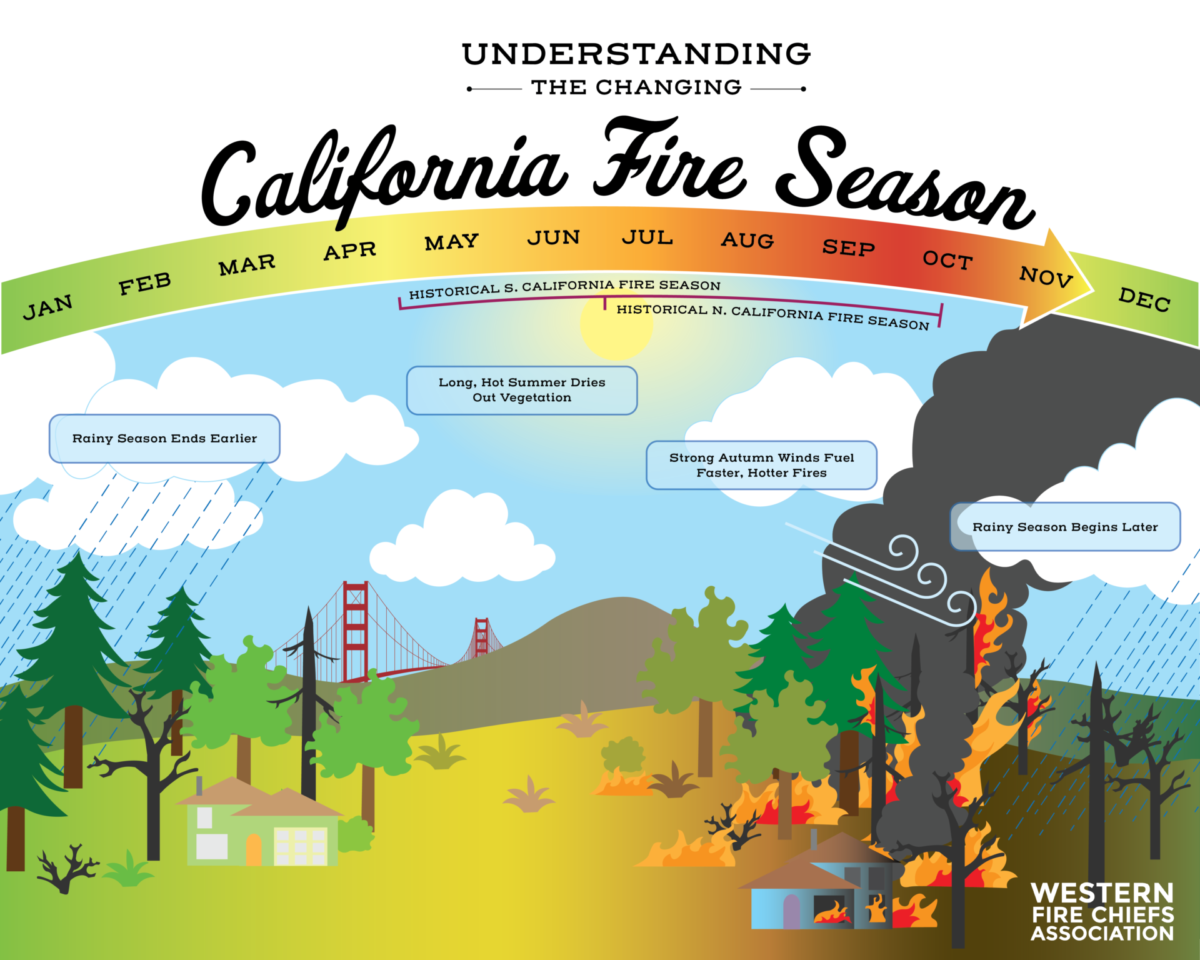
Higher temperatures also extend the traditional fire season, allowing fires to start earlier in the spring and burn later into the fall or even winter. The combination of extreme heat, persistent drought, and often strong, dry winds (like the Santa Ana winds in Southern California or the Diablo winds in Northern California) creates a volatile environment where fires ignite easily, spread rapidly, and become incredibly difficult to control, frequently breaching containment lines and growing into massive blazes.
Fuel Accumulation and Forest Health
The legacy of a century of aggressive fire suppression has resulted in unnaturally dense forests and overgrown wildlands across much of California. Without the natural cleansing of low-intensity fires, immense quantities of fuel – fallen trees, dead branches, and thick undergrowth – have accumulated on the forest floor and within the tree canopies. When a fire eventually ignites in these conditions, it burns with far greater intensity and heat than historically natural fires.
This high-intensity burning is incredibly destructive, killing mature trees that would otherwise survive, sterilizing soil, and hindering ecological recovery. It also increases the likelihood of spot fires caused by embers carried kilometers ahead of the main fire front, making containment efforts extremely challenging. The health of California’s forests is further compromised by pest outbreaks, like bark beetles, which thrive in drought-stressed trees, leading to widespread tree mortality and an even greater abundance of dry, flammable fuel.
Iconic Wildfires: Markers in California’s Narrative
Certain wildfires stand out as grim, unforgettable landmarks in California’s history, each marking a pivot point in public awareness, policy, and the sheer scale of devastation. These events underscore the evolving nature of the wildfire challenge.
Historical Catastrophes
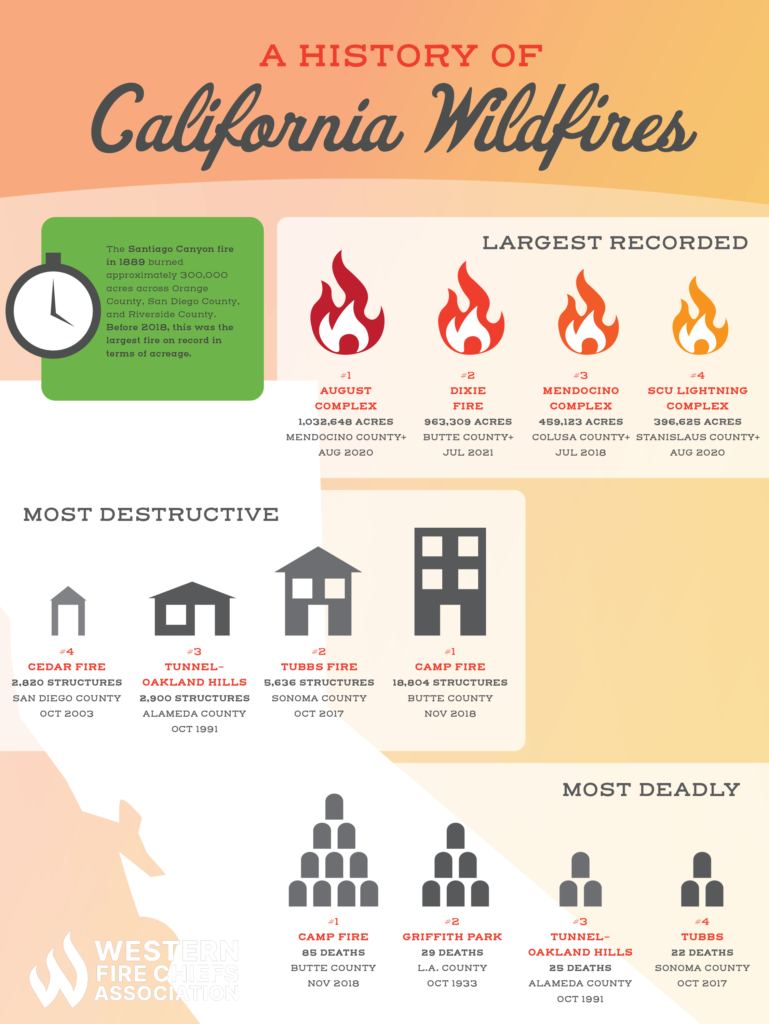
Before the current era of mega-fires, there were still devastating events that shocked the state. The 1991 Oakland Hills Firestorm in Oakland and Berkeley stands as a harrowing example of urban interface disaster, destroying nearly 3,500 homes and killing 25 people. Its proximity to densely populated areas highlighted the extreme vulnerability of communities built into wildland areas. The 2003 Cedar Fire in San Diego County, at the time the largest fire in California history, consumed over 280,000 acres and 2,820 structures, causing 15 fatalities. This fire, ignited by a lost hunter, underscored the human element in ignitions and the rapid spread potential in dry chaparral. These events, and many others, were stark warnings of what was to come.
Recent Major Events
The 2010s and early 2020s ushered in a new, terrifying chapter. The 2018 Camp Fire in Paradise, Butte County, became California’s deadliest and most destructive wildfire, claiming 85 lives and incinerating almost the entire town of Paradise. This fire, caused by aging electrical infrastructure, demonstrated the immense speed and ferocity of fires in extreme conditions.
The 2020 fire season saw the August Complex, ignited by lightning, become the largest wildfire in California history, burning over one million acres. This was a testament to the sheer scale that fires can achieve when multiple smaller fires merge amidst prolonged drought and heat. In 2021, the Dixie Fire surpassed the Mendocino Complex Fire (2018) to become the second-largest single fire in state history, devastating communities like Greenville and burning over 963,000 acres, including vast swathes of national forest. These events are not just statistics; they are etched into the landscape and the collective memory of California, serving as somber, yet powerful, historical markers.
The Evolving Understanding and Adaptation
The long and complex history of wildfires in California has forced a profound re-evaluation of fire management strategies. The traditional paradigm of aggressive suppression, while well-intentioned, proved unsustainable and counterproductive in the long run. Now, the state and its communities are striving towards a more holistic and adaptive approach.
Shifting Paradigms in Fire Management
The core of the evolving strategy lies in recognizing that fire is an inevitable and often necessary force in California’s ecosystems. The focus is shifting from simply fighting fires to living with fire, using tools that mimic natural fire regimes and enhance resilience. Prescribed burning, or controlled burns, is regaining prominence as a critical tool. This involves intentionally setting low-intensity fires under carefully controlled conditions to reduce fuel loads, restore ecological health, and protect communities from future high-severity fires. There is also a renewed appreciation for indigenous land management practices, with efforts to incorporate traditional ecological knowledge into modern fire management plans.
Other proactive measures include mechanical thinning of forests, targeted grazing to reduce fuel, and the creation of defensible space around homes and communities. These efforts aim to create a mosaic landscape where fires can burn at lower intensity, are easier to control, and pose less threat to lives and property.
Protecting California’s Future
Protecting California’s future from catastrophic wildfires requires a multi-pronged approach involving state and federal agencies, local communities, scientists, and private landowners. This includes significant investments in forest health, updating infrastructure to prevent ignitions (such as undergrounding power lines), and enhancing early detection and rapid response capabilities for firefighting.
Crucially, it also involves building community resilience. This means educating residents about wildfire risks, encouraging home hardening (using fire-resistant materials and designs), and creating evacuation plans. Policy changes are also underway, aiming to guide development away from the most hazardous wildland-urban interface areas and to ensure that new construction meets stringent fire-safety standards. Ultimately, understanding when California wildfires started—tracing their journey from natural processes and indigenous stewardship to modern-day climate-exacerbated mega-fires—is not just an academic exercise. It’s an essential foundation for developing sustainable strategies that allow both nature and human communities to thrive in a fire-prone landscape.
In conclusion, California wildfires did not “start” at a single point in time. They are a deeply ingrained, ancient natural process, a historical landmark that has shaped the state’s geography and ecology for millennia. What has changed dramatically is the context and impact of these fires. From naturally ignited and indigenously managed events, they transformed into forces of increasing devastation due to shifts in land use, aggressive fire suppression policies, and the profound acceleration brought about by climate change. Recognizing this deep history and the complex interplay of factors is the first step toward forging a more sustainable and resilient future for the Golden State, where fire is understood not just as a threat, but as an ecological partner requiring careful management and respect.
LifeOutOfTheBox is a participant in the Amazon Services LLC Associates Program, an affiliate advertising program designed to provide a means for sites to earn advertising fees by advertising and linking to Amazon.com. Amazon, the Amazon logo, AmazonSupply, and the AmazonSupply logo are trademarks of Amazon.com, Inc. or its affiliates. As an Amazon Associate we earn affiliate commissions from qualifying purchases.