
A Historical Overview of Political Shifts in the Golden State
The question of when California was last a predominantly Republican state is a complex one, woven into the fabric of American political history and the state’s own dynamic evolution. While today California is largely perceived as a Democratic stronghold, its past tells a different story. Understanding this shift requires examining historical voting patterns, the demographic and economic forces that shaped the state, and the national trends that influenced its political landscape.
The Republican Ascendancy: Early to Mid-20th Century
For much of the early to mid-20th century, California was a key battleground, often leaning Republican. Several factors contributed to this Republican dominance. The state’s burgeoning economy, driven by agriculture, oil, and later the aerospace and entertainment industries, attracted a wave of newcomers, many of whom carried more conservative ideologies with them. The post-World War II era, in particular, saw an influx of people seeking the American dream, and for a significant portion of this demographic, the Republican Party offered a platform that resonated with their aspirations for economic opportunity and traditional values.

During this period, prominent Republican figures held sway in the state. Governors like Earl Warren, though later to become a landmark Chief Justice of the Supreme Court, began his political career as a Republican governor of California. His governorship, from 1943 to 1953, was marked by significant policy initiatives that, while often progressive in their own right, were enacted within a Republican administration. This era demonstrated that the Republican Party in California was not monolithic and could encompass a range of political philosophies.
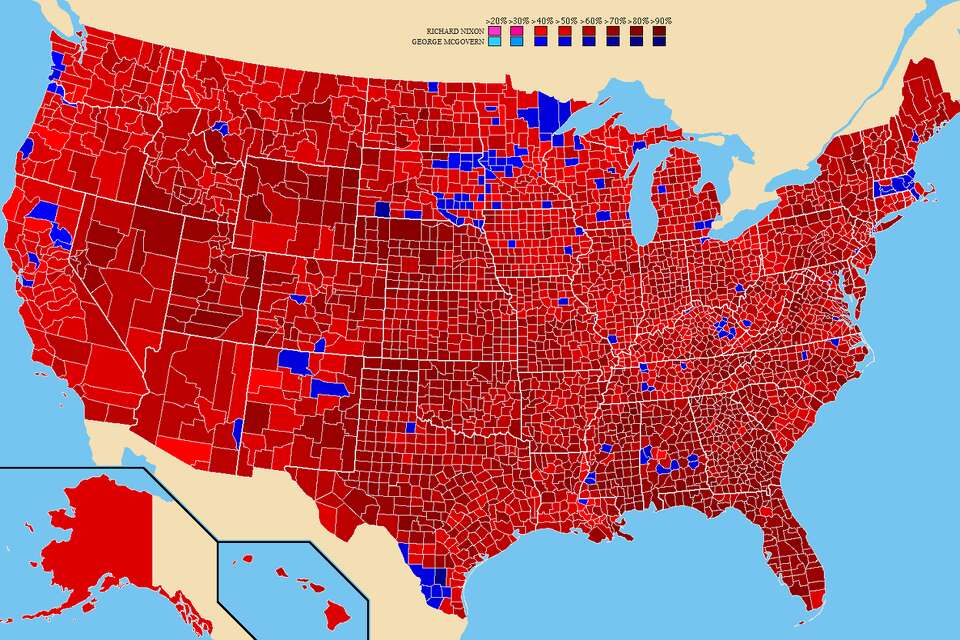
The Presidential election cycles of the mid-20th century often saw California deliver its electoral votes to Republican candidates. The state’s growing population translated into a significant number of electoral votes, making it a coveted prize in national campaigns. The suburbanization of California during this time also played a crucial role. As middle-class families moved to newly developed suburban communities, their political leanings often aligned with the Republican Party’s emphasis on fiscal conservatism and law and order.
The Shifting Tides: Late 20th Century Transformations
The latter half of the 20th century witnessed a gradual but significant transformation of California’s political identity. Several factors converged to erode the Republican Party’s long-standing dominance.
Demographic Changes and Growing Diversity
One of the most impactful factors was the state’s rapidly changing demographics. Beginning in the latter half of the 20th century and accelerating into the 21st, California experienced an unprecedented wave of immigration, primarily from Latin America and Asia. These new populations, bringing with them diverse cultural backgrounds and political perspectives, often gravitated towards the Democratic Party, which was seen as more inclusive and aligned with their social and economic concerns. The growing Latino population, in particular, became a significant force in state politics, and their voting patterns have largely favored Democrats. Similarly, the increasing influence of Asian communities has also contributed to the state’s political diversification.
Economic Evolution and the Rise of New Industries
California’s economy continued to evolve, moving away from traditional industries towards technology, innovation, and a robust service sector. The rise of Silicon Valley as a global hub for technological advancement attracted a highly educated workforce with often more liberal social and economic viewpoints. The tech industry’s focus on research, development, and open information, coupled with a more progressive social outlook prevalent in these urban and tech-centric areas, often aligned more closely with the platform of the Democratic Party. This economic shift, concentrated in key geographic areas, began to tip the political balance.
Social and Cultural Movements
The social and cultural movements of the 1960s and 1970s, which were particularly vibrant in California, also played a role. The civil rights movement, the anti-war movement, and the burgeoning environmentalism had a profound impact on the state’s electorate. These movements often fostered a more progressive and liberal outlook, leading many voters to align with the Democratic Party’s platform on social justice, environmental protection, and civil liberties. The counter-culture movement, with its roots in places like San Francisco, further solidified a liberal identity in certain parts of the state.
The Dawn of a New Era: The Democratic Dominance
By the turn of the 21st century, the political landscape of California had fundamentally changed. The Democratic Party had solidified its hold on the state, consistently winning gubernatorial races, controlling both houses of the state legislature, and securing the vast majority of the state’s congressional seats.
Key Electoral Milestones
While pinpointing an exact “last time” is challenging due to the gradual nature of the shift, the late 1980s and early 1990s represent a period when the Republican grip began to noticeably loosen. The election of governors like Gray Davis in 1998 and subsequent Democratic governors such as Arnold Schwarzenegger (who, despite his Republican affiliation, often governed with a more centrist or even liberal bent, particularly on environmental issues), and then Gavin Newsom, underscored the changing political allegiances. Schwarzenegger’s election in 2003, in a recall election, was an anomaly in many ways, demonstrating that personality and specific issues could sometimes transcend party lines, but it did not signify a return to consistent Republican dominance.
More decisively, California has consistently voted Democratic in presidential elections since 1992, when it supported Bill Clinton. This unbroken streak signifies a fundamental reorientation of the state’s electorate. The growing urban centers like Los Angeles, San Francisco, and San Diego have become strongholds of Democratic support, driven by their diverse populations, economic drivers, and cultural values.

The Nuances of “Republican” in California
It is important to acknowledge that even during periods of Republican dominance, California was never a uniformly conservative state. As mentioned with Governor Warren, there was always a strain of moderate and even progressive Republicanism present. Furthermore, certain regions of the state, particularly in the inland empire and parts of Orange County, have historically maintained stronger Republican affiliations. These areas often have different demographic profiles and economic drivers compared to the coastal urban centers.
However, the question specifically asks about California as a “Republican state,” implying a general electoral trend where the Republican Party holds a consistent majority in statewide elected offices and legislative control. Based on this definition, the last era of sustained Republican ascendancy in California can be broadly placed in the mid-20th century, with its influence significantly waning by the end of the century. The subsequent decades have solidified California’s identity as a reliably Democratic state, shaped by its evolving demographics, economy, and social values. The state’s journey from a Republican stronghold to a Democratic powerhouse is a compelling case study in the fluidity of political landscapes and the forces that drive them.
LifeOutOfTheBox is a participant in the Amazon Services LLC Associates Program, an affiliate advertising program designed to provide a means for sites to earn advertising fees by advertising and linking to Amazon.com. Amazon, the Amazon logo, AmazonSupply, and the AmazonSupply logo are trademarks of Amazon.com, Inc. or its affiliates. As an Amazon Associate we earn affiliate commissions from qualifying purchases.