
The journey between two of the United States’ most vibrant metropolises, Atlanta, Georgia and Chicago, Illinois, is a frequent point of inquiry for travelers, business professionals, and those with connections spanning the Southeast and the Midwest. Understanding the distance and various modes of transportation available is crucial for planning an efficient and enjoyable trip. While geographically separated by a substantial stretch of the American landscape, modern infrastructure and travel options make bridging this gap remarkably accessible. This guide delves into the specifics of this journey, offering insights into distance, travel times, and considerations for an optimal experience.
The Straightforward Answer: Distance Between Two Major Hubs
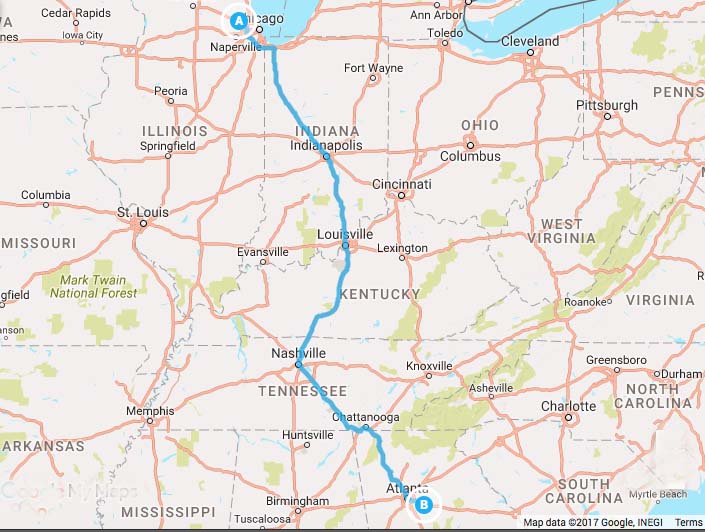
At its core, the question “How far?” seeks a definitive number, and for the route between Atlanta, Georgia and Chicago, Illinois, there are two primary figures to consider: the straight-line (as the crow flies) distance and the practical road distance. Both offer different perspectives on the separation of these dynamic cities.
Geographic Proximity and Implications
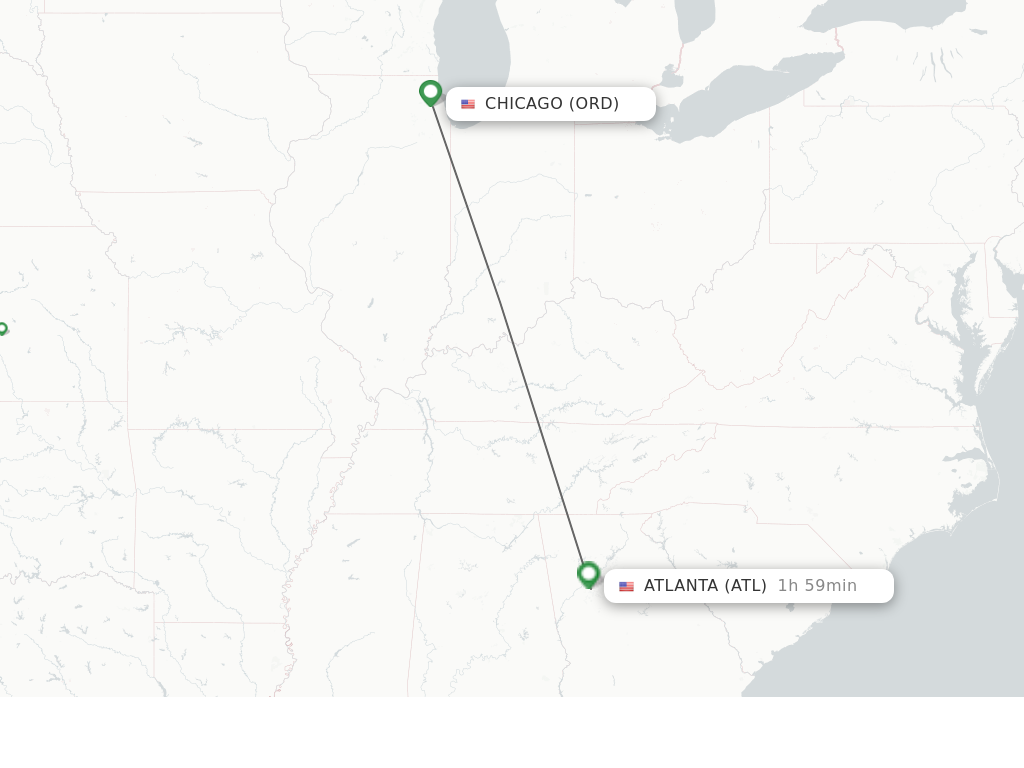
From a purely aerial perspective, the distance between the city centers of Atlanta and Chicago is approximately 600-615 miles (965-990 kilometers). This measurement, often used in aviation, gives a sense of the direct spatial separation. It highlights that while not adjacent, they are within a comfortable range for air travel, typically equating to a flight time of around 1 hour and 45 minutes to 2 hours. This relatively short flight duration is a testament to the efficiency of modern air transportation, making daily commutes and short business trips feasible.
The strategic locations of both cities, with Atlanta serving as a major hub in the Southeast and Chicago anchoring the Midwest, mean that this route is a crucial corridor for commerce, culture, and personal travel. The implications extend beyond mere distance, influencing everything from flight frequencies to the quality of road networks connecting the two.
Straight-Line vs. Road Distance
While the aerial distance is a good reference, most travelers will experience the journey via road or rail. The driving distance between Atlanta and Chicago is significantly longer than the straight-line measurement due to the winding nature of highways and the need to navigate around geographical features and urban areas.
Typically, the road distance spans approximately 700-720 miles (1,126-1,159 kilometers), depending on the specific route taken and starting/ending points within each metropolitan area. This difference of roughly 100-120 miles compared to the aerial distance underscores the practical realities of ground travel. A journey of this length usually translates to a substantial driving time, necessitating careful planning for breaks, fuel, and potential overnight stops if choosing to traverse it over two days. The well-maintained interstate highway system, primarily Interstate 65 and Interstate 57, facilitates this connection, making it a manageable, albeit long, road trip.
Navigating the Journey: Modes of Transportation
Choosing the right mode of transportation between Atlanta and Chicago depends heavily on individual preferences, budget, time constraints, and the overall purpose of the trip. Each option presents a unique set of advantages and considerations.
Flying: The Fastest Route
For those prioritizing speed and efficiency, air travel is unequivocally the best option. The flight time itself is incredibly brief, making it possible to depart one city in the morning and arrive in the other well before noon.
Key Airports and Airlines
Both Atlanta and Chicago boast world-class international airports, serving as major hubs for domestic and international travel.
- In Atlanta, Hartsfield-Jackson Atlanta International Airport (ATL) is consistently ranked among the busiest airports globally, offering a vast array of direct flights to Chicago.
- Chicago is served by two major airports: O’Hare International Airport (ORD), another global behemoth, and Midway International Airport (MDW), known for its focus on domestic travel and often preferred for its closer proximity to downtown Chicago.
Multiple major airlines, including Delta, United, American, Southwest, and Spirit, operate frequent direct flights between these cities. This high volume of competition often leads to competitive pricing, especially when booking in advance.
Travel Time & Considerations
- Flight Time: Approximately 1 hour 45 minutes to 2 hours (non-stop).
- Total Travel Time: When factoring in airport security, boarding, taxiing, and travel to/from the airports, the total door-to-door time can range from 4 to 6 hours.
- Pros: Fastest option, often competitive pricing, suitable for business and short trips.
- Cons: Requires navigating airports, potential for delays, environmental impact, baggage fees, less flexibility once at the destination without a rental car.
Driving: An American Road Trip
Driving offers unparalleled flexibility, the opportunity for scenic detours, and is often more economical for groups or families. The journey is a significant one, traversing through several states.
The Primary Routes
The most common driving route generally involves heading north from Atlanta through Tennessee and Kentucky via Interstate 65, then connecting to Interstate 70 or Interstate 74 through Indiana, and finally taking Interstate 57 or other routes into Illinois and Chicago. The exact path can vary, but these interstates form the backbone of the journey.
Estimated Driving Time and Breaks
- Driving Time: A non-stop drive would typically take 10 to 12 hours. However, this is an ambitious estimate without any significant breaks.
- Realistic Travel Time: For a comfortable and safe journey, most drivers plan for at least one substantial meal break and several shorter stops for fuel and stretching. This extends the travel time to 12-14 hours.
- Overnight Stop: Many travelers opt to break the journey into two days, with an overnight stop in cities like Nashville, Louisville, or Indianapolis. This allows for a more relaxed pace and avoids driver fatigue.
- Pros: Flexibility, cost-effective for groups, opportunity to explore along the way, no baggage restrictions.
- Cons: Long driving hours, potential for traffic delays (especially around major cities), fuel costs, wear and tear on vehicle, requires a driver.
Rail and Bus Travel: Scenic and Economical Alternatives
For those who prefer to sit back and let someone else do the driving, or who are looking for a more economical option, both train and bus services connect Atlanta and Chicago.
Amtrak Options
Amtrak offers routes connecting the two cities, though it’s not a direct, single-train journey. Travelers typically take the “City of New Orleans” line which connects Chicago to the deep South, and would need to connect via another route (e.g., in Memphis or Birmingham) to reach Atlanta. This makes it a considerably longer journey than driving or flying, often taking 18-24+ hours with transfers. While slower, it offers a unique, scenic experience with comfortable seating, dining cars, and a chance to relax without the stresses of driving or airport security.
Bus Services
Companies like Greyhound and Megabus provide regular bus services between Atlanta and Chicago. This is typically the most budget-friendly option, though it is also the longest in terms of travel time. Journeys can range from 15 to 20 hours, including scheduled stops and transfers. It’s a practical choice for those with flexible schedules and a tight budget.
Planning Your Trip: Practical Considerations
Beyond merely knowing the distance and available transport, thoughtful planning can significantly enhance the travel experience between these two great American cities.
Best Time to Travel
The seasons greatly influence the travel conditions between Atlanta and Chicago.
- Spring (April-May) and Fall (September-October): These are generally considered the best times to travel. The weather is milder, offering pleasant conditions for both driving and exploring upon arrival. Airfares and accommodation might be moderately priced outside of peak holiday weekends.
- Summer (June-August): While popular for vacations, summers can bring hot and humid weather, especially in Atlanta. Chicago summers are delightful but can be crowded. Expect higher travel costs and potential for summer thunderstorms to affect flight schedules.
- Winter (November-March): Chicago winters are famously cold and snowy, which can severely impact driving conditions and lead to flight delays or cancellations. Atlanta experiences milder winters, but the route north will inevitably encounter winter weather. While costs might be lower, the risks of travel disruptions are higher.
Budgeting for Your Journey
Travel costs can vary widely.
- Flights: Prices fluctuate based on booking time, season, and airline. Budget $100-$300+ for a round trip, often less if booked far in advance or during sales.
- Driving: Factor in fuel costs (700+ miles at current gas prices), potential tolls, and an overnight stay if desired. A budget of $150-$250 for fuel alone for a round trip is a reasonable estimate, plus $100-$200 for accommodation if breaking the trip.
- Train/Bus: These are generally the most affordable for solo travelers, with bus tickets often starting as low as $30-$60 one-way, and train tickets ranging from $80-$150+ one-way, depending on class and booking time.
What to Pack and Prepare
Regardless of your chosen mode, a few tips can make the journey smoother:
- Documentation: Always carry a valid ID. For driving, ensure your vehicle registration and insurance are up-to-date.
- Connectivity: Portable chargers are a must for electronics. Download maps and entertainment offline.
- Snacks and Hydration: Especially for driving or bus travel, bringing your own snacks and water can save money and ensure you have options you enjoy.
- Comfort: A travel pillow, comfortable clothes, and layers are advisable for any long journey.
- Emergency Kit: For drivers, a basic emergency kit (jumper cables, first-aid, flashlight) is prudent.
What Awaits You: Exploring Atlanta and Chicago
Both Atlanta and Chicago are world-class cities, each offering a distinct flavor and an abundance of attractions. The journey is merely the gateway to experiencing their unique charms.
Discovering the Charms of Atlanta
Atlanta, the capital of Georgia, is a city rich in history, culture, and Southern hospitality, boasting a thriving culinary scene and lush green spaces.
- Iconic Attractions: Immerse yourself in the aquatic wonders of the Georgia Aquarium, explore the sugary history at the World of Coca-Cola, or reflect on civil rights history at the Martin Luther King Jr. National Historical Park.
- Outdoor Spaces: Stroll through Piedmont Park or explore the vibrant urban trail system of the Atlanta BeltLine.
- Culture: Visit the National Center for Civil and Human Rights and Centennial Olympic Park, reminders of Atlanta’s pivotal role in global events.
Experiencing the Vibrancy of Chicago
Chicago, known as the “Windy City,” is a powerhouse of architecture, art, and innovation, set against the stunning backdrop of Lake Michigan.
- Architectural Marvels: Marvel at the city’s skyline from the Skydeck at Willis Tower or take an architectural boat tour along the Chicago River.
- Art and Culture: Wander through Millennium Park to see Cloud Gate, affectionately known as “The Bean,” or explore world-class collections at the Art Institute of Chicago.
- Entertainment and Shopping: Enjoy the lively atmosphere of Navy Pier, indulge in retail therapy along the Magnificent Mile, or catch a baseball game at Wrigley Field in Wrigleyville. Don’t forget to savor a classic deep-dish pizza!
- Green Spaces: Relax in Grant Park, home to many of the city’s major events and attractions.
Conclusion: Making the Journey Your Own
The distance between Atlanta, Georgia and Chicago, Illinois is significant, but far from insurmountable. Whether you opt for the swift convenience of air travel, the freedom of a road trip, or the relaxed pace of rail or bus, each method offers a distinct experience. By understanding the distances involved, considering the various transportation options, and planning effectively, travelers can transform what might seem like a daunting journey into an enjoyable and integral part of their adventure between these two iconic American cities. The real question isn’t just “how far,” but “how will you make the most of the journey?”
LifeOutOfTheBox is a participant in the Amazon Services LLC Associates Program, an affiliate advertising program designed to provide a means for sites to earn advertising fees by advertising and linking to Amazon.com. Amazon, the Amazon logo, AmazonSupply, and the AmazonSupply logo are trademarks of Amazon.com, Inc. or its affiliates. As an Amazon Associate we earn affiliate commissions from qualifying purchases.