
The Chicago World’s Fair refers not to a singular event, but primarily to two monumental expositions that profoundly shaped the city of Chicago and left an indelible mark on global history, culture, and innovation. The first, and arguably most famous, was the World’s Columbian Exposition held in 1893. The second significant event was the Century of Progress International Exposition, which took place from 1933 to 1934. Both fairs served as critical landmarks in their respective eras, reflecting the aspirations, technological advancements, and cultural zeitgeist of America and the wider world. These expositions transformed swathes of Chicago into temporary cities of wonder, showcasing architectural prowess, scientific breakthroughs, and a vision for the future, thereby cementing their place in the annals of landmark historical events.
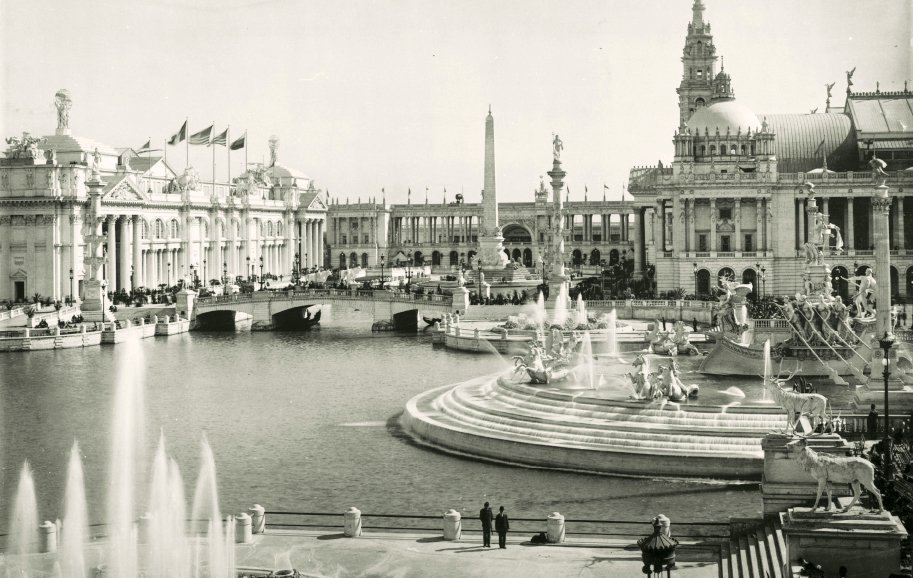
The World’s Columbian Exposition: A Grand Centennial Celebration (1893)
The World’s Columbian Exposition of 1893 was conceived to commemorate the 400th anniversary of Christopher Columbus’ arrival in the New World. Although it was delayed by a year, its impact was colossal, drawing over 27 million visitors during its six-month run from May 1 to October 30, 1893. This fair was not merely an exhibition; it was a grand statement of America’s emergence as a global industrial and cultural power, set against the backdrop of one of its most dynamic cities. It was a landmark event that pushed the boundaries of what was possible in urban planning, architecture, and public spectacle.
Origins and Purpose: The Vision for a Modern Metropolis
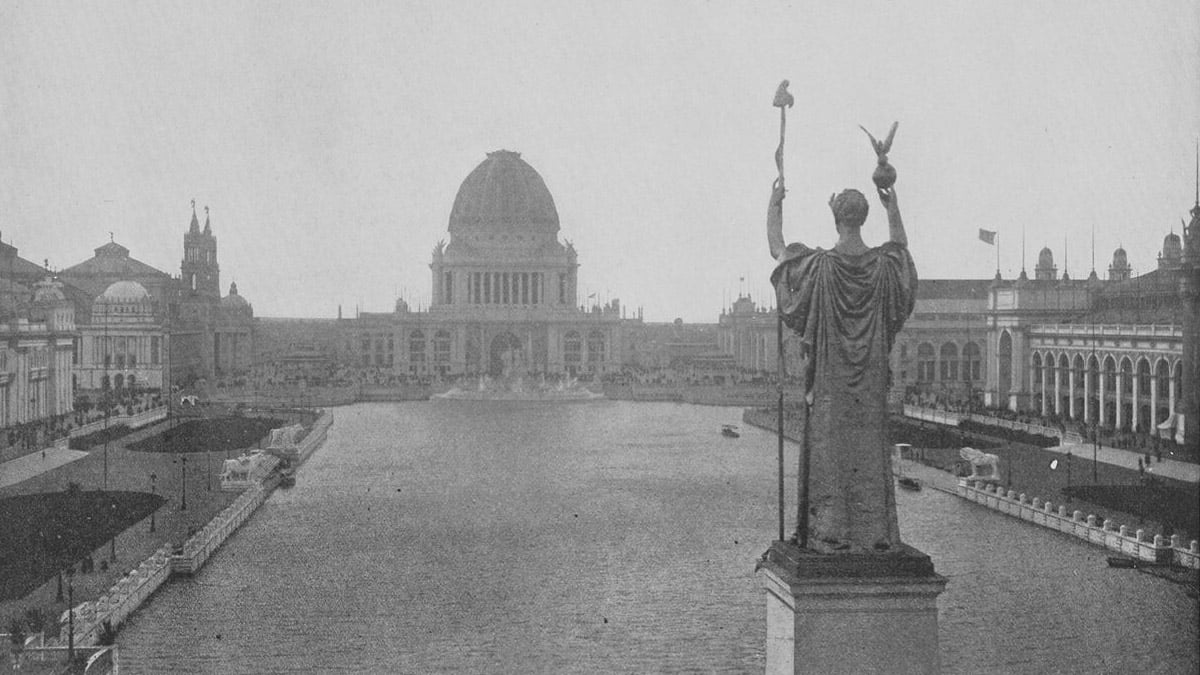
The decision to host the fair in Chicago was contentious, with New York, Washington D.C., and St. Louis also vying for the honor. Chicago’s relentless lobbying, its central location, and its rapid post-fire rebuilding efforts ultimately won over the selection committee. The fair’s purpose was multifaceted: to celebrate American ingenuity, to educate the public, to foster international cooperation, and to project an image of a refined and powerful nation. It was envisioned as a “White City” – a testament to neoclassical ideals and meticulous urban design, a stark contrast to the grimy industrial cities of the era. The site, sprawling across Jackson Park and the Midway Plaisance along Lake Michigan, was transformed from marshland into an exquisite landscape of lagoons, canals, and grand buildings.
Architectural Marvels and the White City
Under the leadership of architect Daniel Burnham and landscape architect Frederick Law Olmsted, a team of leading American architects and artists crafted the fairgrounds into a breathtaking vision. The “White City” moniker stemmed from the classical style of the main exhibition halls, primarily constructed from white staff (a mixture of plaster, cement, and jute fibers) that resembled marble. These monumental structures, though temporary, created an overwhelming sense of grandeur and civic aspiration. The Court of Honor, with its gleaming buildings, reflecting pools, and grand statuary, became the iconic image of the fair.
Beyond its aesthetic appeal, the fair introduced groundbreaking concepts in urban planning and design that would influence cities for decades. The layout was carefully organized, featuring distinct zones for different types of exhibits, efficient transportation systems (including moving walkways and electric boats), and comprehensive security provided by the Columbian Guard. The legacy of the White City profoundly impacted the City Beautiful movement in the United States, advocating for harmonious planning and monumental civic architecture.
Technological Triumphs and Cultural Exchanges
The 1893 Fair was a crucible of innovation. Visitors witnessed a dizzying array of new technologies and products, many of which are commonplace today. George Washington Gale Ferris Jr.’s original Ferris Wheel made its debut, providing a spectacular view of the fairgrounds and becoming an enduring symbol of world’s fairs. Other marvels included the first public demonstration of alternating current (AC) electricity by George Westinghouse (championed by Nikola Tesla), contrasting with Thomas Edison’s direct current (DC) system, paving the way for modern power distribution. The fair also showcased early motion picture devices, dishwashers, and zipper prototypes.
Culturally, the fair offered a window into diverse global traditions through its “ethnographic villages” on the Midway Plaisance. While these exhibits often perpetuated stereotypes, they also exposed millions of Americans to cultures from around the world, fostering a nascent sense of global interconnectedness. The Women’s Building, dedicated to celebrating women’s achievements, was another significant cultural landmark, highlighting the progress of women in various fields.
Lasting Legacy: Influence on Urban Planning and Institutions
Although most of the White City’s structures were temporary and dismantled after the fair, its influence was long-lasting. The layout of Jackson Park retains elements of Olmsted’s original design. Crucially, one building, the Palace of Fine Arts, was rebuilt in permanent materials and today houses the Museum of Science and Industry, a landmark institution in Chicago. The fair also led to the founding of the Field Museum of Natural History and played a role in the establishment of the Art Institute of Chicago and the University of Chicago’s expansion. It galvanized a generation of architects and urban planners, instilling a belief in the power of comprehensive design to uplift society.
A Century of Progress: The 1933-34 World’s Fair
Forty years after the World’s Columbian Exposition, Chicago again hosted a World’s Fair, this time titled the Century of Progress International Exposition. Held from May 27, 1933, to October 31, 1934, this fair aimed to commemorate the city’s centennial (founded in 1833) and showcase scientific and technological advancements that had occurred over the preceding century. Unlike its classical predecessor, the Century of Progress embraced modernism, daring architecture, and a forward-looking vision, serving as a landmark of resilience during a trying period.
Amidst the Great Depression: Context and Challenges
Launching a massive international exposition in the throes of the Great Depression was an audacious undertaking. Economic hardship made funding difficult, and fears about attendance were prevalent. However, the fair’s organizers, led by Rufus Dawes, adopted an innovative financial model: instead of government funding, the fair was financed primarily through bond sales and concessions. This unique approach demonstrated remarkable ingenuity and became a model for future large-scale events. The fair itself offered a much-needed morale boost to a nation grappling with economic despair, providing entertainment, hope, and a glimpse of a brighter, technologically advanced future.
Modernism and Innovation: Science for the Masses
The Century of Progress was a stark departure from the traditional architecture of the 1893 Fair. Its buildings were brightly colored, angular, and illuminated by innovative lighting designs, reflecting the Art Deco and Modernist styles of the era. Located along the lakefront just south of downtown Chicago, the fairgrounds created a dazzling “Rainbow City” in contrast to the earlier “White City.” The focus was heavily on science and industry, with exhibits designed to explain complex scientific principles to the general public.
Innovations included advancements in transportation (streamlined trains and automobiles), communication (television demonstrations, although still nascent), and materials science. Many major corporations had elaborate pavilions showcasing their contributions to modern life. The fair famously hosted the arrival of the Zephyr, a streamlined, diesel-powered train, which made a record-breaking non-stop run from Denver to Chicago in 1934, symbolizing the speed and efficiency of the future. The Sky Ride, an aerial tramway, provided thrilling views of the fair and the city skyline.
Enduring Impact: A Legacy of Resilience and Public Engagement
Like its predecessor, the Century of Progress left a lasting impact on Chicago and beyond. The land created for the fair through landfill operations along Lake Michigan eventually became part of Burnham Park and the Museum Campus, home to institutions like the Adler Planetarium, Shedd Aquarium, and the Field Museum. The fair’s success during the Depression demonstrated the power of public events to stimulate the economy and provide psychological uplift. It also solidified the idea of science popularization, influencing how museums and educational institutions would engage the public with scientific and technological advancements in the future.
The Cultural and Historical Significance of Chicago’s Fairs
The two great Chicago World’s Fairs stand as pivotal landmarks in urban development, technological advancement, and cultural exchange. They were far more than temporary exhibitions; they were catalysts for change, shaping the identity of a major American city and influencing global perspectives.
Shaping Urban Identity: Chicago’s Global Stage
Both fairs fundamentally transformed Chicago’s physical and psychological landscape. The 1893 Exposition cemented Chicago’s reputation as a world-class city, capable of grand vision and execution, shedding its image as merely a rough industrial center. It introduced comprehensive urban planning ideas that continued to guide the city’s development. The 1933-34 Fair, in turn, showcased Chicago’s resilience and its commitment to progress even in times of adversity, solidifying its status as a hub of innovation and modernism. The permanent structures and land reclamation projects associated with both fairs created enduring public spaces and cultural institutions that continue to enrich the city today, serving as physical landmarks of their ambitious origins.
Global Showcase: America’s Role on the World Stage
The Chicago World’s Fairs were critical venues for the United States to present itself to the world. In 1893, it was a declaration of America’s arrival as a sophisticated global power, rivaling the great European empires. In 1933, it was a demonstration of American ingenuity and determination in the face of economic collapse, reaffirming its leadership in science and technology. These fairs served as vital diplomatic and commercial platforms, facilitating international trade, cultural understanding, and the exchange of ideas on an unprecedented scale.

Precursor to Modern Conventions and Public Engagement
The organizational scale and complexity of the Chicago World’s Fairs were unparalleled for their time. They pioneered techniques in large-scale event management, security, public relations, and visitor experience that laid the groundwork for modern conventions, expos, and festivals. From the structured educational exhibits to the popular entertainment on the Midway, these fairs demonstrated effective strategies for engaging and educating a massive public audience, creating a blueprint for how large-scale public events could combine commerce, culture, and entertainment.
In conclusion, the question “When Was Chicago World’s Fair?” invites a journey into two distinct yet equally significant periods in Chicago’s history: 1893 and 1933-34. These expositions were not merely fleeting events; they were powerful landmarks that encapsulated the spirit of their times, propelled architectural and technological innovation, and continue to influence our cities and culture to this day. They stand as enduring testaments to human ambition, ingenuity, and the transformative power of shared public experience.
LifeOutOfTheBox is a participant in the Amazon Services LLC Associates Program, an affiliate advertising program designed to provide a means for sites to earn advertising fees by advertising and linking to Amazon.com. Amazon, the Amazon logo, AmazonSupply, and the AmazonSupply logo are trademarks of Amazon.com, Inc. or its affiliates. As an Amazon Associate we earn affiliate commissions from qualifying purchases.