
The question of how far Tennessee is from Chicago often arises from a desire to bridge the geographical and cultural divide between the Midwest and the South. Whether you’re planning a road trip, considering a flight, or exploring other travel options, understanding the distance and the logistics involved is the first step towards an unforgettable journey. From the bustling urban landscape of Chicago, Illinois, to the vibrant musical heritage and natural beauty of Tennessee, the journey between these two distinct regions offers a fascinating glimpse into America’s diverse tapestry. This guide aims to provide a comprehensive overview for travelers contemplating this interstate expedition, detailing distances, travel times, modes of transport, and essential planning considerations to ensure a smooth and enjoyable experience.

The Geographical Reality: Distance and Driving Time
Understanding the exact distance between Chicago and Tennessee isn’t as simple as a single number, as Tennessee is a large state with various popular destinations. The distance will vary significantly depending on your specific starting point in Chicago and your intended destination within Tennessee, such as Nashville, Memphis, or Knoxville.
Direct Measurement: Air vs. Road
In terms of straight-line (as the crow flies) distance, the heart of Tennessee is roughly 400 to 500 miles from Chicago. However, practical travel, especially by road, involves navigating highways and byways, which adds to the total mileage.
For common destinations:
- Chicago to Nashville: The driving distance typically ranges from 450 to 500 miles, making it an approximate 7.5 to 9-hour drive without significant stops. Nashville is a major hub in Central Tennessee and a frequent destination for travelers from the Midwest.
- Chicago to Memphis: Situated in Western Tennessee, Memphis is slightly closer, averaging around 520 to 550 miles. This journey usually takes about 8 to 9 hours of driving.
- Chicago to Knoxville: Located in Eastern Tennessee, Knoxville is the furthest of the major cities from Chicago, with distances often ranging from 580 to 620 miles. Expect a driving time of 9.5 to 11 hours.
- Chicago to Chattanooga: Another popular destination in Southeastern Tennessee, it is roughly 560 to 600 miles, taking about 9-10 hours to drive.
These times are estimates for continuous driving. Accounting for fuel stops, meals, and potential traffic, a road trip will inevitably take longer, often requiring an overnight stop if you prefer not to drive for more than 8-10 hours in a single day.
Key Routes and Interstate Highways
The journey between Chicago and Tennessee primarily utilizes a network of well-maintained interstate highways. The choice of route often depends on your specific destination within Tennessee.
- For Memphis: The most direct route involves taking I-57 South from Chicago through Illinois and Missouri, eventually connecting with I-55 South which leads directly to Memphis. This route often passes near St. Louis, Missouri, a common stopping point.
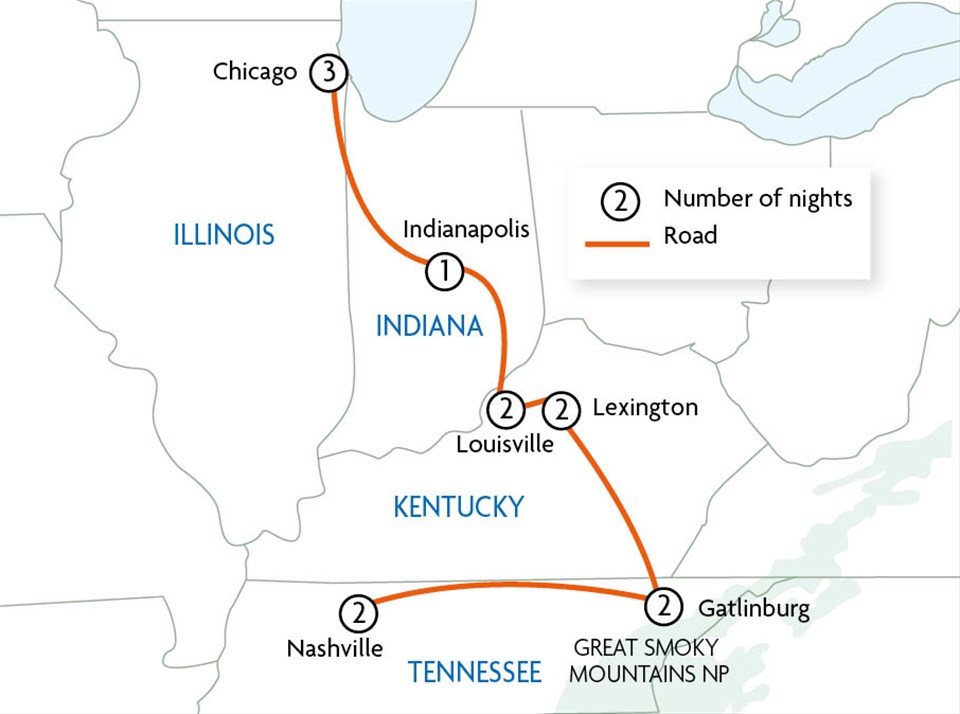
- For Nashville and points east (Knoxville, Chattanooga): A common path is to head southeast from Chicago. This typically involves taking I-65 South through Indiana and Kentucky directly to Nashville. For Knoxville or Chattanooga, you would continue on I-24 East from Nashville or take I-40 East from Nashville (which merges with I-75 for Knoxville). Indianapolis, Indiana, and Louisville, Kentucky, are key cities along this corridor for breaks or overnight stays.
These interstates offer generally smooth travel, but travelers should always be prepared for potential construction delays, rush-hour traffic in major cities, and weather-related disruptions, particularly during winter months in the northern sections of the route.
Modes of Transportation: Weighing Your Options
Choosing the right mode of transportation is crucial for a pleasant journey from Chicago to Tennessee, balancing cost, time, and convenience.
Driving: The Classic American Road Trip
Driving offers unparalleled flexibility, allowing travelers to set their own pace, make spontaneous stops, and carry more luggage. It’s often the most cost-effective option for groups or families once fuel and potential overnight stays are factored in.
- Pros:
- Flexibility: Depart and arrive on your schedule, explore scenic routes, and stop at points of interest.
- Cost-effective for groups: Sharing fuel costs can make it more economical than individual airfares.
- Luggage capacity: No airline restrictions on baggage size or weight (within reason).
- Personal space: Enjoy the comfort of your own vehicle.
- Cons:
- Fatigue: Long hours behind the wheel can be tiring, necessitating breaks or an overnight stop.
- Fuel costs: Can add up, especially with fluctuating gas prices.
- Tolls: Some interstates and bridges may have tolls.
- Vehicle wear and tear: Adds mileage and potential maintenance needs to your car.
- Traffic: Can encounter significant delays in and around major cities.
- Tips for Drivers: Plan your route in advance, account for breaks every 2-3 hours, ensure your vehicle is in good condition, and consider driving apps for real-time traffic updates and navigation.
Flying: Speed and Convenience
For those prioritizing speed and minimizing travel time, flying is the most efficient option. Direct flights significantly cut down on transit time, transforming an 8-10 hour drive into a 1.5-2 hour flight.
- Major Airports in Chicago: O’Hare International Airport (ORD) and Midway International Airport (MDW) offer numerous daily flights to Tennessee.
- Major Airports in Tennessee:
- Nashville International Airport (BNA) for Nashville and Central Tennessee.
- Memphis International Airport (MEM) for Memphis and Western Tennessee.
- McGhee Tyson Airport (TYS) for Knoxville and Eastern Tennessee.
- Chattanooga Metropolitan Airport (CHA) for Chattanooga and Southeastern Tennessee.
- Pros:
- Fastest: Significantly reduces travel time.
- Less strenuous: Avoids the fatigue of long-distance driving.
- Comfort: Modern aircraft offer a relatively comfortable travel experience.
- Cons:
- Cost: Airfares can be expensive, especially for last-minute bookings or peak seasons.
- Airport logistics: Time spent on check-in, security, boarding, and baggage claim.
- Limited luggage: Restrictions on carry-on and checked baggage, often with additional fees.
- Transfers: Need for transportation to and from airports, adding to cost and time.
Train and Bus Travel: Economical Alternatives

For budget-conscious travelers or those who prefer not to drive or fly, train and bus services offer viable alternatives, albeit with longer travel times.
- Train (Amtrak): Amtrak offers routes connecting Chicago to Tennessee. The “City of New Orleans” line runs from Chicago directly to Memphis, offering a unique way to experience the landscapes of the Midwest and South. Travel time is considerably longer than driving or flying, often 10-12 hours or more for Memphis.
- Bus (Greyhound, etc.): Various bus services operate between Chicago and major Tennessee cities. While generally the most economical option, bus travel is also the slowest, with numerous stops and longer overall transit times (often 12-15+ hours).
- Pros:
- Cost-effective: Generally cheaper than flying, sometimes comparable to driving alone.
- Relaxation: No need to drive; you can read, work, or rest.
- Environmental impact: Often a more eco-friendly option than individual car travel or flying.
- Cons:
- Longer travel times: Significantly slower than driving or flying.
- Less flexibility: Fixed schedules and routes.
- Comfort: Can be less comfortable for extended periods, especially on buses.
Planning Your Journey: Essential Considerations
Regardless of your chosen mode of transport, meticulous planning can greatly enhance your travel experience between Chicago and Tennessee.
Best Time to Travel
The seasons play a significant role in determining travel conditions and the overall experience.
- Spring (April-May) and Fall (September-October): These are arguably the best times to travel. Temperatures are mild, foliage is beautiful (especially in the fall), and the risk of extreme weather is lower. Chicago winters can bring heavy snow and ice, making driving hazardous and potentially delaying flights. Tennessee summers can be hot and humid, though this can be ideal for water-based activities.
- Summer (June-August): Popular for family vacations, but expect higher temperatures, potentially heavier traffic, and increased prices for flights and accommodations.
- Winter (November-March): Offers the lowest travel costs outside of holidays, but brings the risk of severe weather, especially in the northern states along the driving route.
Budgeting for Your Trip
A well-planned budget helps avoid unexpected expenses.
- Transportation: Factor in fuel costs, flight tickets, train/bus fares, and any associated taxes or fees. For drivers, consider potential tolls and parking fees.
- Accommodation: If driving overnight, budget for a hotel stay. If flying, consider the cost of accommodation at your destination.
- Food: Account for meals and snacks, whether on the road or at your destination.
- Contingency: Always set aside funds for unforeseen circumstances like vehicle breakdowns, flight delays, or medical emergencies.
Exploring En Route
For those opting for a road trip, the journey itself can be part of the adventure. The routes from Chicago to Tennessee pass through several interesting states and cities that can serve as excellent stopping points.
- Illinois: Southern Illinois, particularly around Cairo at the confluence of the Ohio and Mississippi Rivers, offers historical significance.
- Missouri: St. Louis is a major metropolitan area with the iconic Gateway Arch and numerous dining options.
- Indiana: Indianapolis, home to the famous motor Speedway, offers cultural attractions and comfortable lodging.
- Kentucky: Louisville, known for bourbon distilleries and the Kentucky Derby Museum, makes for an engaging stop. Even smaller towns offer local charm and a chance to stretch your legs. Incorporating a 1-2 hour break every few hundred miles not only recharges drivers but also allows for a taste of regional culture.
Chicago and Tennessee: A Tale of Two Destinations
Understanding why you’re making the journey helps in planning and appreciating the destination. Both Chicago and Tennessee offer unique attractions that draw visitors from across the country.
Why Visit Chicago?
Chicago is a world-class city renowned for its stunning architecture, vibrant arts and culture scene, diverse culinary landscape, and beautiful lakeside setting along Lake Michigan. Visitors come for its iconic skyscrapers, deep-dish pizza, world-class museums, and lively neighborhoods. It serves as a major hub for business, entertainment, and sports, offering an endless array of urban experiences.
Why Visit Tennessee?
Tennessee, in stark contrast, offers a rich blend of musical heritage, natural wonders, and Southern charm. Nashville, the “Music City,” is famous for country music, live venues, and historical sites. Memphis is the birthplace of blues, soul, and rock ‘n’ roll, with a deep history in civil rights. The eastern part of the state boasts the majestic Great Smoky Mountains National Park near Knoxville, offering breathtaking scenery, hiking, and outdoor adventures. Tennessee is a destination for those seeking a soulful immersion into American music, history, and nature.
Conclusion: Your Journey Awaits
The distance between Tennessee and Chicago is substantial, ranging from approximately 450 to over 600 miles by road, translating to an 8 to 11-hour drive, or a quick 1.5 to 2-hour flight. Each mode of transportation—driving, flying, or taking a train/bus—presents its own set of advantages and challenges. The decision ultimately rests on your priorities: speed, budget, flexibility, or the desire for an adventure along the open road. With careful planning, a journey between these two dynamic American regions promises a rich and rewarding travel experience, connecting the urban sophistication of the Midwest with the soulful charm of the South.
LifeOutOfTheBox is a participant in the Amazon Services LLC Associates Program, an affiliate advertising program designed to provide a means for sites to earn advertising fees by advertising and linking to Amazon.com. Amazon, the Amazon logo, AmazonSupply, and the AmazonSupply logo are trademarks of Amazon.com, Inc. or its affiliates. As an Amazon Associate we earn affiliate commissions from qualifying purchases.