
O Block, a name that has gained significant notoriety in contemporary urban culture, refers to a specific section within the Parkway Gardens apartment complex on the South Side of Chicago, Illinois. More than just a residential area, O Block has evolved into a landmark representing a complex tapestry of urban history, architectural significance, socio-economic challenges, and cultural influence, particularly within the music world. To understand O Block is to delve into the history of American public housing, the development of specific urban communities, and the often-gritty realities reflected in art and media that emerge from these environments. Its designation as “O Block” is a tribute to Odee Perry, a young resident who was killed in 2011, solidifying the complex’s identity within certain narratives. This exploration seeks to provide a comprehensive, professional, and insightful look into what O Block truly represents within the landscape of Chicago’s landmarks.

The Genesis of O Block: A Historical Overview
The story of O Block begins not with its contemporary moniker, but with the ambitious vision behind Parkway Gardens itself. Constructed in the mid-20th century, this complex was once heralded as a beacon of progressive urban planning, designed to offer quality housing in a thriving community. Its initial intent was a stark contrast to the challenges it would face decades later, showcasing a common trajectory for many urban developments across America.
From Vision to Reality: The Parkway Gardens Project
Parkway Gardens was developed between 1950 and 1955, designed by the firm of Henry K. Holsman. Unlike many high-rise public housing projects that would follow, Parkway Gardens was conceived as a low-rise, garden-style apartment complex. Spanning several blocks, it comprised 35 buildings, including both two-story row houses and three-story apartment buildings, housing over 600 units. The architectural design emphasized green spaces, courtyards, and a sense of community, intended to foster a high quality of life for its residents. Located at 6400 South Martin Luther King Jr. Drive in the Woodlawn neighborhood, it was initially a cooperative housing project, meaning residents purchased shares and had a stake in the ownership and management of the property. This model aimed to create a stable, engaged community, offering an alternative to the often-segregated and substandard housing available to many African Americans in Chicago during that era. It attracted a diverse mix of working-class families and was even home to notable individuals, including former First Lady Michelle Obama during her early childhood.
A Legacy of Urban Development in Chicago
The construction of Parkway Gardens coincided with a significant period of urban change in Chicago. The post-World War II boom brought migration to the city, leading to increased demand for housing. While promising, the cooperative model of Parkway Gardens faced financial difficulties over time. By the late 1960s and 1970s, the complex transitioned from cooperative ownership to becoming rental property, and eventually, many units fell under the purview of government-subsidized housing programs. This shift marked a critical turning point. As the broader Woodlawn neighborhood, like many inner-city areas, experienced economic decline, deindustrialization, and increased racial segregation, Parkway Gardens became increasingly isolated. The ambitious vision of integrated, community-led housing gradually gave way to the realities of concentrated poverty, disinvestment, and the proliferation of street gangs, which were often a consequence of the systemic issues plaguing these communities. The decline of public safety and economic opportunities transformed the perception and reality of Parkway Gardens, setting the stage for its modern identity as O Block.
Architectural Significance and Design
Beyond its social history, Parkway Gardens holds a distinct place in architectural history, particularly within the context of early modern public housing and cooperative living experiments in the United States. Its design principles reflect an era when architects and urban planners sought to create humane, aesthetically pleasing, and community-oriented living environments, moving away from the crowded tenements of previous generations.
The Layout of Parkway Gardens
The architectural design of Parkway Gardens is characterized by its “garden apartment” style. This approach prioritizes lower-density living, ample green spaces, and a pedestrian-friendly environment. The complex features a mix of two- and three-story brick buildings arranged around central courtyards and landscaped areas, creating semi-private outdoor spaces intended for residents’ use. This design choice was a deliberate attempt to foster a sense of community and provide a healthier living environment than the high-rise, institutional-style housing projects that became more common later. The buildings themselves are relatively unadorned, reflecting the functionalist aesthetics of the mid-20th century, yet their repetitive rhythm and careful placement aimed for a harmonious urban ensemble. The layout encourages natural light and ventilation, with units often featuring cross-ventilation, a thoughtful detail for residential comfort. This design ethos contrasted sharply with the later infamous high-rise projects like Robert Taylor Homes or Cabrini-Green, which, despite their initial good intentions, often struggled with isolation and vertical segregation. Parkway Gardens represents an alternative, more horizontal model of mass housing.
Chicago’s Public Housing Landscape
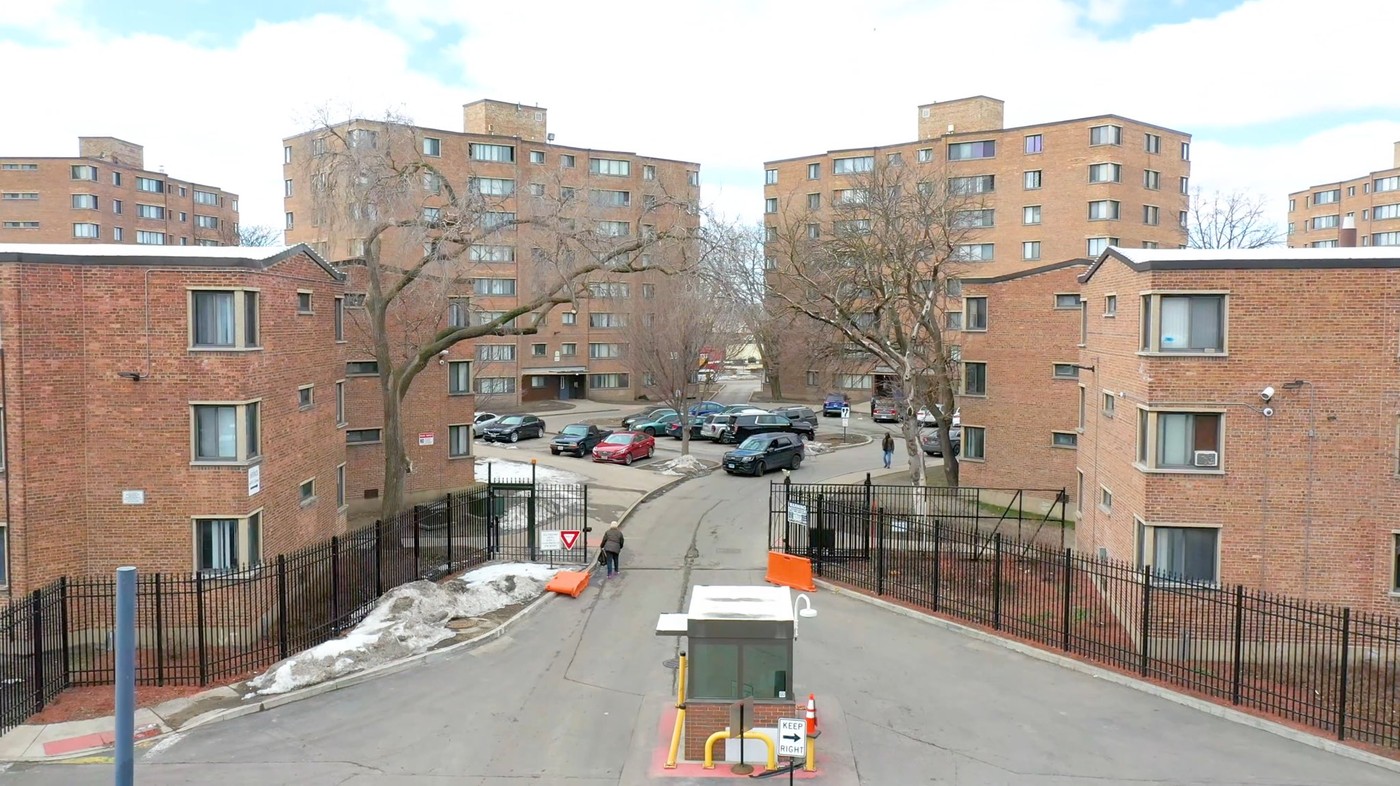
Parkway Gardens is a unique landmark within Chicago’s broader public housing narrative. While Chicago became synonymous with towering public housing projects that eventually faced immense social challenges, Parkway Gardens stands out as an earlier, more human-scaled approach. It was one of the nation’s earliest examples of privately financed, cooperatively owned housing for African Americans, built with a deliberate aim to provide dignified living. The complex was added to the National Register of Historic Places in 2017, acknowledging its historical significance not just as a housing development but as a cultural landmark. This designation highlights its importance in understanding the evolution of urban planning, civil rights, and housing policies in the United States. Architecturally, it serves as a tangible link to a period when idealists believed in the power of design to shape positive social outcomes, even as the complex’s later history reveals the complex interplay of architectural vision with socio-economic forces. The enduring structures of Parkway Gardens are a testament to mid-century modernism and a reminder of the historical aspirations for equitable urban living.
O Block’s Cultural Resonance and Contemporary Identity
In recent decades, O Block has transcended its historical and architectural identity to become a powerful symbol in popular culture, particularly through its strong association with Chicago’s drill music scene. This cultural prominence has reshaped its public perception, often overshadowing its complex past and the everyday lives of its residents.
The Influence of Drill Music
The name “O Block” itself gained widespread recognition largely due to its repeated mention in drill music, a subgenre of hip-hop that emerged from Chicago’s South Side in the early 2010s. Artists such as Chief Keef, King Von, and Lil Durk, many of whom grew up in or had strong ties to Parkway Gardens, frequently referenced the area in their lyrics. These songs often depicted the harsh realities of street life, gang violence, poverty, and loyalty within the community. The raw, unfiltered narratives resonated with a global audience, making O Block a recognizable, albeit often misunderstood, landmark. For many, it became synonymous with a specific brand of urban struggle and resilience. The music offered an intimate, though sometimes controversial, glimpse into the lives of young people in neglected urban centers, transforming a local neighborhood identifier into a global cultural touchstone. The tragic death of King Von in 2020, a prominent figure in drill music frequently associated with O Block, further amplified the area’s presence in public discourse and solidified its place in the annals of contemporary music history.
Beyond the Headlines: A Community’s Perspective
While drill music and media portrayals have painted a vivid picture of O Block, it is crucial to remember that it is first and foremost a residential community. Thousands of people call Parkway Gardens home, navigating daily life with its joys, challenges, and complexities that extend far beyond sensationalized narratives. For many residents, O Block is a place of family, friendships, and shared experiences, a testament to enduring community spirit despite significant adversity. Local organizations and residents actively work to foster positive change, provide support, and improve living conditions. Efforts to create safe spaces, offer educational opportunities, and promote community engagement are ongoing, often overlooked by external observers focused solely on crime statistics or music lyrics. Understanding O Block as a landmark requires looking beyond its symbolic weight in popular culture and acknowledging the vibrant, resilient community that resides within its walls, striving for a better future amidst its challenging past and present. It is a place where real lives unfold, embodying the spirit of human endurance in the face of systemic issues.
Navigating the Complexities: O Block in the Public Consciousness
The public perception of O Block is multifaceted, shaped by a confluence of media narratives, cultural expressions, and socio-economic realities. This complexity makes it a challenging landmark to categorize and understand, demanding a nuanced approach that moves beyond simplistic labels.
Media Portrayals and Stereotypes
The intense media focus on crime and gang activity within O Block has, to a significant extent, defined its public image. News reports often highlight instances of violence, contributing to a narrative that sometimes overshadows the everyday lives of its residents and the broader historical context of Parkway Gardens. This concentration of negative portrayals can lead to harmful stereotypes, stigmatizing the entire community and making it difficult for residents to escape the associated reputation. While it is undeniable that the area has faced and continues to grapple with serious issues of violence and poverty, these issues are often a symptom of larger systemic failures in urban planning, economic opportunity, and social support systems. The media’s selective focus can inadvertently obscure the root causes of these problems, contributing to a cycle of misunderstanding and prejudice. For a landmark such as O Block, this means its story is frequently told through a lens of adversity, rather than its full spectrum of human experience, resilience, and historical significance.

Efforts Towards Community Revitalization
Despite the challenges, there are ongoing efforts by both residents and external organizations to revitalize and improve the conditions within Parkway Gardens and the surrounding Woodlawn neighborhood. Initiatives often focus on youth programs, educational support, job training, and community-building activities designed to empower residents and provide alternatives to the street life often depicted in media. The goal is to address the underlying issues that contribute to violence and poverty, fostering a safer, more stable, and prosperous environment. These efforts are crucial in reshaping the future of O Block, moving beyond its current notoriety towards a renewed sense of community pride and opportunity. The complex’s historical designation on the National Register of Historic Places also opens avenues for preservation funding and attention, potentially aiding in its physical upkeep and long-term viability. As a landmark, O Block stands as a testament to the enduring struggles and hopes of urban communities, a place that continues to evolve and challenge perceptions as its residents work towards a brighter future. Its story is a vital part of Chicago’s’s complex history, reflecting both past aspirations and present realities.
LifeOutOfTheBox is a participant in the Amazon Services LLC Associates Program, an affiliate advertising program designed to provide a means for sites to earn advertising fees by advertising and linking to Amazon.com. Amazon, the Amazon logo, AmazonSupply, and the AmazonSupply logo are trademarks of Amazon.com, Inc. or its affiliates. As an Amazon Associate we earn affiliate commissions from qualifying purchases.