
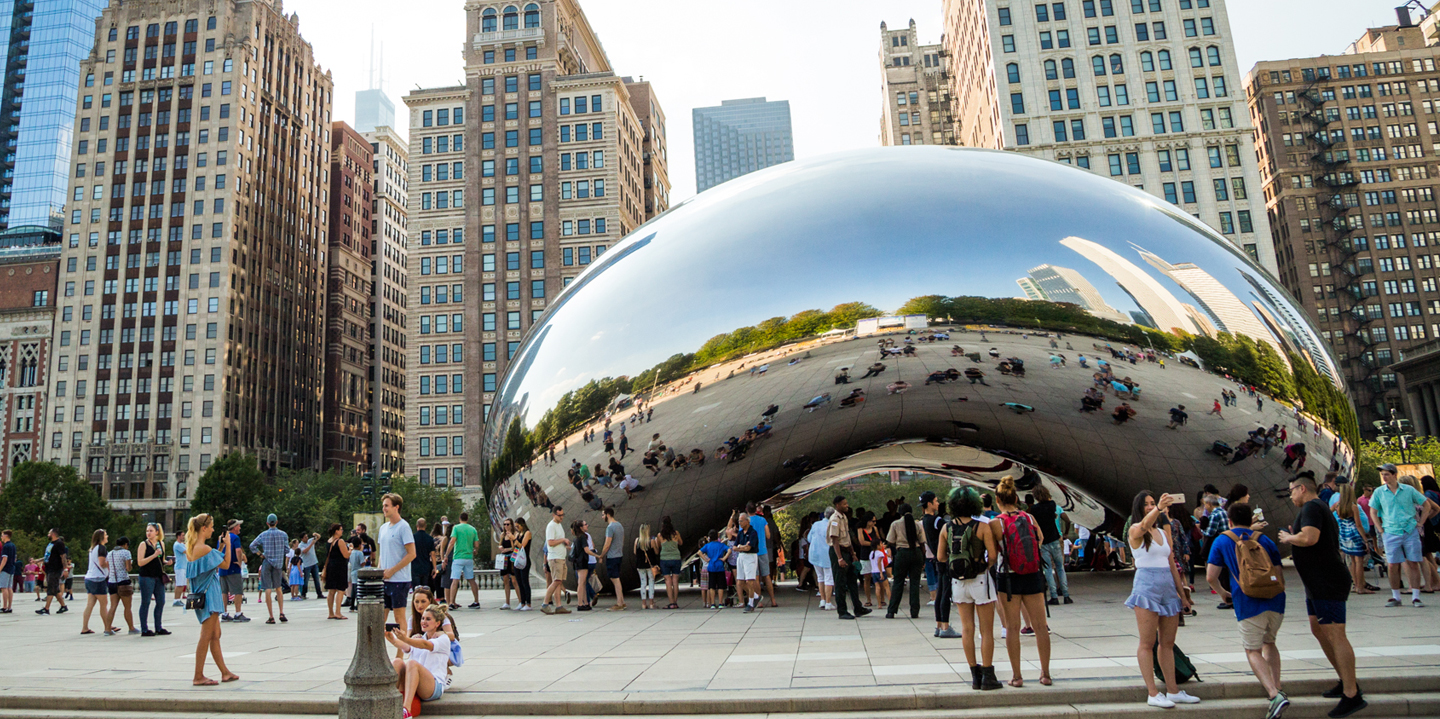
One of Chicago’s most iconic and instantly recognizable landmarks, often affectionately referred to as “The Bean,” is officially known as Cloud Gate. This colossal and captivating public sculpture is strategically situated in the heart of downtown Chicago, within the sprawling and celebrated grounds of Millennium Park. Its central placement makes it an unmissable fixture for both residents and visitors exploring the city’s vibrant cultural landscape. Its reflective surface and unique shape have cemented its status not just as a piece of art, but as a dynamic focal point that interacts with its surroundings and the people who gather around it.
The Iconic Landmark: Cloud Gate’s Home
Cloud Gate stands as a testament to modern public art, perfectly integrating into the urban fabric of one of the United States’ most architecturally significant cities. Its location is not arbitrary but chosen to maximize its visual impact and accessibility, ensuring it serves as a central hub for activity and contemplation within Millennium Park.
Pinpointing the Location
Specifically, Cloud Gate is nestled in the AT&T Plaza area of Millennium Park. This puts it at a prime intersection of several major Chicago thoroughfares and attractions. To its east lies the vast expanse of Grant Park and, beyond that, the shimmering waters of Lake Michigan. To the west, the city’s impressive skyline rises, providing a stunning backdrop that is perfectly mirrored in the sculpture’s polished exterior. The address for Millennium Park itself is 201 E. Randolph St., but “The Bean” is more commonly approached from various points within the park, particularly from Michigan Avenue or from adjacent attractions. This central Loop location ensures easy access via public transportation, including elevated trains (the “L”) and numerous bus routes, making it a convenient stop on any Chicago itinerary. The strategic positioning allows visitors to experience the sculpture from multiple perspectives, each offering a unique interaction with the city’s architectural grandeur and natural beauty.
A Jewel in Millennium Park
Millennium Park itself, inaugurated in 2004, is a magnificent urban oasis covering 24.5 acres. It transformed a former industrial brownfield site and rail yards into a vibrant civic space, becoming an integral part of Grant Park. Conceived as a grand initiative for the new millennium, the park quickly garnered international acclaim for its innovative architecture, landscape design, and, crucially, its cutting-edge public art installations. “The Bean” arrived shortly after the park’s opening, quickly emerging as its unofficial emblem. Its seamless integration into the park’s design, alongside other notable features like the Jay Pritzker Pavilion and Crown Fountain, underscores Chicago’s commitment to blending art, nature, and urban development. The park serves as a dynamic public forum, hosting concerts, festivals, and simply providing a tranquil retreat for urban dwellers. Cloud Gate stands proudly as the centerpiece of this ambition, inviting interaction and reflection from all who visit.
Unveiling the Artistic Vision and Construction
“The Bean” is far more than just a large, shiny object; it is a meticulously crafted work of art born from a profound artistic vision and realized through innovative engineering. Its creation story is as captivating as the sculpture itself, highlighting the ambition and dedication required to bring such a monumental piece to life.
Anish Kapoor’s Masterpiece
The visionary behind Cloud Gate is the renowned British artist, Anish Kapoor. Born in Mumbai, India, Kapoor is celebrated globally for his large-scale public sculptures that often explore themes of reflection, perception, and the void. His proposal for Millennium Park was selected from a competition in 1999, envisioning a sculpture that would serve as a “gateway” to the 21st century and evoke a sense of wonder. Kapoor’s inspiration for the form was liquid mercury, aiming to create a seamless, fluid surface that would reflect the city’s skyline and the ever-changing sky in a distorted yet captivating manner. He famously insisted that the sculpture should have no visible seams, a technical challenge that became central to its construction. This artistic insistence pushed the boundaries of contemporary fabrication, resulting in a piece that truly appears to have materialized organically from the landscape, defying its massive scale and complex construction. His work consistently challenges viewers’ perceptions, and Cloud Gate is a prime example of this philosophy, transforming mundane observations into extraordinary experiences.
The Engineering Marvel Behind the Shine
Building Cloud Gate was an extraordinary feat of engineering and precision fabrication. Weighing approximately 110 tons (around 100 metric tons), the sculpture measures 66 feet (20 meters) long, 42 feet (13 meters) wide, and 33 feet (10 meters) high. It is composed of 168 large stainless steel plates, each individually cut and shaped using computer-aided design. The critical challenge, and Kapoor’s key requirement, was to achieve a perfectly seamless exterior. This was accomplished by polishing all the welds to an incredibly smooth finish, resulting in a surface that appears as if it were a single, monolithic piece of metal. The fabrication process involved a team of experts from A. Zahner Company in Kansas City, Missouri, who specialized in intricate metalwork. The interior structure is a complex steel framework that supports the massive weight and maintains the sculpture’s unique curvilinear shape. The assembly process in Chicago involved hoisting and positioning these heavy plates with extreme care, then undertaking months of meticulous grinding and polishing to achieve the mirror-like finish visitors see today. This combination of artistic vision and engineering prowess truly makes “The Bean” a marvel of modern sculpture and a landmark that pushes the boundaries of what is possible in public art.
The Bean’s Enduring Cultural Impact
Since its completion in 2006, Cloud Gate has transcended its origins as a mere art installation to become a cultural touchstone. It profoundly impacts the urban landscape of Chicago, shaping visitor experiences and becoming an indelible part of the city’s identity. Its presence in Millennium Park has cemented the park’s status as a must-visit destination.
A Magnet for Photography and Reflection
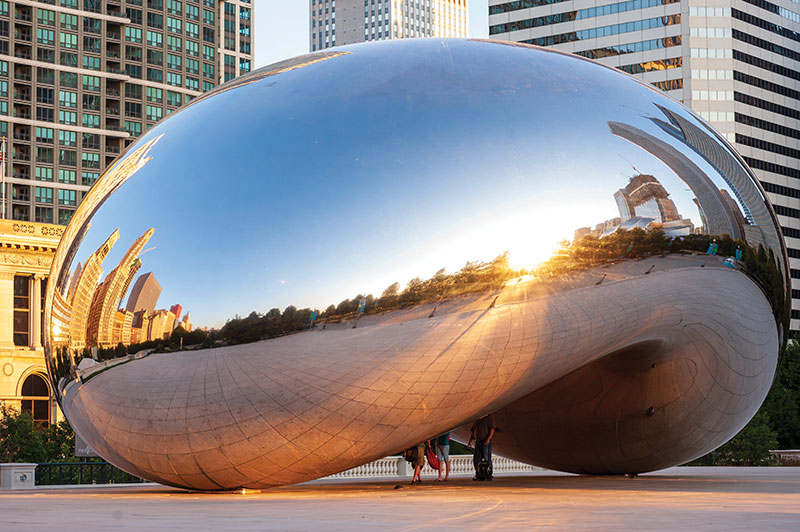
“The Bean” is undeniably one of the most photographed landmarks in the United States. Its highly reflective surface offers endless opportunities for creative photography, capturing distorted reflections of the Chicago skyline, the sky, and the throngs of people gathered around it. Visitors delight in seeing their own warped images, taking selfies, and experimenting with angles that play with perception. The unique concavity on its underside, often referred to as the “omphalos” (Greek for “navel”), creates a mesmerizing vortex of reflections, drawing people in for a closer, more intimate experience. This interactive quality is key to its appeal; it doesn’t just sit there to be observed, but rather invites participation and playful engagement. Beyond the immediate joy of photography, the sculpture encourages a deeper reflection on urban spaces, art, and one’s place within them. It transforms the familiar surroundings into something surreal and dreamlike, fostering a sense of wonder that resonates with people of all ages and backgrounds.
Symbolism and Public Engagement
Cloud Gate’s symbolism is as multifaceted as its reflections. While Anish Kapoor originally envisioned it as a “gateway,” its amorphous shape has led to numerous interpretations. Some see it as a liquid drop, others as a cosmic entity, and many simply appreciate its smooth, inviting form. Crucially, it serves as a powerful symbol of Chicago’s forward-thinking spirit and its commitment to public art and urban revitalization. It represents a city that embraces modernity while honoring its architectural heritage. The sculpture’s accessibility and interactive nature foster a strong sense of public engagement. It’s not behind velvet ropes; it’s right there, inviting touch, exploration, and interpretation. This direct interaction helps demystify contemporary art, making it approachable and enjoyable for everyone. It has become a beloved civic space, a meeting point, a backdrop for countless memories, and a vibrant canvas that constantly mirrors the life and energy of Chicago.
Exploring Millennium Park and Surrounding Landmarks
“The Bean” is undoubtedly a star attraction, but its location within Millennium Park places it at the nexus of several other magnificent landmarks and experiences that collectively celebrate Chicago’s rich cultural and architectural tapestry. A visit to Cloud Gate often serves as a springboard for exploring the broader wonders of the park and the surrounding downtown area.
Beyond The Bean: Other Attractions in Millennium Park
Millennium Park offers a rich array of attractions, each a landmark in its own right. Just a short walk from Cloud Gate is the stunning Jay Pritzker Pavilion, an outdoor concert venue designed by acclaimed architect Frank Gehry. Its dramatic stainless steel ribbons and advanced sound system create an exceptional setting for free concerts and performances throughout the warmer months. Nearby, the Crown Fountain, designed by Jaume Plensa, features two 50-foot glass block towers displaying video images of Chicago residents’ faces, with water spouting from their mouths, providing a whimsical and interactive experience, especially popular with children in summer. The serene Lurie Garden, a 2.5-acre botanical garden, offers a beautiful contrast with its lush perennial plants and winding pathways, providing a quiet respite from the urban hustle. Each of these elements contributes to the park’s identity as a dynamic, multi-sensory environment, ensuring that a visit extends far beyond a simple photo opportunity with “The Bean.”
Neighboring Architectural Wonders
Millennium Park’s prime location places it within walking distance of some of Chicago’s most famous architectural masterpieces. To the west, across Michigan Avenue, stands a line of historic buildings, including the majestic Art Institute of Chicago, home to a world-class collection of art spanning centuries and cultures. Further north along Michigan Avenue, the iconic Wrigley Building and Tribune Tower punctuate the skyline. To the southwest, the towering presence of the Willis Tower (formerly Sears Tower) dominates the cityscape, offering panoramic views from its Skydeck. These structures, along with countless other skyscrapers that define the Chicago Loop, are not just buildings but testaments to the city’s pioneering role in modern architecture. The reflective surface of Cloud Gate brilliantly captures and distorts these architectural giants, offering unique perspectives and photographic opportunities that continuously integrate the sculpture with its grand urban surroundings.
Connecting to Chicago’s Vibrant Heart
The Bean’s location in Millennium Park also provides easy access to other major cultural institutions. A short walk south leads to the Museum Campus, home to the world-renowned Shedd Aquarium, Field Museum (natural history), and Adler Planetarium. These institutions, perched along the shore of Lake Michigan, offer immersive experiences in science, nature, and history, enriching any visit to Chicago. The park’s proximity to the theatre district, countless dining establishments, and shopping avenues further solidifies its role as a central point in the city’s vibrant cultural and commercial life. From the reflections of a bustling Michigan Avenue to the serene expanse of Grant Park and the glimmer of Lake Michigan, “The Bean” stands as a radiant beacon, inviting exploration and appreciation of everything that makes Chicago a truly world-class landmark destination in North America.
Planning Your Visit to The Bean
Visiting “The Bean” is a highlight for most travelers to Chicago, and with a bit of planning, you can enhance your experience of this remarkable landmark. Given its immense popularity, understanding optimal viewing times and practical considerations can make a significant difference.
Best Times to Experience Cloud Gate
Cloud Gate is accessible year-round, 24 hours a day, offering distinct experiences depending on the time of day and season. For those seeking to avoid the largest crowds, early mornings (just after sunrise) or late evenings (after sunset) are ideal. During these times, the light conditions also offer unique photographic opportunities. Sunrise casts a golden glow, while the city lights at night reflect dramatically on its polished surface, creating an entirely different ambiance. Weekdays generally see fewer visitors than weekends.
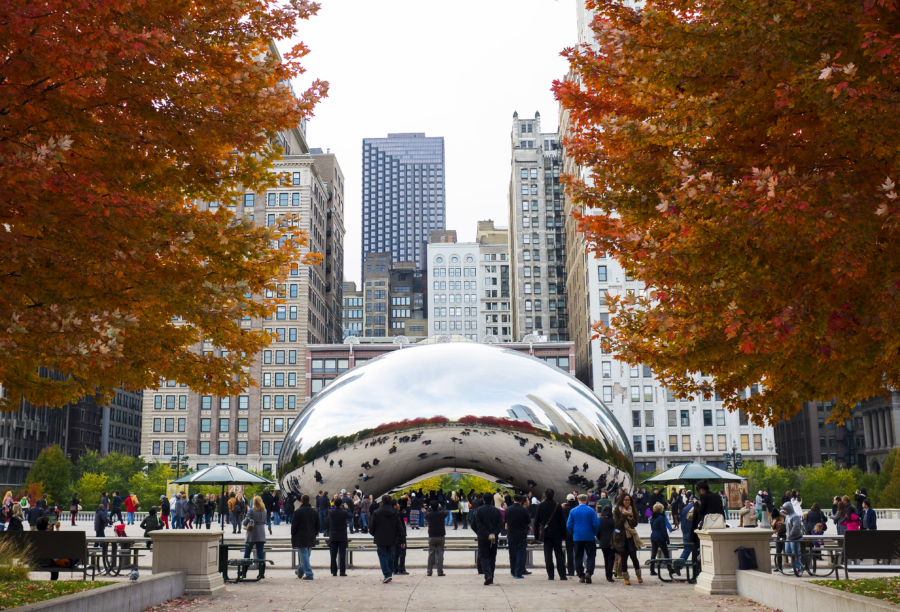
In terms of seasons, spring and fall offer pleasant weather for strolling through Millennium Park and enjoying the sculpture without the intense heat of summer or the biting cold of winter. However, even in winter, “The Bean” holds a special charm, often standing in stark, beautiful contrast to a blanket of snow, with fewer crowds. Summer brings lively crowds and numerous events in the park, adding to the vibrant atmosphere, though it can be very busy.
Accessibility and Visitor Tips
Millennium Park, including the area around Cloud Gate, is fully accessible, with wide, paved pathways suitable for strollers and wheelchairs. Public restrooms are available within the park. Given its central location, accessing “The Bean” is straightforward. Numerous parking garages are located beneath Millennium Park and nearby, though public transportation is highly recommended to avoid traffic and parking expenses in downtown Chicago. The Millennium Park Metra station and several CTA “L” lines (Orange, Green, Brown, Pink, Purple at Randolph/Wabash or Adams/Wabash; Blue and Red lines at various Loop stops) are within a short walking distance.
When visiting, allow ample time to not only admire “The Bean” from various angles and capture your reflections, but also to explore the other exceptional landmarks within Millennium Park and the surrounding architectural wonders of Chicago. Dress appropriately for the weather, as the park is an open space. Most importantly, embrace the opportunity to engage with this unique piece of public art that has become an enduring symbol of Chicago’s innovative spirit and architectural grandeur.
LifeOutOfTheBox is a participant in the Amazon Services LLC Associates Program, an affiliate advertising program designed to provide a means for sites to earn advertising fees by advertising and linking to Amazon.com. Amazon, the Amazon logo, AmazonSupply, and the AmazonSupply logo are trademarks of Amazon.com, Inc. or its affiliates. As an Amazon Associate we earn affiliate commissions from qualifying purchases.