
Understanding the time zone for Connecticut is a fundamental piece of information for anyone planning a visit, coordinating business, or simply staying connected with friends and family in this charming New England state. Connecticut observes Eastern Standard Time (EST) during the winter months and transitions to Eastern Daylight Time (EDT) for the warmer parts of the year. This adherence to the broader Eastern Time Zone means that Connecticut operates in sync with a significant portion of the eastern United States, impacting everything from flight schedules to dinner reservations.
Navigating the Eastern Time Zone
The Eastern Time Zone is one of the six standard time zones in use within the United States. It spans from the Atlantic coast westward, encompassing a vast array of states and populated areas. For Connecticut, this means its clock time is consistently aligned with major metropolitan hubs like New York City, Washington D.C., and Boston. This alignment simplifies logistical planning for travelers, as they don’t need to contend with multiple time zone shifts within the state or when interacting with other popular destinations in the region.

Eastern Standard Time (EST) vs. Eastern Daylight Time (EDT)
The distinction between EST and EDT is crucial for accurate timekeeping.
- Eastern Standard Time (EST) is observed from the first Sunday in November through the second Sunday in March. During these months, Connecticut is at UTC-5 (Coordinated Universal Time minus 5 hours). This is the “standard” time for the zone.
- Eastern Daylight Time (EDT) begins on the second Sunday in March and concludes on the first Sunday in November. During this period, clocks are advanced by one hour, placing Connecticut at UTC-4. This practice of “daylight saving time” is intended to make better use of daylight during the longer days of spring and summer.
The transitions between EST and EDT are standardized across the United States, with most areas within the Eastern Time Zone making the change simultaneously. This ensures minimal disruption to communication and scheduling across different states observing daylight saving time.
Implications for Travelers and Visitors
For those planning a trip to Connecticut, understanding its time zone is paramount for a smooth experience.
Booking Flights and Accommodations
When booking flights into Bradley International Airport (BDL) in Hartford or Tweed New Haven Airport (HVN), flight times will be listed in the local time of Connecticut. Similarly, when reserving a hotel room in Mystic, a suite at a resort in Greenwich, or a bed and breakfast in the Litchfield Hills, check-in and check-out times will correspond to the Eastern Time Zone. If you are traveling from a different time zone, be sure to adjust your arrival and departure plans accordingly. For instance, if you are traveling from the Pacific Time Zone (PT), Connecticut is three hours ahead.
Scheduling Activities and Dining
Connecticut offers a diverse range of attractions, from the historic shores of Mystic Seaport Museum to the intellectual atmosphere of Yale University in New Haven. Many of these attractions have specific operating hours, which will be advertised in the local Connecticut time. For example, an early morning whale watching tour departing from Mystic or an evening performance at the Goodspeed Opera House will be scheduled according to EST or EDT. Likewise, dining reservations at renowned restaurants along the coast or in bustling cities like Hartford will be set in the local time. It’s always wise to confirm opening and closing times, especially around seasonal changes or holidays.
Coordinating with Local Contacts
Whether you are visiting for business or leisure, coordinating with individuals or businesses in Connecticut requires awareness of the time zone. If you are setting up meetings with potential clients in Stamford, arranging a family reunion, or confirming details with a tour operator, clarifying the time zone is essential to avoid misunderstandings. For instance, if a business contact in Los Angeles (Pacific Time) asks to schedule a call, they will need to specify if they mean Connecticut time or their own local time.
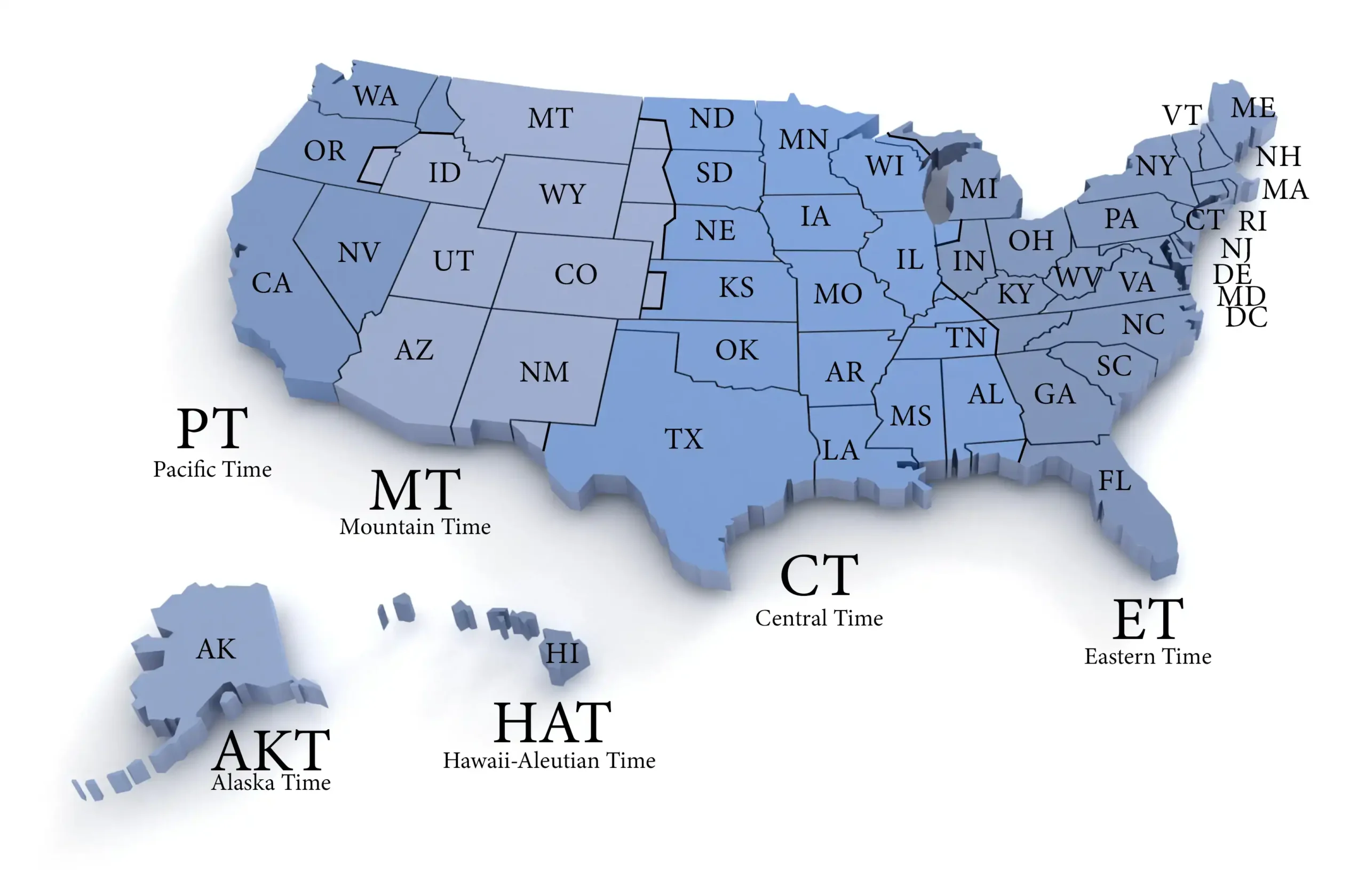
Understanding Time Zone Differences in the United States
The United States is a large country with multiple time zones, and understanding these differences is key for seamless travel and communication.
Adjacent Time Zones
- Atlantic Standard Time (AST): This zone, observed in Puerto Rico and the U.S. Virgin Islands, is one hour ahead of EST.
- Central Standard Time (CST): This zone, which includes states like Illinois and Texas, is one hour behind EST.
- Mountain Standard Time (MST): Found in states such as Colorado and Arizona, MST is two hours behind EST.
- Pacific Standard Time (PST): Covering states like California and Oregon, PST is three hours behind EST.
When traveling between these zones, it’s important to mentally adjust your watch or rely on your smartphone, which typically updates its time automatically based on your location. This awareness is particularly helpful for cross-country travel or when participating in events that span multiple time zones, such as national conferences or broadcast events.
Daylight Saving Time Across Zones
It’s worth noting that most states within the Central, Mountain, and Pacific time zones also observe Daylight Saving Time, typically on the same schedule as the Eastern Time Zone. However, there are exceptions, such as parts of Arizona and Hawaii, which do not observe DST. This adds another layer of complexity when calculating time differences, so always verify whether a particular location is observing standard time or daylight time.
Practical Tips for Time Zone Management
To ensure you are always on time and avoid any scheduling mishaps while in Connecticut or interacting with it, consider these practical tips:
Utilize Technology
- Smartphones and Smartwatches: Most modern smartphones and smartwatches automatically adjust to the local time zone based on GPS or network connectivity. Ensure this feature is enabled for effortless timekeeping.
- World Clock Apps: Utilize world clock applications on your devices to easily view the current time in Connecticut alongside your local time and other important time zones.
Double-Check Confirmations
- When booking flights, hotels, tours, or making reservations, always check the confirmation details carefully to verify the local time. Pay attention to whether the time listed is in EST or EDT, depending on the time of year.
- Before important calls or meetings with people in Connecticut, confirm the scheduled time and specify the time zone (e.g., “Let’s connect at 10 AM EST”).

Plan for Time Zone Transitions
- Be aware of the dates when Connecticut (and the rest of the Eastern Time Zone) transitions between EST and EDT. These dates are usually announced well in advance by official sources and can affect early morning or late-night schedules. For example, a 6 AM flight on the day of the transition might feel like a 5 AM flight the day before, or vice versa, depending on the direction of the change.
By understanding the nuances of the Eastern Time Zone and the practice of daylight saving time, you can navigate your travels, business dealings, and personal connections with Connecticut with confidence and precision. Whether you are exploring the historic charm of Old Saybrook or attending a conference in Hartford, knowing the time zone is a foundational element of a well-planned experience.
LifeOutOfTheBox is a participant in the Amazon Services LLC Associates Program, an affiliate advertising program designed to provide a means for sites to earn advertising fees by advertising and linking to Amazon.com. Amazon, the Amazon logo, AmazonSupply, and the AmazonSupply logo are trademarks of Amazon.com, Inc. or its affiliates. As an Amazon Associate we earn affiliate commissions from qualifying purchases.