
Florida, often affectionately known as the Sunshine State, conjures images of pristine beaches, lush wetlands, and vibrant cities. For many travelers, the allure of its warm climate and diverse attractions is undeniable. However, a less discussed but equally crucial aspect of Florida’s unique geography—its elevation above sea level—profoundly shapes its character, ecosystems, and the very travel experience it offers. Understanding Florida’s topographical reality is key to appreciating its natural wonders, navigating its challenges, and planning an informed trip to this captivating peninsula. Far from a land of towering peaks, Florida is predominantly a low-lying state, a geographical fact that defines much of its charm and vulnerability.
The Sunshine State’s Subtle Topography: A General Overview
Florida stands out on the map of the United States for its distinctive peninsular shape, cradled between the Atlantic Ocean to the east and the Gulf of Mexico to the west. But beneath its sunny exterior lies a landscape far flatter than most, a geological legacy that dictates everything from its climate to its aquatic abundance.
The Average Elevation: Lower Than You Think
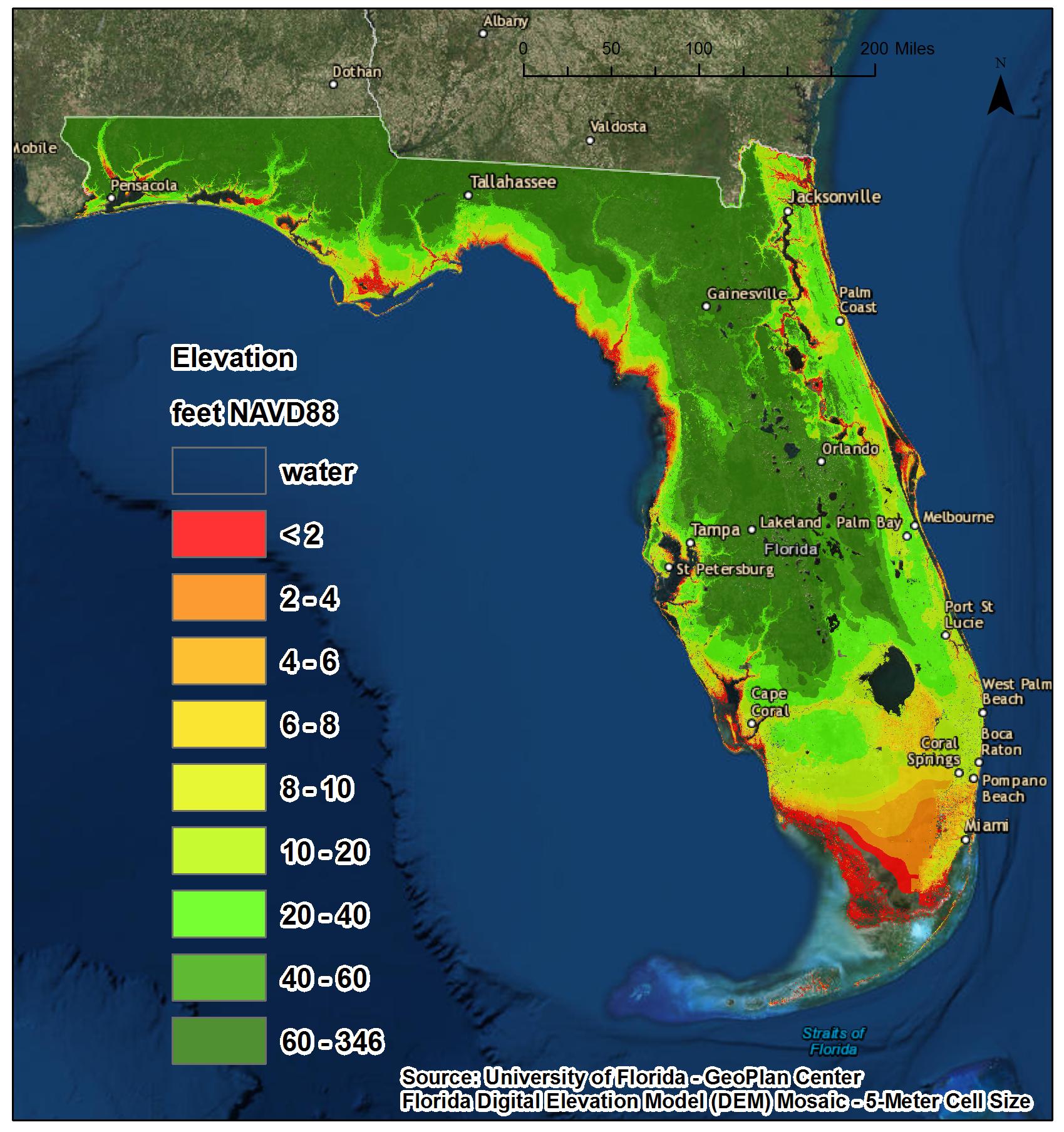
While not entirely flat, Florida’s average elevation is approximately just 100 feet (30 meters) above sea level. This makes it one of the lowest-lying states in the nation. The central spine of the peninsula, often referred to as the Florida Ridge, offers some of the highest points, but even these are gentle undulations rather than dramatic ascents. This general lack of elevation is a direct result of its geological formation—primarily limestone bedrock, created from marine sediments over millions of years, as ancient seas alternately rose and fell. The soft, porous nature of this limestone contributes to Florida’s extensive network of springs, sinkholes, and subterranean rivers, forming a unique hydrological system that is deeply intertwined with its surface landscape. For travelers, this means a consistent visual horizon, vast open skies, and an intimate connection to water, whether it’s the ocean, lakes, or marshlands.
The Peak of Florida: Britton Hill
To truly grasp Florida’s modest elevation, one must visit its highest natural point: Britton Hill. Located in northern Walton County, near the Alabama border, Britton Hill stands at a mere 345 feet (105 meters) above sea level. This makes it the lowest high point of any state in the United States. Far from a rugged mountain trek, reaching Britton Hill involves a short, gentle stroll to a small monument marking the summit. For “high-pointers” – enthusiasts who aim to visit the highest natural point in every state – Britton Hill offers an easy and often amusing accomplishment. While it may not offer panoramic vistas typical of mountainous regions, it provides a fascinating contrast to the state’s predominantly flat and coastal scenery, reminding visitors that even Florida has its subtle peaks.
Embracing the Lowlands: Coastal and Inland Wetlands
The true essence of Florida’s low elevation is most apparent in its extensive coastal areas and vast inland wetlands. Miles of barrier islands, estuaries, and marshlands define the state’s perimeter, while the interior is dominated by shallow lakes, cypress swamps, and the renowned Everglades. The Everglades, often called the “River of Grass,” is a prime example of a low-lying ecosystem where water dictates the terrain, slowly flowing from Lake Okeechobee southwards to Florida Bay. Much of South Florida, including metropolitan areas like Miami and Fort Lauderdale, lies only a few feet above sea level, making these vibrant urban centers intimately connected to, and vulnerable to, the surrounding waters. This low-lying nature creates unique habitats for diverse wildlife, from alligators and panthers to manatees and countless bird species, offering unparalleled opportunities for nature and wildlife tourism.
Navigating Florida’s Elevation: Implications for Travelers
Florida’s distinctive elevation profile is not merely a geological curiosity; it is a fundamental determinant of the travel experience, influencing everything from climate and natural attractions to the resilience of its infrastructure.
Climate and Weather Patterns
The low elevation, combined with its subtropical to tropical latitude, significantly shapes Florida’s climate. Summers are typically hot and humid, characterized by frequent afternoon thunderstorms. This proximity to the ocean and low elevation contributes to high humidity levels, which can make the heat feel even more intense. More significantly, Florida’s low profile makes it highly susceptible to the impacts of tropical storms and hurricanes. Storm surge—an abnormal rise of water generated by a storm, over and above the predicted astronomical tide—poses a substantial threat to coastal communities. Travelers visiting during hurricane season (June 1st to November 30th) must remain vigilant, monitoring weather patterns and heeding local advisories to ensure safety. Understanding these climatic realities is crucial for travelers to pack appropriately and plan activities, emphasizing indoor options or water-based excursions during peak heat and rain.
Unique Ecosystems and Attractions
Florida’s low and flat topography is the canvas upon which its most iconic ecosystems and attractions are painted. The extensive coastline, featuring world-famous white-sand beaches like those on the Emerald Coast and the barrier islands of the Gulf Coast, are a direct result of its low elevation allowing the ocean to meet the land gently. Inland, the vast wetlands, from the Everglades National Park to the smaller sloughs and marshes, thrive due to the minimal elevation changes that permit water to linger and create unique habitats. These areas offer unparalleled wildlife viewing, airboat tours, kayaking, and fishing experiences. The underlying limestone bedrock, influenced by the water table, also gives rise to thousands of freshwater springs, such as those found in Ocala National Forest, providing crystal-clear waters for swimming, snorkeling, and diving. Travelers seeking outdoor adventures will find Florida’s landscape, shaped by its low elevation, to be a captivating playground.
Infrastructure and Development

The challenge of building and maintaining infrastructure in a low-lying, water-rich environment is immense. Cities like Miami, with an average elevation of just six feet above sea level, have implemented extensive drainage systems, canals, and pumping stations to manage rainwater and prevent flood risk. Roads, bridges, and buildings are constructed with these hydrological realities in mind, often requiring specialized engineering techniques. For travelers, this means a unique urban landscape where waterways often parallel roadways, and some areas may experience temporary flooding during heavy rain events. Coastal development, in particular, faces ongoing battles with erosion and the encroaching sea, necessitating costly protective measures. While these challenges are significant, they also highlight the ingenuity of Floridans in adapting to their environment, creating a modern state that harmoniously, yet sometimes precariously, coexists with its natural surroundings.
Exploring Florida’s Diverse Elevations: Destination Insights
While broadly low, Florida’s elevation varies subtly across its regions, impacting the character and attractions of different destinations.
Coastal Gems: Miami, Fort Lauderdale, and the Keys
South Florida is arguably the state’s most low-lying and vulnerable region. Cities like Miami and Fort Lauderdale are vibrant hubs of culture, nightlife, and beautiful beaches, yet they face significant challenges from storm surge and rising sea levels. Travelers to these areas will experience a dynamic urban environment built on a very flat, porous foundation. Further south, the Florida Keys are a string of coral and limestone islands, with Key West often cited as being just a few feet above sea level. This extreme proximity to the ocean defines the Keys’ laid-back, maritime culture, offering world-class fishing, diving, and sailing. Visitors here are immersed in an environment where the sea is ever-present, demanding respect for its power, especially during hurricane season.
Central Florida: Orlando and the Ridge
Moving inland, Central Florida presents a slightly different picture. Home to major theme parks like Walt Disney World Resort and Universal Orlando Resort, this region benefits from being situated on the Florida Ridge, which provides a relatively higher and more stable elevation. Orlando itself sits around 80-100 feet (24-30 meters) above sea level, offering a degree of natural protection from coastal storm surge. This slightly higher ground supports a landscape dotted with numerous lakes, citrus groves, and drier pine flatwoods, providing a different flavor of Florida experience compared to the immediate coast or the Everglades. The stability afforded by this higher elevation was a significant factor in its development as a global tourism mecca.
The Panhandle’s Varied Terrain: From Beaches to Hills
The Florida Panhandle, the northwestern part of the state, exhibits the most varied elevation. While its southern edge boasts the stunning white-sand beaches of the Emerald Coast, its interior gradually rises, featuring rolling hills and forests that feel distinct from the rest of the state. This is where Britton Hill, the state’s highest point, is found. Cities like Tallahassee, the state capital, are located on higher ground, approximately 200 feet (61 meters) above sea level. This slightly elevated terrain offers a more traditional Southern landscape with different agricultural and forestry development patterns, and somewhat less vulnerability to the immediate coastal impacts. For travelers, the Panhandle offers a blend of pristine coastal beauty and a more undulating, forested interior, providing a richer diversity of outdoor experiences.
Planning Your Trip: Elevation-Conscious Travel Tips
Understanding Florida’s low elevation is not about deterring travel but rather enriching it with informed awareness. It allows for a deeper appreciation of the state’s natural beauty and the resilience of its communities.
Staying Safe: Understanding Flood Risk and Hurricane Preparedness
Given Florida’s low elevation, especially in coastal zones, awareness of flood risk and hurricane preparedness is paramount. Travelers should always check weather patterns and forecasts, particularly during the hurricane season. Familiarize yourself with local emergency management resources and understand potential evacuation routes if visiting coastal areas. Travel insurance that covers weather-related disruptions can also provide peace of mind. While the vast majority of visits occur without incident, being prepared ensures a safer and less stressful experience.
Best Times to Visit for Optimal Experience
To avoid the peak of hurricane season and the intense heat and humidity that accompanies Florida’s low-elevation summers, the shoulder seasons of spring (March to May) and fall (October to November) are often ideal. During these months, the weather patterns are typically more temperate, the risk of hurricanes is lower, and the crowds are generally thinner. This allows travelers to fully enjoy the outdoor attractions without the oppressive heat or the constant concern of stormy weather patterns.

Embracing the Flatness: Enjoying Florida’s Unique Landscape
Ultimately, Florida’s low elevation is not a drawback but a defining characteristic that fosters its distinctive charm. It is the reason for its world-famous beaches, its vibrant wetland ecosystems teeming with wildlife, and its endless opportunities for water-based activities. Instead of searching for hills and mountains, travelers should embrace the flat horizons, the expansive skies, and the intimate connection to water that this unique geography provides. From paddling through mangrove tunnels to lounging on sun-drenched shores, Florida’s low elevation creates an environment unlike any other, promising unforgettable travel experiences for those who understand and appreciate its subtle grandeur.
In conclusion, while Florida may not reach great heights, its unique elevation above sea level is precisely what makes it such a captivating and sought-after travel destination. It shapes its stunning natural landscape, influences its climate, and presents both challenges and unparalleled opportunities for visitors to explore a truly one-of-a-kind part of the world.
LifeOutOfTheBox is a participant in the Amazon Services LLC Associates Program, an affiliate advertising program designed to provide a means for sites to earn advertising fees by advertising and linking to Amazon.com. Amazon, the Amazon logo, AmazonSupply, and the AmazonSupply logo are trademarks of Amazon.com, Inc. or its affiliates. As an Amazon Associate we earn affiliate commissions from qualifying purchases.