
Florida, renowned for its sun-kissed beaches, vibrant cities, and world-class attractions, draws millions of visitors each year. While often associated with leisure and entertainment, it is also a state with comprehensive legal frameworks designed to ensure public safety and well-being for both its residents and the myriad of guests it hosts. Among these crucial legal provisions is the Baker Act, a statute that addresses mental health crises. Understanding the Baker Act is not merely a matter for legal professionals or healthcare providers; it’s an essential piece of local knowledge that contributes to a broader appreciation of how Florida safeguards its communities. For anyone residing in or traveling through the state, an awareness of this law can offer valuable insight into the resources and protocols in place for mental health emergencies, reinforcing the state’s commitment to providing a safe and supportive environment for all.

Understanding the Baker Act: A Key Aspect of Public Safety in Florida
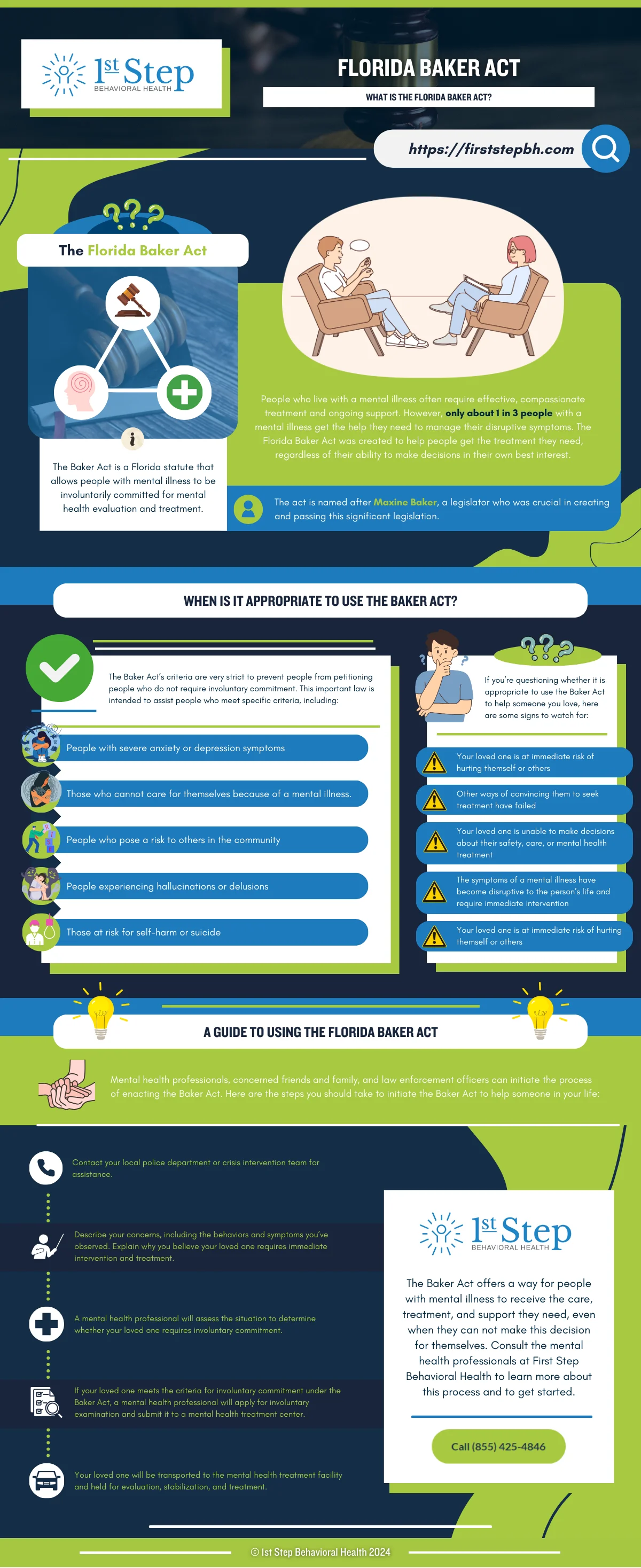
The Baker Act, officially known as the Florida Mental Health Act (F.S. Chapter 394), is a pivotal piece of legislation enacted to provide emergency mental health services. It allows for involuntary examination and, if necessary, short-term involuntary placement of individuals who are deemed a danger to themselves or others due to mental illness, or who are severely impaired and unable to care for themselves. The law is named after Maxine Baker, a former state representative who championed its passage in 1971. Its existence reflects a proactive approach to mental health crises, aiming to intervene compassionately and effectively before situations escalate, thereby contributing to the overall public safety and peace of mind in a state that prides itself on welcoming all.
Origins and Purpose of the Law
Prior to the Baker Act, individuals experiencing severe mental health crises often faced limited options for intervention, sometimes leading to tragic outcomes or inappropriate incarceration. The law was a landmark reform, shifting the paradigm from punitive measures to a focus on treatment and protection. Its core purpose is twofold: to protect individuals who, due to mental illness, are incapable of making rational decisions about their own well-being or pose an immediate threat, and to protect the community from potential harm. This dual objective is especially pertinent in a state like Florida, where diverse populations and a constant flow of visitors necessitate robust public safety mechanisms. The Baker Act ensures that a structured, legal pathway exists to address mental health emergencies with the seriousness and sensitivity they demand, providing a safety net that benefits everyone within the state’s borders.
When and How the Baker Act is Initiated
The initiation of a Baker Act is a serious matter, governed by strict criteria and procedures designed to prevent misuse while ensuring timely intervention. It is not a tool for casual referral but a legal mechanism reserved for specific, urgent circumstances related to mental health. Understanding these triggers is crucial for anyone interacting with the mental healthcare or legal systems in Florida, whether as a resident, a visitor, or someone concerned about another’s welfare.
Criteria for Involuntary Examination
For an individual to be subjected to an involuntary examination under the Baker Act, three stringent criteria must be met, all stemming from recent observable behavior:
- Reason to Believe Mental Illness Exists: There must be evidence, based on the individual’s recent conduct, to suggest they have a mental illness. This is not simply a diagnosis but an observable manifestation impacting their behavior.
- Refusal or Inability to Seek Voluntary Help: Due to their mental illness, the person is unwilling to volunteer for a mental health examination or is unable to determine for themselves that such an examination is necessary. This criterion underscores the involuntary nature of the act, applied only when voluntary options are not viable.
- Threat of Harm: The most critical criterion is that, without care or treatment, the person is likely to cause serious bodily harm to themselves or others in the near future, as evidenced by recent behavior. Alternatively, they may be severely impaired or neglected due to their mental illness, such that they are unable to care for themselves and there is a substantial likelihood that without treatment, they will suffer from neglect or refuse to care for themselves, and such neglect or refusal poses a real and present threat of substantial harm to their well-being. This can include severe self-neglect, inability to provide for basic needs, or clear threats of violence.
Who Can Initiate a Baker Act?
The power to initiate a Baker Act is intentionally limited to specific authorized entities to ensure responsibility and oversight:
- Law Enforcement Officers: Police officers, sheriff’s deputies, and other authorized law enforcement personnel can initiate a Baker Act if they observe an individual meeting the criteria. They often act as the first responders in crisis situations, capable of making an immediate assessment based on observable behavior.
- Physicians and Clinical Psychologists: Licensed medical doctors or clinical psychologists can execute a certificate for involuntary examination if they have examined the individual and found them to meet the criteria. Their professional judgment is crucial in assessing the mental health aspect.
- Judges: A judge may issue an ex parte order for involuntary examination based on a sworn petition filed by an interested party. This judicial involvement provides a layer of legal review, especially when there is no immediate crisis but concerns are significant.
It is important to note that concerned family members, friends, or even bystanders cannot directly “Baker Act” someone. Instead, they must contact law enforcement or mental health professionals, providing information and observations, who then determine if the criteria for involuntary examination are met. This structured initiation process serves to protect individual rights while ensuring that legitimate concerns for safety and well-being are addressed swiftly and appropriately across Florida’s diverse communities, including its bustling tourist zones.
The Process of a Baker Act: From Initiation to Resolution
Once initiated, the Baker Act follows a defined legal and clinical pathway. This structured process is designed to provide immediate care, assess the individual’s mental state, and determine the most appropriate next steps, all while safeguarding the individual’s rights. For residents and visitors alike, understanding this sequence helps demystify a potentially distressing situation and highlights the systematic approach Florida takes to mental health emergencies. It underscores the fact that the intent is always to lead to a resolution that promotes health and safety, rather than simply detaining an individual.
The Initial Examination Period (72 Hours)
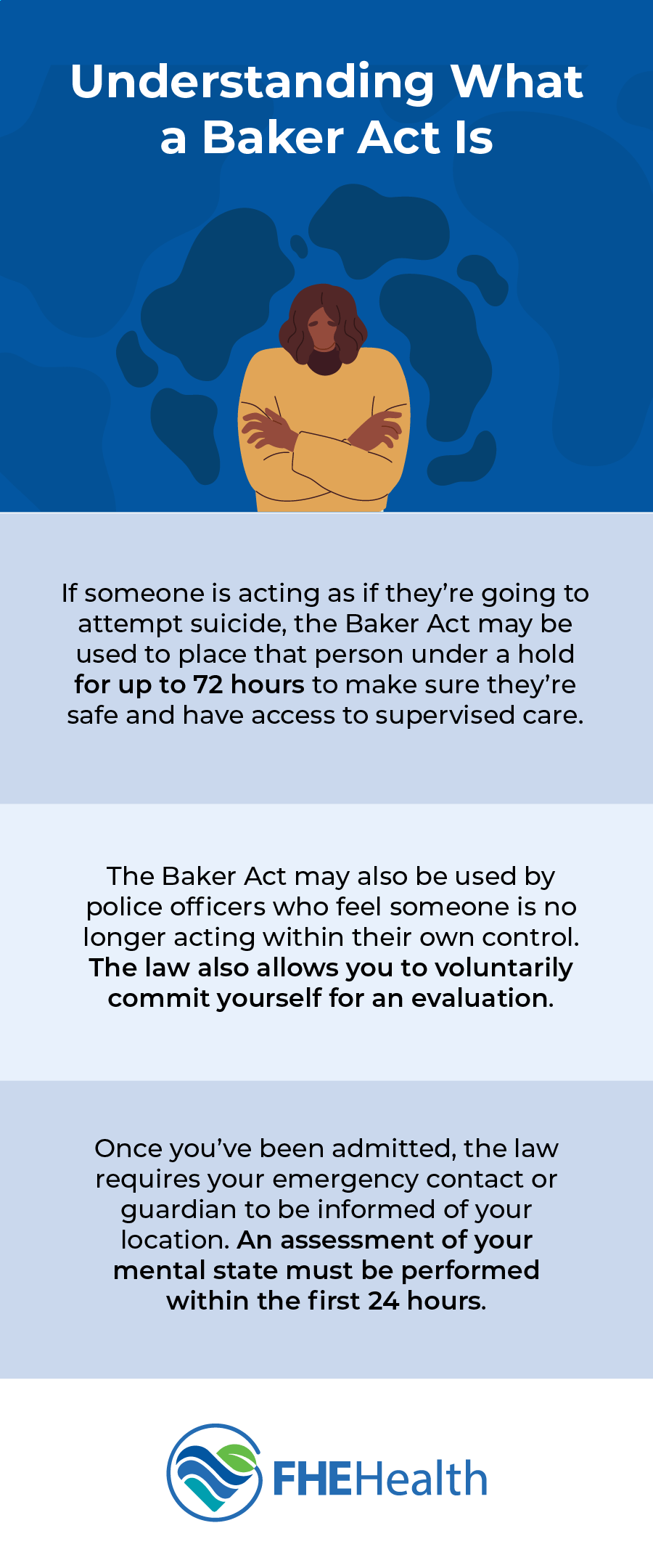
Upon being taken into custody under a Baker Act, the individual is transported to a designated Baker Act receiving facility. These facilities are typically hospitals or specialized mental health centers equipped to provide immediate psychiatric evaluation and crisis stabilization. The law mandates that the individual undergoes an examination by a psychiatrist or other designated professional within 72 hours (excluding weekends and legal holidays) of arrival. During this critical period, the focus is on:
- Immediate Safety: Ensuring the individual is safe from self-harm or harming others, and providing any necessary medical attention for co-occurring physical issues.
- Comprehensive Evaluation: A thorough psychiatric evaluation to assess the individual’s mental state, determine the presence and severity of mental illness, and evaluate whether the criteria for involuntary commitment continue to be met.
- Stabilization: Providing medication or therapeutic interventions to stabilize acute symptoms if necessary.
This 72-hour window is crucial for gathering information, making an informed clinical decision, and allowing the individual time to de-escalate and potentially engage in voluntary treatment. It represents Florida’s commitment to a rapid, expert response to mental health crises.
Rights of the Individual Under the Baker Act
Even when an individual is involuntarily examined or placed, their rights are meticulously protected under Florida law. These protections are a cornerstone of the Baker Act, ensuring that dignity and legal safeguards are maintained throughout the process. Key rights include:
- Right to Information: Individuals must be informed of the reason for their examination, their rights under the Baker Act, and the procedures that will follow.
- Right to Due Process: This includes the right to a hearing before a judge if involuntary placement is sought, and the right to legal representation during such proceedings.
- Right to Communication: The individual has the right to communicate with attorneys, family members, or other significant contacts, unless a mental health professional determines it would be harmful.
- Right to Treatment: Individuals have the right to receive appropriate and humane treatment, including the least restrictive form of treatment necessary.
- Right to Express Treatment Preferences: While under involuntary examination, individuals can express their preferences for treatment, which should be considered where clinically appropriate.
These rights are not just theoretical; facilities are legally obligated to uphold them, and violations can have serious consequences. This emphasis on rights ensures that the Baker Act is utilized as a protective measure, not a punitive one, maintaining a high standard of care and legal accountability across Florida for all individuals, including its many visitors.
Potential Outcomes and Paths Forward
At the conclusion of the 72-hour examination period, a clinical decision is made regarding the individual’s mental health status and the next steps. There are several potential outcomes, each dictating a different path forward:
Voluntary Treatment
If, after the initial examination, the individual is deemed capable of understanding their situation and agrees to receive mental health treatment, they can opt for voluntary inpatient or outpatient care. This is often the preferred outcome, as it empowers the individual to take an active role in their recovery. The Baker Act essentially serves as an entryway to getting the necessary initial assessment that leads to this voluntary engagement.
Involuntary Placement
If the individual still meets the criteria for involuntary commitment (i.e., continues to pose a threat or is severely impaired, and is unwilling or unable to consent to voluntary treatment), the receiving facility may petition a court for an order for involuntary inpatient placement. A judge then reviews the clinical recommendations and evidence. If the judge agrees, an order for involuntary placement is issued, typically for up to 60 or 90 days, with regular reviews. This legal process ensures that continued involuntary care is justified and monitored by the judiciary.
Release
If, after the examination, the individual no longer meets the criteria for involuntary commitment, they must be released. This means they are no longer deemed a danger to themselves or others and are capable of caring for themselves. The facility is legally obligated to facilitate their discharge, often with referrals to outpatient services or community support if needed. The aim is to ensure that individuals are not held longer than absolutely necessary under the involuntary provisions of the law, reflecting a balanced approach to intervention and individual liberty. This carefully managed resolution process reinforces Florida’s commitment to rehabilitative and rights-respecting mental health care, making the state a safer place for residents and tourists to navigate.
Legal and Ethical Considerations: Safeguarding Rights While Ensuring Well-being
The Baker Act operates at the delicate intersection of public safety, individual liberty, and mental health care. Balancing these often-competing interests requires careful legal and ethical consideration. Florida’s framework for the Baker Act is designed with robust safeguards to ensure that involuntary intervention is a last resort, applied only when truly necessary, and always with respect for the individual’s rights. This rigorous approach maintains confidence in the system, which is vital for all who live in or visit the state.
Protecting Individual Liberties
A primary ethical concern with any involuntary commitment law is the potential for infringing on an individual’s fundamental liberties. The Baker Act addresses this through several mechanisms:
- Strict Criteria: As previously discussed, the criteria for initiation are specific and high, demanding clear evidence of mental illness and imminent danger or severe self-neglect. This prevents arbitrary detentions.
- Time Limits: The 72-hour examination period is finite, ensuring that individuals are not held indefinitely without proper justification and review.
- Due Process: The right to a court hearing for involuntary placement and the right to legal counsel are critical components of due process, allowing individuals to challenge the actions taken against them.
- Least Restrictive Environment: The law emphasizes that treatment should be provided in the least restrictive environment clinically appropriate, avoiding unnecessary confinement.
These protections reflect a deep commitment to human rights, ensuring that even in crisis, individuals are treated with dignity and their legal standing is upheld. Such protections are paramount in a state that prides itself on freedom and opportunity.
Role of the Courts and Legal Representation
The judiciary plays an indispensable role in the Baker Act process, acting as a crucial check and balance. Judges are responsible for reviewing petitions for involuntary placement, ensuring that clinical recommendations are supported by sufficient evidence, and that all legal procedures have been followed correctly. This judicial oversight provides an essential layer of protection against potential overreach or errors.
Furthermore, individuals undergoing an involuntary placement petition have the right to legal representation. This can be through a private attorney or a public defender appointed by the court. The attorney’s role is to advocate for the individual, ensure their rights are respected, question evidence presented by the facility, and argue against involuntary placement if appropriate. This legal advocacy is vital in ensuring fairness and equity, upholding the principles of justice for all within Florida.
The Importance of Professional Assessment
At the heart of the Baker Act’s functionality is the reliance on professional clinical assessment. Psychiatrists, psychologists, and other qualified mental health professionals are tasked with conducting thorough evaluations, making diagnostic determinations, and recommending appropriate treatment plans. Their expertise is paramount in discerning whether an individual truly meets the legal criteria for involuntary intervention.
These professionals adhere to ethical guidelines and clinical best practices, ensuring that decisions are based on objective evidence and a comprehensive understanding of the individual’s mental state. This reliance on expert judgment minimizes the risk of misdiagnosis or inappropriate use of the law, affirming that the Baker Act is primarily a tool for clinical intervention guided by medical and psychological science. This commitment to professional standards ensures that mental health crises in Florida are handled with the highest degree of competence and care.
The Baker Act’s Impact on the Community and Visitors to Florida
The existence and operation of the Baker Act have a profound, albeit often unseen, impact on the fabric of Florida life. By providing a structured and legally sound mechanism for addressing acute mental health crises, it contributes significantly to the overall safety and well-being of the community. For the millions of residents and tourists who flock to Florida each year, this means a more secure environment, knowing that severe mental health emergencies have a legal pathway for resolution. It reinforces the state’s dedication to public welfare, extending beyond typical crime prevention to encompass mental health support as a cornerstone of a safe and enjoyable experience for everyone.
Ensuring a Safe Environment for All
The primary benefit of the Baker Act, from a community perspective, is its role in preventing harm. By allowing for timely intervention when individuals pose a danger due to mental illness, it helps to avert tragedies that could otherwise affect individuals, families, and the wider public. This proactive approach to mental health crises contributes directly to the sense of security felt by residents and visitors alike. Whether one is enjoying the theme parks of Orlando, the beaches of Miami, or the tranquility of its natural landscapes, the presence of such a law provides a crucial, underlying layer of public safety. It ensures that critical situations are managed by professionals, allowing the broader community to thrive without undue risk from untreated mental health conditions.
Resources and Support for Mental Health Concerns
Beyond its role in crisis intervention, the Baker Act also serves to highlight the broader network of mental health resources available in Florida. While the Act itself is for involuntary examination, its implementation often brings individuals into contact with services that can lead to long-term voluntary treatment and support. For tourists, encountering a mental health crisis while away from home can be particularly disorienting. Knowing that Florida has a clear, established legal and clinical protocol for such emergencies, along with numerous facilities and professionals, can provide a measure of reassurance.
Furthermore, awareness of the Baker Act can empower individuals – residents and visitors – to understand when and how to seek help for themselves or others. Information about mental health hotlines, crisis intervention teams, and local mental health facilities is readily available across the state. These resources, coupled with the framework of the Baker Act, demonstrate Florida’s commitment to a holistic approach to mental well-being. Understanding such local legal nuances is an important “tip” for anyone navigating the state, ensuring a more informed and secure experience in the Sunshine State, where hospitality and safety go hand in hand.
LifeOutOfTheBox is a participant in the Amazon Services LLC Associates Program, an affiliate advertising program designed to provide a means for sites to earn advertising fees by advertising and linking to Amazon.com. Amazon, the Amazon logo, AmazonSupply, and the AmazonSupply logo are trademarks of Amazon.com, Inc. or its affiliates. As an Amazon Associate we earn affiliate commissions from qualifying purchases.