
The New York Strip steak, a cut celebrated for its balance of tenderness and robust beefy flavor, is a quintessential indulgence for any culinary enthusiast. While often associated with fine dining establishments, mastering its preparation on a stovetop is an accessible and rewarding skill, bringing a touch of gourmet flair to your own kitchen. This guide delves into the intricacies of cooking a perfect New York Strip on the stove, transforming a premium cut of beef into a succulent, flavorful masterpiece that rivals any restaurant. We’ll explore the essential steps, from selecting the ideal steak to achieving that coveted, crusty sear and juicy interior.
I. Selecting and Preparing Your New York Strip
The foundation of a magnificent steak lies in its quality. Choosing the right cut and preparing it properly sets the stage for stovetop success.
A. The Art of Choosing the Perfect Cut
When selecting a New York Strip, also known as a Kansas City Strip or Top Loin, several factors contribute to its potential for excellence. Look for steaks that are at least 1 to 1.5 inches thick. This thickness is crucial for achieving a beautiful sear on the exterior while ensuring the interior remains tender and juicy. The marbling – the fine flecks of fat distributed throughout the meat – is another critical indicator of flavor and tenderness. A well-marbled steak will render fat during cooking, basting the meat from within and contributing to a richer taste. Aim for a vibrant, cherry-red color, which signifies freshness. Avoid steaks that appear dull or have a greyish hue. The best New York Strip steaks are typically sourced from well-regarded butchers or premium grocery stores, often labeled as USDA Prime or Choice. For those in larger cities like New York City or Chicago, exploring renowned butcher shops can offer unparalleled quality.
B. The Crucial Step: Bringing to Room Temperature
One of the most frequently overlooked yet vital steps in cooking a steak is allowing it to come to room temperature. Remove your New York Strip from its packaging and place it on a clean plate or wire rack about 30 to 60 minutes before you plan to cook it, depending on the thickness of the steak and the ambient temperature of your kitchen. This allows the steak to cook more evenly. A cold steak, when placed in a hot pan, will have a significantly cooler center than its exterior, leading to uneven cooking. Bringing it to room temperature ensures that the heat penetrates more uniformly, resulting in a perfectly cooked steak from edge to edge.
C. Seasoning for Maximum Flavor
Generosity with seasoning is key to unlocking the inherent flavors of a New York Strip. While simple salt and pepper are classic and highly effective, the timing of your seasoning can make a difference. For the most impactful flavor, season the steak liberally on all sides with coarse sea salt or kosher salt and freshly cracked black pepper just before it hits the pan. The salt helps to draw out moisture from the surface, which aids in creating a superior crust. Some chefs advocate for salting the steak an hour or more in advance, allowing the salt to penetrate deeper into the meat, but for a stovetop cook, seasoning immediately before cooking is a reliable method for achieving excellent results. You can also experiment with other dry rubs or spices at this stage, but remember that the quality of the New York Strip itself should be the star.
II. The Stovetop Searing Technique
Achieving a perfect sear on your New York Strip is an art form, creating a delicious crust that locks in juices and adds a delightful textural contrast. This is where the magic happens on the stovetop.
A. Choosing the Right Pan and Heat
The choice of pan is paramount. A heavy-bottomed skillet, such as cast iron or stainless steel, is ideal. These materials distribute heat evenly and retain it exceptionally well, crucial for a consistent sear. Avoid non-stick pans, as they generally don’t get hot enough to create the desired crust and can be damaged by the high temperatures required.
Preheating the pan is non-negotiable. Place your chosen skillet over medium-high to high heat and allow it to get smoking hot. This might take several minutes. A properly preheated pan is essential for achieving an immediate sear, preventing the steak from steaming rather than browning.
B. The Fat Factor: Choosing Your Cooking Medium
To facilitate the sear and add flavor, a high smoke-point fat is necessary. Grapeseed oil, avocado oil, or canola oil are excellent choices. You can also use clarified butter (ghee), which has a higher smoke point than regular butter. Add 1-2 tablespoons of your chosen fat to the preheated pan. It should shimmer and begin to smoke slightly when the steak is ready to be added.
C. The Searing Process: Creating the Perfect Crust
Carefully place the seasoned New York Strip into the hot, oiled pan. You should hear a vigorous sizzle immediately – a good sign that your pan is hot enough. Resist the urge to move the steak for the first 2-3 minutes. This allows a deep, flavorful crust to form. After this initial searing period, use tongs to flip the steak and sear the other side for another 2-3 minutes.

For thicker steaks (1.5 inches or more), you may need to sear the edges as well. This is done by holding the steak on its side with the tongs and pressing it against the hot pan to brown the fat cap and sides. Continue searing and flipping the steak every 1-2 minutes to ensure even cooking and prevent burning.
III. Achieving Your Desired Doneness
Once a beautiful crust has been established on both sides of your New York Strip, the focus shifts to cooking the interior to your preferred level of doneness. This is where precision and temperature become critical.
A. Understanding Internal Temperatures
The most reliable way to achieve your desired doneness is by using an instant-read meat thermometer. Insert the thermometer into the thickest part of the steak, avoiding any bone or fat pockets. Here’s a general guide for New York Strip doneness:
- Rare: 120-125°F (49-52°C)
- Medium-Rare: 130-135°F (54-57°C) – This is often considered the ideal for a New York Strip.
- Medium: 135-140°F (57-60°C)
- Medium-Well: 140-145°F (60-63°C)
- Well-Done: 150°F+ (65°C+)
Remember that the steak’s internal temperature will continue to rise by 5-10°F (3-5°C) as it rests, so pull the steak from the heat a few degrees below your target temperature.
B. The Role of Basting (Optional but Recommended)
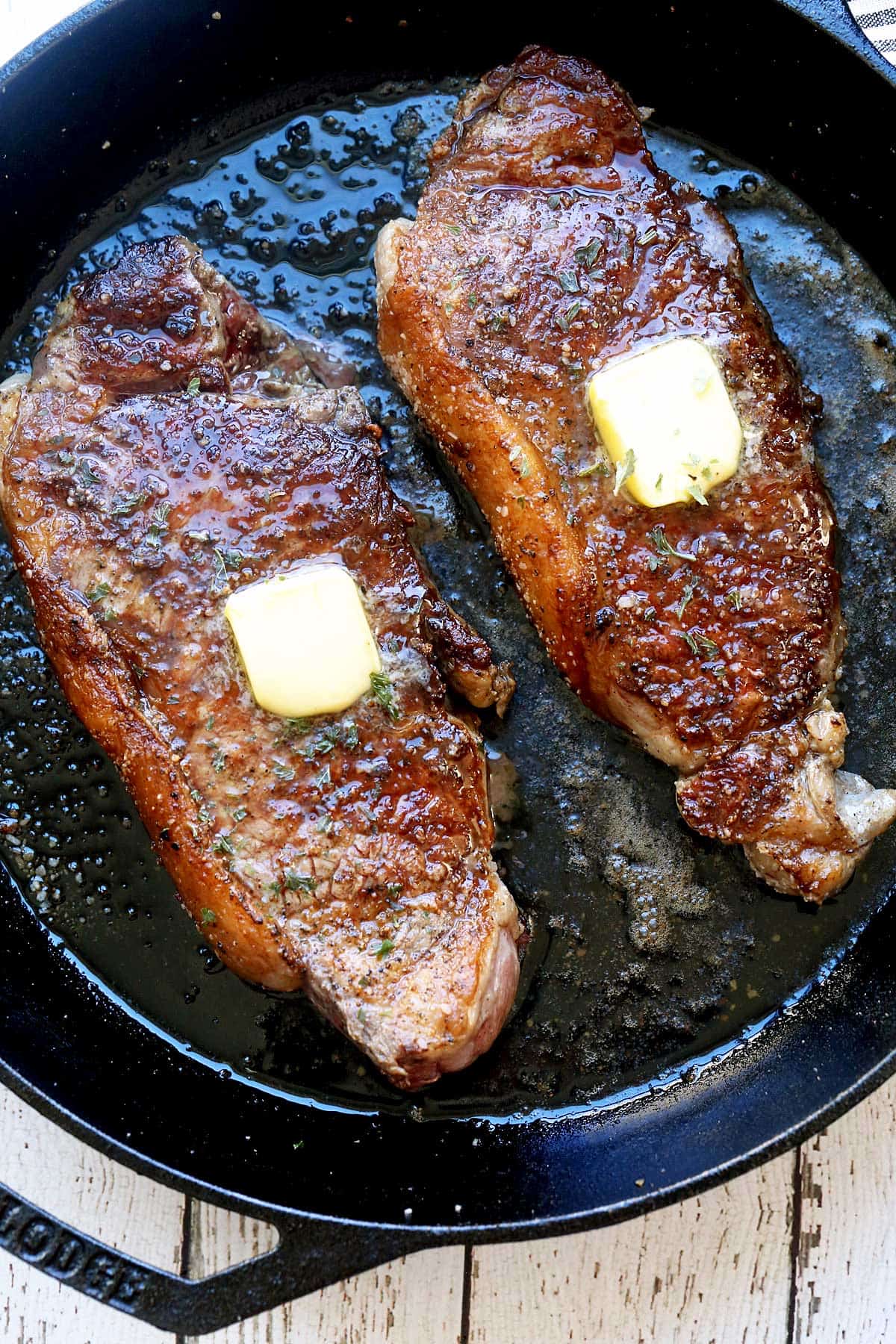
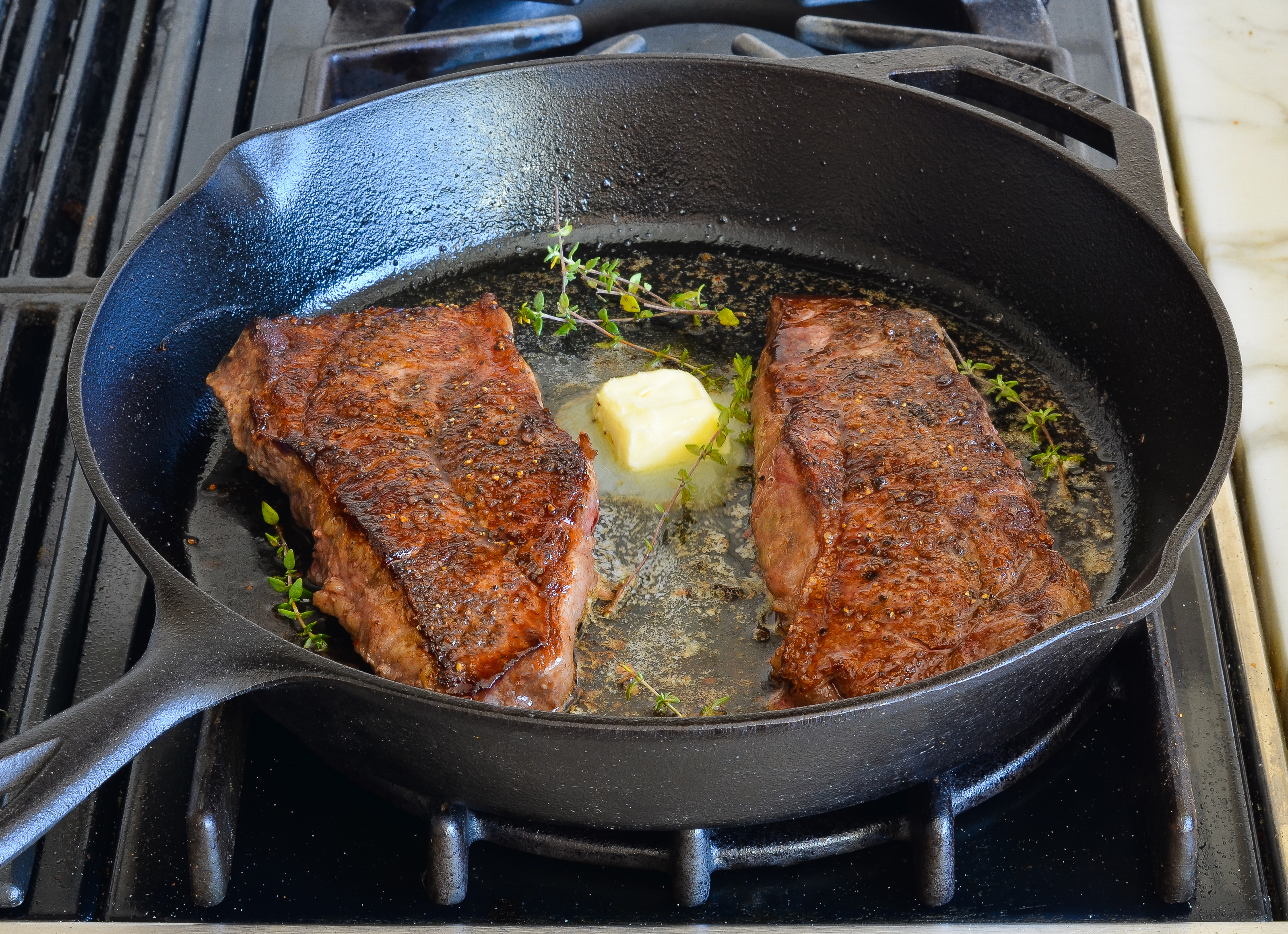
For an extra layer of flavor and moisture, consider basting your New York Strip during the final stages of cooking. Once you’ve achieved your desired sear and are monitoring the internal temperature, you can add 1-2 tablespoons of unsalted butter, a crushed clove of garlic, and a sprig of fresh herbs (like rosemary or thyme) to the pan. As the butter melts, tilt the pan and use a spoon to continuously ladle the melted butter and aromatics over the steak. This process, known as basting, infuses the steak with rich flavor and helps to keep it moist. Continue basting until the steak reaches your target internal temperature.
C. The Crucial Rest: Allowing Juices to Redistribute
Perhaps as important as the searing and cooking itself is the resting period. Once your New York Strip has reached its optimal internal temperature, remove it from the skillet and place it on a clean cutting board or a warm plate. Tent it loosely with foil. Allow the steak to rest for at least 5 to 10 minutes. During cooking, the muscle fibers tighten, forcing the juices to the center. Resting allows these juices to redistribute throughout the steak, resulting in a more tender and flavorful bite. Skipping this step will cause all those precious juices to run out onto the cutting board, leaving you with a dry steak.
IV. Serving and Enjoying Your Masterpiece
The culmination of your efforts is the moment you slice into your perfectly cooked New York Strip. Presentation and simple accompaniments can elevate the dining experience.
A. The Perfect Slice: Against the Grain
When it’s time to serve, use a sharp knife to slice the New York Strip against the grain. The grain refers to the direction in which the muscle fibers are running. Identifying the grain and slicing perpendicular to it will break down these fibers, making the steak exceptionally tender and easy to chew. Look for the lines of the muscle and slice across them.
B. Pairing with Simple Sides
A New York Strip is a robust dish that pairs beautifully with a variety of classic accompaniments. Simple, high-quality sides complement, rather than overpower, the steak’s flavor. Consider a classic baked potato with all the fixings, some sautéed asparagus or green beans, or a fresh, crisp salad. A dollop of horseradish cream or a red wine reduction sauce can add an extra touch of elegance, but often, the steak needs little more than a sprinkle of flaky sea salt and a grind of black pepper.
C. The Ultimate Indulgence
Savoring a perfectly cooked New York Strip on the stove is a testament to the power of technique and quality ingredients. It’s a dish that can be enjoyed on a special occasion or simply as a treat to elevate an ordinary weeknight meal. Whether you’re dining in San Francisco or enjoying a quiet evening at home, this stovetop preparation ensures a delicious and satisfying experience, bringing the essence of a prime steakhouse meal right to your table.
LifeOutOfTheBox is a participant in the Amazon Services LLC Associates Program, an affiliate advertising program designed to provide a means for sites to earn advertising fees by advertising and linking to Amazon.com. Amazon, the Amazon logo, AmazonSupply, and the AmazonSupply logo are trademarks of Amazon.com, Inc. or its affiliates. As an Amazon Associate we earn affiliate commissions from qualifying purchases.