
Florida, often lauded as the Sunshine State, beckons millions with its pristine beaches, vibrant cities, and world-class attractions. From the magical theme parks of Orlando to the bustling metropolis of Miami, and the tranquil beauty of the Gulf Coast, there’s an undeniable allure. However, enjoying the Florida lifestyle, whether as a resident or a long-term visitor, often comes with an eye on the budget. Savvy individuals constantly seek opportunities to maximize their purchasing power, and one of the most effective ways to do so is by strategically timing purchases during the state’s popular sales tax holidays. These designated periods offer a unique chance to save on essential goods and recreational items, directly impacting your financial well-being and allowing for a more enriched experience in Florida.
Understanding when and how to take advantage of these tax-free windows is a cornerstone of smart lifestyle management and budget travel in Florida. This guide will delve into the anticipated sales tax holidays for 2024, offering insights into what items are covered, typical timing, and practical tips to ensure you make the most of these significant savings opportunities. By planning your shopping around these events, you can significantly reduce your expenditures on everything from school supplies to hurricane preparedness items and even outdoor recreation gear, allowing you to allocate those savings to other aspects of your Florida adventure or daily life.
Understanding Florida’s Sales Tax Holidays
Florida’s sales tax holidays are a recurring legislative initiative designed to provide financial relief to consumers while stimulating economic activity. These periods temporarily exempt specific categories of items from the state’s 6% sales tax, plus any applicable local discretionary sales surtaxes. For anyone focused on a budget-conscious lifestyle, these holidays represent a golden opportunity to make planned purchases without the added cost of sales tax.
The Concept of Sales Tax Holidays
The fundamental idea behind a sales tax holiday is simple: certain goods become temporarily exempt from the standard sales tax. The Florida Legislature, often with the support of the Governor, approves these holidays, specifying the eligible items, price limitations, and the exact dates they will be in effect. While the primary goal is often to alleviate financial burdens during key periods – like back-to-school season or hurricane season – they also serve to encourage consumer spending, boosting retail sales across the state. For instance, families preparing for the academic year can save substantial amounts on clothing and supplies, while residents bracing for hurricane season can stock up on emergency essentials without the extra levy. This contributes to a more resilient and economically vibrant Florida.
General Eligibility and Exclusions
Each sales tax holiday has its own set of rules regarding eligible items and price caps. Generally, items like clothing, school supplies, specific emergency preparedness items, and certain recreational goods are common inclusions. However, it’s crucial to understand that not everything is tax-free. For example, during a “Back-to-School” holiday, clothing items might be tax-exempt only up to a certain price per item (e.g., $60), and school supplies might have a per-item limit (e.g., $15). Similarly, during “Disaster Preparedness” holidays, generators might be exempt only if they fall below a specific price threshold.
Common exclusions across most holidays include:
- Items sold for rental rather than purchase.
- Purchases made in theme parks or entertainment complexes.
- Purchases at public lodging establishments (e.g., hotels).
- Food and beverages (unless specifically outlined, which is rare for sales tax holidays).
- Any item whose price exceeds the specified limit for that particular holiday.
Always consult the official Florida Department of Revenue website closer to the actual dates for the definitive list of eligible items and price restrictions, as these details can change annually.
Anticipated Tax Holiday Periods in 2024
While the exact dates and full scope of Florida’s 2024 sales tax holidays are subject to legislative approval, based on historical patterns, several popular tax-free periods are highly anticipated. These windows provide excellent opportunities for budget-conscious individuals and families to save on a variety of goods crucial for their Florida lifestyle.
The Back-to-School Sales Tax Holiday
This is perhaps one of the most widely utilized tax holidays, typically occurring in late July or early August, just before students head back to classes.
- Typical Timing: Late July to Early August (often a 10-14 day period).
- Eligible Items Often Include:
- Clothing: Generally, items like shirts, pants, shorts, and shoes are exempt up to a certain price per item (e.g., $60-$100). This excludes watches, jewelry, handbags, and accessories.
- School Supplies: Items such as pens, pencils, notebooks, binders, crayons, glue, and calculators are typically exempt up to a certain price per item (e.g., $15-$20).
- Learning Aids & Art Supplies: Educational toys, puzzles, art paper, paint, and clay might also be included, often with specific price limits.
- Personal Computers and Accessories: Sometimes, a separate exemption is provided for computers and related accessories when purchased for noncommercial home or personal use, usually with a higher price cap (e.g., $1,500).
This holiday is invaluable for families preparing for the academic year, allowing significant savings on essential items for students of all ages across cities like Jacksonville, Tampa, and St. Petersburg.
Disaster Preparedness Sales Tax Holiday
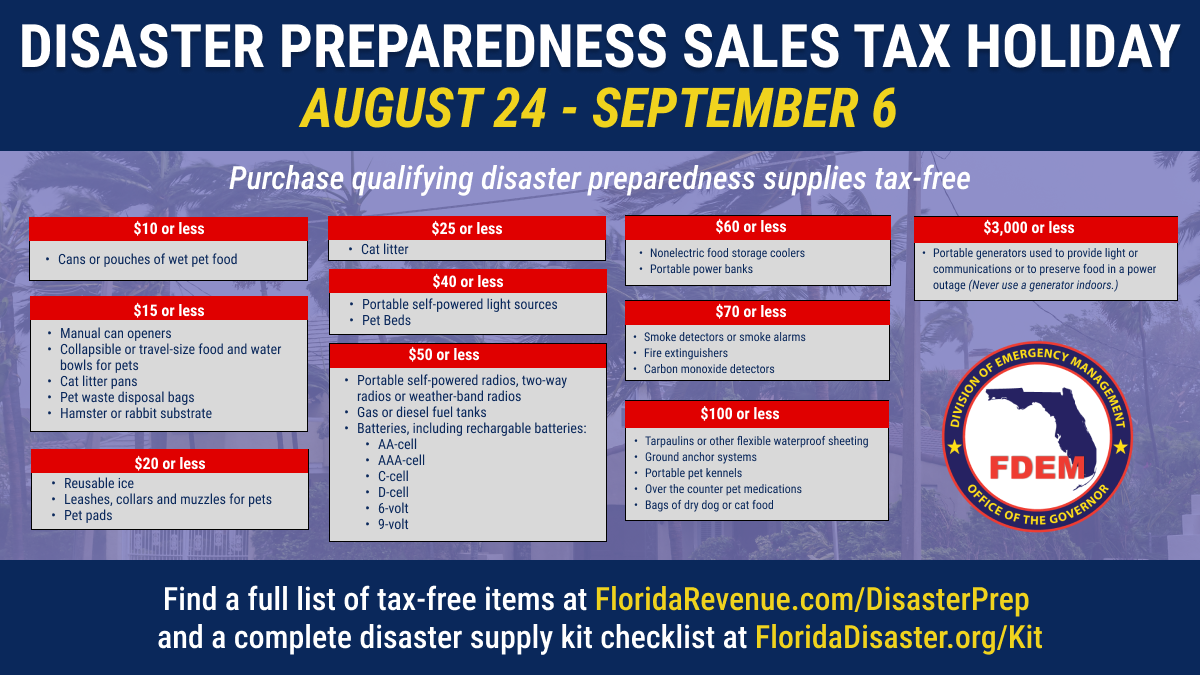
Given Florida’s susceptibility to hurricanes and other natural disasters, this tax holiday is critical for resident preparedness. It often occurs twice a year, once in the spring/early summer and again later in the hurricane season.
- Typical Timing: Late May/Early June and/or August/September (often a 7-14 day period).
- Eligible Items Often Include:
- Batteries: Reusable ice packs and various types of batteries (e.g., AA, AAA, C, D, 6-volt, 9-volt) with specific package price limits.
- Flashlights & Radios: Battery-powered or hand-crank radios and flashlights.
- Coolers & Tarps: Coolers, tarpaulins, and bungee cords.
- First Aid Kits: Pre-packaged first aid kits.
- Generators: Portable generators might be exempt, but typically with a higher price cap (e.g., $1,000-$3,000).
- Pet Supplies: Cans or pouches of wet pet food, cat litter, leashes, and pet carriers might also be included.
This holiday empowers Florida residents from Key West to Tallahassee to prepare for potential emergencies, reducing the financial barrier to safety.
Freedom Month (Summer) Sales Tax Holiday
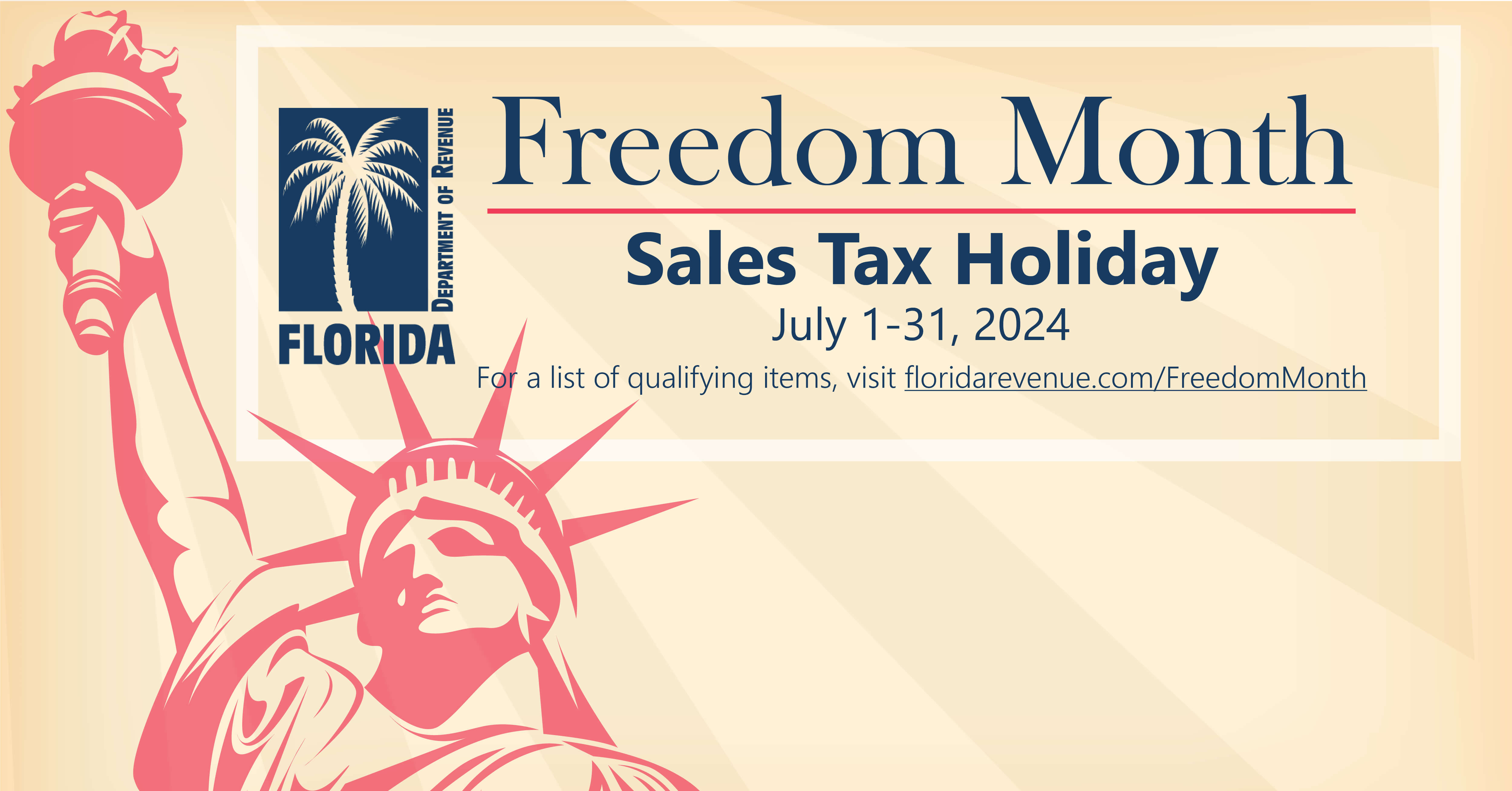
Introduced more recently, this holiday aims to encourage outdoor activities and cultural experiences, often aligning with the summer vacation period.
- Typical Timing: July (often a month-long period).
- Eligible Items Often Include:
- Outdoor Recreation: Fishing tackle, lures, bait, rods, and reels; camping tents, sleeping bags, and outdoor cooking equipment; bicycles and helmets.
- Boating & Water Sports: Life jackets, paddles, water skis, and wakeboards.
- Admissions & Events: Tickets to museums, concerts, sporting events, state parks, and fairs for specific dates.
- Camping & Park Gear: Often includes items like insect repellent and sunscreens.
This expansive holiday encourages residents and visitors alike to enjoy Florida’s diverse attractions, from the beaches of Daytona Beach and South Beach to the wilderness of Everglades National Park, by making recreational pursuits more affordable.
Maximizing Your Savings During Tax-Free Events
Participating in Florida’s sales tax holidays can lead to significant savings, but a strategic approach is essential to truly maximize the benefits. It’s not just about knowing when to shop, but how to shop smartly during these periods.
Plan Ahead and Make a List
Impulse purchases, even tax-free ones, can derail a budget. Before a tax holiday begins, take stock of what you genuinely need.
- Review Needs: For the Back-to-School holiday, check school supply lists and children’s wardrobes. For Disaster Preparedness, assess your emergency kit’s contents and expiration dates. For Freedom Month, consider upcoming outdoor activities or events.
- Create a Detailed List: Specify the items and their quantities. Stick to this list to avoid buying unnecessary things, even if they’re tax-exempt.
- Check Eligibility: Refer to the official Florida Department of Revenue guidelines for the specific holiday to confirm that your desired items are indeed eligible and fall within any price caps. This prevents frustration at the checkout.
Compare Prices and Deals
A tax-free purchase isn’t necessarily the cheapest purchase. Retailers are aware of tax holidays and sometimes adjust their pricing.
- Pre-Holiday Research: Before the tax-free period, compare prices from various retailers. A store offering a deep discount before the holiday might still be cheaper overall, even with sales tax, than a store offering a regular price during the holiday.
- Stack Savings: Look for retailers that offer additional sales or coupons during the tax holiday. Combining a store promotion with the tax exemption can lead to substantial savings. For example, getting 20% off an item and then not paying sales tax on the reduced price offers a double benefit.
Understand Limitations
Every tax holiday comes with specific rules and restrictions. Ignoring these can lead to unexpected charges.
- Price Caps: Be mindful of the per-item price limitations. If a jacket is tax-exempt up to $100 and you buy one for $120, the entire $120 might be subject to tax, or only the amount exceeding the cap might be taxable, depending on the specific legislation. Always clarify.
- Item Specificity: Ensure the item you’re buying precisely matches the eligible categories. For instance, “batteries” might be tax-free, but car batteries might not be included, only household sizes.
- Retailer Participation: While most major retailers participate, it’s worth a quick check if you’re shopping at a smaller or specialty store.
Consider Online vs. In-Store Purchases
Tax holidays typically apply to both in-store and online purchases, but there are nuances.
- Shipping & Delivery: For online orders, ensure that the purchase is made and the items are shipped during the tax holiday period. If an item ships after the holiday ends, sales tax might be applied. Confirm the retailer’s policy.
- Convenience: Online shopping offers the convenience of avoiding crowded stores, particularly during popular holidays like Back-to-School. However, factor in potential shipping costs, which are generally not tax-exempt.
- Local Support: Shopping in-store supports local Florida businesses, which can be a consideration for those who prioritize community engagement.
Beyond Sales Tax: Other Ways to Save in Florida
While sales tax holidays offer fantastic short-term savings, a holistic approach to managing expenses is part of a smart lifestyle in Florida. Understanding other financial aspects and embracing budget-friendly activities can further enhance your experience in the Sunshine State.
Understanding Tourism Taxes (Lodging, Rental Car)
It’s important to distinguish sales tax holidays from other forms of taxation, particularly those impacting tourists.
- Lodging Taxes: When staying at a hotel, resort (like perhaps the Walt Disney World Resort hotels or specific properties in Orlando), or even a vacation rental in Florida, you’ll typically pay a “tourist development tax” or “resort tax” in addition to the standard sales tax on the accommodation. These taxes are local and usually not affected by state-level sales tax holidays. For example, in Miami or Orlando, these can add a significant percentage to your bill.
- Rental Car Surcharges: Similarly, renting a car in Florida comes with various fees and surcharges, including a state rental car surcharge and sales tax on the rental itself. These are separate from general sales tax holidays on consumer goods. Budgeting for these additional costs is crucial for travelers.
Budget-Friendly Activities and Attractions
Florida’s allure isn’t solely dependent on expensive attractions. There are countless ways to enjoy the state without breaking the bank, perfectly aligning with a budget-conscious lifestyle.
- Free Beaches: Florida boasts miles of stunning, free-access beaches along both its Atlantic Coast and Gulf Coast. Pack a picnic, enjoy the sun, and swim in the clear waters.
- State Parks and Nature Preserves: Many state parks offer low-cost entry fees, providing access to hiking trails, wildlife viewing, and natural springs. Places like Everglades National Park or various state parks offer unparalleled natural beauty for a fraction of the cost of theme parks (though national parks have their own fees).
- Public Events & Festivals: Throughout the year, Florida cities host numerous free festivals, art walks, and cultural events. Check local tourism websites for listings in areas like Tampa or Jacksonville.
- Museums with Free Days: Some museums offer free admission on specific days or evenings.
- Window Shopping and People Watching: Strolling through vibrant districts like South Beach in Miami or the marketplaces around Universal Studios Florida can be entertaining and entirely free.
Florida Resident Benefits
For those who call Florida home, being a resident often unlocks additional savings.
- Theme Park Discounts: Walt Disney World Resort, Universal Studios Florida, and other major attractions frequently offer discounted tickets or annual passes exclusively for Florida residents.
- Local Attractions: Many local museums, zoos, and smaller attractions provide resident-specific pricing.
- Government Services: Reduced fees for certain state services or licenses.
Staying informed about these various opportunities, from targeted sales tax holidays to broader resident perks and free activities, is key to truly embracing an affordable yet fulfilling lifestyle in Florida.
In conclusion, Florida’s sales tax holidays in 2024 present valuable chances to save on a range of essential and recreational items. By strategically planning your purchases around the anticipated Back-to-School, Disaster Preparedness, and Freedom Month periods, and diligently following the guidelines, you can significantly reduce your household expenditures. Embracing a proactive approach to these tax-free events, coupled with an awareness of broader budget-friendly practices, empowers both residents and long-term visitors to enjoy all that the Sunshine State has to offer without unnecessary financial strain. Keep an eye on the official Florida Department of Revenue announcements for the definitive dates and details, and make 2024 your year for smart, tax-free savings in Florida.
LifeOutOfTheBox is a participant in the Amazon Services LLC Associates Program, an affiliate advertising program designed to provide a means for sites to earn advertising fees by advertising and linking to Amazon.com. Amazon, the Amazon logo, AmazonSupply, and the AmazonSupply logo are trademarks of Amazon.com, Inc. or its affiliates. As an Amazon Associate we earn affiliate commissions from qualifying purchases.