
When contemplating the geography of Florida, images of sun-drenched beaches, sprawling wetlands, and seemingly endless flat terrain often spring to mind. The Sunshine State is famously known for its low elevation, a characteristic that defines much of its landscape and contributes to its unique ecosystems. Yet, even in a state renowned for its flatness, there exists a discernible highest point, a subtle yet significant landmark that challenges popular perception and offers a quiet testament to geological forces. This pinnacle, far from the dramatic peaks found in other parts of the US, is a place of modest elevation but profound natural and historical intrigue.
Unveiling Britton Hill: Florida’s Surprising Summit
For many, the idea of a “highest point” in Florida conjures images of an imperceptible rise, perhaps a subtle undulation in the landscape that requires a keen eye to spot. While this perception is largely accurate when compared to the towering mountains of other states, Florida’s true summit is a defined, albeit gentle, landmark that carries a distinct charm.
A Misconception of Flatness: Dispelling Myths
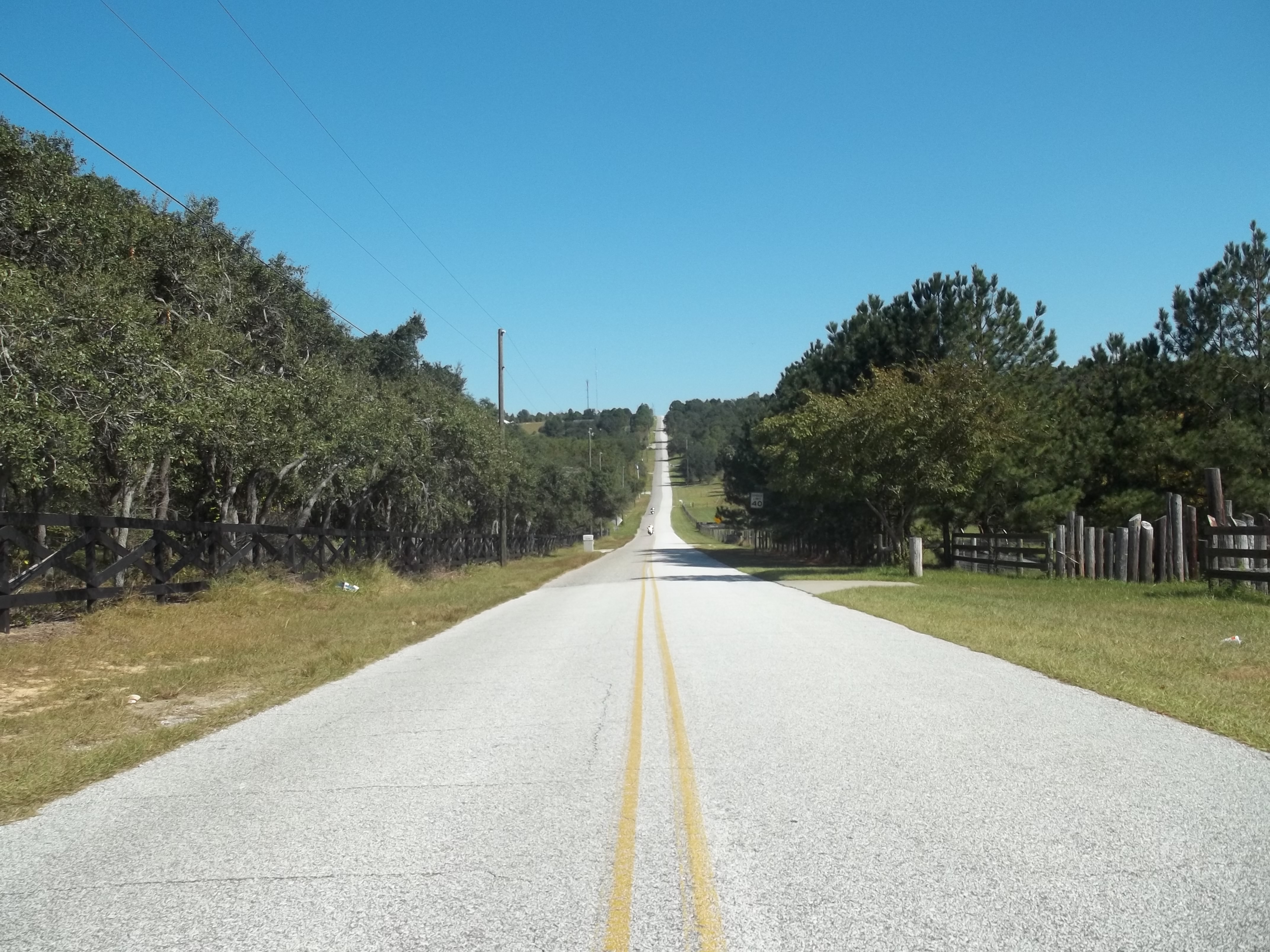
The prevailing image of Florida as uniformly flat is deeply ingrained in the public consciousness, and for good reason. Large swathes of the state, particularly the peninsula, are indeed remarkably level, sculpted by ancient sea levels and the deposition of sediments over millennia. This low-lying topography is responsible for the state’s abundant wetlands, intricate river systems, and vulnerability to sea-level rise. However, the state’s northern reaches, particularly the Florida Panhandle, tell a slightly different geological story. Here, the land begins to gently roll, remnants of ancient uplands that escaped the full force of marine submersion, creating a landscape that, while not mountainous, is noticeably more varied than its southern counterparts. This subtle shift in elevation is precisely where Florida’s highest point quietly asserts itself, challenging the monolithic perception of the state’s topography. It is a reminder that even within seemingly uniform landscapes, nuanced geological features exist, offering pockets of elevation that stand out from their surroundings.
The Exact Location: Pinpointing Britton Hill
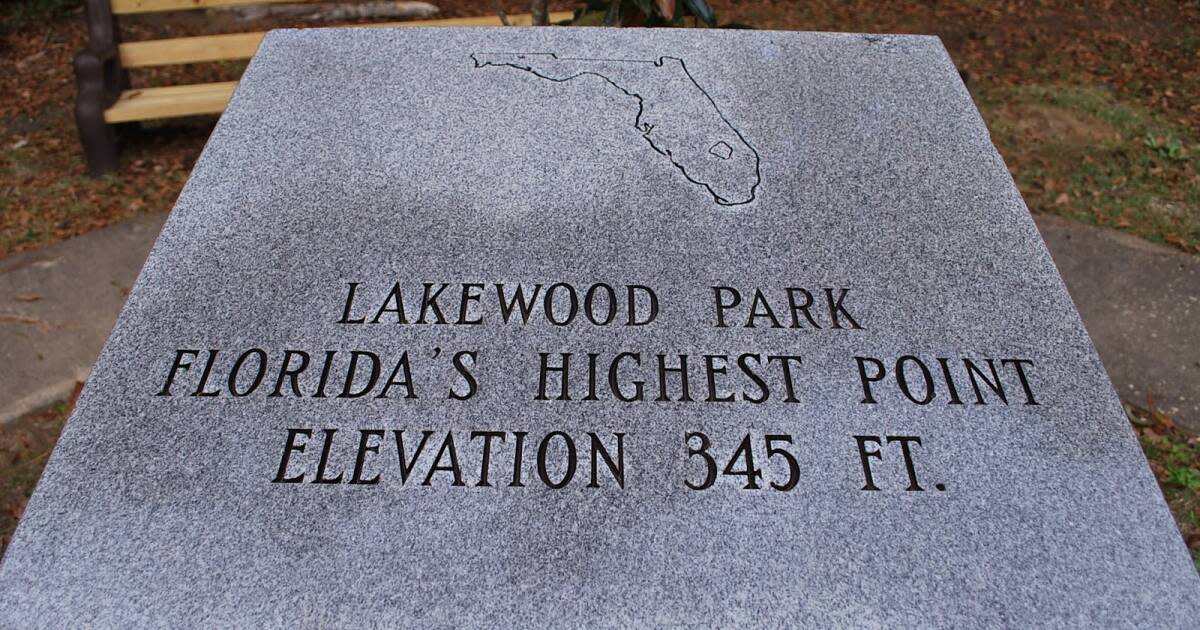
Florida’s highest natural point is Britton Hill, situated in the northeastern corner of Walton County, near the border with Alabama. This unassuming rise is nestled within Lakewood Park, a small, well-maintained recreational area that serves as the official public access point. Finding Britton Hill is not an arduous mountain expedition; rather, it’s a serene drive through rural landscapes, culminating in a designated park complete with a monument marking the summit. The precise coordinates lead to a spot that, while not dramatic, is undeniably the pinnacle of Florida’s natural elevation. The location itself speaks to the state’s rural beauty, far from the bustling coastal cities and theme parks, offering a tranquil escape into the understated natural grandeur of the Panhandle. It’s a landmark that requires a specific journey, rewarding visitors with a unique insight into a lesser-known aspect of Florida’s diverse geography.
The Modest Elevation: Relative to Other State High Points
At a mere 345 feet (105 meters) above sea level, Britton Hill holds the distinction of being the lowest state high point in the entire United States. This fact often elicits surprise, even amusement, especially when compared to towering peaks like Denali in Alaska (20,310 feet) or Mount Whitney in California (14,505 feet). Even neighboring states boast significantly higher summits; Brasstown Bald in Georgia stands at 4,784 feet, and Mount Cheaha in Alabama reaches 2,407 feet. Britton Hill’s modest stature underscores Florida’s unique geological history, shaped predominantly by its long relationship with the ocean. It’s a high point that celebrates the subtle instead of the spectacular, embodying a different kind of natural record. This low elevation also means that reaching the summit involves no strenuous hiking or specialized gear, making it one of the most accessible state high points in the nation, open to visitors of all ages and physical abilities.
The Unique Landscape and Geology of Florida’s Panhandle
The geography of the Florida Panhandle is distinct from the central and southern parts of the state, largely due to its geological history and its position relative to the North American continent. This region serves as a transitional zone, where the flat, low-lying coastal plains begin to give way to the more undulating terrain characteristic of the southeastern United States.
Formation of Britton Hill: A Brief Geological Explanation
Britton Hill and its surrounding uplands are primarily composed of sand, clay, and gravel deposits, remnants of ancient marine terraces and riverine sediments. Millions of years ago, as sea levels fluctuated, the land that now constitutes the Florida Panhandle was alternately submerged and exposed. During periods of lower sea level, rivers flowing from the Appalachian Mountains deposited vast quantities of sediment, gradually building up the land. Subsequent periods of erosion, particularly by wind and water, further sculpted these deposits. Britton Hill itself is not a result of tectonic uplift in the way that mountain ranges like the Rocky Mountains were formed. Instead, it is essentially a relict hill, a higher elevation remnant that has withstood the forces of erosion better than the surrounding areas. It is an example of differential erosion, where harder or more resistant sediments, or simply areas less exposed to erosive forces, remain as higher ground while softer or more exposed areas are worn down. This process, coupled with ancient shoreline dynamics, created the gentle rises and dips seen in the Panhandle today, with Britton Hill standing as the most prominent, albeit slight, elevation.
Surrounding Ecosystems: Describing the Natural Environment
The natural environment surrounding Britton Hill is characteristic of the sandhill and longleaf pine flatwood ecosystems that define much of inland North Florida and the adjacent parts of Alabama and Georgia. This region is home to vast tracts of pine forests, particularly the majestic longleaf pine, which once covered millions of acres across the southeastern U.S. These forests are remarkably biodiverse, supporting a variety of plant and animal species adapted to sandy soils and periodic natural fires. Wiregrass, various oaks, and a mosaic of herbaceous plants thrive beneath the pine canopy. Wildlife includes white-tailed deer, gopher tortoises, bobcats, and a plethora of bird species. The health of these ecosystems is often dependent on controlled burns, a management technique that mimics natural fire regimes to prevent the encroachment of hardwoods and promote the growth of fire-adapted species. The tranquility of this environment, far from the coastal bustle, offers a glimpse into Florida’s less-advertised natural beauty, emphasizing conservation and ecological richness rather than tourist attractions.
Contrasting Florida’s Topography: How This Area Differs
The Panhandle’s topography stands in stark contrast to the vast, low-lying plains and wetlands that characterize much of peninsular Florida. While central and south Florida are dominated by limestone bedrock, extensive aquifers, and a mosaic of swamps (like the Everglades), lakes (like Lake Okeechobee), and coastal marshes, the Panhandle exhibits a more varied terrain. Here, one finds rolling hills, steephead ravines (deep, narrow, spring-fed ravines unique to this region), and bluffs overlooking rivers like the Choctawhatchee River. The underlying geology is different, with older, more consolidated sediments and a greater presence of clay leading to different soil types and drainage patterns. This creates a distinct hydrological system, with more clear-water springs and fewer vast, shallow lakes compared to the peninsula. The Panhandle, in essence, feels more like the “Deep South” geographically than the tropical or subtropical Florida most people envision, offering a diverse natural landscape that broadens the definition of the Sunshine State. It’s a region where the ecological boundaries blur with neighboring states, showcasing a continuity of southern landscapes rarely associated with Florida.
Experiencing Britton Hill: A Landmark of Quiet Significance
Visiting Britton Hill is an experience that diverges significantly from typical Florida tourist itineraries. It’s not about adrenaline-pumping rides or pristine beaches; instead, it offers a moment of quiet reflection, a unique accomplishment for those who seek out geographical extremes, and an appreciation for the subtle beauty of the state’s northern interior.
The Britton Hill Highpoint Trail: Detailing the Visitor Experience
Accessing Britton Hill is remarkably easy. The “trail,” if it can be called such, is a short, paved walk from the parking lot within Lakewood Park. The approach is marked by clear signage directing visitors to the summit. The park itself is well-maintained, featuring picnic tables, restrooms, and interpretive displays that provide information about Britton Hill and the surrounding environment. The path to the high point is an accessible, gentle incline, suitable for families with small children, seniors, and individuals with mobility challenges. Unlike mountain high points that demand arduous treks, the journey to Britton Hill is a leisurely stroll, allowing visitors to absorb the peaceful atmosphere of the longleaf pine forest. It’s an experience designed for contemplation rather than conquest, highlighting the unique accomplishment of reaching Florida’s highest natural elevation without the associated physical strain. The ease of access makes it a popular stop for “highpointers” from across the nation and curious local travelers alike.
What to Expect at the Summit: A Serene Atmosphere
At the summit of Britton Hill, visitors are greeted by a commemorative monument, a bronze plaque set on a stone marker, officially designating it as Florida’s highest point. There’s also an observation deck, offering views over the surrounding woodlands, though it’s important to set expectations: you won’t find panoramic vistas stretching for hundreds of miles, nor dramatic cliffs. Instead, the view is one of serene, rolling forest canopy, a sea of green stretching towards the horizon. The atmosphere is one of peaceful solitude, a stark contrast to the bustling tourist hubs often associated with Florida. It’s a place to pause, take a photograph with the monument, perhaps enjoy a picnic lunch, and simply appreciate being atop the “highest” ground in a famously flat state. The monument and the small park provide a sense of place and accomplishment, marking a geographical curiosity that sparks conversation and encourages a deeper understanding of Florida’s diverse landscapes. It’s a testament to the fact that even the most unassuming landmarks can hold significant meaning.
Why Visit This Unique Landmark? The Appeal for Highpointers, Nature Enthusiasts, and Curious Travelers
Britton Hill holds particular appeal for several groups. For “highpointers”—individuals dedicated to visiting the highest natural point in every U.S. state—it is a mandatory and often anticipated stop, representing one of the easiest checkboxes on their national list. Beyond this niche community, nature enthusiasts will appreciate the opportunity to experience the unique longleaf pine ecosystems and the quiet charm of the Florida Panhandle. It’s a chance to connect with a less-developed, more natural side of Florida, away from the coastal crowds. For curious travelers, visiting Britton Hill offers a unique story and a quirky accomplishment. It provides an insightful counterpoint to the typical Florida narrative, demonstrating that the state’s natural wonders extend beyond its beaches and theme parks. It’s a landmark that invites reflection on geography, perception, and the subtle beauty of an understated landscape, proving that even the lowest high point can offer a memorable and rewarding experience.
Exploring the Panhandle Beyond Britton Hill
While Britton Hill itself offers a unique landmark experience, the surrounding Florida Panhandle is replete with other natural wonders, charming small towns, and historical sites that make a visit to the region a multifaceted adventure. The area provides a different lens through which to view Florida, showcasing its rural character and the enduring legacy of the Deep South.
Nearby Natural Attractions: State Parks, Forests, and Springs
The Panhandle is a treasure trove of outdoor recreation, offering a wealth of state parks, vast national forests, and pristine spring-fed swimming holes. Just a short drive from Britton Hill, visitors can explore Falling Waters State Park in Chipley, home to Florida’s highest waterfall—a dramatic 73-foot cascade that plunges into a deep, fern-draped sinkhole. The nearby Blackwater River State Forest, stretching across Santa Rosa and Okaloosa Counties, offers extensive opportunities for hiking, canoeing, and camping along its pristine, dark-water river system. For those seeking refreshing dips, Ponce de Leon Springs State Park and Morrison Springs provide crystal-clear, cold springs perfect for swimming, snorkeling, and diving, showcasing Florida’s vast network of underground aquifers. These natural landmarks highlight the Panhandle’s diverse ecosystems, from ancient forests to unique karst topography, offering a wealth of experiences for nature lovers beyond the state’s famed coastlines.
Charming Panhandle Towns: History and Culture
Beyond its natural beauty, the Florida Panhandle is dotted with small, historic towns that offer a glimpse into the region’s rich cultural heritage. DeFuniak Springs, the county seat of Walton County, is famous for its perfectly circular lake, Lake DeFuniak, around which a Victorian-era Chautauqua assembly developed. The town boasts a charming historic district with beautifully preserved homes and the Chautauqua Hall of Brotherhood, reflecting a unique educational and cultural movement. Other towns like Chipley, located in Washington County, and Bonifay in Holmes County, offer insights into agricultural traditions, small-town life, and the enduring influence of Southern culture. Visiting these towns provides a refreshing contrast to the more cosmopolitan areas of Florida, offering authentic experiences, local cuisine, and a slower pace of life. The Panhandle Pioneer Settlement in Blountstown, for instance, offers a living history museum experience, preserving the traditions and structures of early Florida settlers. These locales serve as essential landmarks, telling the story of Florida’s inland development and its deep roots in Southern heritage.
A Different Side of Florida: Emphasizing the Distinct Character
The Florida Panhandle truly represents a distinct side of the state, often referred to as “the other Florida.” Geographically, culturally, and historically, it shares more in common with its Deep South neighbors, Alabama and Georgia, than with the bustling, tropical image of South Florida. This region offers a more subdued, rural, and traditionally Southern experience, characterized by hospitality, pine forests, freshwater springs, and a slower pace of life. Its natural landmarks, from Britton Hill to the many state parks, reflect a different kind of beauty, one that emphasizes natural ecosystems and historical preservation rather than coastal development. This area’s proximity to military installations like Eglin Air Force Base also adds another layer to its unique character, blending natural landscapes with strategic importance. Exploring this part of Florida provides a richer, more nuanced understanding of the state’s diverse identity, demonstrating that Florida is much more than just its world-famous beaches and attractions. It’s a testament to the fact that even within a single state, vast differences in landscape, culture, and experience can exist.
The Significance of Highpointing in the United States
The quest to reach Britton Hill is often undertaken as part of a larger, fascinating pursuit known as highpointing. This unique hobby transforms geographical data into a personal challenge and a journey of discovery, connecting individuals with the diverse landscapes and subtle elevations of the American continent.
The Allure of State Highpoints: Explaining the Hobby
Highpointing is the hobby of visiting the highest natural point in each of the 50 U.S. states. For some, it’s a lifelong endeavor that involves scaling formidable peaks requiring advanced mountaineering skills, while for others, it’s a more accessible goal, involving scenic drives and short walks. The appeal lies in several factors: the challenge of completion, the opportunity to explore remote and beautiful corners of the country, and the sense of accomplishment that comes with standing atop a state’s highest ground. Each high point tells a story—not just of geology, but of the communities and natural environments that surround it. The Highpointers Club, a national organization, supports and connects enthusiasts, providing resources, meetups, and a platform for sharing experiences. It’s a hobby that fosters a deep appreciation for the geographical diversity of the United States, from the arid deserts of the Southwest to the lush forests of the Southeast, and of course, the distinctive lowlands of Florida.
Britton Hill’s Place in Highpointing: A Unique Achievement
For highpointers, Britton Hill holds a special, almost celebratory status. It’s often the “easiest” high point on the list, a welcome respite after challenging climbs like those in Colorado or California, or a gentle introduction for those just beginning their highpointing journey. Its accessibility means that it is often one of the first high points many enthusiasts visit, and it serves as a unique benchmark—a reminder that not all peaks are towering. Reaching Britton Hill, despite its low elevation, still marks a significant achievement in the highpointing community, as it is one of the 50 unique geographical points that define the challenge. It underscores the spirit of highpointing: it’s not always about the grandeur of the ascent, but the completion of the geographical collection, and the stories and landscapes encountered along the way. Its existence reminds highpointers that the spectrum of elevation in the US is vast, encompassing everything from near sea-level rises to alpine giants.

Celebrating Geographical Diversity: Reflection on What Highpoints Represent
Ultimately, Britton Hill, like all state high points, serves as a celebration of geographical diversity. It highlights the vast and varied topography of the United States, from the rugged mountains formed by ancient tectonic forces to the subtle uplands shaped by millennia of erosion and fluctuating sea levels. These high points are more than just elevations; they are landmarks that encapsulate the geological history, ecological uniqueness, and even the cultural identity of each state. They encourage us to look beyond common stereotypes and explore the nuances of our natural world. In Florida’s case, Britton Hill stands as a quiet emblem of the state’s interior beauty, a place that defies the flatland myth and invites us to appreciate the subtle, yet profound, wonders of its landscapes. It offers a powerful reminder that every corner of the country, no matter how unassuming, holds a unique and valuable place in the grand tapestry of national geography.
LifeOutOfTheBox is a participant in the Amazon Services LLC Associates Program, an affiliate advertising program designed to provide a means for sites to earn advertising fees by advertising and linking to Amazon.com. Amazon, the Amazon logo, AmazonSupply, and the AmazonSupply logo are trademarks of Amazon.com, Inc. or its affiliates. As an Amazon Associate we earn affiliate commissions from qualifying purchases.