
Hawaii, the very name conjures images of pristine beaches, lush tropical forests, and, most powerfully, dramatic volcanic landscapes. This isolated archipelago in the middle of the Pacific Ocean is a geological marvel, born from a hotspot deep within the Earth’s mantle. Its islands are, quite literally, still growing, continuously shaped and sculpted by the powerful forces of volcanism. For any traveler contemplating a journey to this extraordinary state, understanding its active volcanoes is not merely an academic exercise; it’s fundamental to appreciating the islands’ dynamic beauty, cultural significance, and unique array of experiences.
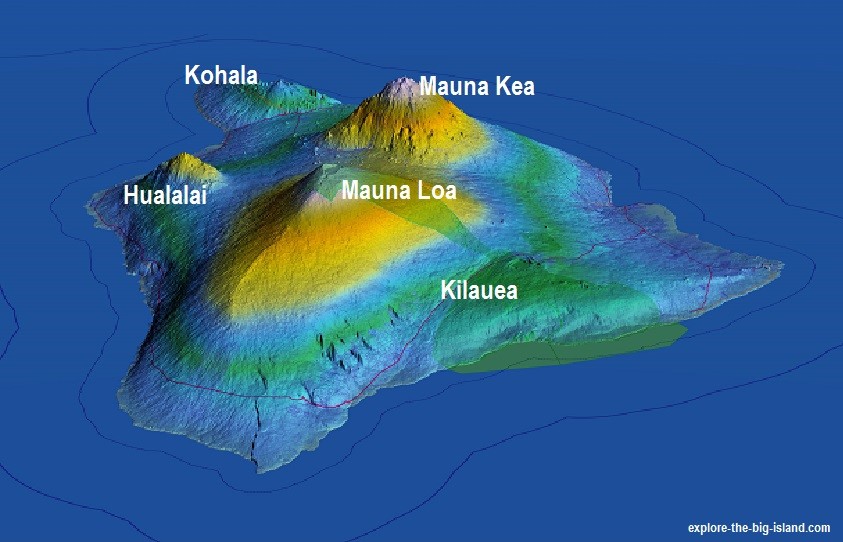
The question of “how many active volcanoes” often arises, and the answer, while seemingly straightforward, carries layers of geological nuance. At its core, Hawaii is home to five active volcanoes, each contributing to the islands’ ongoing creation and offering distinct facets of their fiery personalities. These geological titans are Kīlauea, Mauna Loa, and Hualālai on The Big Island (officially known as Hawaii Island); Haleakalā on Maui; and the submarine Lōʻihi Seamount off the coast of The Big Island. Together, these volcanoes represent the cutting edge of Earth’s creation, providing unparalleled opportunities for observation, adventure, and profound natural connection for curious travelers.
The Dynamic Definition of “Active” in Hawaii
The term “active volcano” might sound simple, but geologists employ a precise definition that reflects the dynamic nature of these geological features, especially in a place like Hawaii. It’s not just about recent eruptions, but also about the potential and ongoing internal activity.
What Constitutes an Active Volcano?
According to the United States Geological Survey (USGS) and the Hawaiian Volcano Observatory (HVO), a volcano is considered active if it has erupted in historical times (which, in Hawaii’s relatively brief recorded history, typically means within the last 200 years) or if it shows ongoing signs of unrest. These signs can include seismic activity (earthquakes), ground deformation (swelling or shrinking), and gas emissions. This definition differentiates active volcanoes from dormant ones, which have not erupted recently but could again, and extinct volcanoes, which are considered unlikely to ever erupt. In Hawaii, where volcanic activity is continuous, this nuanced understanding is critical for monitoring, research, and ensuring public safety. The work of the HVO, established in 1912, is paramount in continuously observing these giants, providing invaluable data that informs both scientific understanding and practical travel advice.
Hawaii’s Five Active Volcanoes
As established, the Hawaiian Islands are currently home to five volcanoes classified as active:
- Kīlauea (on Hawaii Island): Renowned for its almost continuous activity, making it one of the most consistently erupting volcanoes on Earth.
- Mauna Loa (on Hawaii Island): The Earth’s most massive shield volcano, standing as a colossal presence on the island.
- Hualālai (on Hawaii Island): While not erupting frequently, it has erupted in historical times and shows signs of ongoing seismic activity, keeping it firmly in the active category.
- Haleakalā (on Maui): Known as the “House of the Sun,” this majestic volcano last erupted in the late 18th century but is still considered active.
- Lōʻihi Seamount (submarine, off Hawaii Island): This underwater volcano is Hawaii’s youngest and most active in terms of frequent seismic swarms, steadily growing towards its eventual emergence above sea level.
Each of these volcanoes contributes uniquely to the islands’ geology, ecology, and cultural narrative, making them compelling points of interest for any visitor.
The Giants of The Big Island: Kīlauea, Mauna Loa, and Hualālai
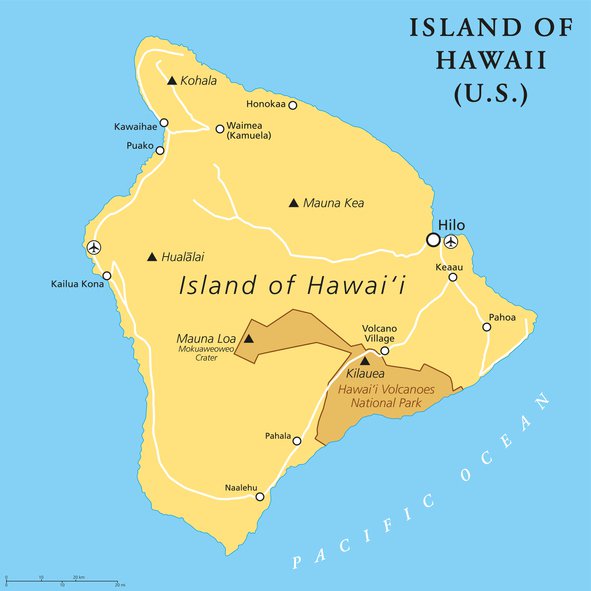
The Big Island is truly the epicenter of Hawaiian volcanism, hosting three of the state’s five active volcanoes. These giants have profoundly shaped the island’s landscape, creating dramatic contrasts from barren lava fields to lush rainforests.
Kīlauea: The World’s Most Active Volcano
Often dubbed the world’s most active volcano, Kīlauea is an icon of continuous creation and destruction. For decades, from 1983 to 2018, its East Rift Zone erupted almost non-stop, adding hundreds of acres of new land to Hawaii Island. The dramatic events of 2018, including a massive caldera collapse and extensive lava flows in the Puna district, reshaped much of Hawaii Volcanoes National Park and the island’s southeastern coastline. Since then, Kīlauea has resumed intermittent eruptions within its summit crater, Halemaʻumaʻu, offering visitors breathtaking views of lava lakes and glowing vents when conditions allow.
For travelers, Hawaii Volcanoes National Park provides the most accessible way to experience Kīlauea’s power. The Kilauea Visitor Center serves as an excellent starting point, offering current conditions, safety information, and ranger-led programs. Highlights include driving a portion of the Crater Rim Drive (parts of which remain closed), walking the surreal Devastation Trail through a landscape scarred by past eruptions, and exploring the fascinating Thurston Lava Tube. The volcano is deeply sacred to Native Hawaiians, believed to be the home of Pele, the goddess of volcanoes and fire, adding a profound spiritual dimension to any visit.
Mauna Loa: The Massive Mountain
Rising majestically alongside Kīlauea, Mauna Loa holds the title of the Earth’s most massive shield volcano. Its sheer volume is staggering, estimated to contain 19,000 cubic miles of rock, with most of its bulk hidden beneath the ocean surface. While Kīlauea is known for its frequent, effusive eruptions, Mauna Loa’s eruptions are less frequent but can be far more voluminous and far-reaching, posing significant hazards due to its massive size and the rapid pace of its lava flows. After nearly 40 years of quiet, Mauna Loa stirred back to life in November 2022, reminding the world of its immense power.
Accessing Mauna Loa’s summit requires a strenuous multi-day hike, making it less of a casual tourist destination compared to Kīlauea. However, its imposing presence defines much of The Big Island’s skyline, and its fertile flanks support unique ecosystems. Travelers can appreciate its scale from various viewpoints across the island, particularly from the vantage points within Hawaii Volcanoes National Park or the scenic Saddle Road that traverses its lower slopes.
Hualālai: The Kona Coast’s Slumbering Giant

Overlooking the bustling Kona Coast on The Big Island, Hualālai is the third active volcano on the island. While its last eruption occurred in 1801, sending lava flows towards the sea near present-day Kailua-Kona, it is still classified as active due to its geological youth and ongoing seismic activity monitored by the HVO. Should Hualālai erupt again, its proximity to major towns and resorts on the west side of the island means it would pose a significant threat.
For travelers, Hualālai’s presence is largely appreciated for the rich, fertile soil it has created, which is ideal for growing the world-renowned Kona coffee. Exploring coffee plantations on its slopes offers not only delicious tastings but also stunning panoramic views of the coast, indirectly connecting visitors to the volcano’s enduring legacy. While there’s no visible lava, the landscape itself—from ancient lava flows to lush coffee farms—tells the story of this slumbering giant’s powerful past.
Maui’s Haleakalā and the Submarine Lōʻihi Seamount
While The Big Island often takes center stage for volcanic activity, the other islands bear their own active geological marvels, offering different, yet equally captivating, experiences for the intrepid traveler.
Haleakalā: Maui’s House of the Sun
On the island of Maui, the majestic Haleakalā volcano dominates the eastern landscape. Meaning “House of the Sun” in Hawaiian, Haleakalā last erupted between 1790 and 1793, sending two lava flows to the island’s southwest shore. Despite this relatively long dormancy, geological evidence and ongoing monitoring place it firmly in the active category, with the potential for future eruptions.
Haleakalā National Park is a quintessential Maui experience. Travelers flock to its summit, nearly 10,000 feet above sea level, to witness some of the most spectacular sunrises and sunsets on Earth, often floating above a sea of clouds. The immense erosion-formed “crater” (actually a valley) at its summit, dotted with numerous volcanic cones, offers surreal, lunar-like landscapes ideal for hiking and stargazing. Permits are required for sunrise viewing, highlighting the popularity and ecological sensitivity of this incredible site. Visiting Haleakalā provides a profound sense of geological time, showcasing how volcanic forces sculpt islands over millennia, long after the last lava flow has cooled.
Lōʻihi Seamount: Hawaii’s Next Island
Hidden beneath the waves, about 20 miles off the southeast coast of The Big Island, lies Lōʻihi Seamount. This submarine volcano is Hawaii’s newest and is actively growing, exhibiting frequent seismic swarms and hydrothermal venting. It is currently about 3,000 feet below the ocean’s surface, and while it won’t emerge for tens of thousands of years, it is undoubtedly the next island in the Hawaiian chain.
Though not visible or directly accessible to the average traveler, Lōʻihi Seamount is crucial to understanding the ongoing process of island formation. Its existence underscores that Hawaii is not a static paradise but a constantly evolving geological landscape, a vivid testament to the power of the Earth’s hotspot beneath the Pacific Plate. For those fascinated by geology and the future of our planet, Lōʻihi represents a captivating, if unseen, chapter in Hawaii’s geological saga.
Experiencing Hawaii’s Volcanic Wonders: Travel Tips and Safety
Visiting Hawaii’s active volcanoes is an unparalleled travel experience, offering insights into Earth’s raw creative power. However, it requires respect for nature and adherence to safety guidelines.
Visiting Hawaii Volcanoes National Park
For most travelers seeking to witness active volcanism, Hawaii Volcanoes National Park on The Big Island is the primary destination. The park offers various ways to safely observe the current volcanic activity, primarily at Kīlauea’s summit. Always check the official National Park Service website and HVO updates before your visit. Conditions change rapidly, and what might be visible one day could be obscured or off-limits the next. The best viewing opportunities for lava often occur after dark, with the red glow illuminating the night sky, creating an unforgettable spectacle. Essential activities include exploring the remaining open sections of Crater Rim Drive, hiking the various trails that traverse ancient lava flows, and visiting the Kilauea Visitor Center for interpretive exhibits.
Safety Precautions and Respecting the Land
Volcanoes, while mesmerizing, are powerful and unpredictable. Safety should always be your top priority.
- Stay on Marked Trails: Venturing off designated paths can expose you to dangerous unstable ground, hidden fissures, or extreme heat.
- Beware of Vog and Gases: Volcanic smog (vog), a mixture of sulfur dioxide gas and other aerosols, can be irritating to the respiratory system, especially for those with pre-existing conditions. Always heed air quality warnings.
- Lava Flow Hazards: Never approach active lava flows closely. They are extremely hot, can produce dangerous gases, and can collapse suddenly. Follow all park ranger instructions and warnings.
- Cultural Respect: Remember that these volcanoes are sacred to Native Hawaiians and the dwelling place of Pele. Treat the land with respect and reverence. Do not remove lava rocks or other natural items from the park.
Beyond Lava: The Volcanic Landscape’s Beauty
Beyond the mesmerizing lava, Hawaii’s volcanoes create a diverse and breathtaking landscape. The rich volcanic soils foster incredible biodiversity, from lush rainforests to unique endemic species found nowhere else on Earth. Travelers can explore stunning black sand beaches, such as Punaluʻu Black Sand Beach, formed from pulverized lava cooling rapidly in the ocean. The geothermal activity also manifests in steam vents and fumaroles, constant reminders of the heat beneath the surface. These landscapes offer opportunities for hiking, birdwatching, photography, and a deep immersion in nature, showcasing the complete life cycle of an island built by fire.
In conclusion, Hawaii is home to five active volcanoes: Kīlauea, Mauna Loa, and Hualālai on The Big Island; Haleakalā on Maui; and the submarine Lōʻihi Seamount. Each plays a vital role in shaping the islands, providing a continuous spectacle of creation and an unparalleled opportunity for travelers to connect with the raw power of our planet. A visit to these volcanic wonders is more than just sightseeing; it’s an immersive journey into the heart of a living, breathing archipelago, an experience that will undoubtedly leave an indelible mark on your travel memories. Always approach with curiosity, respect, and a commitment to safety, and Hawaii’s fiery heart will reveal its splendor.
LifeOutOfTheBox is a participant in the Amazon Services LLC Associates Program, an affiliate advertising program designed to provide a means for sites to earn advertising fees by advertising and linking to Amazon.com. Amazon, the Amazon logo, AmazonSupply, and the AmazonSupply logo are trademarks of Amazon.com, Inc. or its affiliates. As an Amazon Associate we earn affiliate commissions from qualifying purchases.