
Traveling to Hawaii is a dream for many, but choosing the right time to visit the 50th state of the United States can be a balancing act between weather preferences, crowd sizes, and travel costs. October represents a unique “sweet spot” in the Pacific Ocean archipelago’s calendar. It is a shoulder season month, sitting comfortably between the bustling summer vacation period and the peak winter holiday rush.
Understanding the nuances of the climate during this month is essential for any traveler looking to maximize their experience. While the islands enjoy a tropical climate year-round, October marks a subtle transition in atmospheric patterns, offering a blend of summer warmth and the beginning of the refreshing trade winds that define the cooler months.

Understanding Hawaii’s Macroclimate in October
The weather in Hawaii during October is characterized by consistency, yet it holds the first signs of the seasonal shift from the dry season (kau) to the wet season (ho’oilo). For most visitors, the changes are so minor that they only enhance the comfort of the trip.
Temperature Trends Across the Islands
In October, temperatures remain pleasantly warm, mimicking the tail end of summer. On average, daytime highs hover around 84°F to 86°F (29°C to 30°C), while nighttime lows rarely dip below 70°F (21°C) at sea level. This makes it an ideal time for those who enjoy the heat but want to avoid the peak intensity of August or September.
The humidity levels, which can be quite high in the preceding months, begin to stabilize as the trade winds return. These winds act as nature’s air conditioning, blowing from the northeast and keeping the coastal regions comfortable. However, on days when the winds fail to blow—often referred to as “Kona weather” days—the air can feel heavy and tropical, particularly on the leeward sides of the islands.
Rainfall and Humidity Expectations
October is technically the start of the rainier season, but it is important to distinguish between “rainy” in a tropical sense and “rainy” in a temperate sense. Rainfall in Hawaii typically occurs in short, localized bursts, often overnight or in the early morning. These showers are frequently followed by vibrant rainbows, a staple of the Honolulu skyline.
The windward (northeast) sides of the islands receive more precipitation than the leeward (southwest) sides. If you are staying in a resort area like Waikiki or Poipu, you are much more likely to experience clear skies even when the mountain peaks are shrouded in clouds. Statistically, the chance of a tropical storm or hurricane is lower in October than in September, though the official hurricane season does not end until November 30th.
Ocean Conditions and Water Temperature
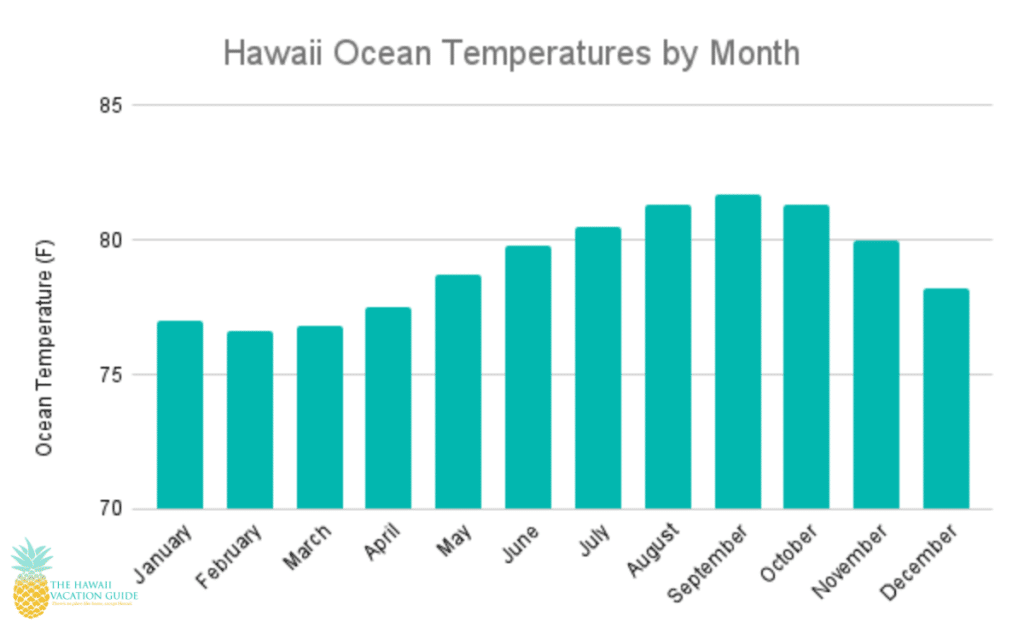
For swimmers, snorkelers, and divers, October offers some of the best ocean conditions of the year. The water temperature remains a balmy 80°F (27°C), meaning you can spend hours in the surf without feeling a chill.
One of the most notable changes in October is the arrival of the first winter swells. While the south shores remain relatively calm, the legendary North Shore of Oahu and Maui begins to see an increase in wave height. While the massive “giant” waves of December haven’t arrived yet, the surf starts to pick up, providing a spectacle for beachgoers and a challenge for intermediate to advanced surfers.
Island-Specific Weather Guide
While the general trends apply to the entire chain, each island has its own unique topography that influences its microclimate. From the lush rainforests of Kauai to the volcanic deserts of the Big Island, October treats each location slightly differently.
Oahu: The Gathering Place
Oahu remains one of the most reliable islands for sunshine in October. The capital city, Honolulu, stays warm and dry. This is an excellent time to visit historical landmarks like Pearl Harbor or hike the Diamond Head crater, as the slight cooling of the trade winds makes the ascent more manageable than in the mid-summer heat.
If you venture toward Hanauma Bay, the water clarity is typically excellent this month. On the North Shore, you’ll find a mix of quiet beach days and the burgeoning excitement of the surf season. Cultural attractions like the Polynesian Cultural Center are also less crowded, allowing for a more intimate look at island traditions.
Maui: The Valley Isle
Maui in October is a paradise for outdoor enthusiasts. The popular resort areas of Lahaina and Kaanapali enjoy consistently dry weather. However, if you plan to drive the Road to Hana, expect passing showers; this is what keeps the waterfalls flowing and the rainforest lush.
A highlight of Maui is Haleakala National Park. In October, the summit offers crisp, clear views for sunrise or sunset. However, visitors should be aware that temperatures at the 10,000-foot summit can be 30 degrees colder than at the beach, sometimes dropping near freezing even in the autumn.
Kauai: The Garden Isle
As the oldest and northernmost island, Kauai is naturally the wettest. In October, the frequency of showers in Lihue and the northern Hanalei Bay increases slightly. However, these rains are what give the Na Pali Coast its stunning emerald hue.
For those planning to hike the Kalalau Trail, October provides a good window before the heavier winter rains make the trails muddier and more treacherous. Over on the west side, Waimea Canyon State Park remains relatively dry, offering breathtaking views of the “Grand Canyon of the Pacific.”
Hawaii Island: The Big Island
The Big Island is a land of extremes. The Kona side is famous for its sunny, dry weather, making it the perfect base for snorkeling or visiting Kailua-Kona. Conversely, Hilo on the east side is one of the wettest cities in the United States.
October is a significant month for the Big Island as it often hosts the Ironman World Championship. The weather for this event is notoriously hot and humid, illustrating how intense the Kona sun can still be in October. If you head toward Hawaii Volcanoes National Park, the elevation brings cooler temperatures, and the volcanic landscapes can be experienced comfortably under the October sun. For those looking for a truly unique experience, the summit of Mauna Kea provides world-class stargazing, though heavy jackets are required regardless of the month.
Packing and Preparation for an October Trip
Because Hawaii has so many microclimates, packing for October requires a bit of versatility. You might be sunbathing in 85-degree weather in the morning and shivering on a mountain top in the afternoon.
Essential Apparel for Tropical Microclimates
The foundation of your suitcase should be lightweight, breathable clothing. Natural fabrics like linen and cotton are ideal for the daytime heat. For women, sundresses and light rompers are perfect; for men, moisture-wicking shirts and shorts are essential.
Even though it is the “warm” season, don’t forget a light waterproof shell. A compact rain jacket is invaluable for those sudden tropical downpours, especially if you plan on hiking in Kauai or exploring the windward sides of Oahu. If your itinerary includes Haleakala or Mauna Kea, you will need a fleece or a light puffer jacket, long pants, and closed-toe shoes.
Gear for Outdoor Adventures
October’s ocean conditions demand good gear. If you plan on snorkeling, consider bringing your own mask and snorkel for the best fit, though rentals are plentiful in places like Waikiki. Since the sun remains very strong in the islands, reef-safe sunscreen is a legal requirement in Hawaii to protect the delicate coral ecosystems.
Footwear is another critical consideration. For the beach, flip-flops (locally known as “slippers”) are the standard. However, if you intend to explore trails such as those in Waimea Canyon, sturdy hiking sandals or trail running shoes with good grip are necessary to navigate the red dirt and potentially slick rocks.
Best Activities to Enjoy During the October Shoulder Season
October is one of the best times for activities because the wait times for popular attractions are significantly shorter than in the summer or winter.
Water-Based Activities: Surfing and Snorkeling
As mentioned, the ocean is warm and inviting. This is the last month of the year where the North Shore waters are often still calm enough for beginner snorkeling before the winter swells truly take over.
It is also an excellent time for whale watching, though the official season usually starts a bit later in the year (December). However, lucky visitors might spot early arrivals of the Humpback whales near Maui toward the end of October. Boat tours and catamaran cruises are highly recommended during this month, as the seas are generally calmer than they are in the mid-winter.

Land-Based Exploration: Hiking and Sightseeing
The slightly lower humidity of October makes long-distance hiking much more enjoyable. Whether you are trekking the volcanic craters on the Big Island or walking through the botanical gardens in Kauai, the weather is on your side.
Furthermore, many local festivals occur in October. The Hawaii Food & Wine Festival often spans several islands during this month, showcasing the incredible culinary diversity of the region. The manageable weather makes these outdoor events particularly pleasant, allowing you to enjoy world-class cuisine without the oppressive heat of mid-summer.
In summary, the weather in Hawaii in October is nearly perfect. You get the warmth of the summer, the emerging swells for surf enthusiasts, and the cooling breezes of the coming winter. By preparing for occasional rain and the diverse microclimates of each island, you can experience the very best that the United States’ tropical paradise has to offer.
LifeOutOfTheBox is a participant in the Amazon Services LLC Associates Program, an affiliate advertising program designed to provide a means for sites to earn advertising fees by advertising and linking to Amazon.com. Amazon, the Amazon logo, AmazonSupply, and the AmazonSupply logo are trademarks of Amazon.com, Inc. or its affiliates. As an Amazon Associate we earn affiliate commissions from qualifying purchases.