
When planning a journey to the middle of the Pacific Ocean, one of the first questions travelers ask is, “What time is it in Honolulu, Hawaii?” However, for the savvy tourist, the answer involves much more than just numbers on a watch. Understanding the time in Honolulu is about embracing a unique geographical isolation, a specific cultural rhythm, and a strategic approach to experiencing the best of Oahu. Whether you are coordinating a business call with New York or timing your arrival at the Pearl Harbor National Memorial, mastering the island clock is the key to a seamless tropical vacation.
Understanding Hawaii-Aleutian Standard Time (HST)
The state of Hawaii operates on Hawaii-Aleutian Standard Time (HST). This time zone is unique within the United States because it is one of the few regions that does not observe Daylight Saving Time. This creates a shifting relationship between Honolulu and the rest of the world depending on the time of year.
The No-Daylight-Saving Advantage
In Hawaii, the sun rises and sets at relatively consistent times throughout the year. Because the islands are located near the equator, there is no need to “spring forward” or “fall back.” For tourists, this means that the internal logic of your itinerary remains constant regardless of whether you visit in July or January. While the mainland United States grapples with changing clocks, Honolulu remains a steady anchor in the Pacific Ocean.
Synchronizing with the Mainland and the World
When calculating the time difference, it is essential to know if your home location is currently observing Daylight Saving Time. During the summer months, Honolulu is three hours behind California and six hours behind New York. In the winter, when the mainland moves their clocks back, the gap narrows to two hours for the West Coast and five hours for the East Coast. For international travelers coming from Tokyo or Sydney, the time jump can be more significant, often involving crossing the International Date Line.
Living on “Island Time”: The Cultural Rhythm of Honolulu
Beyond the technicalities of the Hawaii-Aleutian Standard Time, visitors will quickly encounter the concept of “Island Time.” This is not a lack of punctuality, but rather a cultural shift in priority. In Honolulu, the pace of life is dictated by the environment, the weather, and the spirit of Aloha.
The Philosophy of Aloha and Punctuality
While professional services, tours, and transportation in Honolulu run with high efficiency, the general social atmosphere is more relaxed. The “Island Time” philosophy encourages people to be present in the moment. When you are visiting landmarks like Iolani Palace or walking through the Foster Botanical Garden, you are encouraged to slow down. Rushing through an experience is often seen as missing the point of being in Hawaii in the first place.
Navigating Local Business Hours
To maximize your tourism experience, it is vital to understand the local “rhythm of the day.” Residents of Honolulu are often early risers, taking advantage of the cool morning hours for surfing at Waikiki Beach or hiking. Consequently, many local bakeries and cafes open as early as 6:00 AM. Conversely, you may find that smaller family-owned shops in neighborhoods like Kaimuki or Kalihi close earlier than they would in a city like Chicago. Planning your day around these early starts ensures you experience the most authentic version of the city.
The Best Time for Iconic Honolulu Activities
In Honolulu, the time of day can drastically change your experience of a tourist attraction. From the lighting for photography to the density of the crowds, timing is everything.

Morning Magic at Diamond Head State Monument
If you want to hike the iconic Diamond Head State Monument, time is your greatest ally. The gates typically open at 6:00 AM, and arriving at first light is highly recommended. Not only does this allow you to avoid the midday Pacific heat, but it also provides the most breathtaking golden-hour views of the Honolulu skyline and the Pacific Ocean. Reservations are required, so syncing your booking time with the sunrise is a pro-traveler move.
Midday Exploration in Waikiki and Downtown
Midday is the perfect time for indoor cultural experiences or coastal exploration. As the sun reaches its peak, the turquoise waters of Hanauma Bay Nature Preserve are at their most transparent, making it the ideal time for snorkeling. Alternatively, escaping the heat by visiting the Bishop Museum allows you to delve into the history of the Polynesian people in a climate-controlled environment. If you find yourself in the Capitol District, this is the time to admire the architecture of Iolani Palace, the only royal palace on United States soil.
Sunset Rituals at Ala Moana Beach Park
As the afternoon wanes, the focus shifts to the western horizon. Ala Moana Beach Park and the nearby Magic Island are premier locations for sunset viewing. In Honolulu, sunset is not just a time of day; it is a daily event. You will see locals and tourists alike gathered along Kalakaua Avenue to watch the sun dip below the horizon. Timing your dinner at a beachfront spot like Dukes Waikiki to coincide with this transition is a quintessential Hawaii experience.
Culinary Timelines: When to Eat in the Capital
The food scene in Honolulu is deeply tied to the clock. From the morning “fresh catch” at the fish markets to the late-night “pupu” (appetizer) culture, knowing when to eat is as important as knowing where to eat.
Breakfast Traditions and Early Starts
Because Hawaii is an early-rising culture, breakfast is a major event. If you want to try the world-famous malassadas at Leonards Bakery, arriving early is a must to avoid the longest lines. Similarly, the Kapiolani Community College Farmers Market is a Saturday morning staple that rewards those who arrive shortly after the 7:30 AM opening with the freshest local produce and prepared foods.
The Happy Hour Culture and Nightlife
In Honolulu, “Pau Hana” (the time after work) is the local version of Happy Hour. Between 4:00 PM and 6:00 PM, many restaurants in the Ala Moana Center and the Kakaako district offer significant discounts on drinks and small plates. For those looking for nightlife, the energy in Waikiki picks up after 9:00 PM, but remember that many kitchens close earlier than they do in major mainland cities like Las Vegas. If you are looking for late-night eats, seek out the “hole-in-the-wall” spots in Chinatown or the food trucks that frequent the streets of Oahu.
Planning Your Itinerary Around the Sun
While the clock tells you the hour, the sun tells you the activity. Tourism in Honolulu is inherently seasonal and solar-dependent.
Seasonal Shifts in Daylight
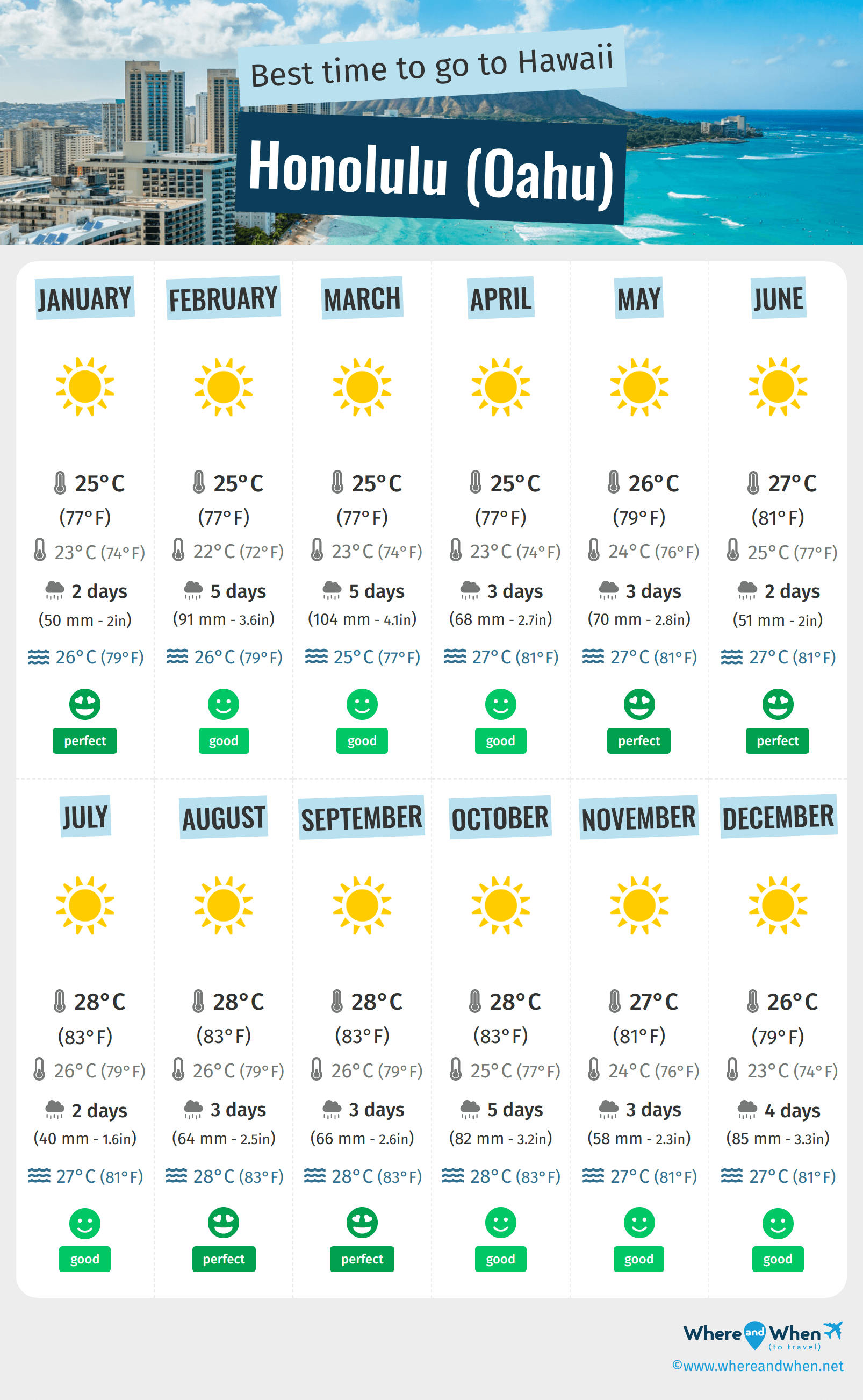
Although Hawaii does not have drastic seasonal changes, the length of the day does vary slightly. During the summer solstice, Honolulu enjoys about 13.5 hours of daylight. During the winter, this drops to about 11 hours. This shift is particularly important for those planning to drive to the North Shore for the day. You want to ensure you are off the winding coastal roads before total darkness sets in, especially if you are not familiar with the local terrain.
Practical Tips for Beating Jet Lag
When you first arrive in Honolulu, your body clock will likely be out of sync. To adjust quickly to Hawaii-Aleutian Standard Time, experts suggest immediately adopting the local schedule. If you arrive in the morning after a long flight from London or Germany, stay awake and get plenty of sunlight. A walk along Waikiki Beach or a visit to the Polynesian Cultural Center can help reset your circadian rhythm. Avoid the temptation to nap, and try to eat your meals at the standard Honolulu times.
In conclusion, “What time is it in Honolulu, Hawaii?” is a question that opens the door to a deeper understanding of the island’s culture and lifestyle. By respecting the Hawaii-Aleutian Standard Time, embracing the “Island Time” philosophy, and strategically scheduling your visits to places like Pearl Harbor or Diamond Head, you can ensure that every minute of your Oahu adventure is spent wisely. The clock in Hawaii doesn’t just measure minutes; it measures the moments of connection between you and the spirit of the islands.
LifeOutOfTheBox is a participant in the Amazon Services LLC Associates Program, an affiliate advertising program designed to provide a means for sites to earn advertising fees by advertising and linking to Amazon.com. Amazon, the Amazon logo, AmazonSupply, and the AmazonSupply logo are trademarks of Amazon.com, Inc. or its affiliates. As an Amazon Associate we earn affiliate commissions from qualifying purchases.